Blue skincare products usually get their color from specific ingredients, but the blue color itself is not what benefits your skin. In Korean skincare, ingredients such as guaiazulene and copper peptides can naturally give formulas a blue or blue-green shade, while other products may use added colorants.
So what actually matters is why the product is blue and what the ingredient behind that color can do for your skin. In this guide, I’ll look at the most common ingredients behind blue skincare, what the research says about them, and when the color is meaningful rather than just part of the marketing.
Key Takeaways
✓ Blue skincare products are not all blue for the same reason.
✓ Guaiazulene and copper peptides are two of the most common naturally blue skincare ingredients.
✓ Many blue products use color primarily to communicate hydration, soothing care, or freshness.
✓ A blue color does not automatically indicate a better formulation.
✓ The ingredient list matters far more than the color of the product.
Some links are affiliate links. If you choose to purchase through them, it helps support my work at no extra cost to you.
Guaiazulene: The Original Blue Skincare Ingredient
What Is Guaiazulene?
Guaiazulene is a naturally blue azulene derivative used in skincare both for its distinctive colour and for its potential soothing and anti-inflammatory properties. It is one of the ingredients most commonly responsible for the deep blue shade you see in Korean calming creams and serums.
One small clarification is worth making because the names are often mixed up. Azulene is a family of related compounds, while guaiazulene and chamazulene are specific azulene derivatives. German chamomile is particularly associated with chamazulene, the blue-violet compound formed during steam distillation of chamomile oil. A 2024 review of azulene and its derivatives discusses their anti-inflammatory and other potential dermatologic effects, although much of this research is still laboratory or preclinical rather than strong clinical evidence in finished skincare products.
In cosmetics, guaiazulene is commonly included in formulas made for sensitive or easily irritated skin. Its intense blue colour also makes it visually easy to recognize, which is probably part of the reason blue creams have become so strongly associated with calming skincare.
Products That Use Guaiazulene Well
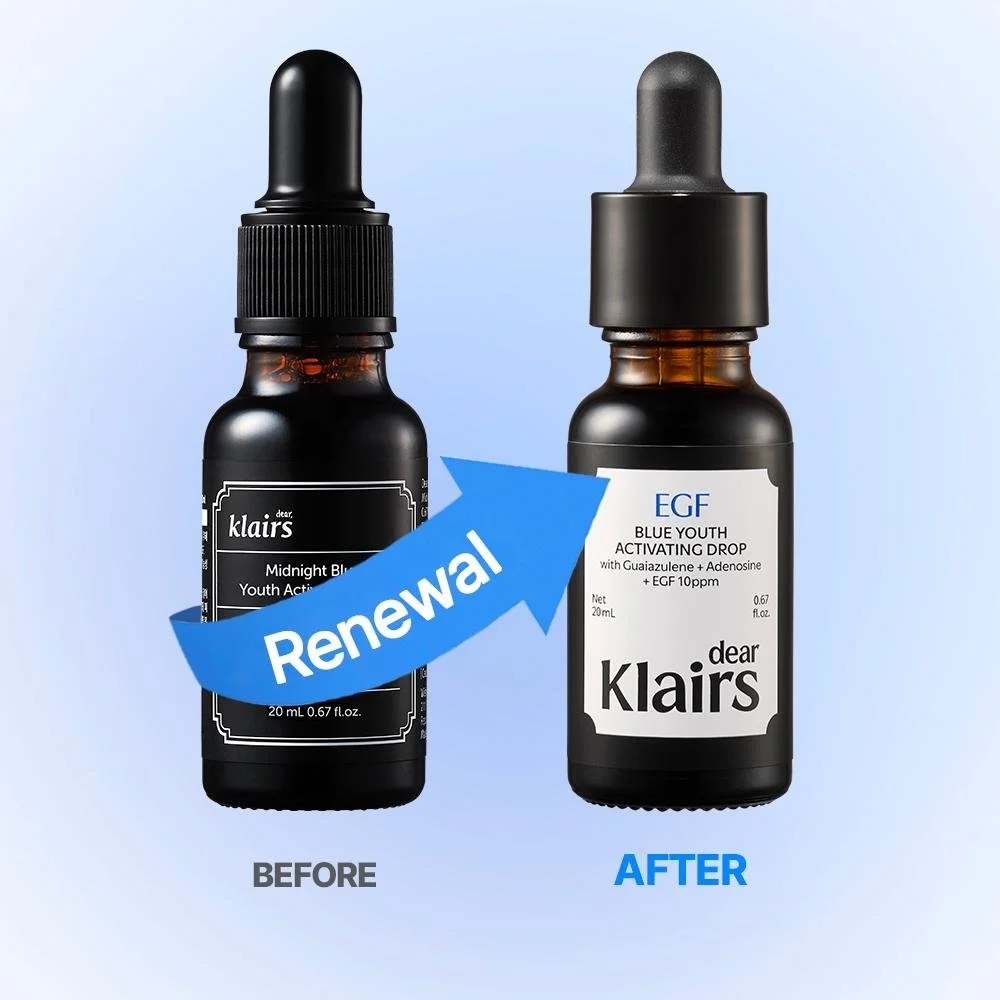
Dear, Klairs Blue Youth Activating Drop
Where to buy
This is a very lightweight, water-like peptide ampoule focused on skin repair, hydration support, and early anti-aging care. Unlike many peptide serums that rely on heavy textures or long ingredient lists, this formula takes a much more minimalistic approach. The blue tint comes from guaiazulene, which also adds a subtle soothing element to the formula, while the real focus is the combination of EGF and FGF growth factor peptides designed to support skin regeneration and elasticity.
Contains EGF 10ppm + FGF 10ppm
Minimalist ingredient list with very low risk of ingredient overload
Includes adenosine for additional anti-aging support
Free from fragrance and essential oils
Fungal acne safe
Best for: any skin type with early signs of aging, minimalist skincare routines, sensitive skin
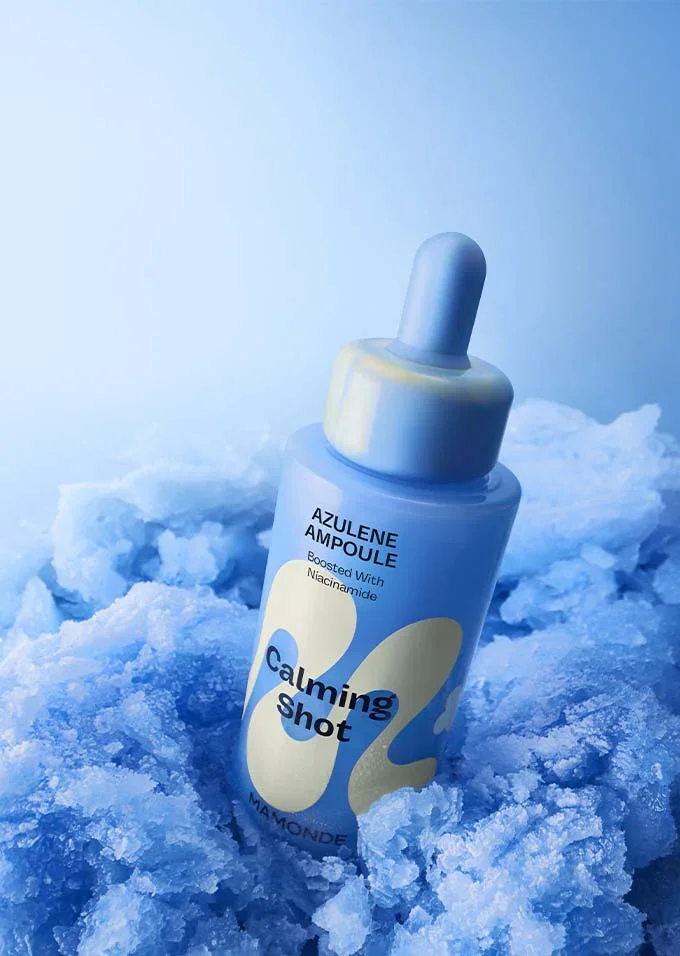
Mamonde Calming Shot Azulene Ampoule
Where to buy
Mamonde went through a major rebrand in recent years, shifting from its older “romantic floral” identity toward a much more modern, science-driven direction while still keeping flowers at the center of the brand philosophy. The newer formulas feel noticeably more sophisticated and streamlined, and the Calming Shot line is probably one of the best examples of that transition. The entire line uses azulene-focused soothing technology, but honestly, the ampoule is the standout product of the range.
This is a lightweight hydrating serum designed to calm irritated skin while also targeting dehydration and post-blemish marks. The formula combines 100ppm guaiazulene with a high concentration of niacinamide, giving it a more modern “soothing plus tone-support” approach rather than functioning as just a classic calming serum.
Contains 4% niacinamide
Lightweight watery-gel texture that layers easily under other skincare
Includes menthoxypropanediol for an immediate cooling sensation
Fragrance is present, although the overall formula still feels relatively restrained
Fungal acne safe
Silica gives the finish a slightly smoother, less sticky skin feel
Best for: combination or oily dehydrated skin with redness, heat irritation, or post-blemish marks that dislikes heavy calming creams
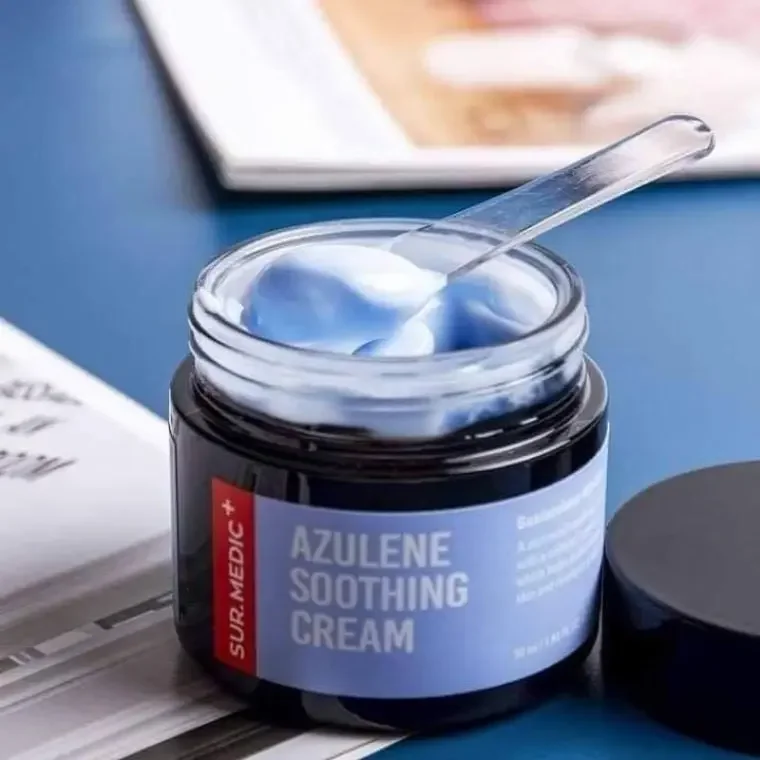
Neogen Surmedic Azulene Soothing Cream
Where to buy
This is a rich calming cream built around 300ppm guaiazulene and centella asiatica derivatives to target redness, irritation, and compromised skin barriers. The formula leans heavily into the classic “blue calming cream” concept often seen in Korean skincare, combining soothing ingredients with nourishing emollients and barrier-supportive components. Compared to more minimalist azulene formulas, this one takes a much more complex, treatment-style approach with a thicker moisturizing texture.
Supported by panthenol, ceramide NP, allantoin, sodium hyaluronate, and licorice root extract
Rich cream texture with a slightly occlusive finish
Contains tea tree oil, lavender extract, cypress oil, and mint leaf extract
Not ideal for highly reactive or fragrance-sensitive skin despite the soothing positioning
Contains calamine, which can help visually reduce redness temporarily
Best for:dry skin, compromised skin barriers, redness-prone skin, post-irritation recovery, winter skincare routines
TIA’M Snail & Azulene Calmfort Cream
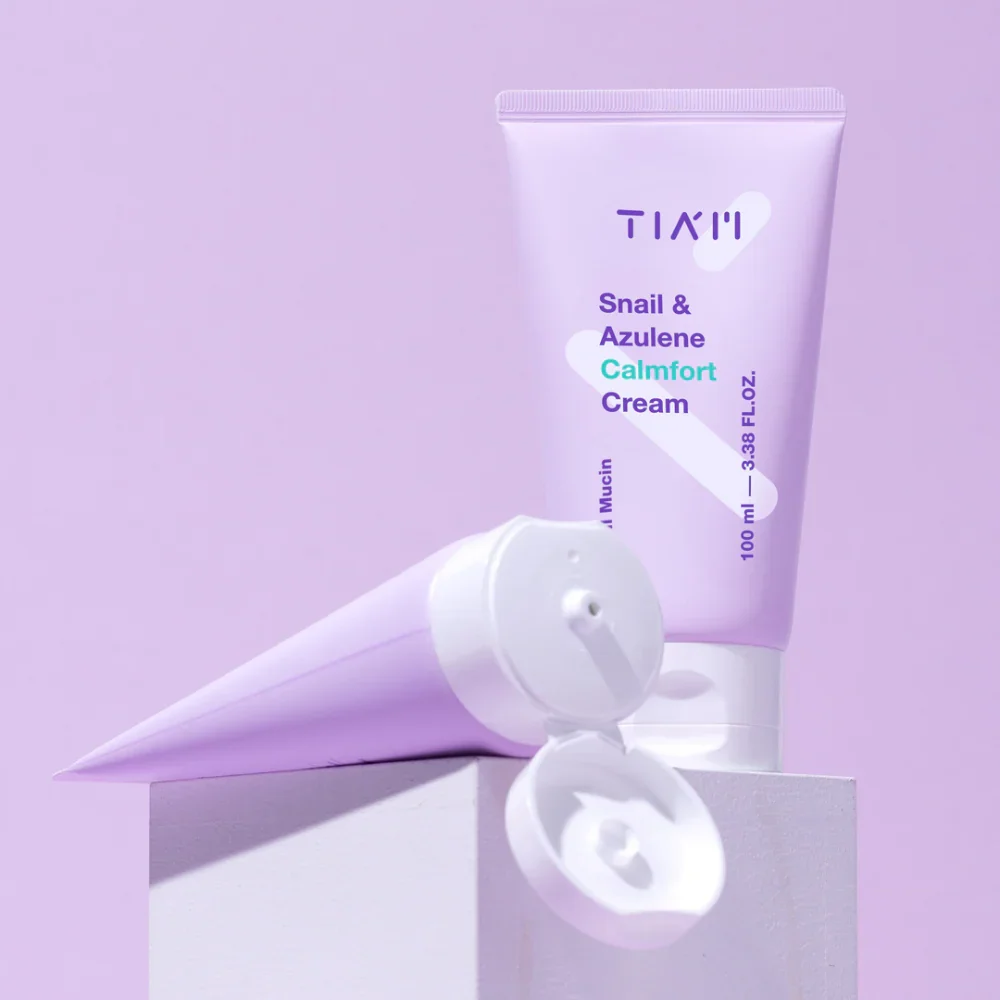
Snail secretion filtrate may not be the viral K-beauty ingredient it was a few years ago, but honestly, it is still one of the most genuinely useful ingredients for compromised, dehydrated, and irritation-prone skin. This cream combines a very high concentration of snail secretion filtrate with guaiazulene to create a formula focused on barrier recovery, moisture retention, and skin comfort rather than trendy active overload.
Contains 92% snail secretion filtrate
Supported by panthenol, allantoin, sodium hyaluronate, and betaine
Feels lighter and less occlusive than the Neogen Surmedic Azulene Soothing Cream, while still giving enough moisture for dehydrated skin
Fragrance-free and essential oil-free
Relatively minimalist soothing formula without excessive botanical extracts
Best for: dehydrated combination-to-dry skin with irritation, tightness, or flaking from retinoids, over-exfoliation, or a damaged skin barrier



Why Copper Peptides Are Naturally Blue
What Makes Copper Peptides Blue?
Copper peptides get their blue or blue-green colour from the copper ion bound to the peptide itself. The best-known example in skincare is Copper Tripeptide-1, also called GHK-Cu, a complex formed when the tripeptide GHK binds copper.
This gives copper peptide formulas a very different shade from guaiazulene. Instead of a deep royal blue, GHK-Cu usually creates more of a turquoise, aqua or blue-green tone.
Copper Tripeptide-1 is also one of the better-known peptides used in anti-aging skincare. A 2025 review of topical GHK-Cu discusses its potential role in skin regeneration and collagen-related processes, while also pointing out that the clinical evidence for topical GHK-Cu is still much smaller than its popularity in cosmetics might suggest. A second 2025 review also highlights an important formulation challenge: GHK-Cu is hydrophilic and does not easily cross the lipid-rich skin barrier, so delivery matters too.
And a copper peptide product does not have to look obviously blue. How visible the colour is depends on the concentration of the copper complex and the rest of the formulation, so a pale or completely non-blue serum can still contain Copper Tripeptide-1.
In other words, blue can be a clue that copper peptides are present, but colour intensity does not tell you how effective the product will be.
What Copper Peptides Actually Do
Copper peptides are mainly used in anti-aging and repair-focused skincare, with research linking GHK-Cu to collagen production, tissue repair and wound-healing processes.
The science is promising, but the topical anti-aging evidence is still not as strong as the popularity of copper peptides might suggest. A closer look at topical GHK-Cu found that clinical studies specifically measuring wrinkle improvement are still limited.
Formulation also matters because GHK-Cu does not cross the outer skin barrier particularly easily. Research on GHK-Cu skin permeation is therefore looking at delivery systems that may improve how well it reaches the skin.
So I see copper peptides as promising supportive anti-aging ingredients, rather than a replacement for better-established options such as retinoids.
Copper Peptide Products Worth Knowing
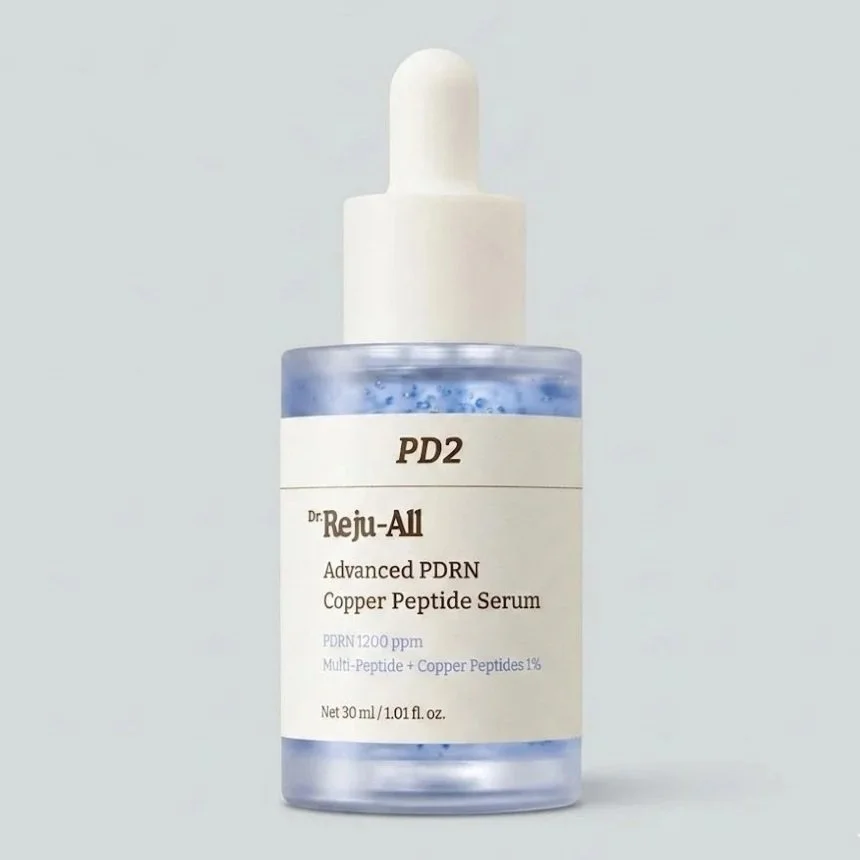
Dr.Reju-All Advanced PDRN Copper Peptide Serum
Where to buy
Dr.Reju-All is one of the newer Korean skincare brands embracing the current high-tech, science-focused skincare direction with formulas built around ingredients like PDRN, copper peptides, and multi-peptide complexes. This serum is a good example of that modern “biotech skincare” approach, combining skin-repair, hydration-support, and anti-aging ingredients in one lightweight treatment-style formula. The blue tint comes naturally from copper peptides and guaiazulene.
Contains PDRN 1200ppm + 1% Multi-Peptides + Copper Peptide
Includes several signal peptides, including Acetyl Octapeptide-3 and Palmitoyl Tripeptide-5
Supported by panthenol, beta-glucan, sodium hyaluronate, allantoin, and sodium PCA
Lightweight gel-serum texture without a greasy or silicone-heavy finish
Contains essential oils, including Roman chamomile oil and hinoki cypress oil
Not ideal for extremely reactive skin because of the essential oil content
Best for: any skin types, including oily dehydrated skin with early signs of aging, post-inflammatory redness, weakened skin barrier, or dehydration from aggressive active use
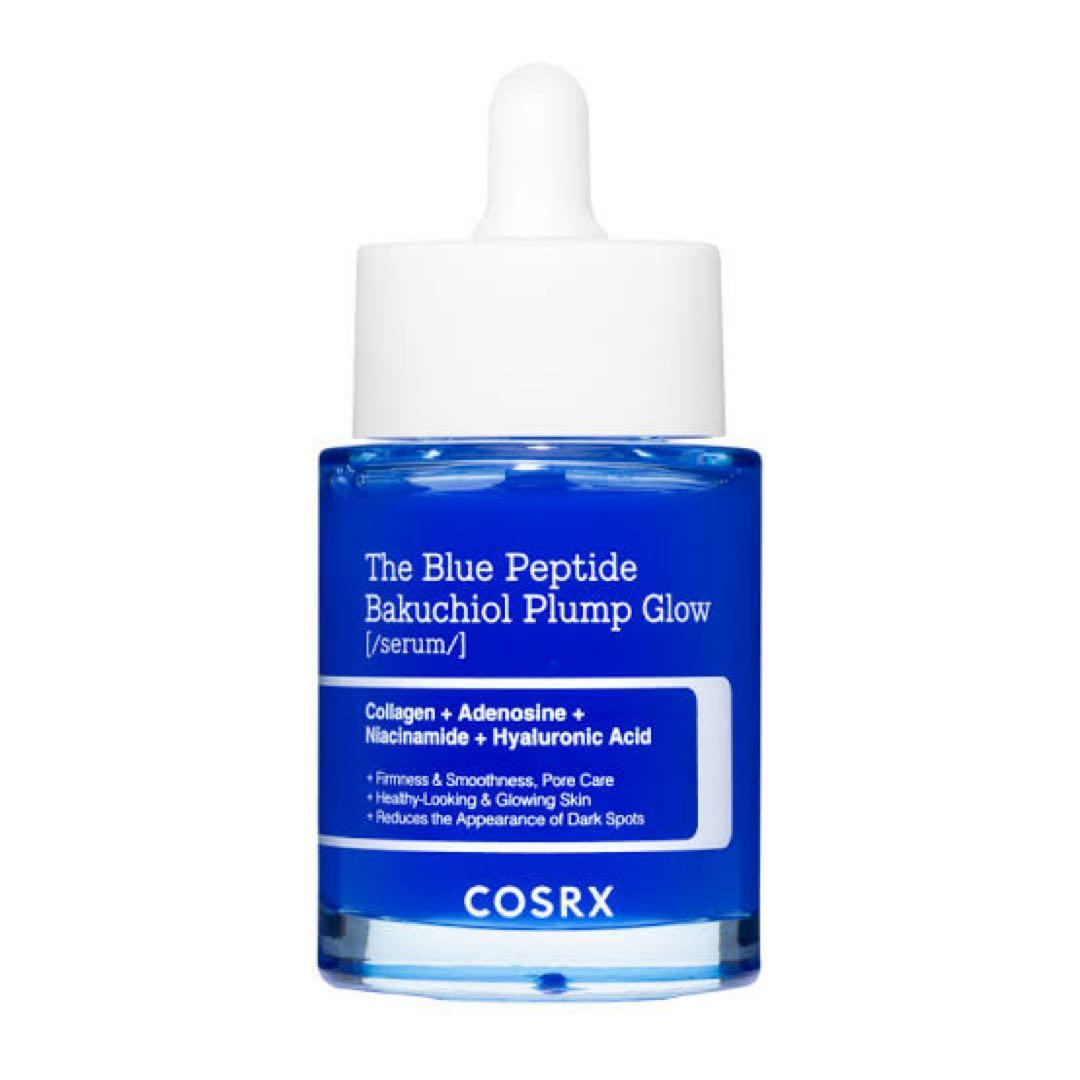
COSRX The Blue Peptide Bakuchiol Plump Glow Serum
Where to buy
This is one of the newer COSRX launches that reflects how strongly Korean skincare is moving toward modern peptide-focused formulas with a more “active serum” approach. Instead of relying on a single anti-aging ingredient, the formula combines copper peptides, bakuchiol, multiple peptides, niacinamide, and several forms of hyaluronic acid in a lightweight glow-focused serum designed to support elasticity and hydration without the heaviness of traditional anti-aging creams.
Contains 0.5% Copper Peptide (5,000ppm) + 0.25% Bakuchiol (2,500ppm)
Includes multiple peptides, including Acetyl Octapeptide-3 and Acetyl Hexapeptide-8
Supported by niacinamide, panthenol, beta-glucan, collagen, and several forms of hyaluronic acid
Lightweight hydrating serum texture with a soft glow finish
Fragrance-free and essential oil-free
Contains a small amount of alcohol, although not positioned aggressively high in the formula
Fungal acne safe
Best for: dehydrated combination or oily skin with early signs of aging, dullness, fine dehydration lines, and loss of glow
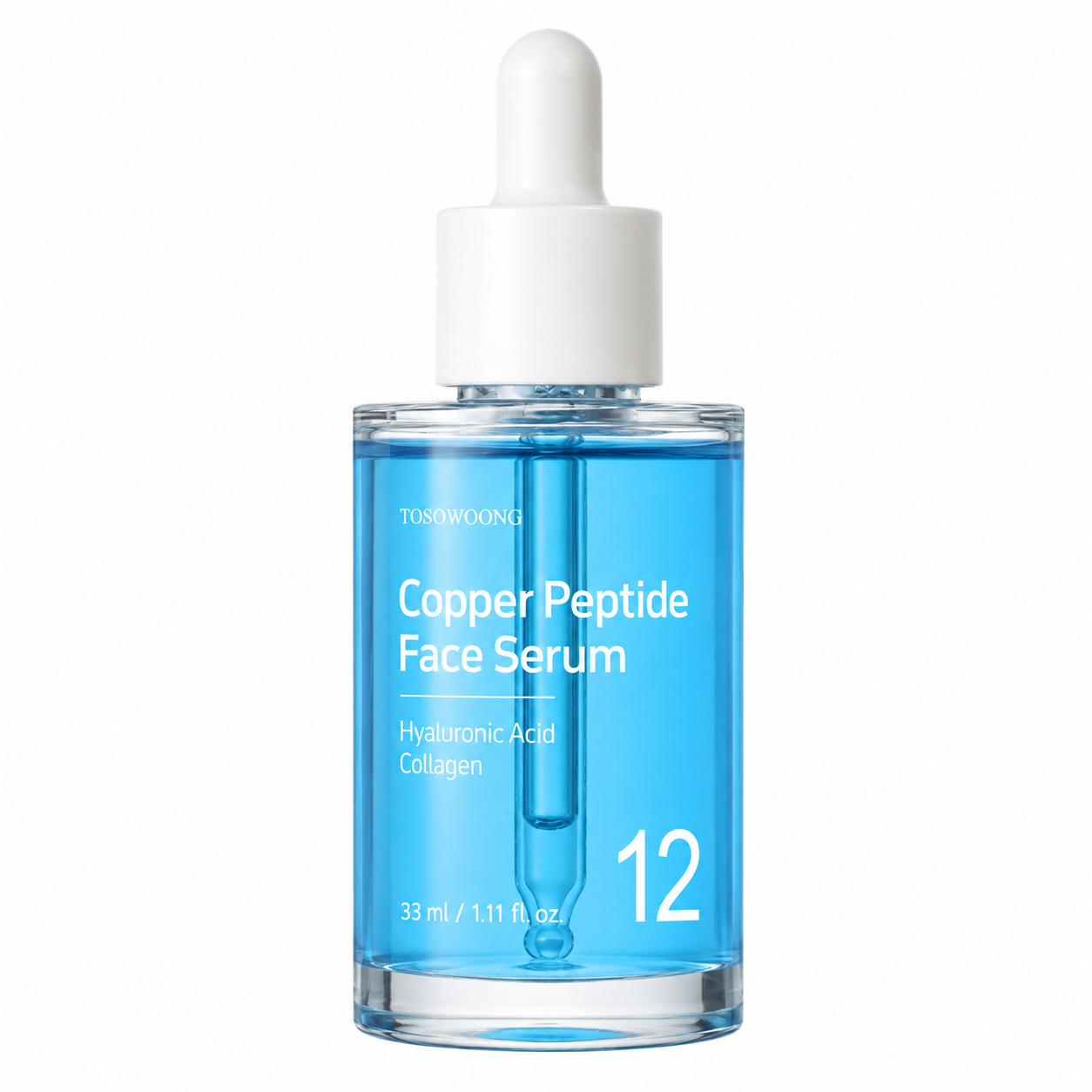
Tosowoong Copper Peptide Face Serum
Where to buy
This serum combines copper peptides with a very large blend of peptides, collagen ingredients, and multiple forms of hyaluronic acid in one formula. Similar to the newer peptide-focused direction seen in products like the COSRX Blue Peptide Serum, the formula aims to support hydration, elasticity, glow, and early signs of aging from multiple angles at once rather than focusing on just one hero ingredient.
Despite the extensive ingredient list, the texture itself stays relatively lightweight and hydrating rather than feeling heavy or overly rich on the skin.
Contains copper peptide 1000ppm
Includes a very large peptide blend, including Palmitoyl Tripeptide-1, Acetyl Hexapeptide-8, Hexapeptide-9, and Palmitoyl Pentapeptide-4
Niacinamide is positioned very high in the ingredient list
Fragrance-free
Contains alcohol, which makes the formula less ideal for very dry, highly sensitive, or barrier-damaged skin despite the strong hydration-focused ingredient list
Best for: dehydrated combination or oily skin with early signs of aging, loss of elasticity, fine dehydration lines
When Blue Is Mostly Aesthetic
As we discussed earlier, blue skincare is often associated with calming, soothing, and recovery-focused formulas because of ingredients like guaiazulene and copper peptides. But over time, blue also became strongly connected to fresh, lightweight, hydration-focused textures.
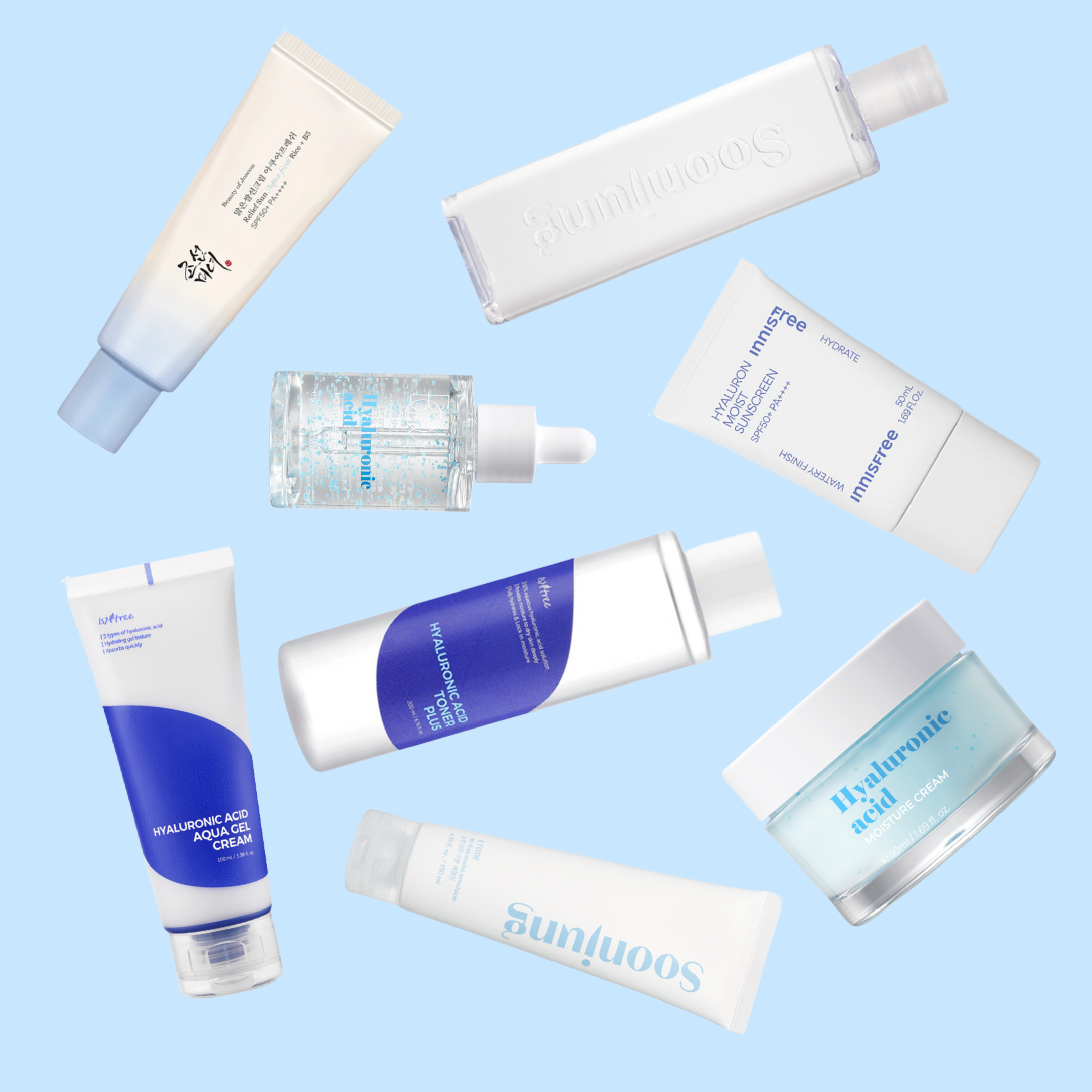
This is especially noticeable in gel moisturizers, watery toners, facial mists, and hydrogel formulas commonly seen in Korean skincare. Even before reading the ingredient list, many consumers already expect a blue product to feel cooling, refreshing, and comforting on the skin.
That does not automatically make the product gimmicky or ineffective. Skincare is also a sensory experience, and texture, appearance, and application feel genuinely influence how enjoyable a product feels to use.
Frequently Asked Questions
Can You Use Guaiazulene and Copper Peptides Together?
Yes. There is no general reason guaiazulene and copper peptides cannot be used together, and some skincare formulas already combine both ingredients. What matters more is the complete formula and how well your skin tolerates it.
Can You Use Copper Peptides With Retinol or Vitamin C?
You do not automatically need to separate copper peptides from every other active ingredient. However, if you use several potent actives and your skin becomes irritated, simplifying the routine or using them at different times may make it easier to tolerate.
Is Blue Skincare Good for Acne-Prone Skin?
It can be, but the colour tells you very little about whether a product will suit acne-prone skin. Look at the overall formula, texture and other ingredients rather than assuming a blue calming product will automatically be suitable for breakouts.
Do Blue Skincare Products Need to Be Refrigerated?
Usually not. Unless the brand specifically recommends refrigeration, store the product according to the instructions on the packaging and keep it away from excessive heat and direct sunlight.
Why Has My Blue Serum Changed Colour?
A small difference in colour can sometimes occur between formulas or batches, but a noticeable change after opening deserves more attention. If the product also develops a different smell, texture or appearance, check the expiry and period-after-opening information and stop using it if you suspect the formula has deteriorated.
Does Blue Skincare Actually Benefit Your Skin?
Not all blue skincare products are blue for the same reason. Some formulas get their color from genuinely functional ingredients, such as guaiazulene or copper peptides, while others use blue mainly as part of the product’s sensory identity and visual branding.
Neither approach is automatically better or worse. A naturally blue formula can still be poorly formulated, while a product with a purely aesthetic blue tone can still be an excellent moisturizer, toner, or serum. What truly matters is the overall formulation, ingredient quality, and whether the product is actually suitable for your skin type and concerns.
Instead of focusing on the color itself, focus on the ingredient list, realistic claims, and brands that communicate their formulations transparently.
If you enjoy ingredient-focused skincare education and honest Korean skincare analysis, explore more guides on the blog for skincare tips, product recommendations, and formulation deep dives. Not sure where to start? Try my Skin Type Quiz or book a personalized skincare consultation for recommendations tailored to your skin’s actual needs, not just trends.

Having rosacea does not mean giving up every active ingredient. This guide looks at which actives can still fit into your routine, where the evidence is strongest, and which ones need more caution.