How to Build a Dry Skin Care Routine That Actually Works

Building an effective dry skin care routine is not simply about using richer products. Understanding how dry skin differs from dehydrated skin and choosing ingredients that support the skin barrier can make a significant difference in long-term comfort, hydration, and skin health.
Key Takeaways
✓ Dry skin is a skin type characterized by low oil and lipid production.
✓ Dry skin and dehydrated skin are not the same and require different skincare approaches.
✓ Ceramides, cholesterol, fatty acids, and squalane are key ingredients for dry skin.
✓ Dry skin responds best to gentle cleansing, barrier support, and consistent hydration.
✓ The best dry skin routine focuses on long-term comfort rather than heavy products or aggressive treatments.
Some links are affiliate links. If you choose to purchase through them, it helps support my work at no extra cost to you.
What Is Dry Skin?

Dry skin is a skin type characterized by naturally decreased sebum production and lower levels of skin-identical lipids.
These lipids — mainly ceramides, cholesterol, and fatty acids — play an essential role in helping the skin retain moisture and maintain comfort.
When lipid levels are insufficient, the skin has more difficulty holding onto both oil and water, which can lead to tightness, rough texture, and increased sensitivity.
Dry skin can be something you’re born with due to naturally lower oil production, but dry skin characteristics can also develop or worsen over time.
Environmental exposure, climate, and skincare habits can temporarily — and in some cases persistently — turn even normal or combination skin into dry skin by disrupting the skin’s lipid structure.
Key Characteristics of Dry Skin
Dry skin typically shows ongoing patterns of discomfort rather than brief or occasional imbalance.
Common characteristics include:
Tight or uncomfortable skin, especially after cleansing
Rough or uneven texture, sometimes accompanied by flaking
Reduced elasticity or natural glow
Increased reactivity to environmental changes or skincare products
The intensity of these signs can fluctuate with seasons or routines, but the underlying tendency toward dryness often remains.
Common Causes of Dry Skin
Dry skin can be influenced by both internal tendencies and external stressors, including:
Naturally low sebum production and reduced lipid availability
Cold weather, low humidity, wind, and indoor heating
Cleansing habits that remove too much oil from the skin
Frequent exfoliation or use of strong active ingredients
Over time, these factors can compromise the skin’s ability to maintain comfort and moisture balance.
Main Challenges of Dry Skin

One of the main challenges with dry skin is maintaining lasting comfort without overwhelming or irritating the skin. Common challenges include:
Moisture loss throughout the day despite regular skincare
Products absorbing quickly without providing sustained comfort
Increased sensitivity when exposed to harsh routines or formulas
This is why dry skin responds best to thoughtful, consistent routines that focus on long-term comfort rather than aggressive or quick-fix treatments.
Dry Skin vs Dehydrated Skin
Let’s clear up this confusion right at the beginning, because it’s one of the most common misunderstandings in skincare — and it’s very easy to see why it happens.
Dry skin and dehydrated skin are not the same thing.
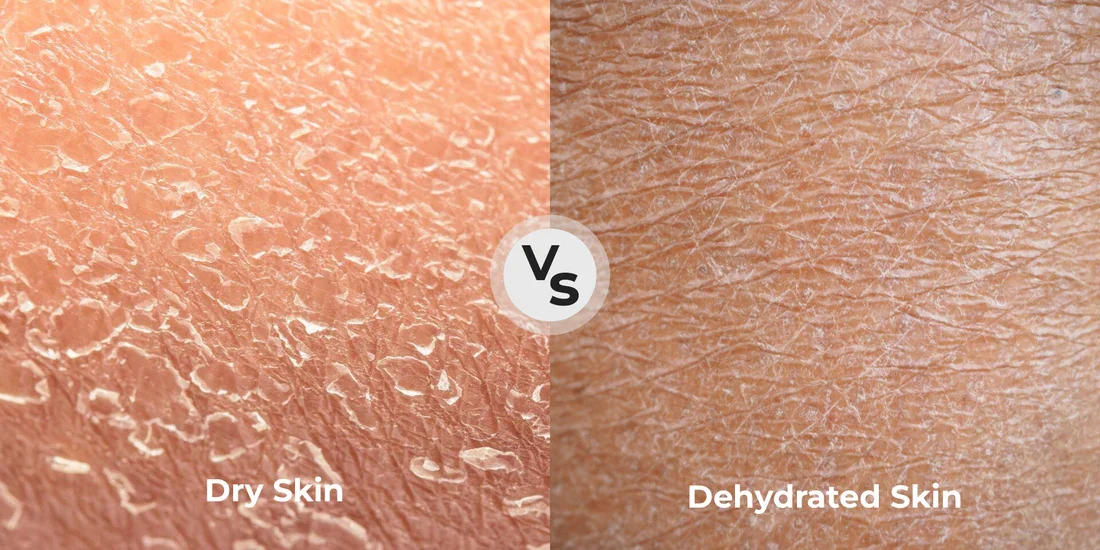
Dry skin is a skin type, while dehydrated skin is a skin condition. In simple terms, dry skin lacks oil, while dehydrated skin lacks water.
Because both can cause tightness or discomfort, they’re often mistaken for each other, even though they need different approaches.
Dehydrated skin can happen to anyone — oily, combination, normal, or dry skin — and it’s often temporary.
Dry skin, on the other hand, reflects how your skin naturally functions, especially in terms of oil and lipid production. This is why treating dry skin with hydration alone often isn’t enough, and why oily skin can still feel dehydrated at the same time.
The Key Differences at a Glance
Dry Skin
A skin type
Characterized by low oil and lipid production
Tends to feel consistently dry or uncomfortable
Needs lipid support and moisture retention
Dehydrated Skin
A skin condition
Characterized by lack of water
Can affect any skin type
Often improves with better hydration and routine adjustments
Understanding this difference makes it much easier to choose the right products and build a routine that actually fits your skin.
What Dry Skin Actually Needs to Stay Healthy
If you have dry skin, it’s very easy to assume that the solution is simply adding richer or oilier products. That seems logical — but in practice, it doesn’t always work, and it’s often not the most comfortable approach either.
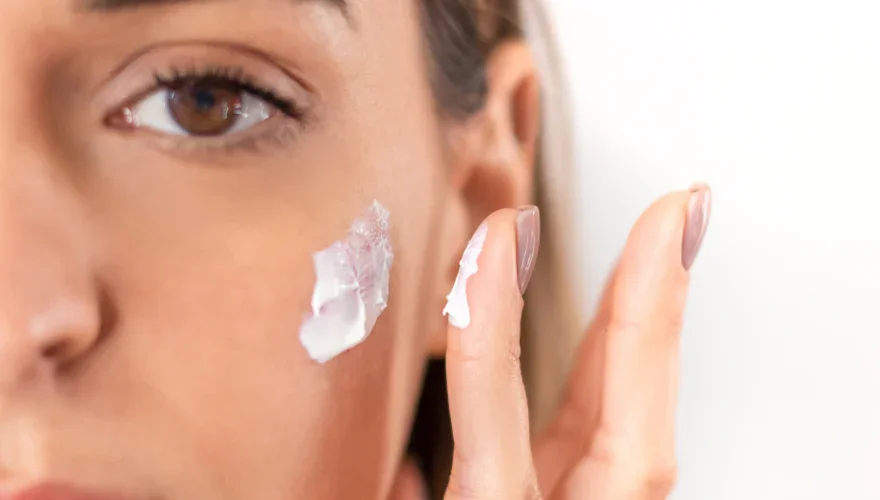
What tends to matter more for dry skin is how the routine functions as a whole.
Dry skin usually responds better to consistent, low-stress care that helps maintain comfort and moisture throughout the day, rather than relying on one very heavy product to do all the work.
In practical terms, dry skin does best with:
Skin-identical lipids, rather than greasy or overly occlusive textures
Steady hydration support, so moisture lasts beyond the first hour
Gentle cleansing and limited exfoliation, as dry skin is easily stressed
Layering that builds comfort gradually, instead of focusing on a single rich step
Approaching dry skin this way makes routine choices feel clearer and more predictable. It also creates a natural foundation for choosing ingredients that genuinely suit dry skin, which we’ll look at next.
Key Ingredients That Support Dry Skin
So, if you have dry skin, what should you actually look for on an ingredient list?
Not heavier textures by default, and not the strongest actives either. Dry skin tends to do best with ingredients that support comfort, help retain moisture, and calm the skin — rather than trying to push quick visible results.
Below are the ingredient groups that matter most for dry skin, and how they fit into a balanced routine.
1. Barrier-Supporting Ingredients
Dry skin naturally has lower oil and lipid levels, which is why ingredients that mirror the lipids the skin naturally produces are especially helpful.

Look for ingredients such as:
Ceramides
Cholesterol
Fatty acids
Squalane
These ingredients help improve skin comfort and flexibility, making it easier for the skin to retain moisture and tolerate daily skincare. When well formulated, they don’t need to feel heavy or greasy to be effective.
2. Hydrating Ingredients That Work Well for Dry Skin
Hydration still plays an important role in dry skin care, but the goal isn’t just to add water temporarily. For dry skin, hydration works best when it helps maintain comfort throughout the day rather than being lost quickly from the skin.
Ingredients that tend to suit dry skin particularly well include:
Glycerin
Hyaluronic acid (in balanced, supportive formulas)
Beta-glucan
Panthenol
You’ll also see ingredients like PDRN and Collagen used frequently in Korean skincare.
These ingredients do not penetrate the skin barrier — they are simply too large to do so — but this does not make them ineffective or secondary. Instead, they work where dry skin needs support most: at the skin surface.
By forming a hydrating, protective layer on the surface, PDRN and collagen help improve moisture retention, enhance skin comfort, and create a more stable environment for dry skin.
For skin that already struggles to hold onto moisture, this kind of surface-level hydration is especially beneficial.
3. Soothing & Comfort Ingredients
Dry skin is often more reactive, especially when stressed by climate, exfoliation, or routine changes. Soothing ingredients play an important role in keeping the skin comfortable and balanced.
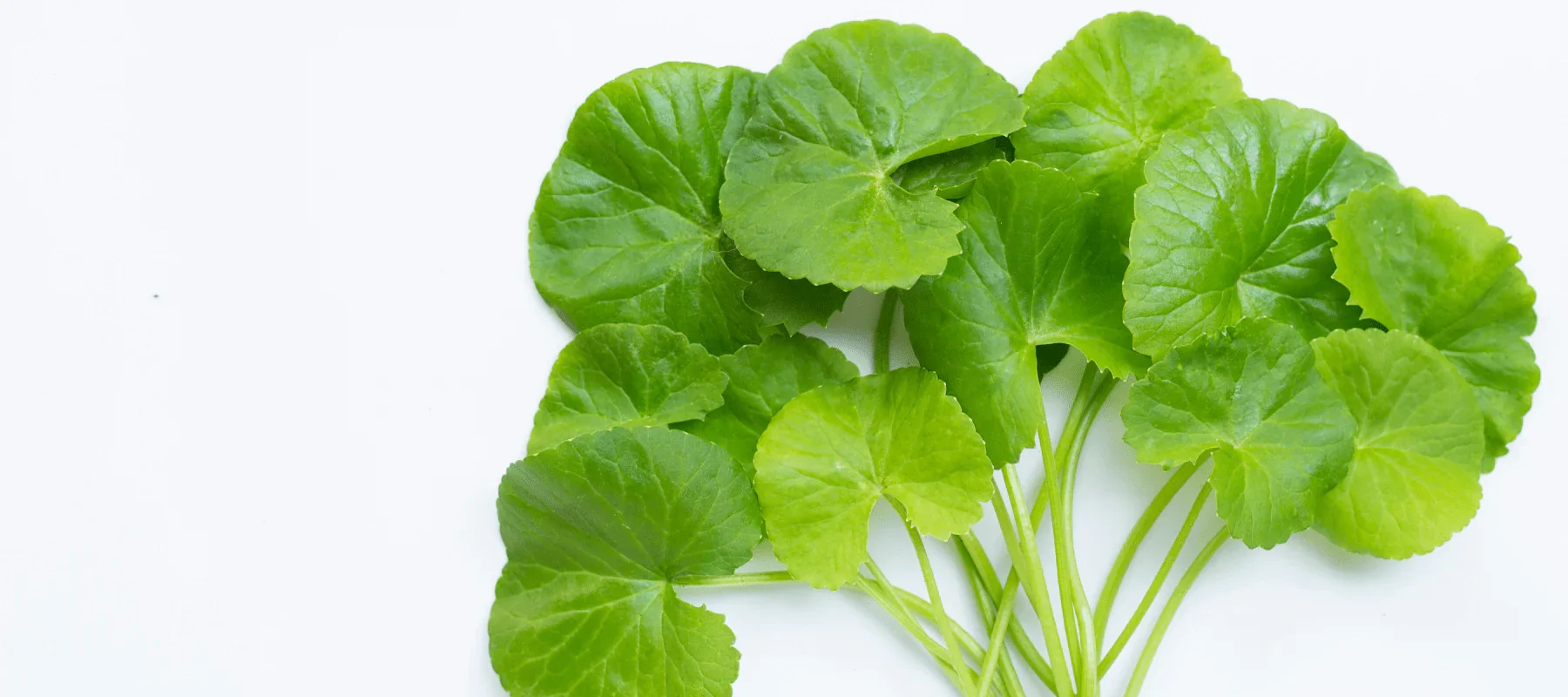
In Korean skincare, commonly used soothing ingredients include:
Centella asiatica
Heartleaf (Houttuynia cordata)
Mugwort
These ingredients help calm visible irritation, reduce discomfort, and make dry skin more tolerant of daily skincare — particularly when layered consistently in lightweight formats like toners, essences, or serums.
4. Exfoliation for Dry Skin (When & If Needed)
Dry skin doesn’t need frequent exfoliation, but gentle exfoliation can still be helpful for improving texture and product absorption — when done carefully.
For dry or very dry skin, better options include:
Enzyme exfoliants, which work on the surface and are usually very gentle
Lactic acid in low concentrations
PHAs, which exfoliate more slowly and are generally well tolerated
The purpose here isn’t to chase glow or rapid turnover, but to support smoother texture without increasing dryness or discomfort.
Dry skin and sensitivity often go hand in hand. For a more detailed look at gentle exfoliation methods and suitable products, explore my guide to exfoliating sensitive skin.
5. Ingredients to Be Cautious With in Dry Skin Care
Dry skin lacks oil, but that doesn’t mean all oil-related ingredients are beneficial. Some commonly used ingredients in products marketed for dry skin can actually increase irritation or discomfort, especially for dry, sensitive, or rosacea-prone skin.
Essential Oils in Dry Skin Products
Essential oils are often added to products for fragrance or a “natural” feel, but they don’t provide nourishment or barrier support for dry skin. Ingredients such as lavender oil, citrus oils, peppermint, or tea tree oil can be irritating — even when present in small amounts.
For dry skin, especially when sensitivity is involved, essential oils can:
Trigger irritation or stinging
Increase redness or reactivity over time
Undermine skin comfort rather than improve it
If a product marketed for dry skin relies heavily on essential oils, it’s unlikely to calm or support your skin in the long term. This is one ingredient group that’s generally best avoided.
Mineral Oils
Mineral oil is still used in many skincare formulas, including products marketed for dry skin. In ingredient lists, it commonly appears as Mineral Oil, Paraffinum Liquidum, Petrolatum, or Liquid Paraffin.
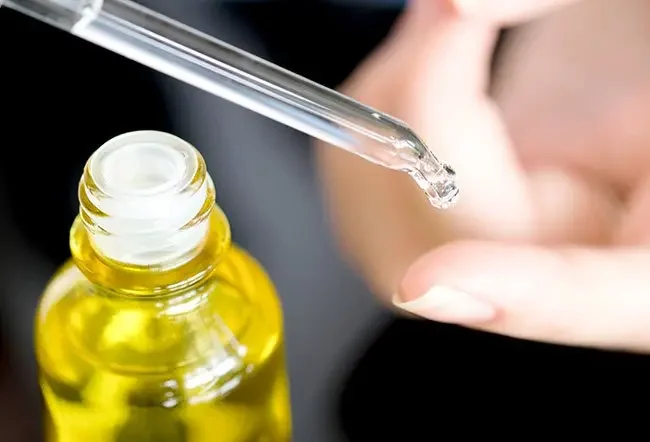
Mineral oil is derived from petroleum and consists mainly of inert hydrocarbons.
In skincare, it acts as a strong occlusive, forming a film on the skin’s surface that reduces water loss. However, it does not contain skin-identical lipids and does not actively support the skin’s own lipid balance.
For dry and sensitive skin — especially when rosacea, flushing, or heat sensitivity are present — this type of occlusion can be poorly tolerated. It may:
Trap heat and moisture at the skin surface
Feel heavy without improving underlying skin quality
Reduce tolerance in already sensitive skin
Because mineral oil is still widely used, please always double-check the ingredient list. Even products made for dry skin can contain it, and if your skin is sensitive or reactive, avoiding it is often the safer choice.








Building a Dry Skin Routine: Step-By-Step
At this point, you already know what dry skin needs. Now let’s put that into practice.
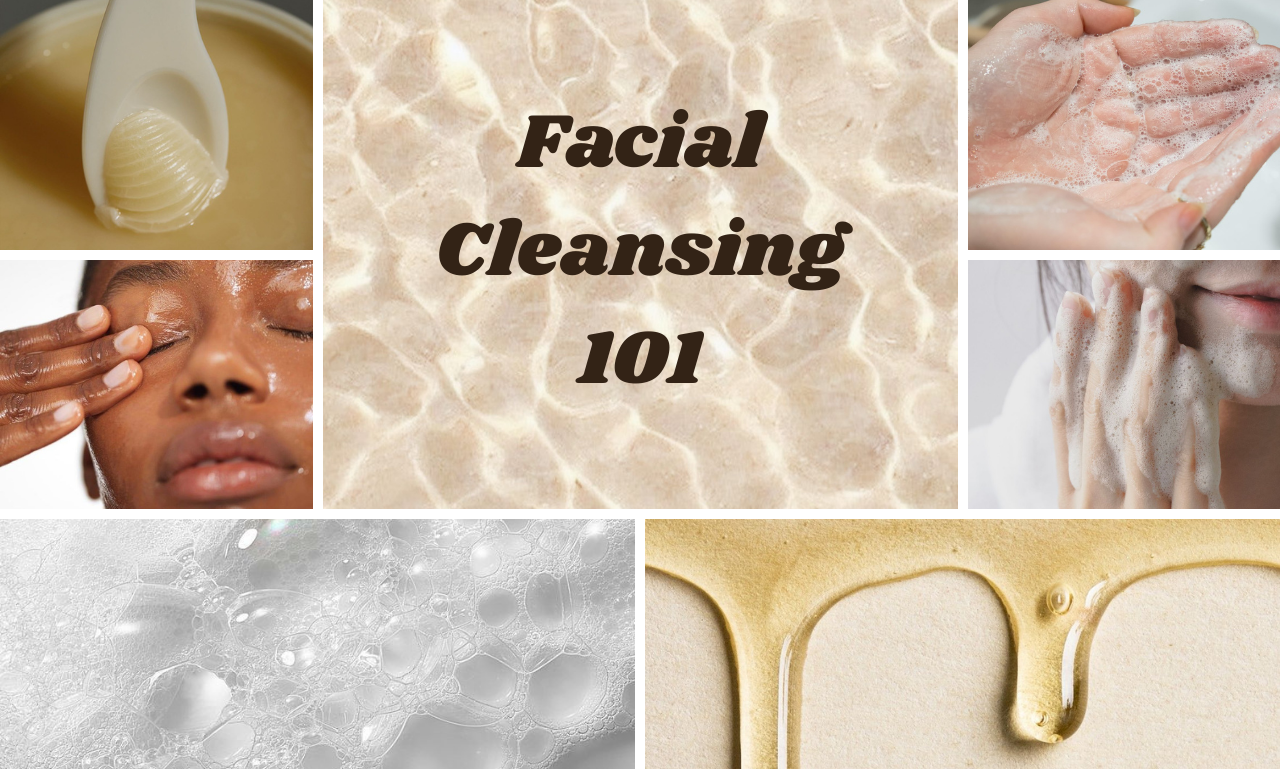
1. Cleansing: Reduce Oil Loss, Not Just Remove Dirt

Cleansing sets the tone for the rest of your routine, which is why it’s especially important for dry skin. The goal here isn’t to strip the skin or create a “squeaky clean” feeling, but to remove impurities while preserving as much of your skin’s natural moisture as possible.
This is where double cleansing, a classic Korean skincare step, can be very helpful — as long as it’s done in a dry-skin-friendly way.
Double cleansing simply means cleansing the skin in two steps:
An oil-based cleanser
A water-based cleanser
Each step has a different role, and when chosen carefully, they can work beautifully for dry skin.
Step 1: Oil-Based Cleanser
An oil-based cleanser dissolves oil-based impurities such as sunscreen, makeup, and excess sebum. Because oil attracts oil, this step cleans the skin effectively without relying on strong surfactants.
Dry skin can comfortably choose oil cleansers that contain heavier oils, such as avocado oil, shea butter, or olive oil. This is also the skin type that can truly enjoy cleansing balms, which provide a richer, cushioning feel during cleansing while still rinsing off easily.
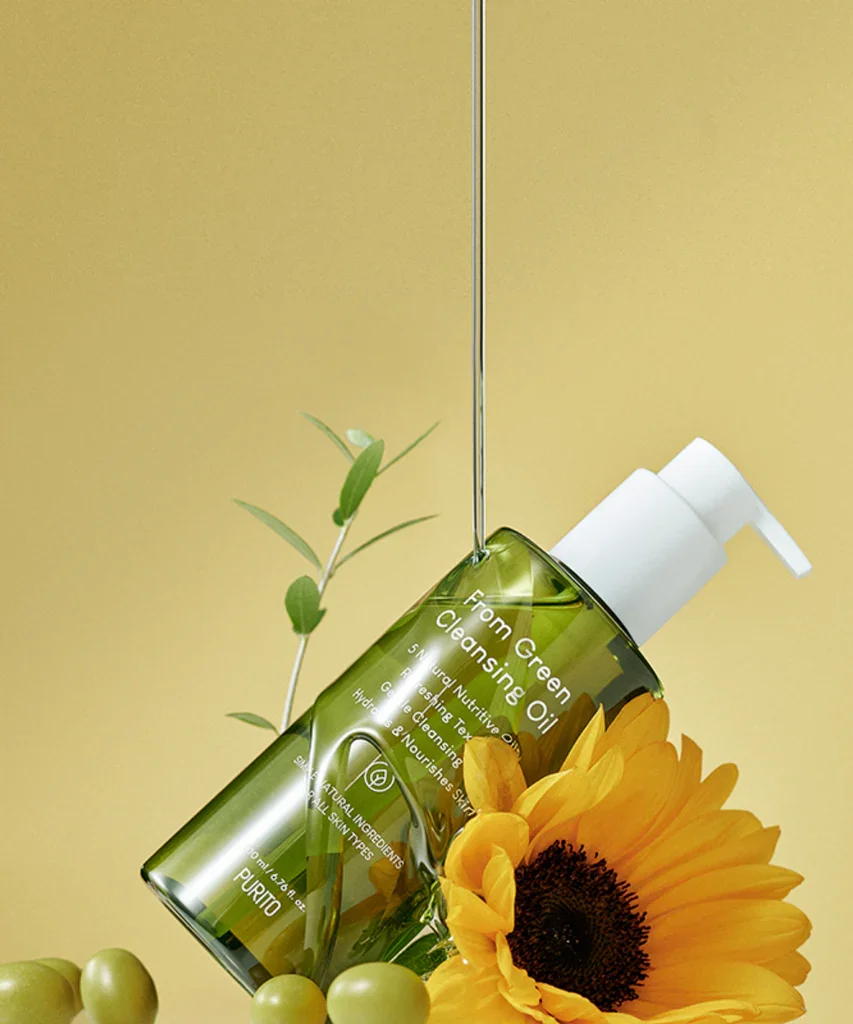
Purito Seoul From Green Cleansing Oil
Where to buy
This is a straightforward, minimalist cleansing oil that focuses on gentle cleansing without unnecessary extras. The formula relies on a blend of skin-friendly oils that cleanse effectively while keeping dry skin comfortable.
Why it works well for dry skin:
Uses olive oil and sunflower seed oil as the base, which are richer, nourishing oils
Includes jojoba oil and sweet almond oil, both well tolerated and supportive for dry, delicate skin
Emulsifies and rinses cleanly, leaving the skin comfortable rather than tight
Free from essential oils and fragrance, reducing the risk of irritation
Beauty of Joseon Radiance Cleansing Balm

Where to buy
The ingredient list combines lipids, fermented extracts, and soothing components without added fragrance or essential oils.
Why it works well for dry skin:
Contains rice bran oil, rice seed water, and rice extract, which contribute to skin conditioning
Includes oat extract and Coix seed extract, supporting comfort in dry or easily sensitized skin
Incorporates a fermented soybean extract, aligning with a mild, skin-friendly cleansing approach
Free from essential oils and fragrance
Step 2: Water-Based Cleanser
The second step removes any remaining residue from the first cleanse and lightly cleanses the skin itself.
For dry skin, this step should be very gentle. The best options are:
Cleansing milks
Cream cleansers
Low-foaming cleansers with mild surfactants
Strongly foaming cleansers are usually best avoided, as they’re designed to remove excess oil — something dry skin already lacks. Even if they feel refreshing initially, they often leave the skin feeling tight or uncomfortable afterward.
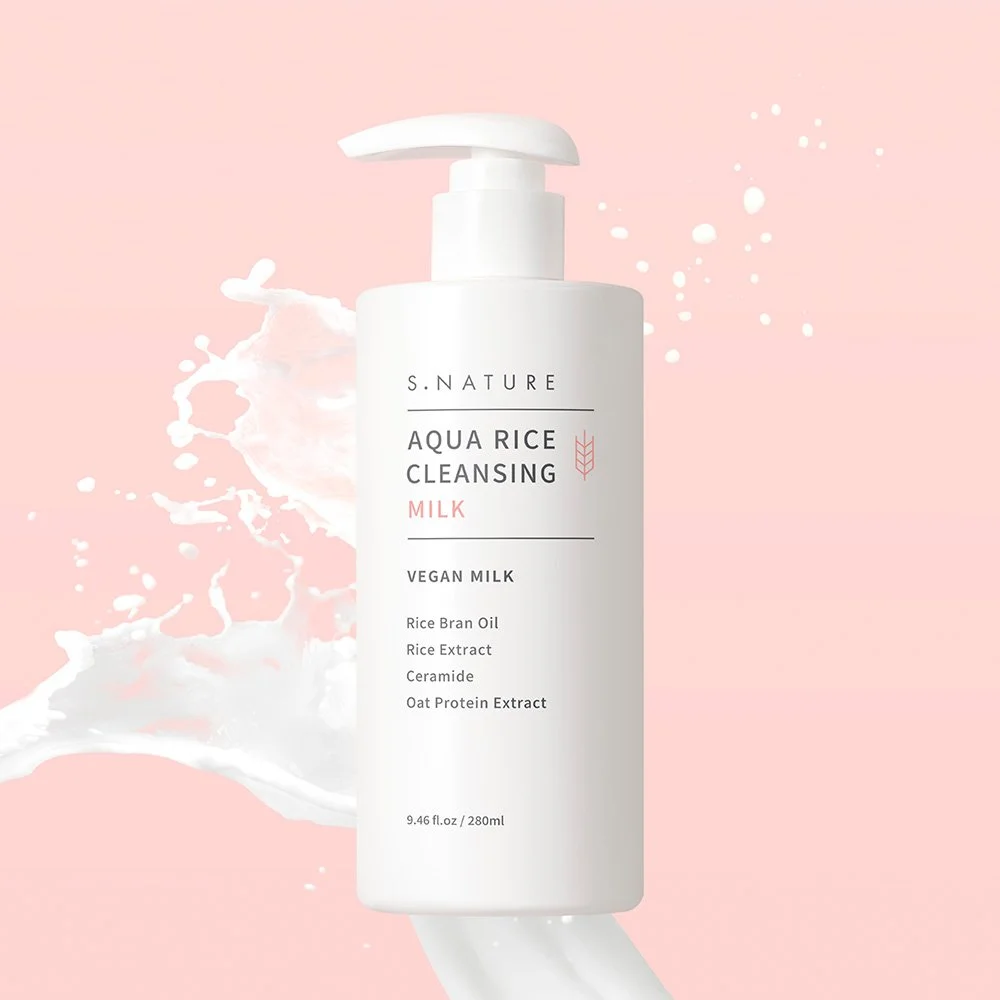
S.NATURE Aqua Rice Cleansing Milk
Where to buy
This is a cleansing milk formulated with mild surfactants, emollients, and barrier-supportive ingredients, designed to cleanse without aggressively removing lipids.
Why it works well for dry skin:
Uses sunflower seed oil to maintain lipid comfort during cleansing
Contains glycerin, panthenol, and allantoin, supporting hydration and skin comfort
Includes ceramide NP, which is beneficial for dry skin even in a rinse-off formula
Formulated with rice-derived ingredients and oat extracts, adding gentle skin-conditioning support
Cleanses with very mild glucoside-based surfactants, reducing the risk of dryness
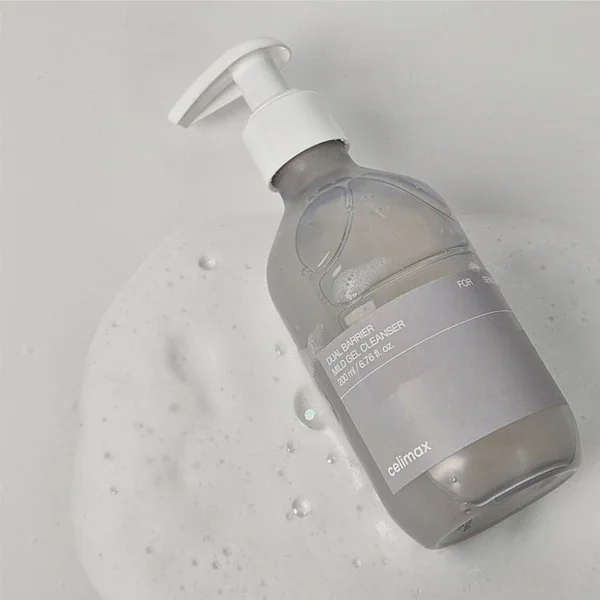
Celimax Dual Barrier Mild Gel Cleanser
Where to buy
This is a gel cleanser that produces a light foam while relying on mild surfactants and barrier-supportive lipids, rather than aggressive cleansing agents.
Why it can work for dry skin:
Uses amino-acid–type and amphoteric surfactants, resulting in a gentler, low-stripping foam
Contains glycerin and betaine, helping reduce moisture loss during cleansing
Formulated with a ceramide complex, cholesterol, and phytosphingosine, supporting barrier comfort even in a rinse-off product
Thick gel texture provides structure and control without feeling harsh
Note:
A suitable option if you prefer a foaming cleanse but still want a formula adapted for dry or compromised skin.
2. Exfoliation: Gentle Renewal for Dry Skin
Dry skin generally holds onto dead skin cells more tightly, which can make the surface feel rough and reduce how evenly products absorb. The goal of exfoliation here is simply to loosen that buildup — not to aggressively speed up cell turnover.
For dry skin, exfoliation should stay light and supportive, not frequent or intense.
The most suitable exfoliation options for dry skin include:
Enzyme exfoliants
Lactic acid, a gentle AHA
PHAs (polyhydroxy acids)
Enzyme exfoliants work on the surface by breaking down dead skin cells without acids or friction. Because they don’t penetrate deeply, they’re especially suitable for very dry or sensitive skin, or when your skin feels easily reactive.
Like lactic acid, mandelic acid belongs to the AHA family, but its larger molecular size means it penetrates more slowly. This makes it one of the better-tolerated AHAs for dry skin, helping improve texture without the sharp dryness or irritation often associated with stronger exfoliating acids.
PHAs exfoliate more slowly and gently than traditional AHAs, which makes them another reliable option for dry skin. They help refine texture while generally being better tolerated by skin that struggles with stronger acids.
For dry skin, exfoliation works best as an occasional step. The aim is a smoother surface and better product performance — not tingling, peeling, or visible irritation.
Haruharu wonder Centella 3% PHA Gentle Liquid Exfoliating Serum
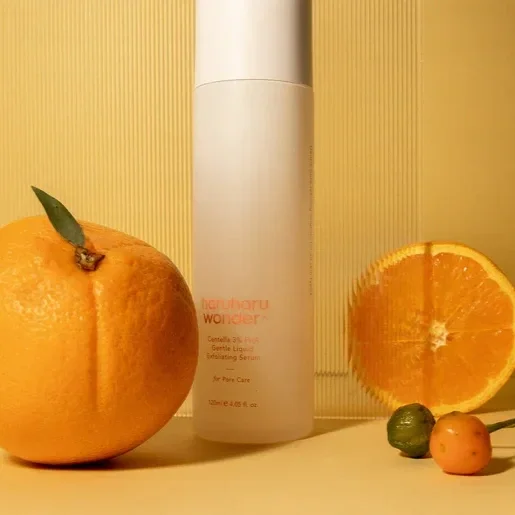
This is a leave-on exfoliating serum formulated with 3% PHA (gluconolactone) and multiple soothing and hydrating components, designed for low-irritation surface exfoliation.
Why it works well for dry skin:
Uses gluconolactone (PHA), which exfoliates slowly and gently
Includes sodium hyaluronate and glycols, helping limit moisture loss during exfoliation
Formulated with centella extract and centella-derived components (asiaticoside, madecassoside, asiatic acid) to support skin comfort
Incorporates fermented ingredients, aligning with a mild, skin-supportive exfoliation approach
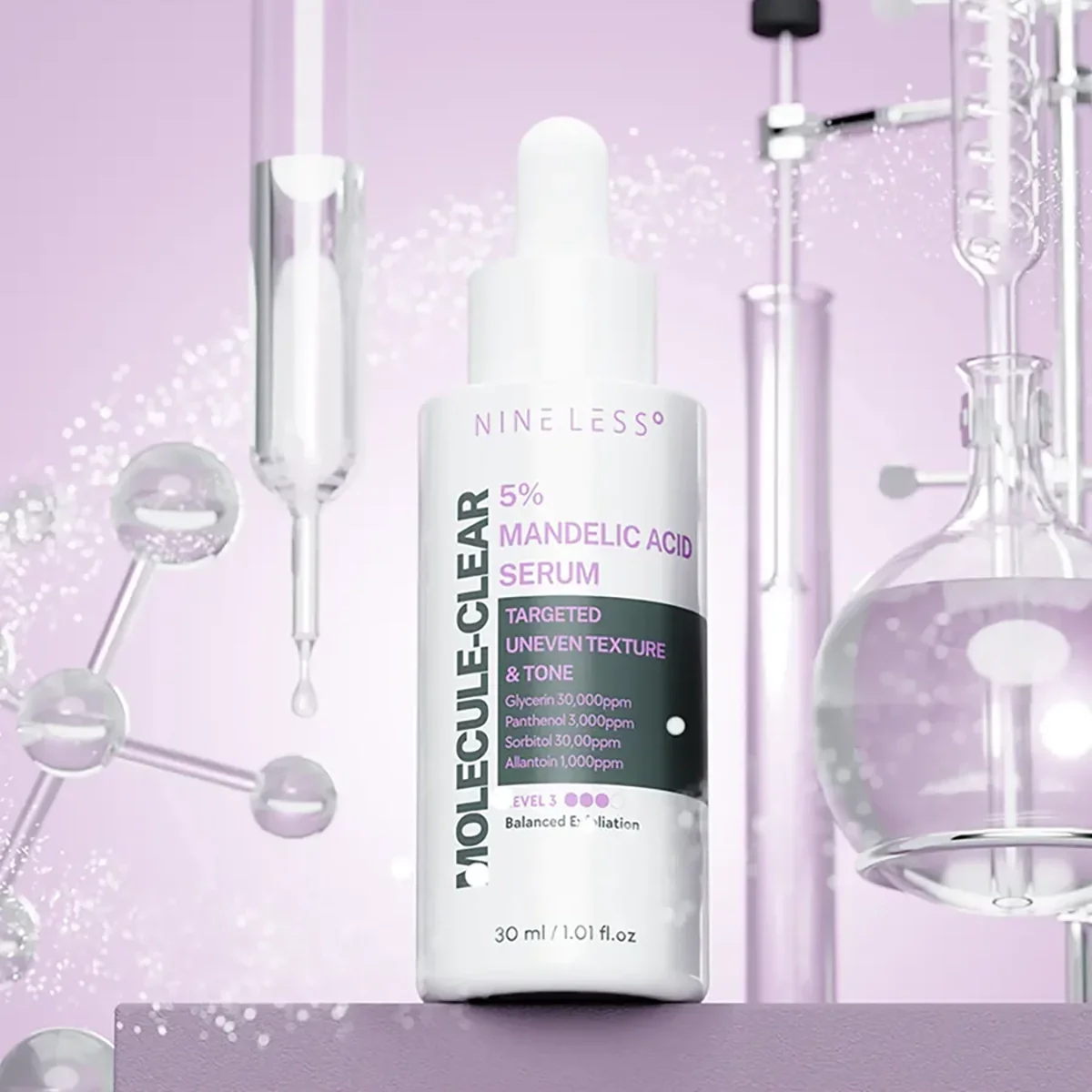
NINELESS Molecule-Clear 5% Mandelic Acid Serum
Where to buy
This is a leave-on exfoliating serum formulated with 5% mandelic acid, an AHA with a larger molecular size that exfoliates more slowly and gently than stronger acids.
Why it works well for dry skin:
Uses mandelic acid, which penetrates the skin more gradually, reducing irritation risk
Formulated with humectants to support hydration during exfoliation
Contains panthenol and allantoin, helping improve skin comfort and tolerance
Simple, focused formula without unnecessary fragrance or essential oils
Note:
A suitable option if you want an AHA exfoliant but find stronger acids too harsh.
3. Hydrating Toners & Essences: Why They Matter for Dry Skin
This step gives your skin its first real sip of hydration and helps prepare dry skin for the rest of the routine.
How to Choose a Hydrating Toner for Dry Skin
For dry skin, the texture and ingredient focus matter more than whether a product is simply labeled “hydrating.”
Look for:
Slightly thicker or milky textures, which provide more immediate comfort than watery toners
Moisture-supporting ingredients, such as glycerin or hyaluronic acid
Emollient components, like squalane, which help soften the skin without feeling greasy
Calming ingredients, especially if dryness comes with sensitivity
Milky toners work especially well for dry skin because they combine hydration with a soft, cushioning feel, making the skin more receptive to what follows.
Why Essences Work So Well for Dry Skin
An essence sits between a toner and a serum in both texture and function. For dry skin, this makes it a very useful step rather than an optional one.
Good options for dry skin include:
Barrier-supporting essences, often with fermented ingredients
Soothing-focused essences, especially for skin that feels reactive or easily stressed
Essences add an extra layer of hydration and gentle nourishment without heaviness. This gradual layering helps dry skin stay comfortable and reduces the need to rely on very rich products later on.
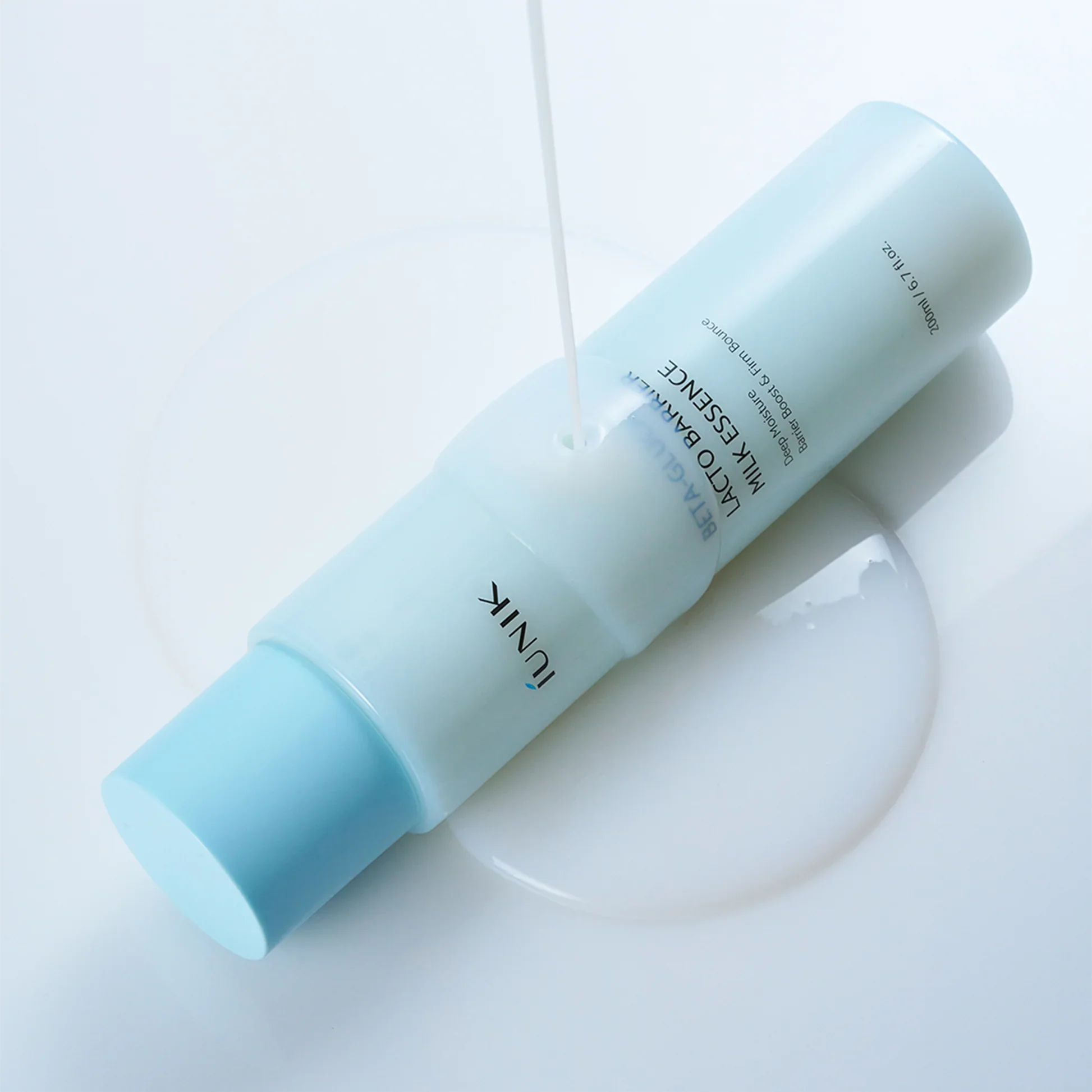
iUNIK Beta-Glucan Lacto Barrier Milk Essence
Where to buy
This is a milky toner–essence hybrid designed to deliver hydration, comfort, and barrier support in a lightweight but nourishing format. The formula focuses on humectants, lipids, and calming components rather than strong actives.
Why it works well for dry skin:
Built around beta-glucan and glycerin, providing long-lasting hydration
Contains lactobacillus ferment lysate, supporting skin comfort and barrier resilience
Includes meadowfoam seed oil and olive-derived emulsifiers, adding light nourishment without heaviness
Formulated with panthenol and centella extract, helping calm dryness-related sensitivity
Contains multiple peptides (including signal and copper peptides), offering gentle skin-supportive benefits without irritation
Note:
Because this functions as both a toner and an essence, it works well in simpler routines or as the main hydrating layer when you don’t want to stack many products.
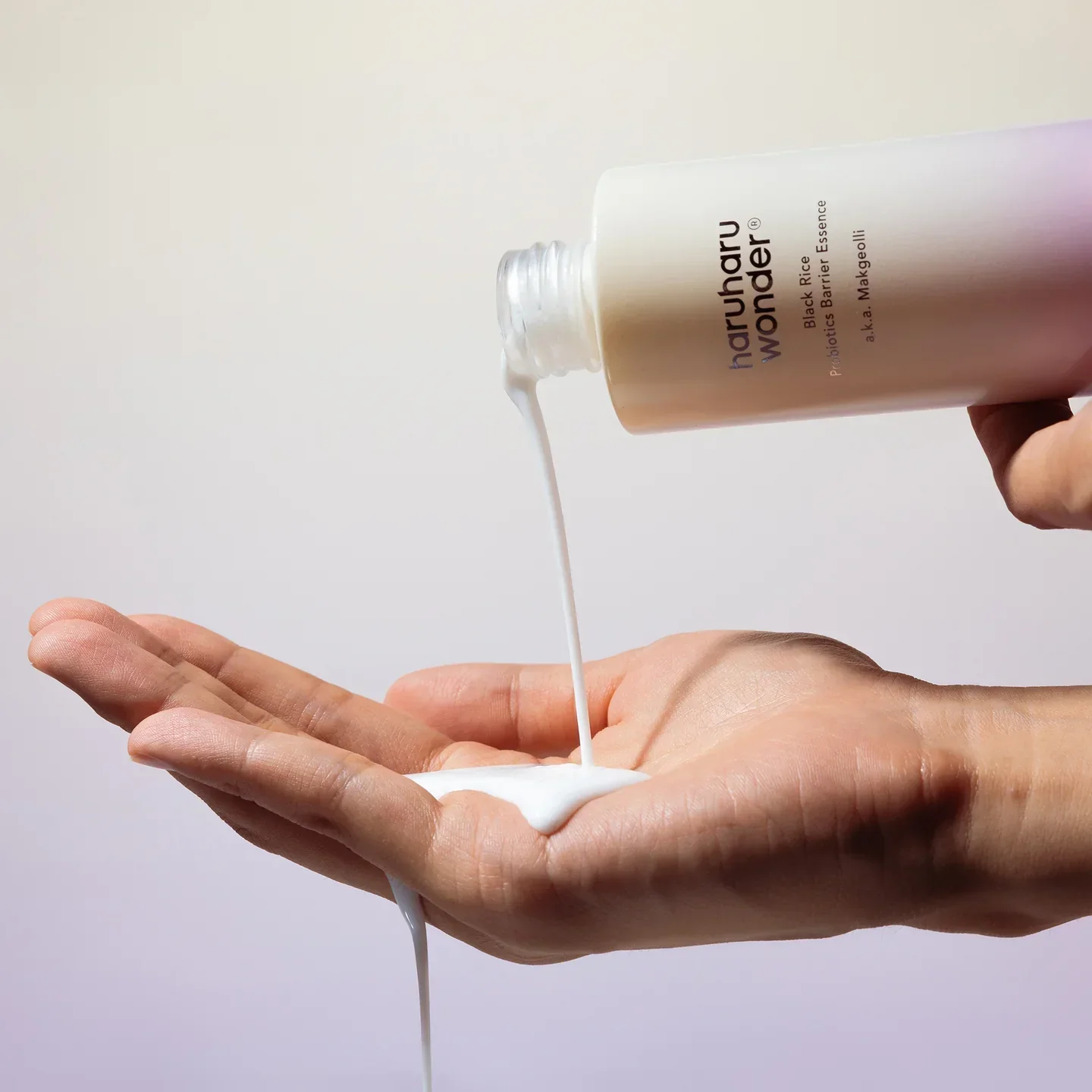
Haruharu Wonder Black Rice Probiotics Barrier Essence
Where to buy
This is a creamy essence formulated with a combination of lipids, ferments, and barrier-supportive ingredients, designed to deliver both hydration and nourishment. The texture sits closer to a light lotion than a watery essence.
Why it works well for dry or very dry skin:
Combines emollient oils and esters (sunflower oil, meadowfoam oil, shea butter) to support comfort in flaky or lipid-depleted skin
Contains multiple ferments, contributing to a skin-friendly, low-irritation approach
Formulated with ceramides, cholesterol, phytosphingosine, and fatty acids, supporting the skin’s lipid balance
Includes panthenol and glycerin, helping maintain hydration alongside richer components
Creamy texture makes it especially suitable for very dry or compromised skin that needs more than a lightweight essence
Note:
Because of its richness, this essence works well for very dry skin or during periods of increased dryness.
4. Serums for Hydration & Barrier Support
Serums are often where dry skin starts to feel uncomfortable — not because active ingredients are a problem, but because very strong or high-concentration formulas can be difficult for dry skin to tolerate.
For dry skin, the best approach is usually a gentle, multifunctional serum that focuses on comfort and support rather than intensity. These types of serums work gradually and are easier for dry skin to live with on a daily basis.
If you want to incorporate active ingredients, choosing gentler alternatives makes a noticeable difference. For example:
Instead of high-strength retinol, look for bakuchiol or retinyl palmitate
Instead of pure ascorbic acid, opt for vitamin C derivatives such as sodium ascorbyl phosphate or ascorbyl glucoside
Peptides are generally skin-friendly and well tolerated at typical cosmetic concentrations
With ingredients like niacinamide, less is often more. Lower concentrations tend to support the skin without increasing dryness or irritation, while very high percentages can feel uncomfortable on dry skin.
Dry skin can absolutely benefit from active ingredients — the key is choosing supportive formulations rather than relying on strength alone.
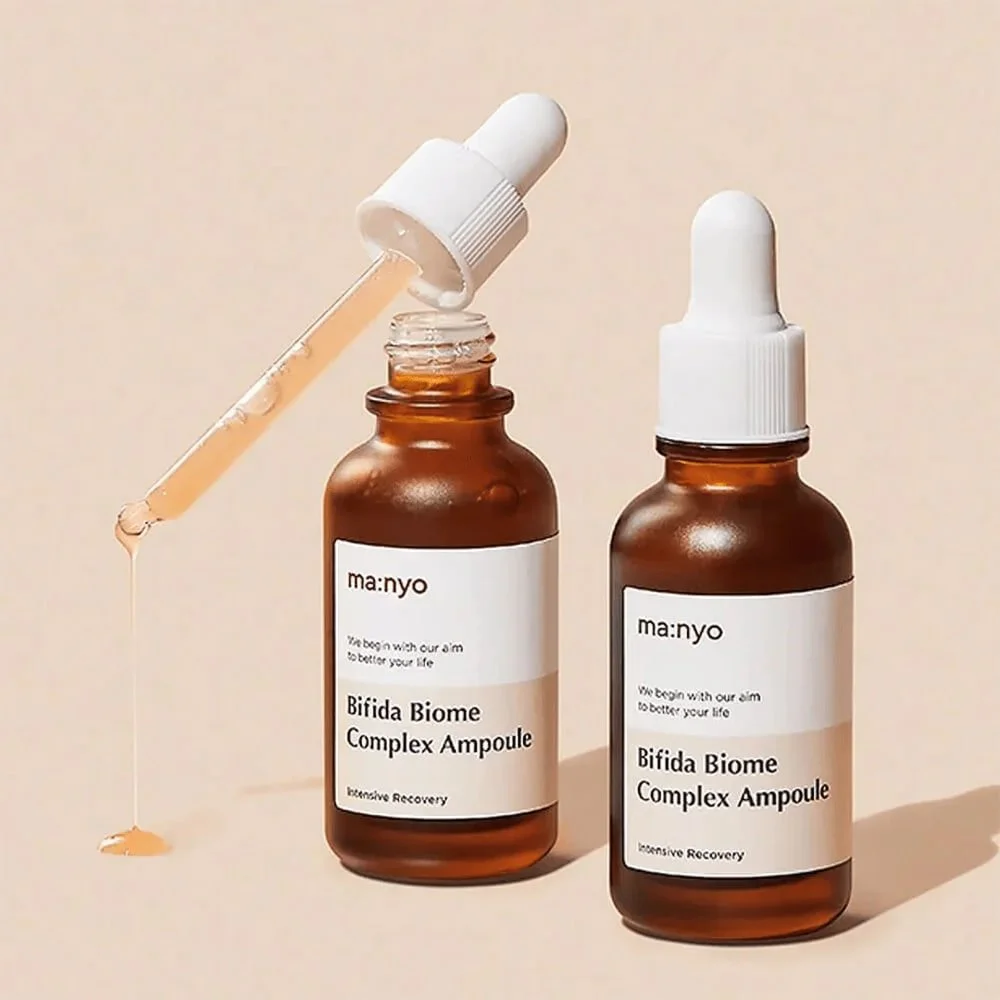
ma:nyo Bifida Biome Complex Ampoule
Where to buy
This serum is primarily focused on strengthening and supporting the skin barrier, using fermented ingredients, humectants, and skin-identical components rather than strong corrective actives.
Why it fits well into a dry skin routine:
Built around bifida and other fermented lysates, commonly used to support barrier stability and skin tolerance
Contains multiple forms of hyaluronic acid, helping maintain hydration at the skin surface
Includes squalane and hydrogenated lecithin, supporting the skin’s lipid structure
Formulated with ceramides-related components, peptides, and centella-derived compounds, which are generally well tolerated by dry or easily stressed skin
Note:
This ampoule is a good option when dry skin feels fragile, easily irritated, or slow to recover.
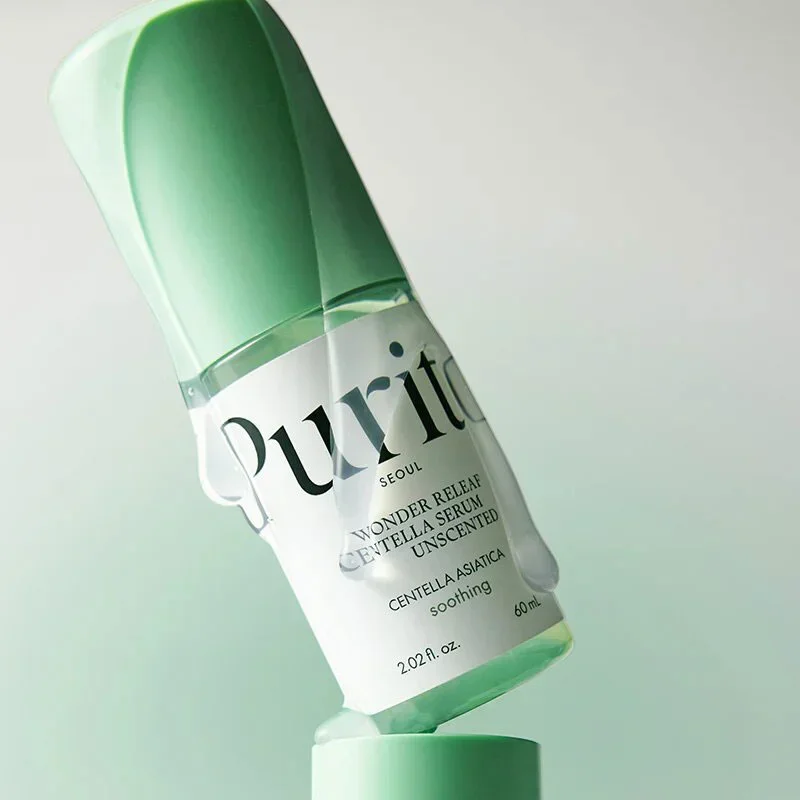
Purito SEOUL Wonder Releaf Centella Serum (Unscented)
Where to buy
This serum is centered on soothing inflammation and supporting barrier recovery, using centella-derived components, humectants, and skin-identical lipids in a fragrance-free formula.
Why it fits well into a dry skin routine:
High focus on centella asiatica and centella actives, supporting calm and recovery
Formulated with glycerin, hyaluronic acid, and panthenol, helping maintain hydration without heaviness
Contains ceramide NP and hydrogenated lecithin, contributing to barrier support
Includes peptides, offering gentle skin-supportive benefits without irritation
Unscented and free from essential oils
Note:
This serum works especially well when dry skin feels reactive, tight, or easily flushed.
5. Moisturizers & Creams: Sealing in Comfort
When it comes to moisturizers, I like to keep the focus on the name itself: a moisturizer should moisturize. That means helping the skin retain moisture and stay comfortable — not acting as another active treatment step. For dry skin, this principle matters even more.
A good moisturizer for dry skin combines hydrating ingredients with nourishing and barrier-supportive components, helping lock in the hydration you’ve already layered earlier in the routine.
There’s usually no need for strong actives in this step — the goal here is comfort and consistency.
Texture choice is flexible and depends on how you build your routine:
If you use hydrating toners, essences, and serums, a lighter but nourishing cream is often enough and feels more comfortable
If you prefer fewer steps or don’t enjoy layering, a richer, thicker cream can help provide both moisture and lasting comfort in one step
You don’t need the heaviest cream by default. What matters most is whether your skin feels comfortable for hours after application, without heaviness or tightness.
Purito SEOUL Luminous Ceramide Moisturizer
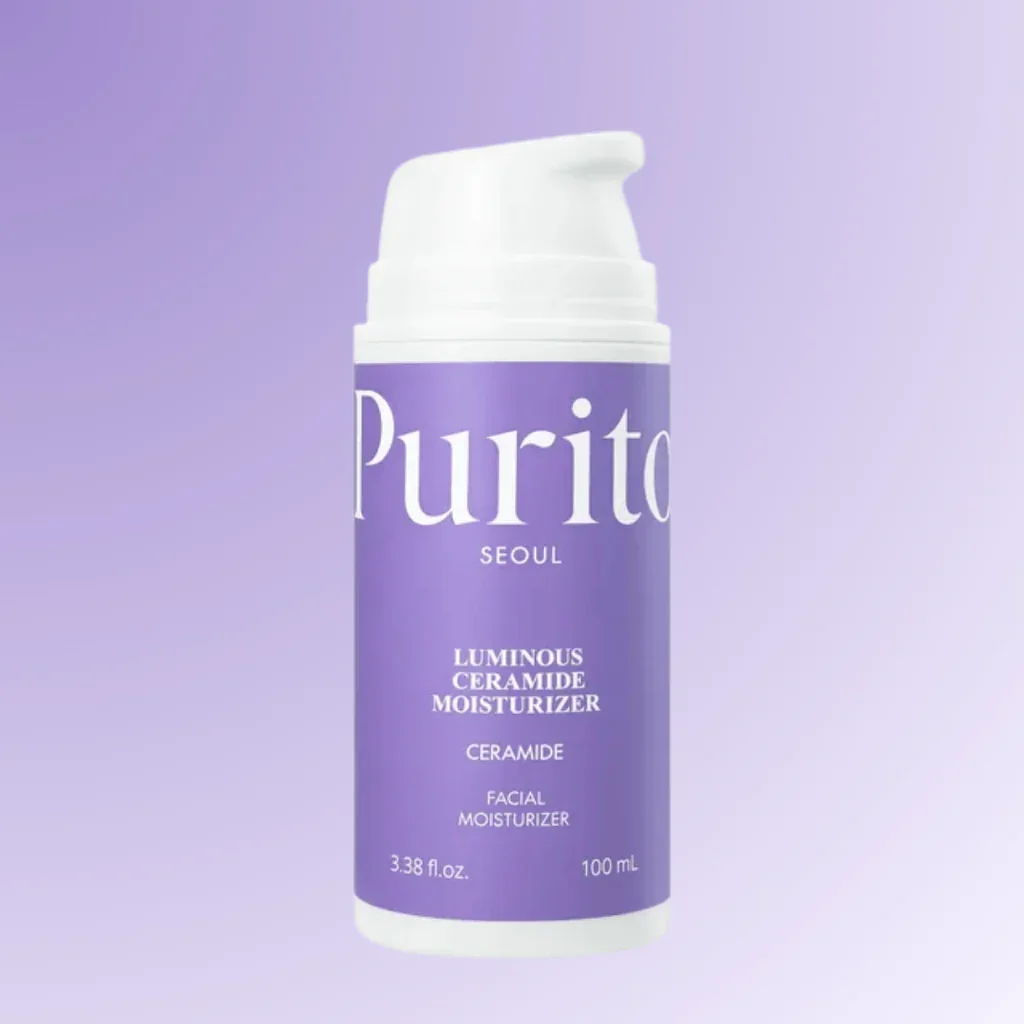
The formula combines humectants, emollients, and skin-identical lipids in a balanced way.
Why it works well for dry skin:
Uses glycerin as primary humectants to support moisture levels
Containsmeadowfoam seed oil, macadamia oil, and shea butter, providing nourishment without excessive heaviness
Formulated with a multi-ceramide complex (NP, NS, AS, AP, EOP) and cholesterol, supporting the skin’s lipid structure
Includes squalane and hydrogenated lecithin, contributing to barrier comfort and softness
Contains panthenol and allantoin, supporting tolerance in dry or easily stressed skin
Note:
This is a good option if you want a true “moisturizer” — one that hydrates and seals in moisture without acting like a treatment product. It works especially well when your routine already includes hydrating layers underneath.
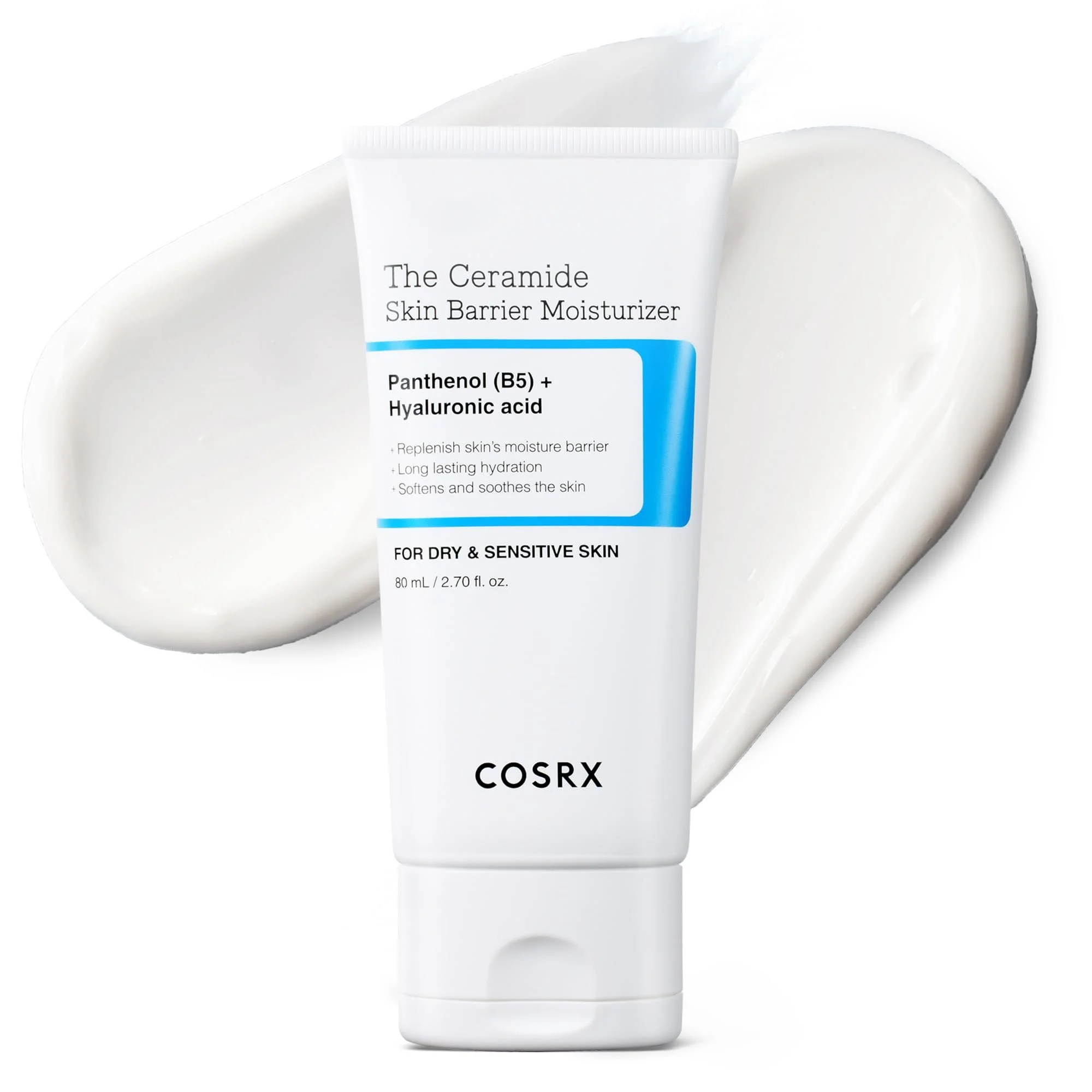
COSRX The Ceramide Skin Barrier Moisturizer
Where to buy
This is a richer moisturizer designed to provide hydration, nourishment, and barrier support in a single step. The formula is more occlusive and lipid-dense than lighter creams, making it suitable for routines with fewer layers.
Why it works well for dry skin:
Uses glycerin, betaine, and multiple forms of hyaluronic acid to support hydration
Contains squalane and multiple emollient esters, contributing to softness and comfort
Formulated with pseudo-ceramides, cholesterol, fatty acids, phytosphingosine, and ceramides, supporting the skin’s lipid structure
Includes panthenol and allantoin, helping improve tolerance and reduce dryness-related discomfort
Note:
This is a good option if you prefer a simpler routine or don’t enjoy layering many products.
6. Sunscreen for Dry Skin
Sunscreen is one of the most difficult steps to get right in any routine. If the sunscreen feels uncomfortable, heavy, or drying, it’s usually not because your skin “hates sunscreen,” but because the formula isn’t the right match.
Mineral vs Chemical Sunscreens
Mineral sunscreens are often a good option for sensitive or reactive skin. However, because they contain mineral particles, they can feel heavier and may even feel drying if the formula isn’t well balanced with hydrating or emollient ingredients.
Chemical sunscreens, especially modern formulations, are safe and widely used. They often feel lighter on the skin and can be easier to wear daily. They’re also a practical option if you have a deeper skin tone and want to avoid white cast.
Both mineral and chemical sunscreens can work well for dry skin — the key is finding a formula your skin tolerates and feels comfortable wearing.
What to Look For in a Dry Skin-Friendly Sunscreen
When choosing a sunscreen, texture matters more than the filter type.
A good option should:
Feel comfortable and non-drying on the skin
Layer well over your moisturizer
Stay pleasant to wear for several hours
Added hydration is a bonus, but sunscreen doesn’t need to act as a treatment step. There’s no need for extra actives here — consistent UV protection already does the most important work.
Finding the right sunscreen often takes some trial and error, but once you find one that feels good on your skin, daily use becomes much easier.
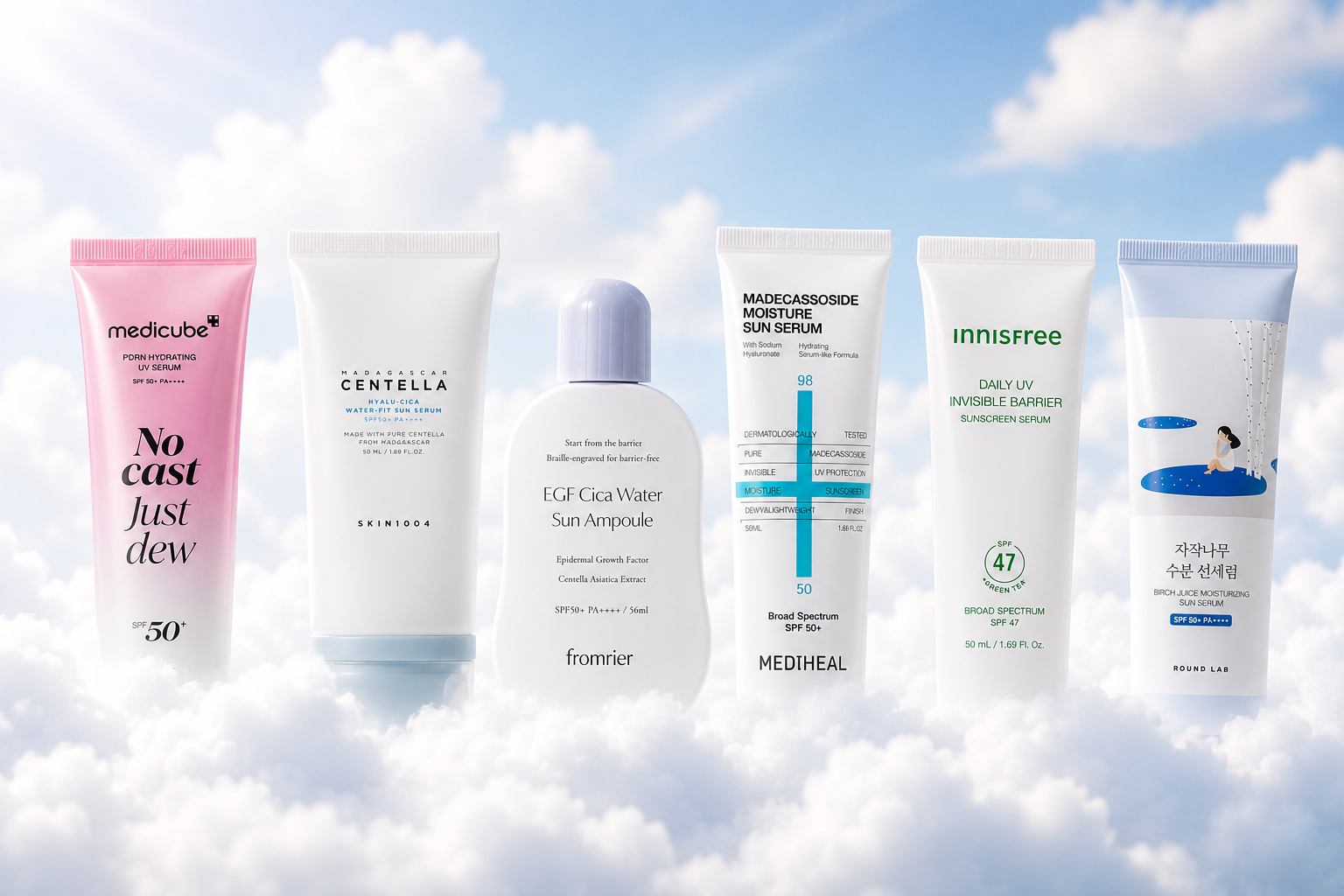

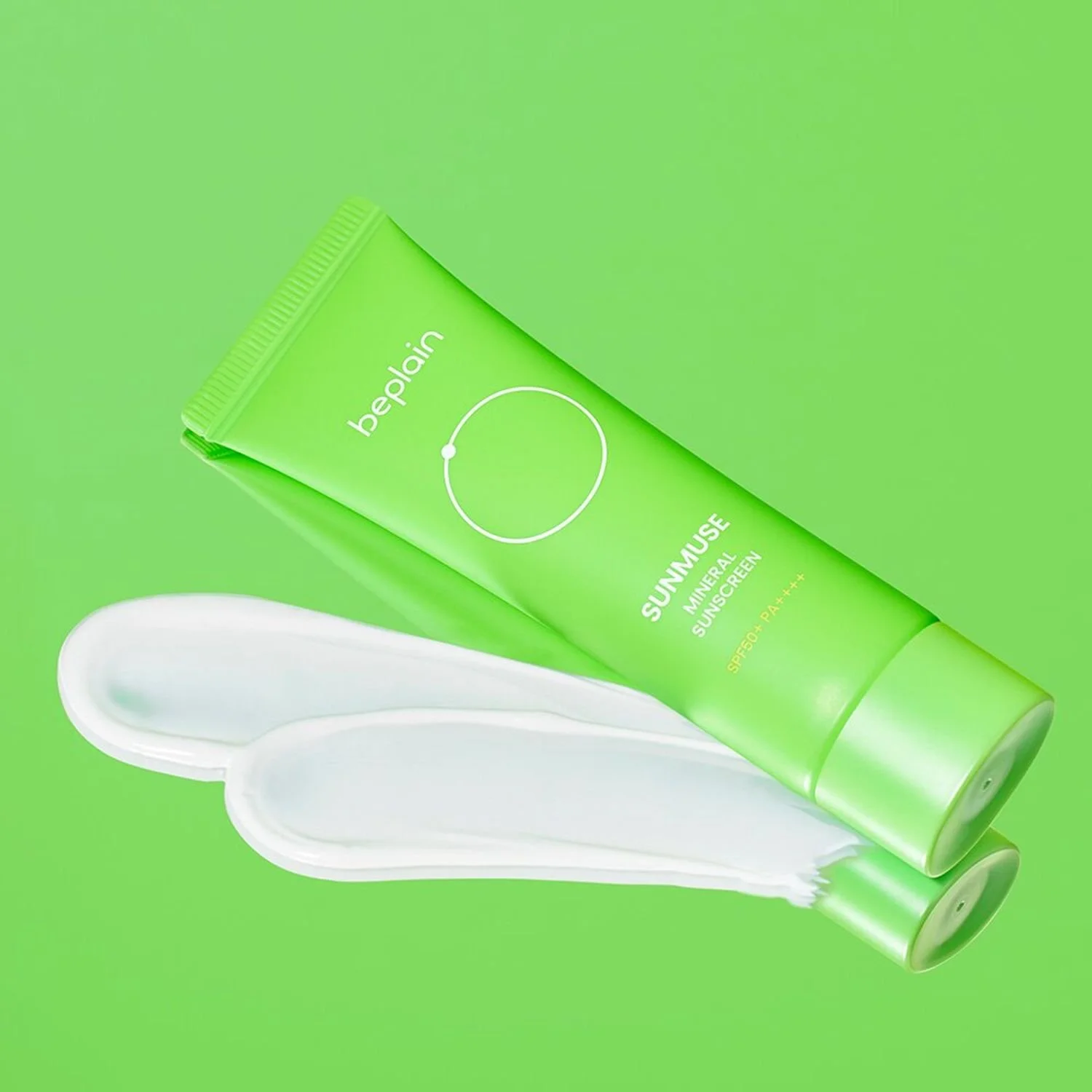
beplain Sun Muse Mineral Sunscreen
Where to buy
This is a zinc oxide–based mineral sunscreen formulated without essential oils or fragrance, focusing on UV protection with added hydration and skin-supportive ingredients.
Why it works well for dry skin:
Uses zinc oxide as the sole UV filter, suitable for sensitive or reactive skin
Contains glycerin, beta-glucan, and hyaluronic acid, supporting hydration within the formula
Includes avocado oil, echium seed oil, and sunflower seed oil unsaponifiables, adding lipid support for dry skin
Free from essential oils and added fragrance, making it a safer choice for dry, sensitive skin
I’m From Rice Sunscreen
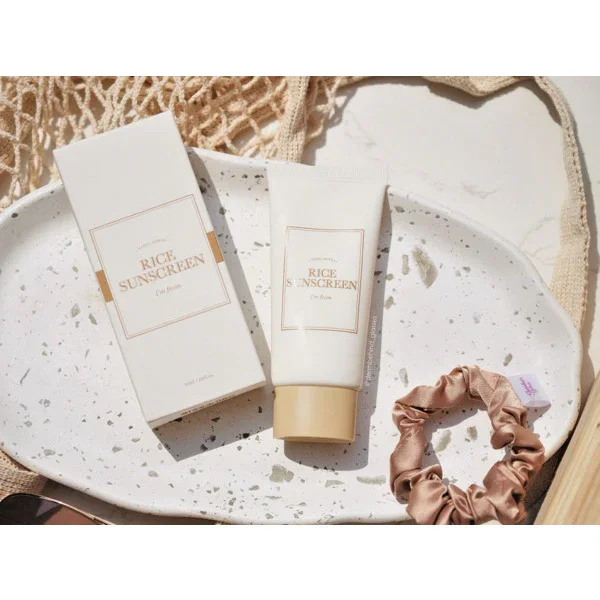
Where to buy
This is a zinc oxide–based mineral sunscreen formulated with silicones and rice extract, offering UV protection in a formula that feels lighter on the skin than many mineral sunscreens.
Why it can work for dry skin:
Uses zinc oxide as the UV filter
Formulated with lightweight silicones and emollient esters, giving it a comfortable, non-heavy skin feel
Contains rice extract and sodium hyaluronate, contributing to basic skin comfort
Compared to beplain, this option feels lighter on the skin
Personal note:
From my experience, this sunscreen does not leave a visible white cast. It does, however, work best when applied over a well-hydrated base, as it doesn’t provide much hydration on its own.
Optional Extras for Dry Skin
These steps aren’t mandatory, but they can be helpful depending on your skin, your routine, and even your lifestyle.
Facial Oils: Helpful for Some, Not Automatic for All
Facial oils can help seal in moisture, especially at night or during colder months. That said, they’re not automatically a good fit for every dry skin routine.
One important thing to watch out for: many facial oils contain essential oils. Even if a product is marketed for dry skin, essential oils can increase irritation and sensitivity rather than calm the skin. For this reason, always double-check the ingredient list before using a facial oil.
If you choose to use one, look for simple, essential-oil-free formulas and use them as a final step to seal in moisture — not as a replacement for hydration.
Derma Factory Jojoba 100% Pure Oil
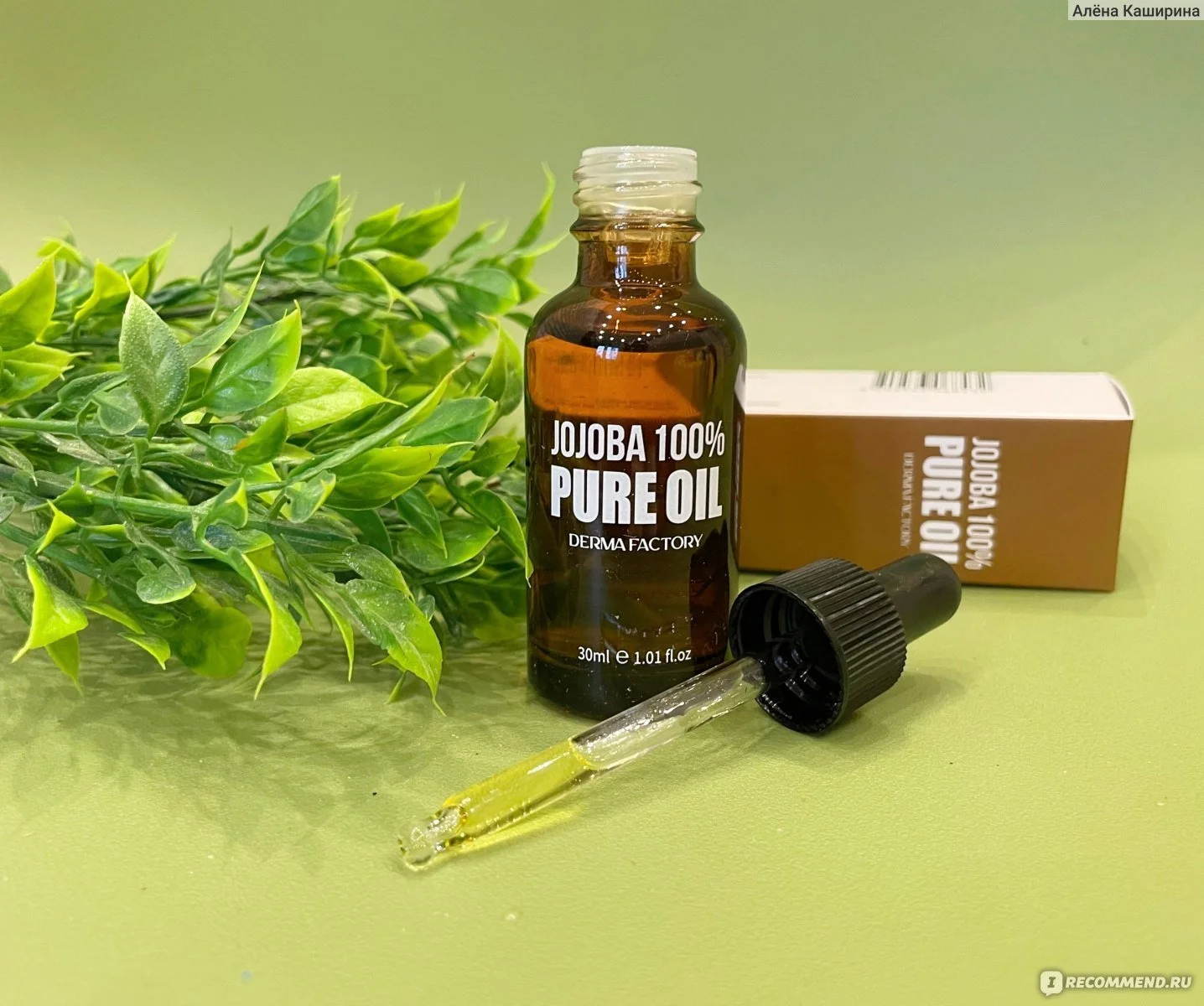
Where to buy
This is a single-ingredient facial oil made of 100% jojoba oil, without fragrance, essential oils, or added fillers. Jojoba oil is technically a wax ester, closely resembling components of the skin’s own surface lipids.
Why it can work well for dry skin:
Jojoba oil is structurally similar to skin-produced lipids, making it generally well tolerated
Helps reduce moisture loss when used as a sealing step
Lightweight compared to many plant oils, so it’s less likely to feel heavy or greasy
Note:
Best used on top of a moisturizer or mixed into a cream, rather than applied directly to dry skin.
Sleeping Masks & Sheet Masks
Masks can be a nice support step when dry skin feels particularly uncomfortable.
Overnight sleeping masks can help maintain moisture while you sleep, especially if your skin tends to feel tight by morning
Sheet masks are often the more practical option for dry skin, as they deliver hydration efficiently without disrupting the routine
Sheet masks formulated with ceramides or other barrier-supportive ingredients are especially useful for dry skin, providing both comfort and moisture without heaviness.
These steps are optional — helpful when needed, but not something you have to use daily.
A Small but Important Detail: Your Pillowcase
This is something many people don’t think about — and honestly, I get it. I also love the feel of a freshly washed, soft cotton pillowcase. But for dry skin, cotton can quietly work against you.
Cotton absorbs moisture and oil from the skin overnight, which can contribute to dryness or tightness by morning — especially if you sleep on your side or stomach and your face stays in contact with the pillow.
A 100% silk pillowcase can be a better option for dry skin:
It absorbs far less water and oil from the skin
It creates less friction against the face
It has natural antibacterial properties
It’s especially helpful if your face presses into the pillow while you sleep
It’s a small lifestyle change, but for dry skin, it can support overnight comfort in a way skincare alone sometimes can’t.
Promeed Mulberry Silk Pillowcase
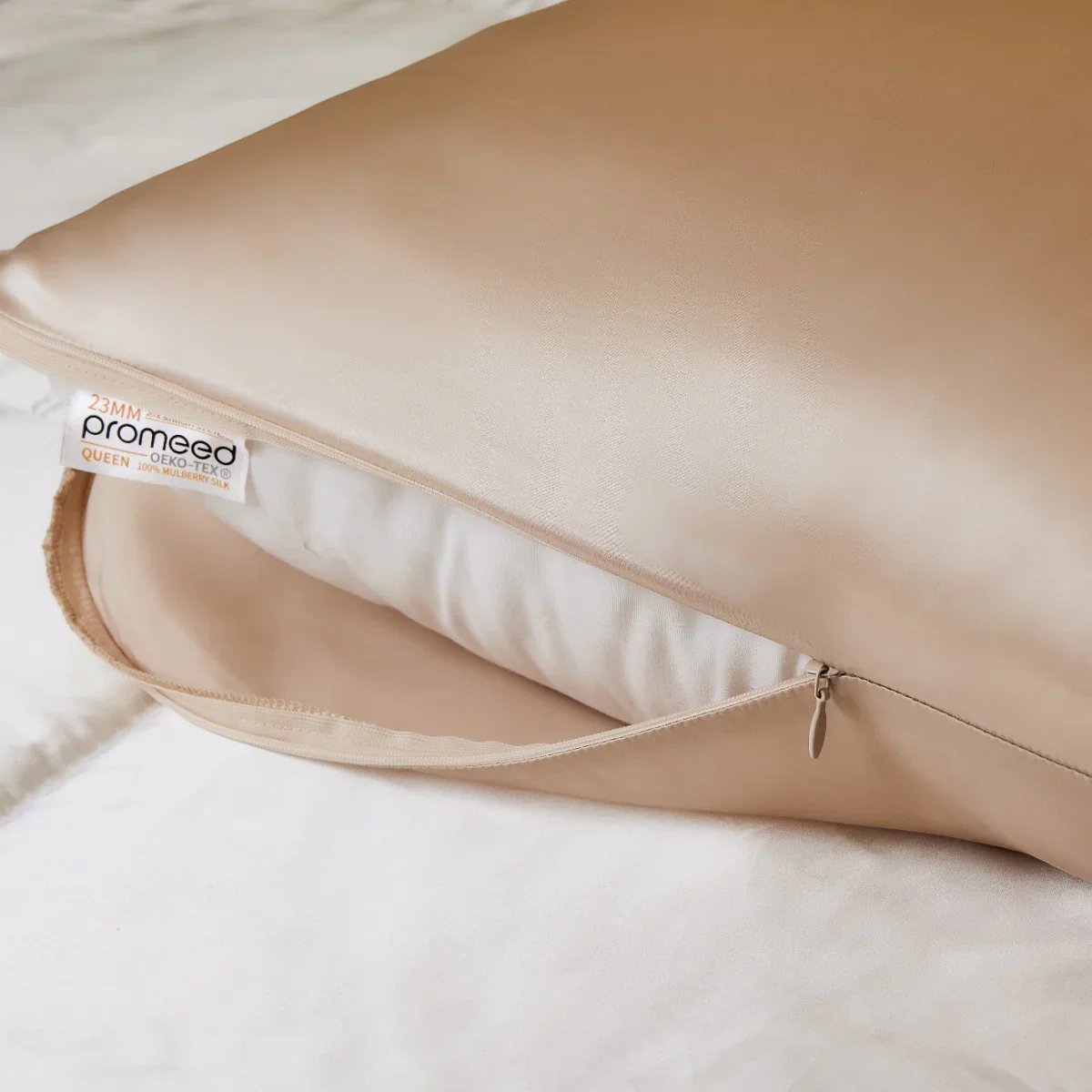
If you’re looking for a silk pillowcase, Promeed offers 100% mulberry silk options in consistent quality. Their pillowcases are made from 6A-grade mulberry silk, which is the standard typically used for skin-contact silk products.
Why it’s a reliable option:
Made from 100% mulberry silk, without blended fibers
Available in different sizes and thicknesses, making it easier to match your pillow and personal preference
Comes in multiple colors and formats, including options suited for different pillow shapes
Consistent construction quality, suitable for long-term use
This type of silk pillowcase can be a useful addition for dry or sensitive skin, especially if your face stays in contact with the pillow during sleep. As with skincare, comfort and consistency matter more than trend-driven features.
Final Thoughts: Taking Care of Dry Skin, the Sustainable Way
Dry skin usually isn’t asking for more products or stronger treatments. In most cases, it needs routines that respect how the skin functions — maintaining hydration, avoiding unnecessary irritation, and keeping the skin comfortable day to day.
When cleansing is gentle, hydration is layered thoughtfully, and products are chosen with tolerance in mind, dry skin tends to settle and behave more predictably over time.
If you want to explore this further, you’ll find more ingredient-focused articles and practical Korean skincare guides on the blog. I also share downloadable skincare eBooks, and you can book a personalized skincare consultation if you’d like a routine built specifically around your skin, habits, and concerns.
Recommended for You




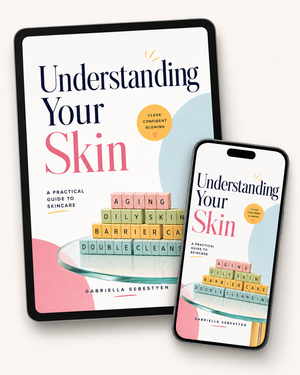
Understanding Your Skin
A Practical Guide to Skincare
I wrote Understanding Your Skin to help you build an effective skincare routine with confidence. This illustrated guide explains skin types, ingredients, and routines in a practical, evidence-based way that's easy to understand and apply.
- Written by a physician
- 120-page illustrated guide
- Evidence-based skincare guidance
- Sample routines & product recommendations

Face oils are a simple way to give your skin a little extra softness and comfort when it needs it. Here’s how to choose the right one, plus six thoughtful picks for different skin needs.