Korean Skincare for Fungal Acne: Safe Ingredients, Simple Routine, and Product Guide
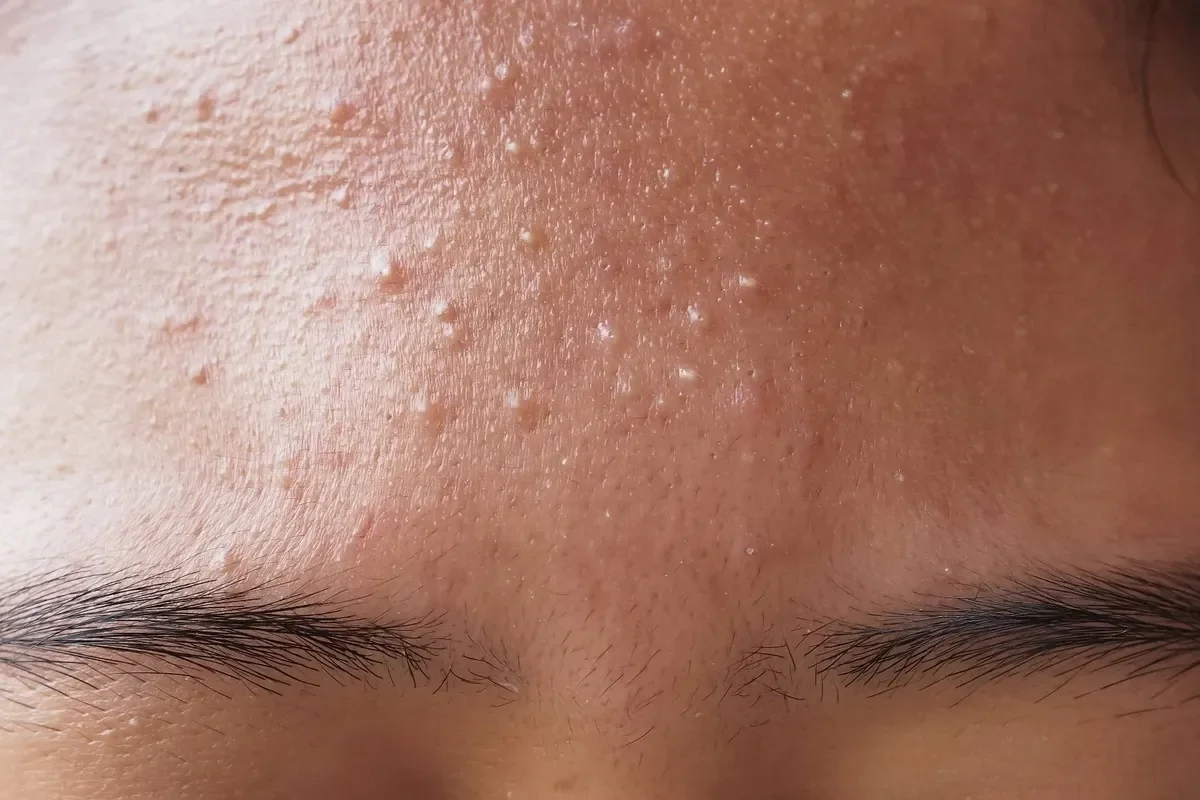
“Fungal acne” is not actually acne. It usually refers to Malassezia folliculitis, a condition caused by an overgrowth of Malassezia yeast around the hair follicles that can look surprisingly similar to ordinary breakouts. That difference matters because products that work well for acne-prone skin are not automatically the best choice when Malassezia is involved.
In this guide, I’ll explain what fungal acne really is, which skincare ingredients deserve more caution, how to keep your routine simple, and which Korean skincare products make the most sense if you are prone to these yeast-related breakouts. I’ll also separate what we actually know from the science from the much broader “fungal-acne-safe” rules you often see online.
Key Takeaways
✓ Fungal acne does not respond to skincare the same way as traditional acne.
✓ Many ingredients that work well for acne-prone skin can worsen fungal acne.
✓ A simpler routine is often more effective than adding more treatment products.
✓ Reducing triggers is usually more important than chasing stronger actives.
✓ Consistent ingredient selection can make a significant difference over time.
In This Article
Some links are affiliate links. If you choose to purchase through them, it helps support my work at no extra cost to you.
What Is Fungal Acne (Malassezia Folliculitis)?
“Fungal acne” is the common name for Malassezia folliculitis, an inflammatory condition involving an overgrowth of Malassezia yeast inside the hair follicles. Malassezia normally lives on healthy skin, but under certain conditions it can multiply within the follicles and cause small, often itchy papules and pustules that can easily be mistaken for acne. A 2026 review of Malassezia folliculitis highlights hot and humid weather, increased sebum production, follicular occlusion, and immune factors among the conditions that can encourage this shift.
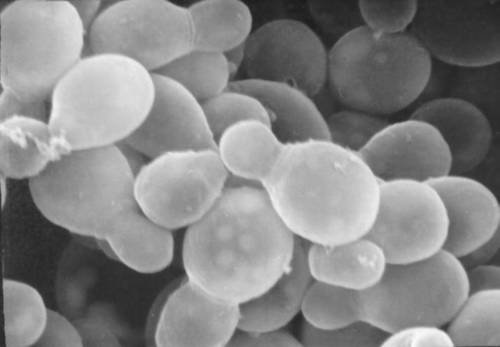
Malassezia is lipid dependent, which means it relies on fats from its environment because most species cannot make certain fatty acids on their own. That helps explain why it prefers oilier areas of the body, such as the face, scalp, chest, and upper back. Research on Malassezia lipid metabolism shows how the yeast breaks down and uses lipids from sebum.
This is also where the popular idea of “feeding fungal acne” comes from. The logic sounds simple: if Malassezia uses lipids, then oily skincare ingredients must make it worse. In reality, it is not quite that straightforward.
Some things clearly can create a more favorable environment for Malassezia. European dermatology guidance on Malassezia folliculitis lists factors such as high sebum production, sweating, hot climates, occlusion, antibiotics, and corticosteroid use. Heavy emollient or very occlusive products may also contribute in some people.
But that does not mean every oil, ester, or fatty ingredient automatically causes a flare. The very detailed “fungal acne safe” ingredient blacklists you often see online are much stricter than the clinical evidence currently supports.
How to Distinguish Fungal Acne from Traditional Acne
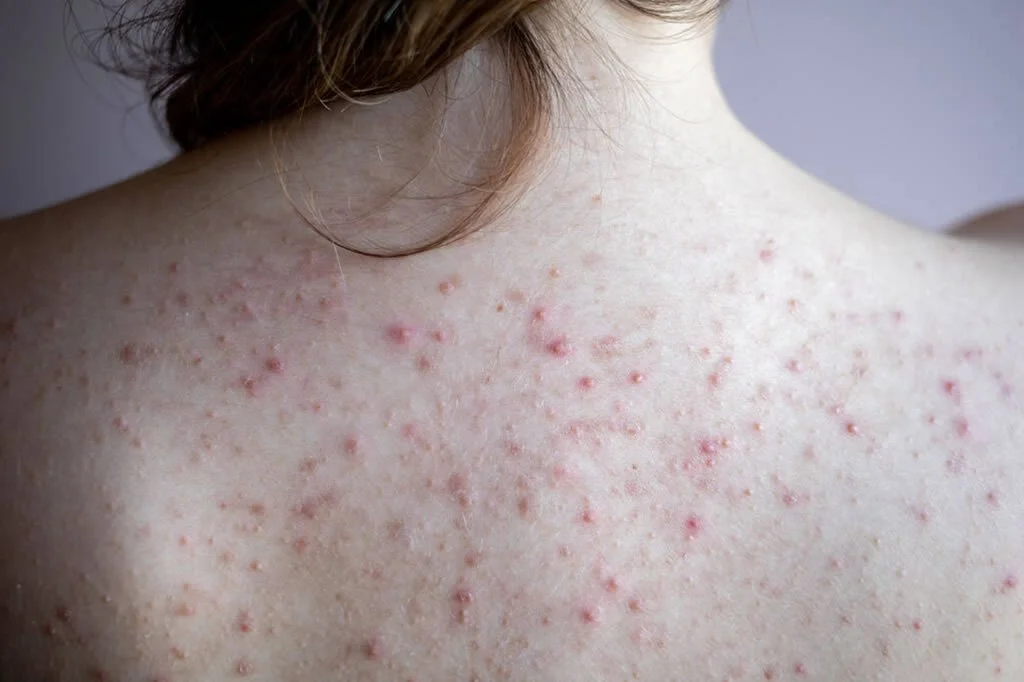
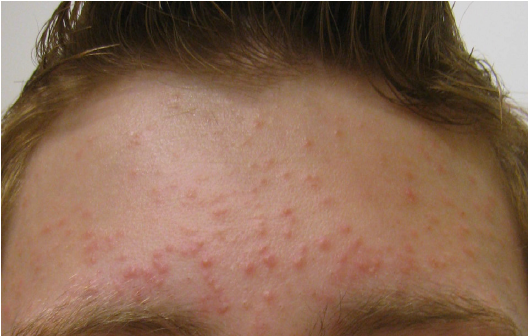
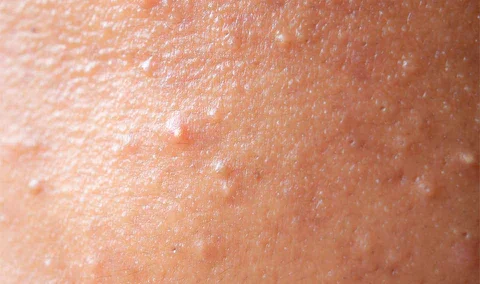
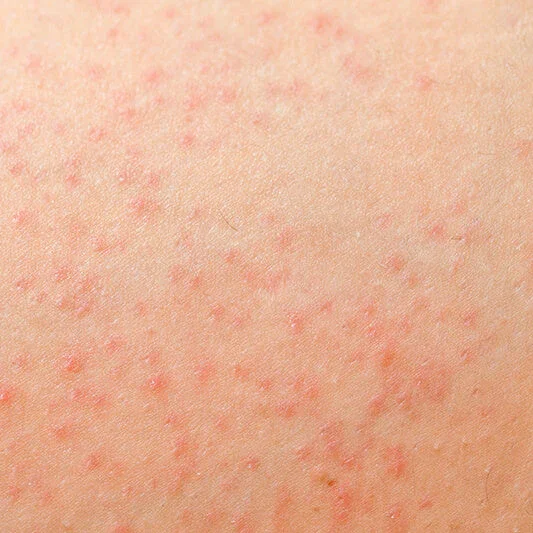
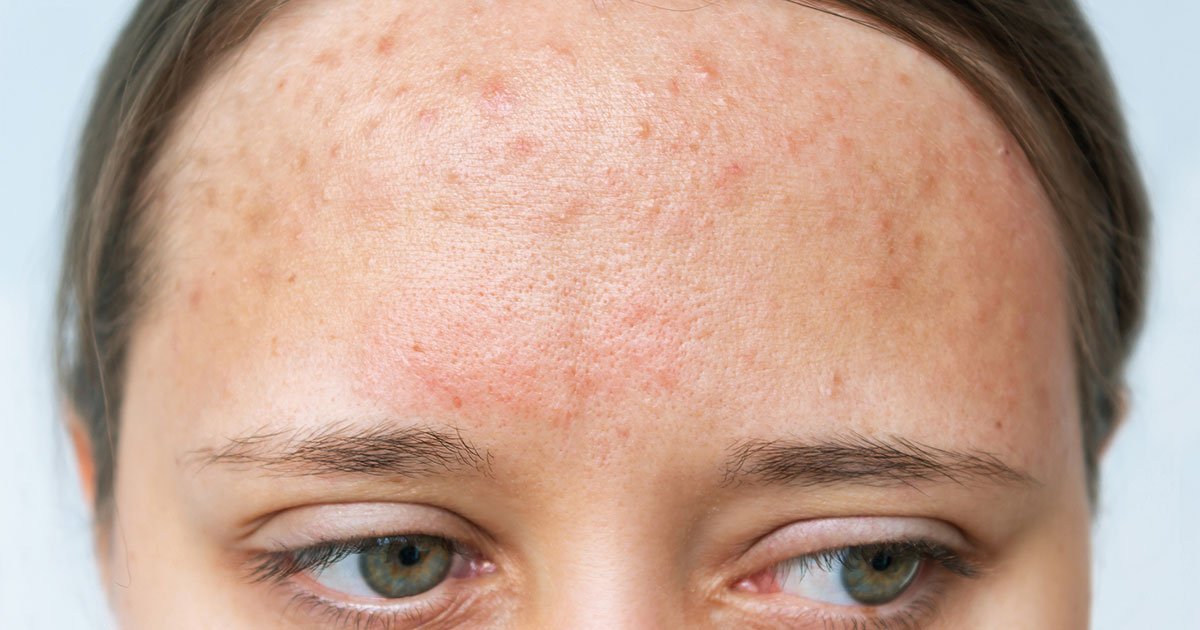
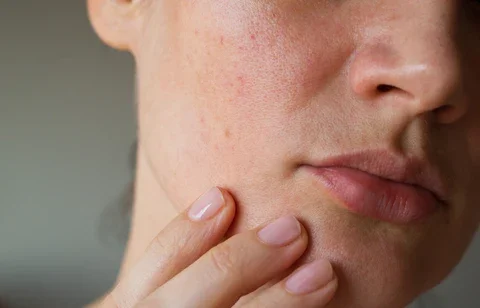
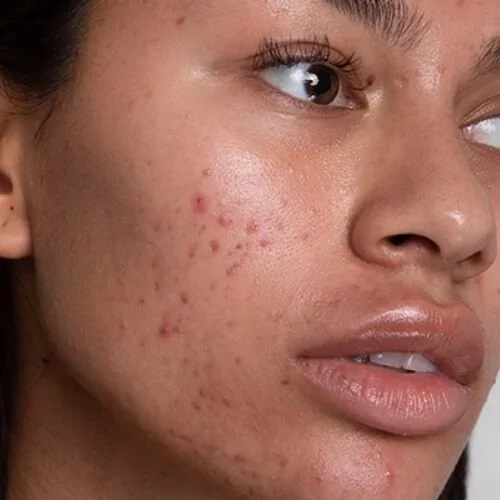
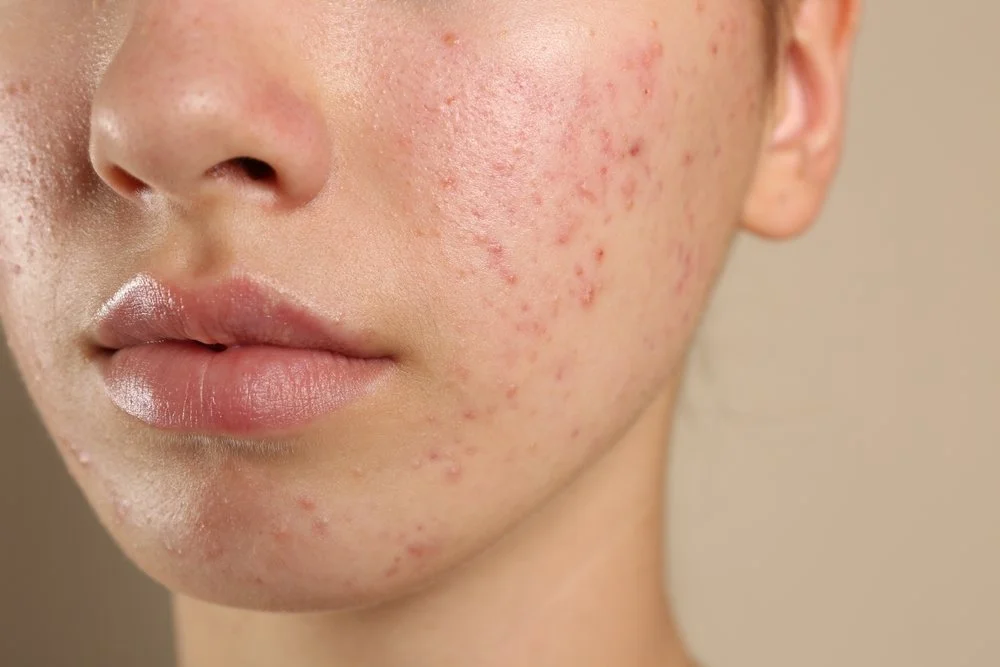
Malassezia folliculitis can look very similar to acne, but a few clues can help tell them apart. The bumps are often more uniform in size, commonly itch, and usually appear without blackheads or whiteheads. Traditional acne is more likely to include a mix of comedones, papules, pustules, and sometimes deeper lesions. A 2025 review comparing Malassezia folliculitis with acne highlights this combination of uniform bumps, itching, and the absence of comedones as some of the most useful clinical clues.
The following images show what Malassezia folliculitis can look like.
You may be dealing with Malassezia folliculitis if you notice:
Small bumps that look very similar to one another, rather than a mixture of blackheads, whiteheads, pustules, and deeper pimples
Itching, which is much more common with Malassezia folliculitis than with ordinary acne
Breakouts on the forehead, hairline, chest, shoulders, or upper back, especially in oily or sweaty areas
No obvious comedones, meaning no typical blackheads or closed whiteheads
Little improvement with standard acne care, particularly after antibiotics. In some cases, antibiotic use can actually encourage Malassezia overgrowth by changing the skin microbiome. A large review found that many patients had already tried unsuccessful acne treatments before the correct diagnosis was made.
One complication is that you can have acne and Malassezia folliculitis at the same time, so the picture is not always perfectly clear. If the bumps are persistent, itchy, very uniform, or keep returning despite acne products, a dermatologist can confirm the diagnosis with tests such as microscopy rather than relying on appearance alone.
If your breakouts are typical acne rather than Malassezia folliculitis, I cover the differences in ingredients and routine structure in my acne guide.




Common Lifestyle and Environmental Triggers
Malassezia folliculitis tends to flare when the skin becomes warmer, oilier, sweatier, or more occluded. That is why the problem often feels worse in summer, after exercise, or in areas covered by tight clothing. Current dermatology guidance lists sweating, hot climates, high sebum production, occlusion, antibiotics, corticosteroids, and immune suppression among the main risk factors.
Skincare-Related Factors
Skincare can matter, but not quite in the simple “this ingredient feeds fungal acne” way you often see online.
Because Malassezia depends on lipids, very rich or highly occlusive products may create a more favorable environment for it, especially if your skin is already oily or you are sweating a lot. European guidance on Malassezia folliculitis specifically mentions occlusion from emollients and sunscreens as a possible risk factor.
In practice, I would pay more attention to:
Very rich or greasy layers, especially if they leave the skin heavily occluded
Using several emollient products at once when your skin does not actually need them
Products that seem to repeatedly coincide with flare-ups on your own skin
A lightweight product is not automatically safe, and an oil-containing product is not automatically a problem. The complete formula, how much you apply, your skin type, and the conditions around you all matter.
Environmental and Internal Factors
Heat and moisture are particularly important. Malassezia folliculitis is more common in hot, humid environments, and sweating can create exactly the kind of warm, moist conditions in which the yeast thrives. Tight clothing can make this worse by trapping sweat and increasing occlusion, especially on the chest and back.
Your own sebum production matters too. Oilier skin naturally provides more lipids, which may help explain why Malassezia folliculitis often appears in sebaceous areas.
Not sure what your skin type is? You can take my skin type quiz for product recommendations matched to your skin.
There are also factors that have very little to do with skincare. Recent antibiotic use is a well-recognized trigger, because changing the skin microbiome can give Malassezia more opportunity to grow. Immune suppression is another established risk factor, and conditions such as diabetes have also been associated with a higher risk of Malassezia folliculitis.
Which Skincare Ingredients Deserve More Caution?
Some fatty acids, oils, esters, fatty alcohols, and polysorbates can support Malassezia growth in laboratory conditions. This is the scientific basis behind many “fungal acne safe” ingredient lists, but there is an important limitation: most of this research looks at individual ingredients in yeast cultures, not finished skincare products applied to people.
A study testing common cosmetic ingredients found that Malassezia could use several natural oils, long-chain fatty acids, fatty acid esters, and primary fatty alcohols with chains longer than 12 carbons as lipid sources. Shorter-chain fatty acids and several other cosmetic ingredients did not support growth in the same way.
So these ingredient groups are reasonable to pay attention to, especially if you already know that rich or lipid-heavy products tend to coincide with your flare-ups. But I would not automatically reject a product because it contains one ingredient from an online blacklist.
Fatty Acids
Malassezia needs outside sources of certain fatty acids to grow, and laboratory research shows that species such as M. furfur can use fatty acids including palmitic and oleic acid. More recent research continues to confirm this lipid-dependent growth.
Common examples you may see in skincare include:
Oleic acid
Palmitic acid
Stearic acid
Linoleic acid
Linolenic acid
This does not mean that every formula containing one of these fatty acids will cause a flare. Concentration, the rest of the formula, how occlusive the product is, and your own skin all matter.
Plant Oils
Plant oils contain mixtures of fatty acids, and some have supported Malassezia growth in laboratory experiments. Natural oils were actually among the stronger lipid sources in one study of cosmetic ingredients.
Examples include:
Argan oil
Rosehip oil
Macadamia oil
Olive oil
I would be more cautious with very oil-rich formulas during an active or recurrent problem, rather than saying that every trace of plant oil must be avoided.
Esters
Esters are extremely common because they can make skincare feel smoother, lighter, and easier to spread. Some fatty acid esters can also be broken down by Malassezia enzymes, releasing fatty acids that the yeast may then use.
Examples often discussed include:
Glyceryl stearate
Isopropyl palmitate
But not every ingredient ending in “-ate” is automatically a problem, and even among fatty acid esters, Malassezia does not use all structures equally well. Chain length and the chemical structure of the ester make a difference.
Polysorbates
Polysorbates, also known as Tweens in laboratory research, are emulsifiers that help oil and water stay mixed.
Malassezia species are actually cultured using some of these compounds because they can provide a lipid source. Research has shown growth with Tween 20, 40, 60, and 80, although how well individual species use them varies.
You may see them on ingredient lists as:
Polysorbate 20
Polysorbate 60
Polysorbate 80
Again, this is laboratory evidence of nutrient use, not proof that a small amount of polysorbate in a finished serum will trigger Malassezia folliculitis.
Fatty Alcohols
Fatty alcohols such as cetyl and cetearyl alcohol are normally gentle, useful skincare ingredients. They help thicken creams, improve texture, and reduce moisture loss.
Some long-chain primary fatty alcohols have supported Malassezia growth in laboratory testing, which is why they often appear on fungal-acne ingredient checkers.
Common examples include:
Cetyl alcohol
Cetearyl alcohol
Stearyl alcohol
I would not automatically avoid a moisturizer because it contains one of these, especially if the product otherwise works well for your skin. The evidence simply is not strong enough to label every fatty alcohol-containing formula unsafe.
What About Fermented Ingredients?
Fermented ingredients are often included on online “fungal acne” avoidance lists, especially Galactomyces Ferment Filtrate. But this recommendation is much less well supported than the concerns around certain lipids.
Galactomyces Ferment Filtrate is the filtered product left after fermentation with Galactomyces microorganisms, rather than simply live yeast added to skincare. I could not find a clinical study testing whether Galactomyces Ferment Filtrate actually worsens Malassezia folliculitis in people.
For that reason, I would not automatically classify all fermented skincare as unsafe. If a particular fermented product repeatedly seems to coincide with flare-ups on your own skin, it makes sense to stop using it, but at the moment we do not have enough evidence for a blanket rule.
If you want to learn more about fermented ingredients and what they actually do in skincare, you can read my fermented skincare guide.
Discover My eBook
Whether you're just starting out or want to deepen your skincare knowledge, this practical guide helps you understand your skin and build a routine with confidence.
See What's Inside →How to Build a Skincare Routine Around Malassezia Folliculitis
A good skincare routine can make Malassezia folliculitis easier to manage, but the goal is not to strip your routine down to nothing or obsess over every ingredient. Keep the skin comfortable, reduce conditions that seem to encourage flare-ups, and avoid adding more products than you actually need.
1. Keep the Routine Simple
When your skin is flaring, this is not the time for a complicated ten-step routine.
A basic routine may be enough:
A gentle cleanser
A lightweight moisturizer if your skin needs one
Sunscreen during the day
Any antifungal medication recommended for you
Using fewer products also makes it much easier to notice if one particular formula repeatedly seems to coincide with a flare.
2. Be Selective Rather Than Following a Perfect “Safe” List
This is where I would be much less strict than many fungal-acne guides online.
We know that Malassezia can use certain lipids, and laboratory research has shown growth with some natural oils, long-chain fatty acids, fatty acid esters, and long-chain fatty alcohols. But those experiments do not prove that every finished skincare product containing one of these ingredients will worsen Malassezia folliculitis on human skin.
So instead of trying to eliminate every flagged ingredient, I would pay more attention to:
Very rich or greasy products that seem to make your skin worse
Heavy layering that leaves the skin occluded
Products that repeatedly coincide with your own flare-ups
Whether your routine becomes more complicated than your skin actually needs
Ingredient checkers such as Sezia, Folliculitis Scout, and similar tools can still be useful for quickly screening a formula, but I would treat them as guides rather than definitive proof that a product is “safe” or “unsafe.” Their rules are largely based on ingredient structure and laboratory Malassezia research, not clinical testing of every finished product.
3. You Still Need Hydration
Avoiding rich formulas does not mean your skin should be left dry. In fact, irritating or over-cleansing the skin can make the whole situation much harder to manage.
There are some ingredients that are less interesting to Malassezia from a biological point of view:
Caprylic/Capric Triglyceride contains shorter C8 and C10 fatty acids. Laboratory research found no Malassezia growth with caprylic/capric triglyceride, and older research even found that medium-chain triglycerides can suppress the growth of some Malassezia species.
Silicones such as dimethicone were not used as a growth source by Malassezia in cosmetic-ingredient testing.
Squalane is chemically different from the fatty acid-rich plant oils we discussed earlier and is generally considered a more practical emollient option, although we do not have clinical trials showing that squalane specifically prevents Malassezia folliculitis.
Humectants such as glycerin, hyaluronic acid, beta-glucan, and panthenol are also easy ways to add hydration without building a very lipid-heavy routine.
The important part is still the whole formula, not whether one ingredient appears on somebody's fungal-acne-safe list.
4. Antifungal Options (When Needed)
In some cases, adjusting skincare is not enough, and targeted treatment is needed.
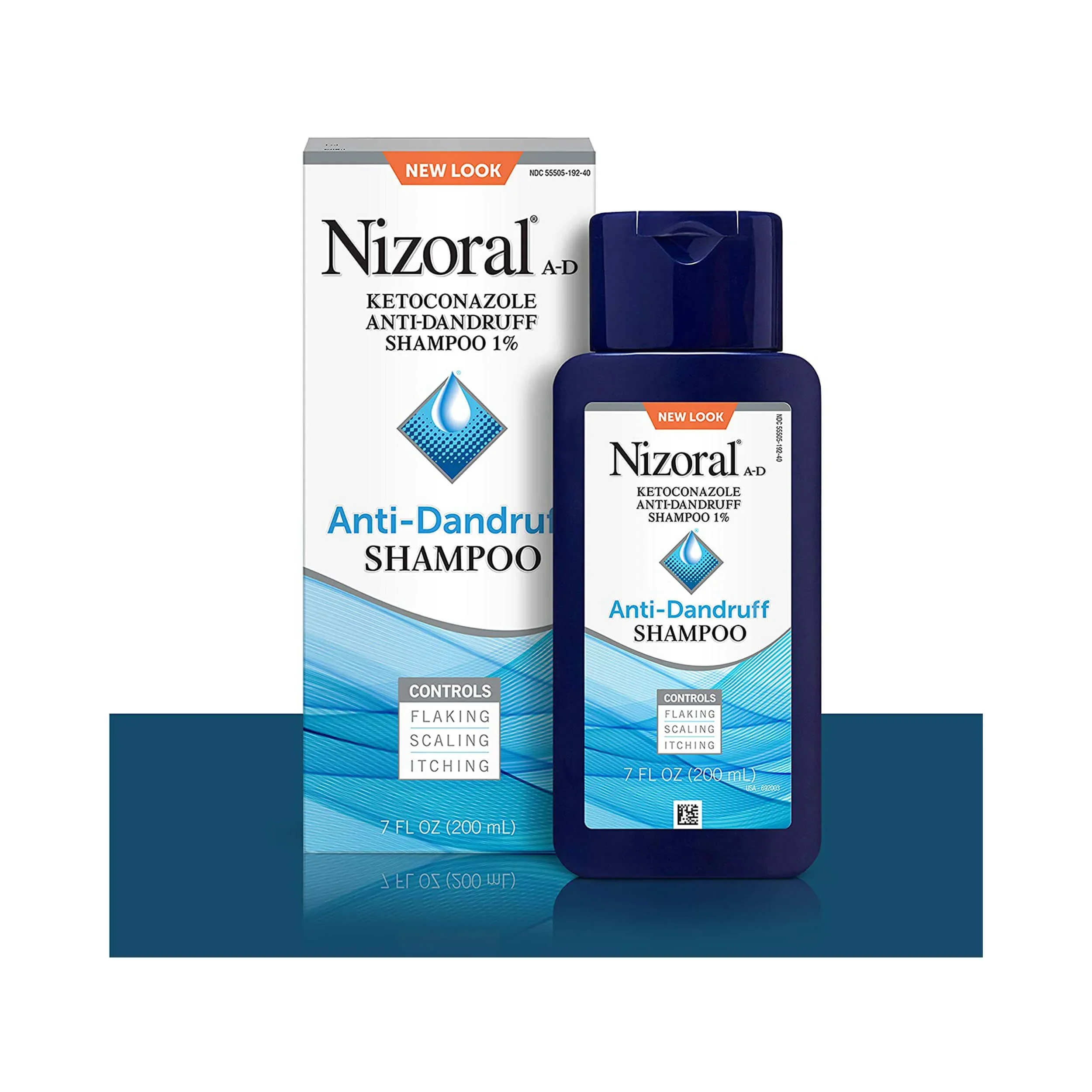
Ketoconazole is one of the most effective antifungal ingredients. It works by disrupting the yeast’s structure and reducing its ability to grow. It is also effective across different types of Malassezia.
A commonly used option is Nizoral A-D Ketoconazole Anti-dandruff Shampoo, which contains 1% ketoconazole. Although it is designed for dandruff, it can also be used on the face.
A practical way to use it:
Apply to clean skin
Leave on for 5–10 minutes as a mask
Rinse thoroughly
At the beginning, it can be used every other day or daily for a short period. After improvement, reduce frequency to once weekly for maintenance. It can be drying, so it is important to keep the rest of the routine gentle.
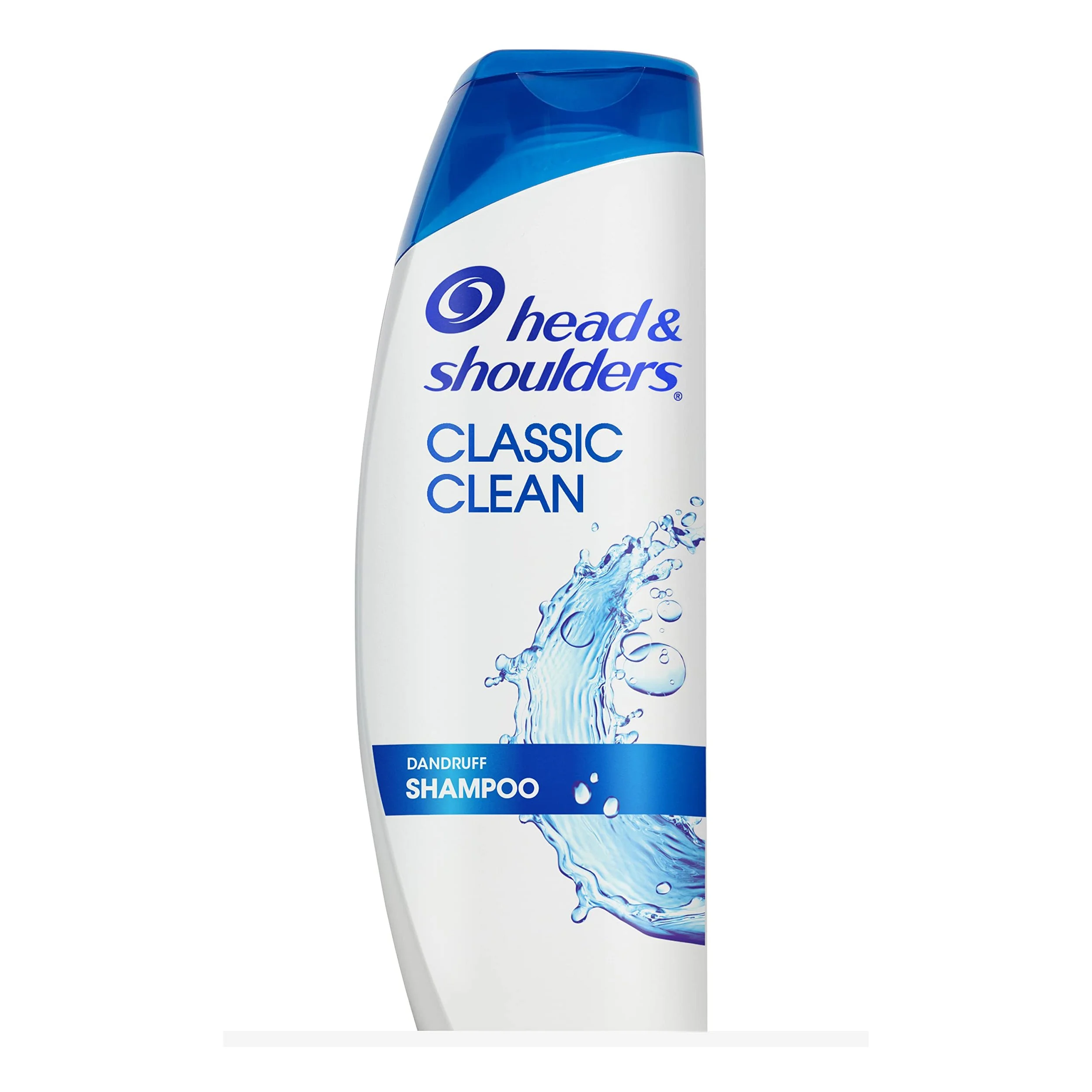
If ketoconazole is not suitable, zinc pyrithione is another option. It is less potent but can still help and is commonly found in anti-dandruff shampoos, such as Head & Shoulders Classic Clean Shampoo.
A Step-by-Step Fungal Acne-Safe Korean Skincare Routine
A fungal acne-friendly routine does not need to be complicated. Focus first on three basics:
Gentle cleansing
Lightweight hydration
Daily sunscreen
Once those are working well, you can add targeted products for concerns such as acne, pigmentation, or dehydration.
If you have confirmed or strongly suspected Malassezia folliculitis, remember that skincare mainly plays a supportive role. Antifungal medication may still be needed to control the yeast overgrowth itself.
Step 1: Cleansing
Cleansing removes sweat, excess sebum, and impurities from the skin, helping to maintain a balanced environment without disrupting the skin barrier.
For a closer look at cleansing and how to do it correctly, you can explore it here.
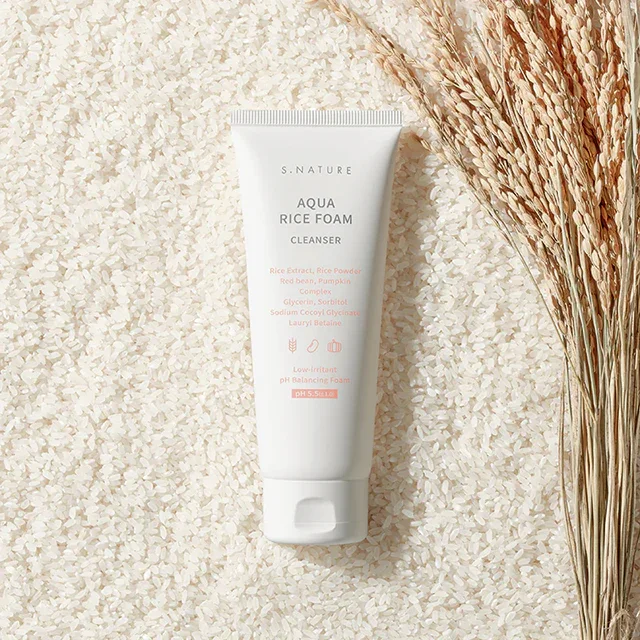
S.NATURE Aqua Rice Foam Cleanser
Mild Low-Irritation Gel-to-Foam Cleanser
Where to buy
This is a gentle, water-based cleanser designed for daily use. It removes sebum, sweat, and impurities without leaving the skin tight, which is important when you are trying to avoid barrier disruption.
Key Features
Mild surfactants (Sodium Cocoyl Glycinate, Sodium Lauroyl Glutamate, Disodium Cocoamphodiacetate) cleanse effectively while maintaining skin barrier integrity
Gel-to-foam texture creates a light lather that spreads easily and rinses off without residue
Glycerin and Sorbitol help reduce dehydration during cleansing
Rice extract and rice powder provide mild brightening support and very light physical refinement, without acting as a harsh scrub
Additional plant extracts (pumpkin, adzuki bean) offer basic antioxidant support, but are not present in high concentrations
Fragrance-free and no essential oils, which reduces the risk of irritation
Best for: Normal to combination skin, including sensitive skin, especially if you need a gentle daily cleanser that does not cause dryness or tightness.
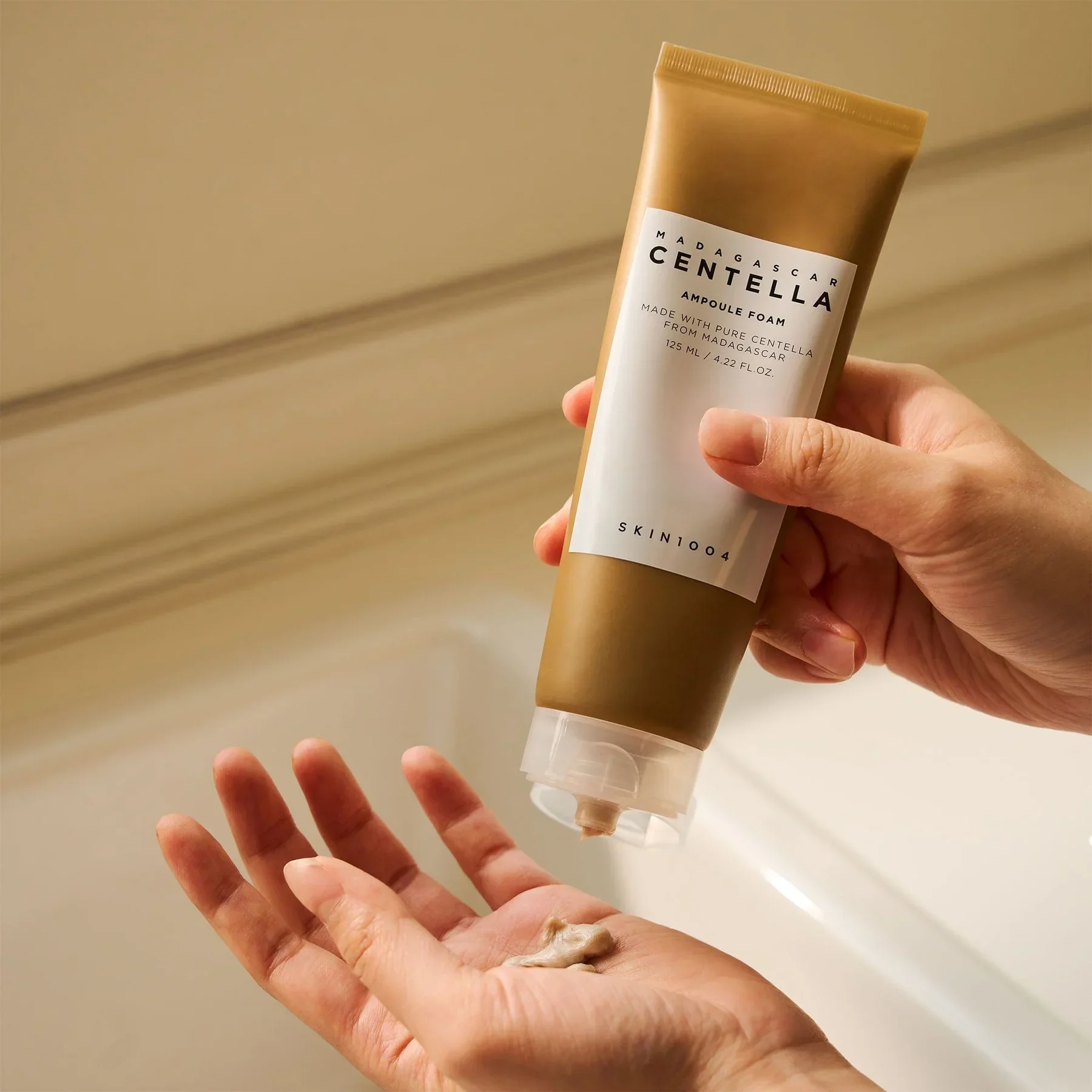
SKIN1004 Madagascar Centella Ampoule Foam
Barrier-Supporting Low-Irritation Foam Cleanser
Where to buy
This is a gentle foam cleanser with a focus on skin comfort and barrier support. It removes daily buildup without strong degreasing, making it suitable if your skin reacts easily to harsher cleansers.
Key Features
Mild surfactant blend (Sodium Cocoyl Isethionate, Sodium Methyl Cocoyl Taurate, Potassium Cocoyl Glycinate, Coco-Betaine) provides effective cleansing with lower irritation potential
Creamy foam texture creates a soft lather that cushions the skin and rinses clean without leaving a tight finish
Centella Asiatica extract is present in high proportion, supporting skin calming and barrier stability
Glycerin and Sodium Hyaluronate help maintain hydration during cleansing
Supporting plant extracts (Coptis root, cacao, Eclipta, Coccinia) add antioxidant support, though not primary actives
No added fragrance or essential oils, reducing unnecessary irritation risk
Best for: Normal, combination, and sensitive skin, especially if you prefer a softer, more cushioning foam that does not leave the skin stripped.
Medicube Zero Pore Capsule Cleansing Foam
Pore-Care Foaming Cleanser with Gentle Exfoliation
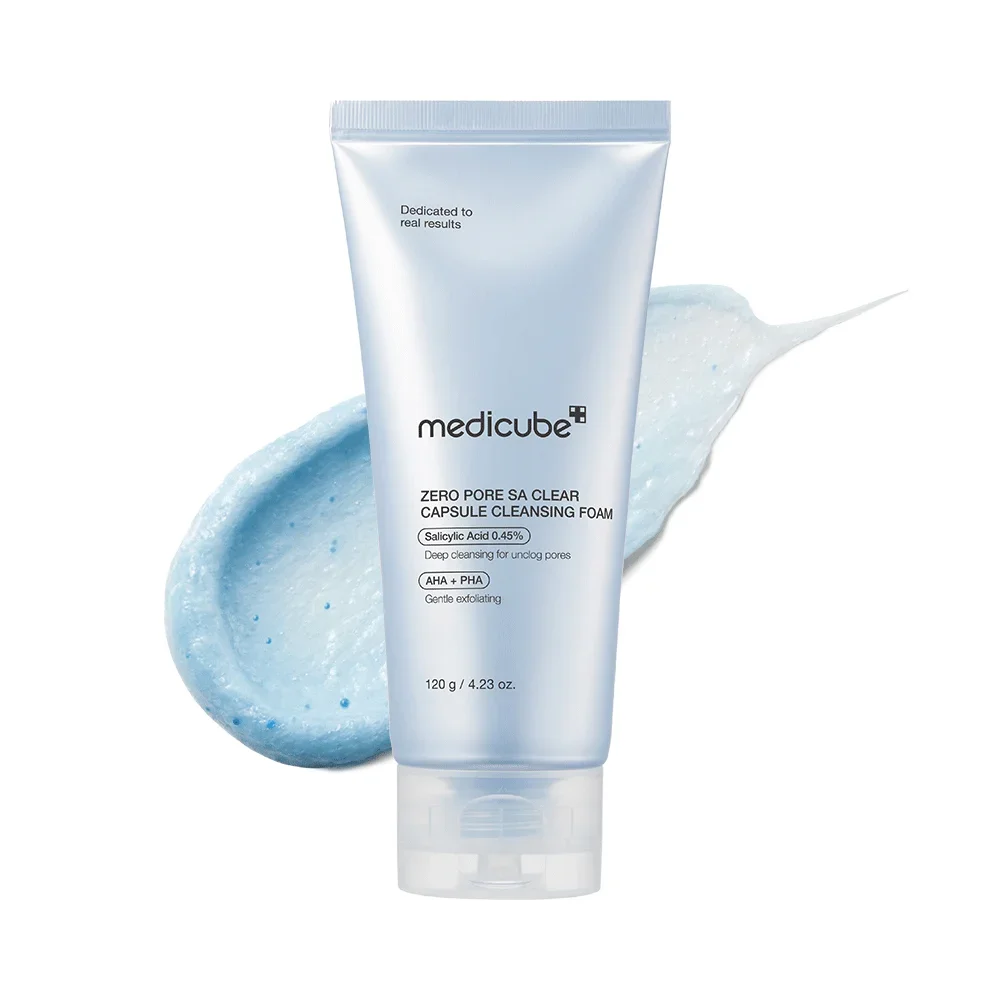
This cleanser is designed for oily and congestion-prone skin, combining a gentle sulfate-free cleansing base with low levels of exfoliating acids to help remove excess sebum while keeping the skin comfortable. Although it is more active than a basic daily cleanser, the formula remains well-balanced thanks to its high glycerin content and mild surfactant system.
Key Features
Gentle sulfate-free surfactants cleanse effectively without leaving the skin feeling overly stripped
Contains 0.45% salicylic acid (BHA), gluconolactone (PHA), and mandelic acid (AHA) to help keep pores clearer and support smoother skin texture
Rich whipped-foam texture creates a dense lather that spreads easily and rinses clean without residue
High glycerin content helps reduce post-cleansing dryness and improves skin comfort
Contains fragrance but no essential oils
Best for: Combination to oily skin, especially if clogged pores, blackheads, excess sebum, or frequent breakouts are a concern.
Anua 8 Hyaluronic Acid Hydrating Gentle Foaming Cleanser
Multi-Hydration Balancing Foam Cleanser
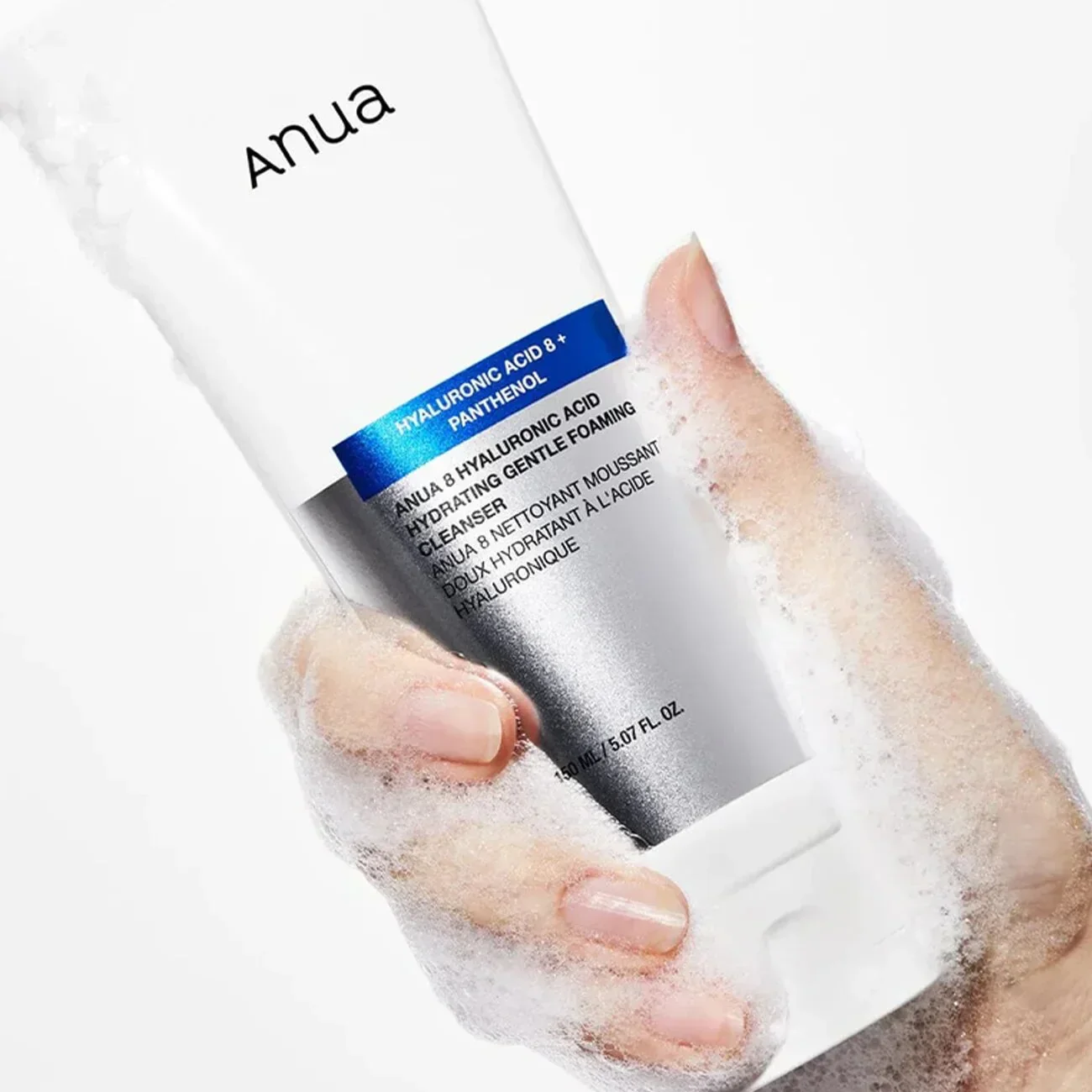
This formula focuses on hydration while also helping to manage excess sebum, making it suitable when your skin feels both oily and dehydrated.
Key Features
Mild surfactant system (Sodium Cocoyl Glycinate, Sodium Lauroyl Glutamate, Coco-Glucoside, Lauryl Hydroxysultaine, Sodium Cocoyl Isethionate) cleanses effectively with low irritation potential
Light foam texture that spreads easily and rinses off without leaving residue
Multiple forms of hyaluronic acid support hydration at different levels and help reduce post-cleansing tightness
Glycerin, Betaine, and Panthenol improve skin comfort and help maintain moisture balance
Zinc PCA supports sebum regulation, which is relevant for oil-prone areas
No added fragrance or essential oils, reducing unnecessary irritation risk
Best for: Combination to oily skin, especially when dehydration is also present.
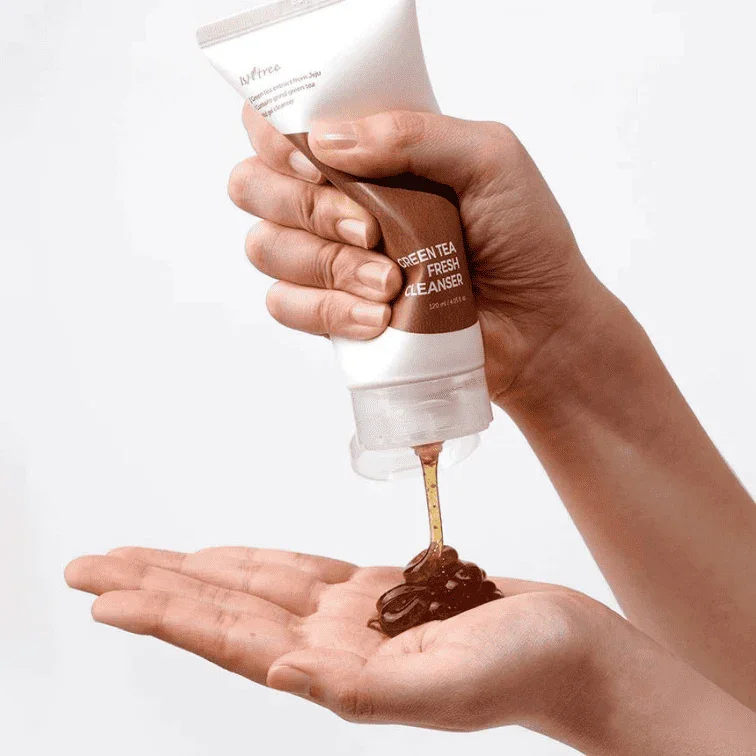
Isntree Green Tea Fresh Cleanser
Sebum-Balancing Antioxidant Gel Cleanser
Where to buy
This cleanser is built around green tea, with a focus on managing excess sebum while keeping the skin comfortable. It is a good option if your skin tends to feel greasy during the day but still needs a gentle approach.
Key Features
Mild surfactant system (Sodium Cocoyl Alaninate, Sodium Methyl Cocoyl Taurate, Disodium Cocoamphodiacetate, Lauryl Hydroxysultaine) provides effective cleansing without strong stripping
Light gel-to-foam texture that feels fresh on the skin and rinses off cleanly without residue
Green tea in multiple forms (leaf, extract, powder) supports antioxidant protection and helps regulate excess sebum
Glycerin and hyaluronic acid derivatives help maintain hydration during cleansing
Supporting plant extracts (pine, kudzu root, elm root, evening primrose) contribute additional antioxidant support, though not primary actives
No added fragrance or essential oils, reducing irritation risk
Best for: Combination to oily skin, especially if excess sebum and midday shine are a concern.
Step 2: Hydrating
Hydration is essential for maintaining skin barrier function, and the focus here should be on lightweight, well-tolerated ingredients that do not contribute to yeast overgrowth.
If you want to understand different moisturizer textures and how to select between them, you can read more here.
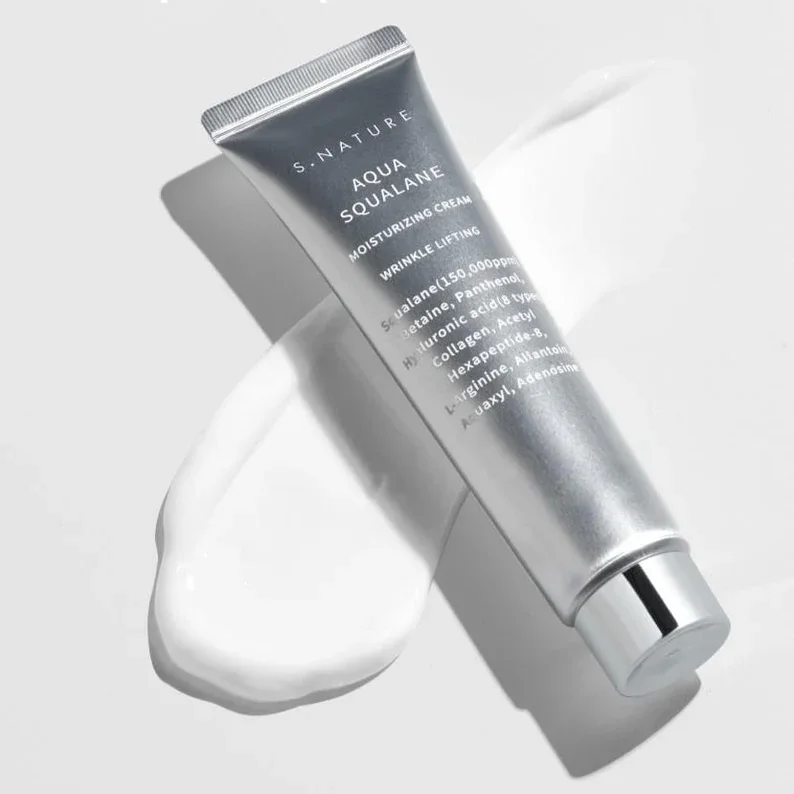
S.NATURE Aqua Squalane Moisturizing Cream
Barrier-Supporting Lightweight Squalane Cream
Where to buy
This formula focuses on maintaining hydration while supporting the skin barrier, using squalane as the main emollient instead of heavier lipid-based ingredients.
Key Features
High concentration of squalane (150,000 ppm) provides lightweight emollient support without the typical fatty acid profile of plant oils
Cream-gel texture that spreads easily, absorbs well, and does not leave a heavy or greasy finish
Strong humectant system (Glycerin + multiple forms of hyaluronic acid) supports hydration at different levels
Panthenol, Betaine, and Allantoin help maintain skin comfort and reduce potential irritation
Peptides (Acetyl Hexapeptide-8) and Adenosine provide additional skin-conditioning support
No added fragrance or essential oils, making it suitable for sensitive skin
Best for: Normal, combination, and dehydrated skin, especially if you prefer a lightweight moisturizer that supports the barrier without feeling heavy.
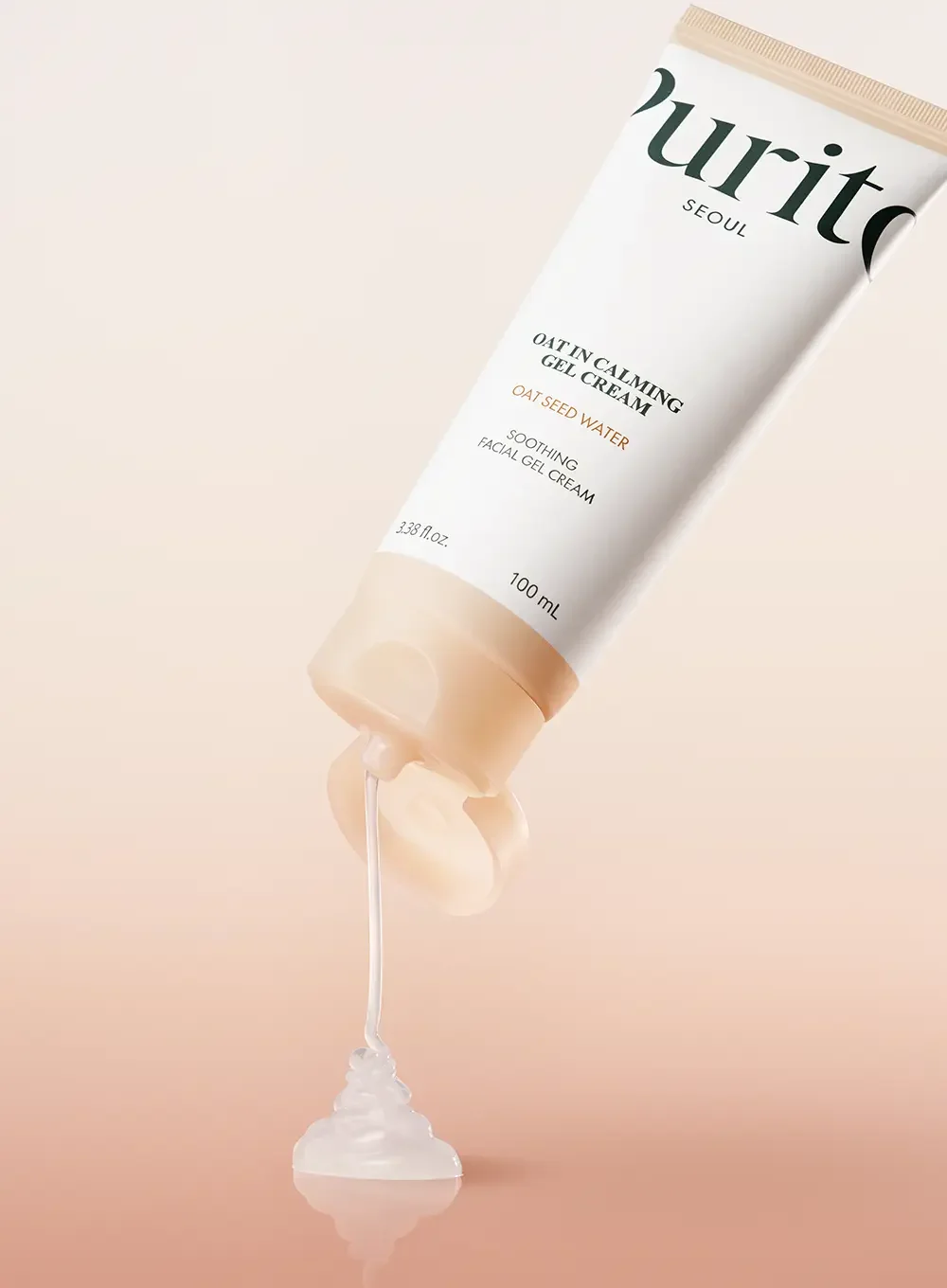
Purito Seoul Oat-In Calming Gel Cream
Lightweight Calming Gel Moisturizer
Where to buy
This is a minimal, soothing formula built around oat, focusing on reducing irritation while maintaining light hydration without heaviness.
Key Features
High oat content (77% oat seed water) provides calming and skin-soothing support, especially for reactive skin
Gel texture that absorbs quickly and leaves a non-greasy, breathable finish
Humectants (Glycerin, Butylene Glycol, 2,3-Butanediol) help maintain hydration without heaviness
Squalane adds light emollient support without contributing to a heavy or occlusive feel
Panthenol, Beta-Glucan, and Dipotassium Glycyrrhizate support barrier comfort and help reduce visible irritation
No added fragrance or essential oils, making it suitable for sensitive skin
Best for: Oily, combination, and sensitive skin, especially if you prefer a very lightweight moisturizer or need something calming during irritation or flare-ups.
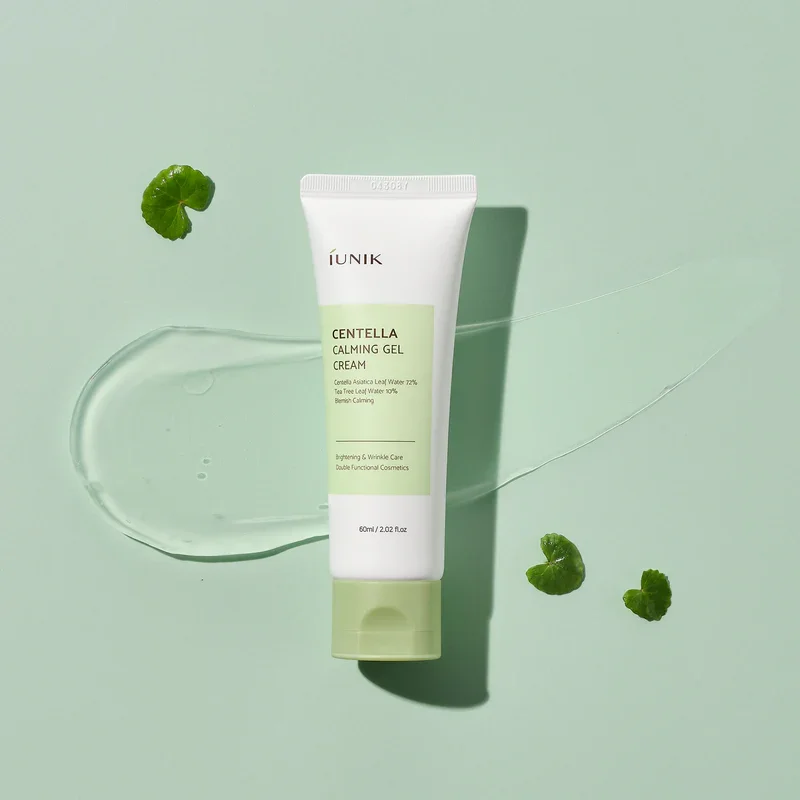
iUNIK Centella Calming Gel Cream
Soothing Sebum-Balancing Gel Moisturizer
Where to buy
This formula combines calming ingredients with light oil-control support, making it suitable when the skin is both reactive and prone to excess sebum.
Key Features
Centella Asiatica base (leaf water + extract) supports skin calming and barrier stability
Light gel texture with silicones (Dimethicone, Methyl Trimethicone) creates a smooth, non-heavy finish and helps reduce moisture loss
Niacinamide supports oil regulation and helps improve overall skin balance
Tea tree leaf water and extract provide additional support for oil-prone and blemish-prone skin
Allantoin and Dipotassium Glycyrrhizate help reduce visible irritation and improve skin comfort
Contains essential oil (bergamot oil); research indicates it shows potential antifungal activity against Malassezia, but it may still be sensitising for some skin types
Best for: Oily and combination skin, especially if prone to breakouts or redness, but less ideal for very sensitive skin due to the presence of essential oil.
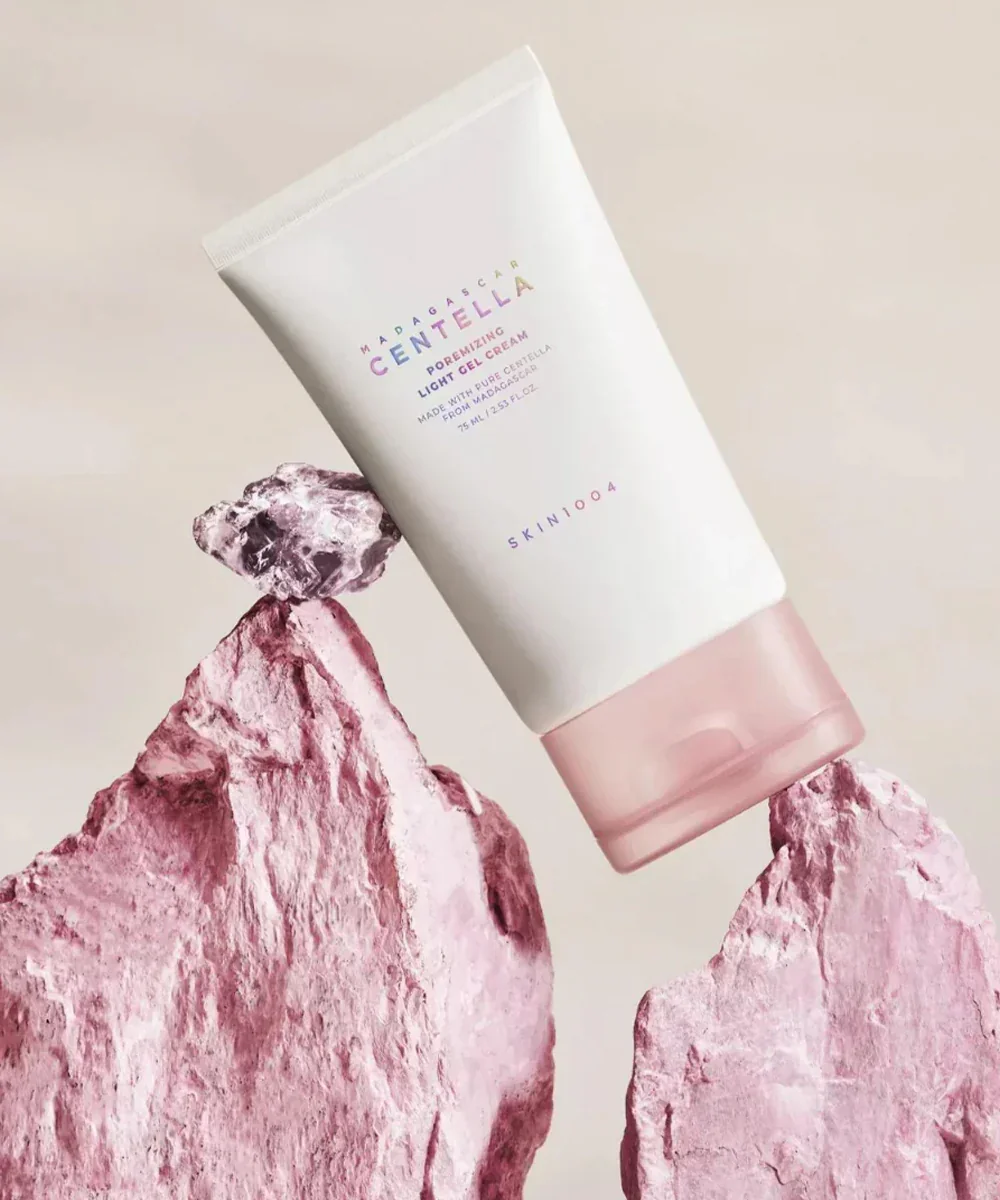
SKIN1004 Madagascar Centella Poremizing Light Gel Cream
Pore-Focused Oil-Control Gel Moisturizer
Where to buy
This formula is designed for oil control and pore appearance, combining calming ingredients with mild astringent and sebum-balancing components.
Key Features
High Centella content (50.96%) supports skin calming and barrier stability
Light gel texture absorbs quickly and leaves a non-heavy finish, suitable for oil-prone skin
Niacinamide helps regulate sebum and supports a more even-looking skin tone
Humectants (Glycerin, Propanediol, Hyaluronic Acid forms, Xylitol complex) maintain hydration without heaviness
Kaolin and mineral components help absorb excess oil and reduce shine
Hamamelis (witch hazel) leaf water provides astringent effect, which may help with pore appearance but can be slightly drying for some
Multiple plant extracts provide antioxidant support, though not primary actives
Contains lavender extract, which may be sensitising for reactive skin types
Best for: Oily and combination skin, especially if enlarged pores and excess sebum are primary concerns; less ideal for very sensitive or easily irritated skin.
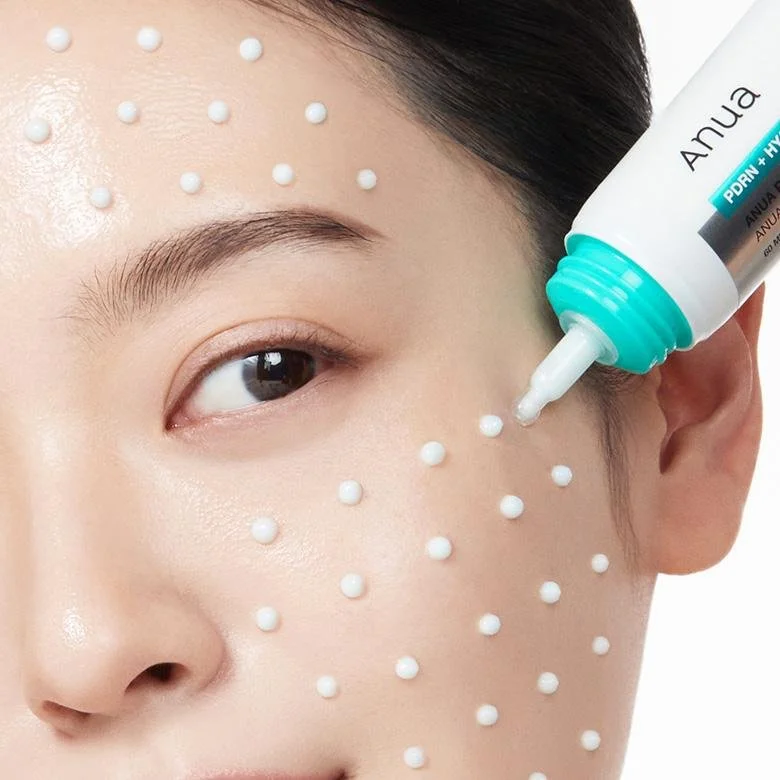
Anua PDRN Hyaluronic Acid 100 Moisturizing Cream
Hydration-Dense Barrier Support Cream
Where to buy
This formula focuses on combining strong hydration with barrier-supporting ingredients, using a mix of humectants, emollients, and skin-conditioning components.
Key Features
Squalane-based emollient system provides lightweight barrier support without a heavy or greasy finish
Cream-gel texture spreads easily and forms a light protective layer without feeling occlusive
Multiple forms of hyaluronic acid support hydration at different levels and help maintain moisture balance
Niacinamide supports skin balance and helps regulate sebum production
Sodium DNA (PDRN) and Madecassoside/Centella components contribute to skin conditioning and barrier support
No added fragrance or essential oils, reducing irritation risk
Best for: Normal to combination skin, including dehydrated skin, especially if you want a more cushioning moisturizer without a heavy occlusive feel; may feel too rich for very oily skin.
Innisfree Cherry Blossom Glow Jelly Cream
Brightening Lightweight Jelly Moisturizer
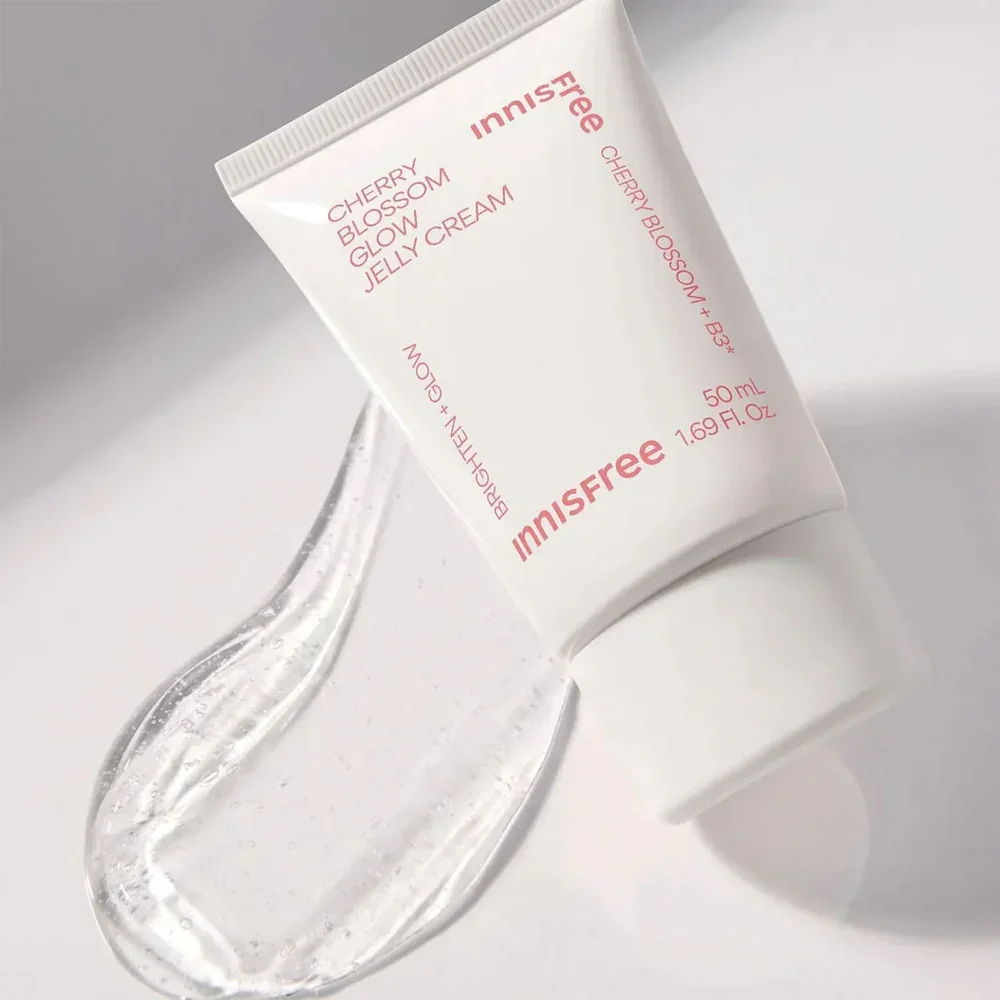
This formula is built around humectants and niacinamide, focusing on lightweight hydration with a visible brightening effect.
Key Features
Jelly texture that absorbs quickly and leaves a light, fresh finish without heaviness
Humectant base supports hydration without occlusion
Niacinamide helps improve overall skin tone and supports oil balance
Cherry blossom extract provides antioxidant support, but is not a primary active
Minimal formula structure with no heavy emollients, making it suitable for lighter routines
Contains added fragrance, which may be sensitising for reactive or sensitive skin
Best for: Normal to oily skin, especially if you prefer a very lightweight moisturizer with a focus on hydration and tone-evening.
Step 3: Sun Protection
Daily sun protection is a key part of any skincare routine, helping to prevent further skin damage, irritation, and post-inflammatory changes.
For a closer look at sunscreen filters and how they protect your skin, you can explore it here.
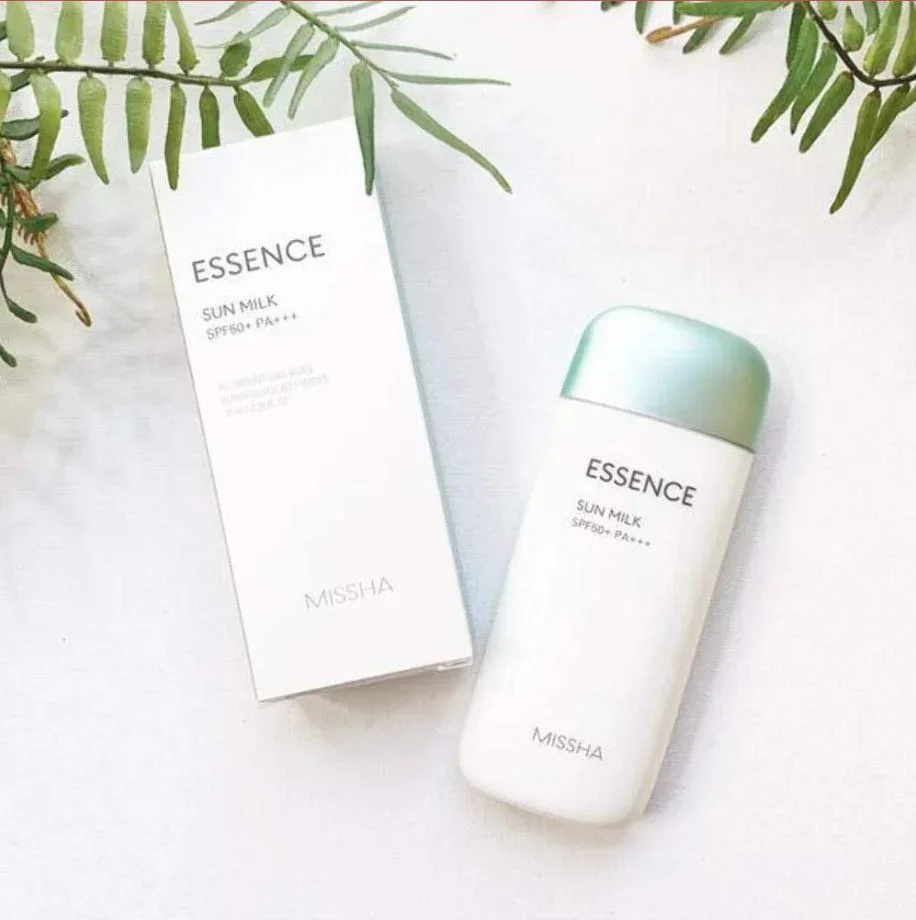
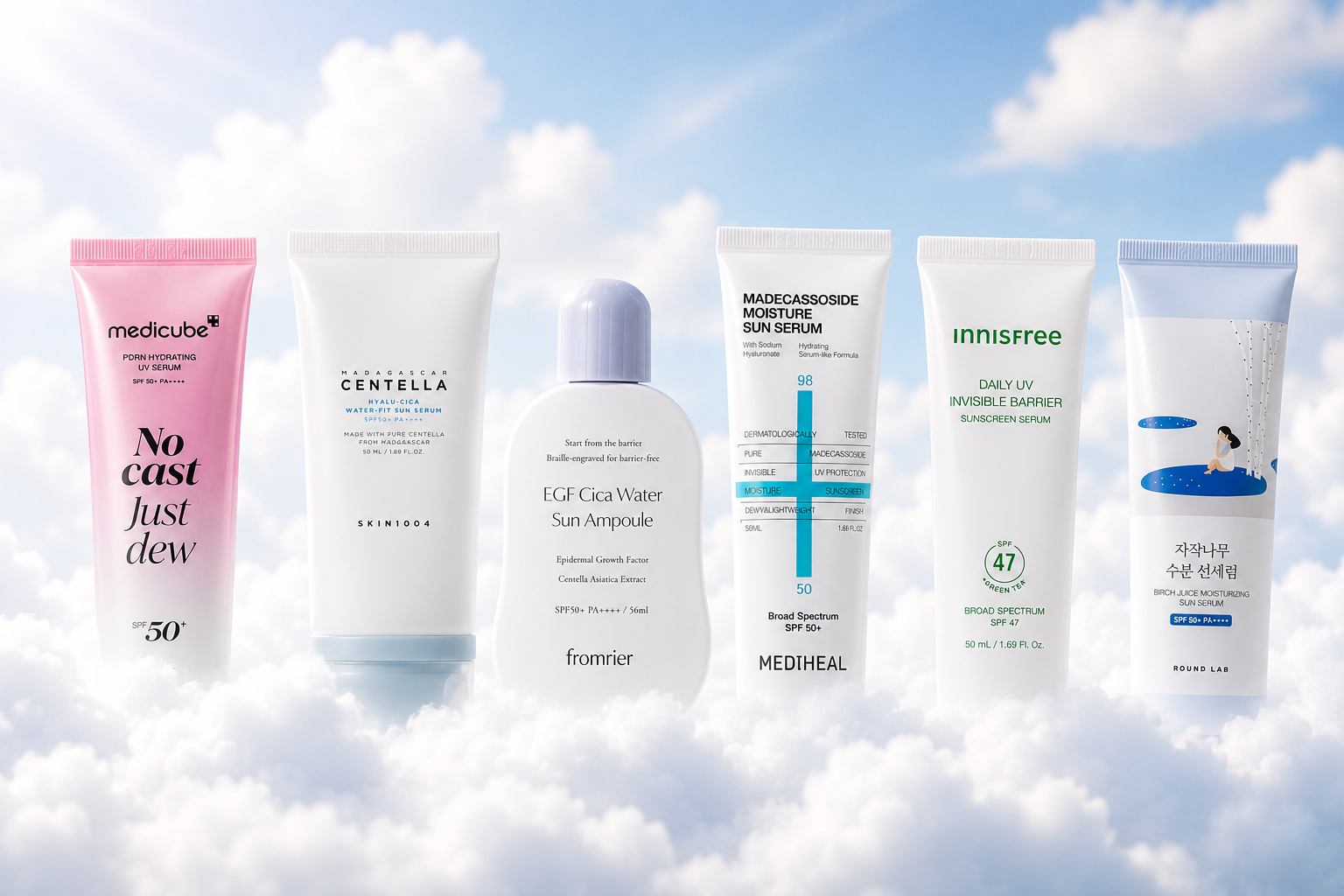
Missha All-Around Safe Block Essence Sun Milk SPF50+ PA+++
Lightweight Chemical UV Filter Sun Milk
Where to buy
This sunscreen uses a combination of chemical UV filters in a very lightweight base, designed to spread easily and leave minimal residue on the skin.
Key Features
Chemical UV filters (Ethylhexyl Methoxycinnamate, Octocrylene, Ethylhexyl Salicylate, Butyl Methoxydibenzoylmethane, Tinosorb S) provide broad-spectrum protection
Fluid, milk-like texture that spreads easily and sets quickly, making it suitable for layering
Silica and polymer components help control shine and create a smoother skin finish
Contains ethanol high in the formula, which contributes to the lightweight feel but may be drying or irritating for some skin types
Multiple plant extracts provide antioxidant support, though not primary actives
Contains added fragrance and botanical waters, which may be sensitising for reactive skin
Best for: Normal to oily skin, especially if you prefer a lightweight, fast-absorbing sunscreen with a non-heavy finish; less ideal for very dry or sensitive skin.
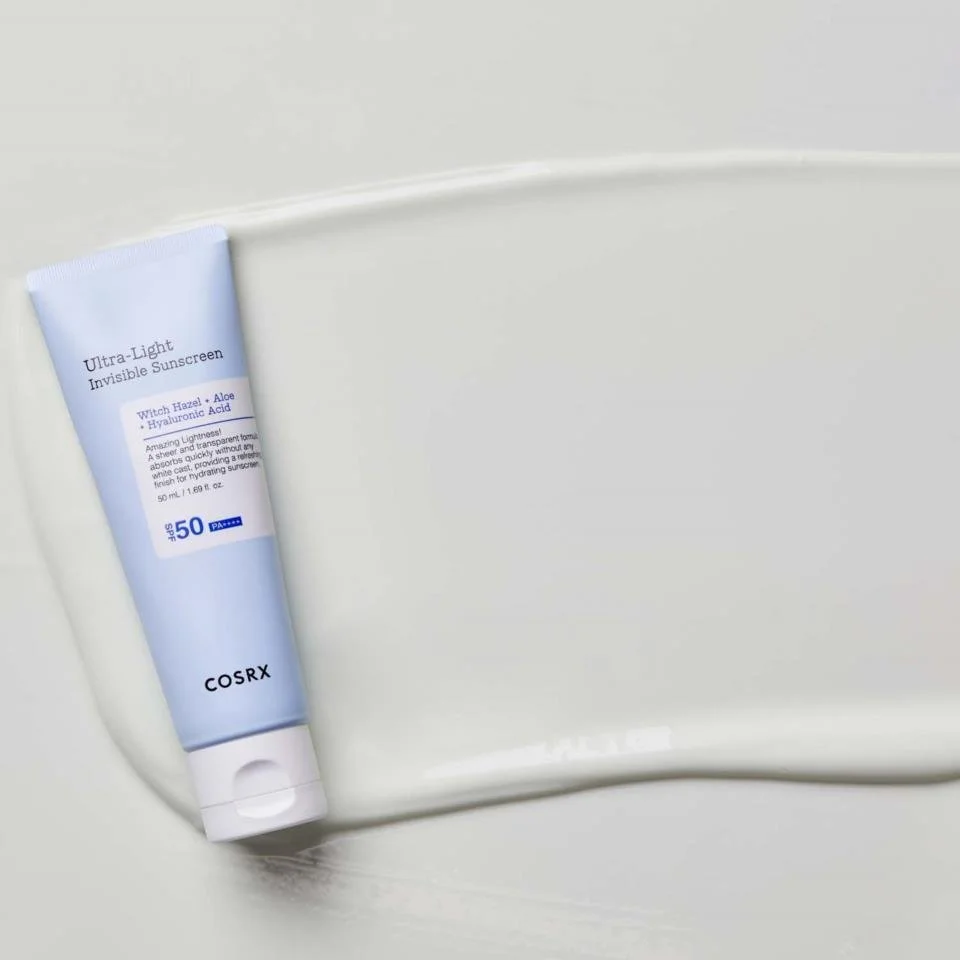
COSRX Ultra Light Invisible Sunscreen SPF50+
Ultra-Light Chemical Filter Invisible Sunscreen
Where to buy
This formula is designed for a weightless finish, using modern chemical filters in a base that absorbs quickly and leaves no visible residue.
Key Features
Advanced chemical UV filters (Drometrizole Trisiloxane, Ethylhexyl Triazone, Diethylamino Hydroxybenzoyl Hexyl Benzoate, Terephthalylidene Dicamphor Sulfonic Acid) provide broad-spectrum protection with good photostability
Ultra-light fluid texture that spreads easily and becomes virtually invisible on the skin
Silicone components (Methyl Trimethicone) contribute to a smooth, non-greasy finish
Niacinamide supports skin balance and helps regulate sebum
Aloe, Allantoin, and Sodium Hyaluronate help maintain skin comfort and hydration
Contains witch hazel water, which may provide mild astringent effect but can be slightly drying or irritating for some
No added fragrance or essential oils, reducing irritation risk
Best for: Combination to oily skin, especially if you prefer a very lightweight, invisible sunscreen that layers well under makeup; may feel slightly drying on very dry or sensitive skin.
Targeted Steps (Optional)
Once your basic routine is stable, you can introduce additional steps to address specific concerns such as texture, dullness, or uneven skin tone. These should always be added gradually and only if your skin tolerates the core routine well.
Makeup Removal (If Needed)
If you wear makeup or water-resistant sunscreen, a dedicated first cleanse helps remove these effectively without excessive rubbing or irritation. Because of the nature of Malassezia, cleansing oils are not an option, as they can support yeast growth. However, this does not mean that double cleansing is not possible.
Instead, I will show you gentle micellar water options that can be used as a first cleanse in place of oils.
Always remember to rinse micellar water off. It is not a leave-on product and should not remain on the skin.
ROVECTIN Aqua Deep Cleansing Water
Hydrating Low-Residue Micellar Cleanser
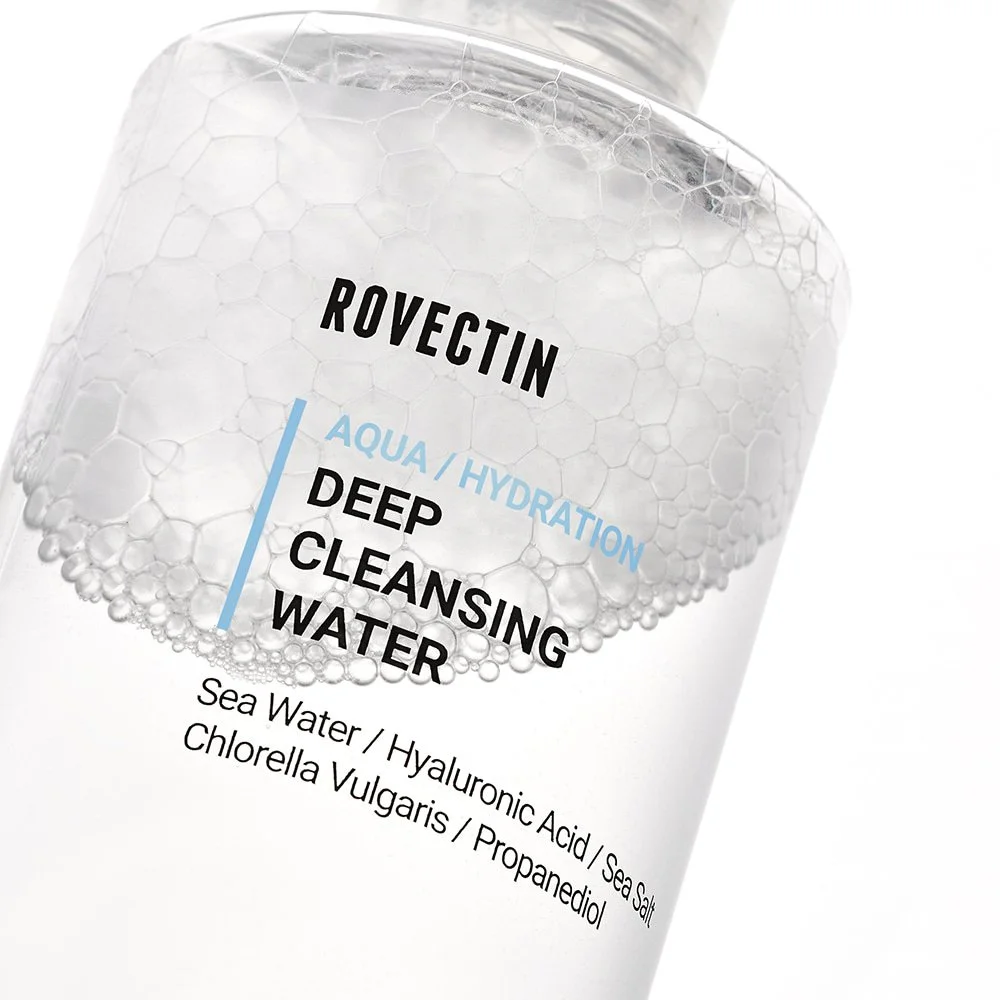
This micellar water focuses on gentle cleansing with added hydration support, making it suitable for removing light makeup and sunscreen without disrupting the skin barrier.
Key Features
Mild cleansing agents (Disodium Cocoamphodiacetate) help lift impurities and residue without harsh rubbing
Water-light texture that spreads easily and does not leave a heavy or sticky film
Multiple forms of hyaluronic acid support hydration and help reduce post-cleansing dryness
Marine complex (kelp, chlorella, and other algae extracts) provides antioxidant support and contributes to skin hydration
Electrolyte components (sea water, sea salt) help support overall skin balance
No added fragrance or essential oils, reducing irritation risk
Best for: All skin types, including sensitive skin, especially if you want a gentle first cleanse that does not leave the skin feeling dry.
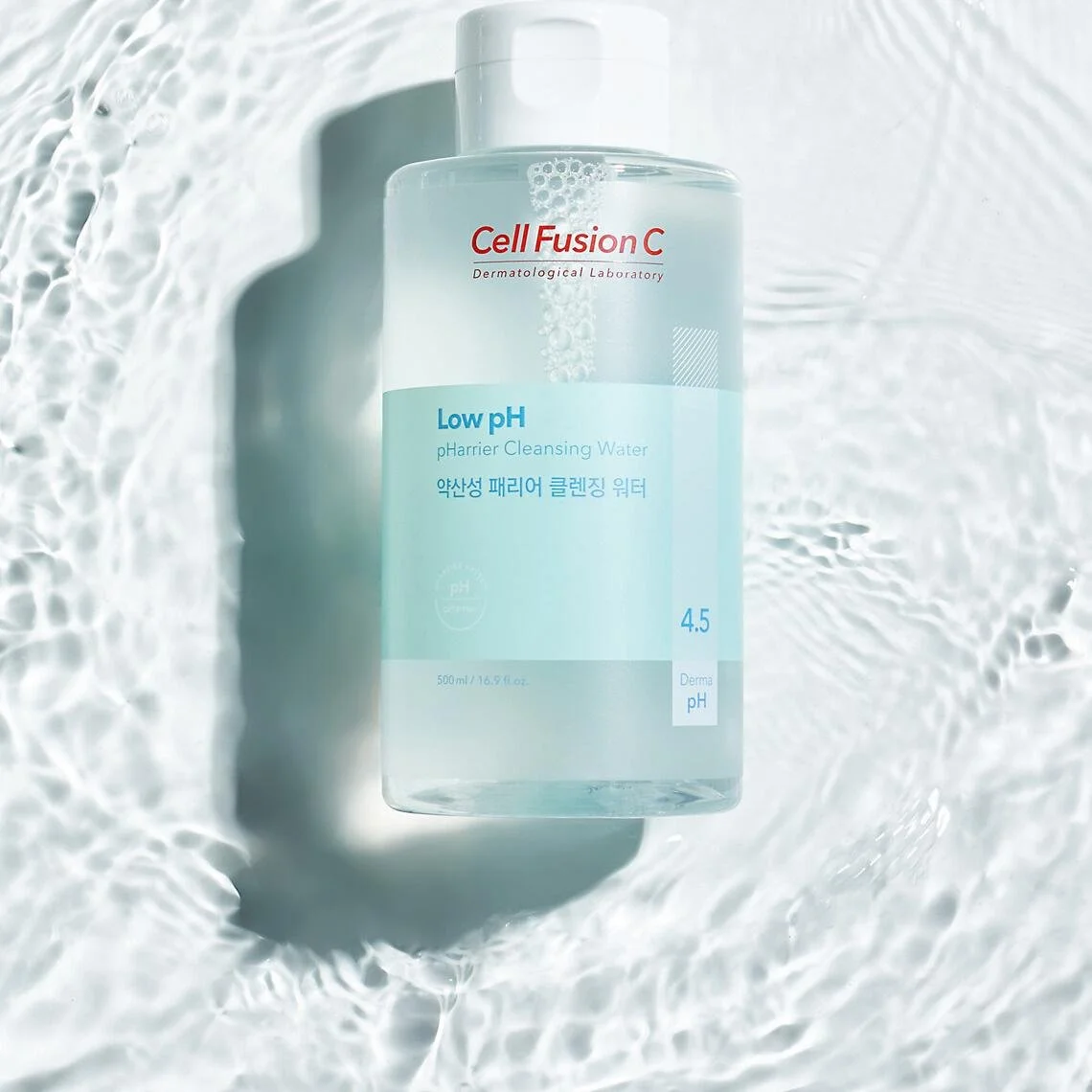
Cell Fusion C Low pH pHarrier Cleansing Water
Low-pH Barrier-Support Micellar Cleanser
Where to buy
This micellar water is designed with a low pH approach, focusing on gentle cleansing while helping to maintain the skin’s natural barrier balance.
Key Features
Mild cleansing system (Polyglyceryl-4 Caprate, Sodium Cocoamphoacetate, Lauryl Glucoside, Sodium Cocoyl Glutamate) removes makeup and impurities without aggressive stripping
Water-light texture that spreads easily and leaves minimal residue when properly rinsed
Low pH formulation helps support the skin’s natural barrier and reduces disruption during cleansing
Trehalose, Glycerin, and Panthenol provide hydration and improve skin comfort
Gluconolactone (PHA) offers very mild exfoliating support, contributing to smoother skin over time
Plant extracts and rosmarinic acid provide antioxidant support
No added fragrance or essential oils, reducing irritation risk
Best for: All skin types, including sensitive skin, especially if you prefer a low pH cleanser with added barrier support.
Toners and Essences
Toners and essences can provide an additional layer of hydration and help improve overall skin comfort, as long as the formulation is carefully chosen.
If you’re unsure whether you need a toner and how to use it, you can learn more here.
EQQUALBERRY Swimming Pool Toner
Hydration-Focused Enzyme Toner
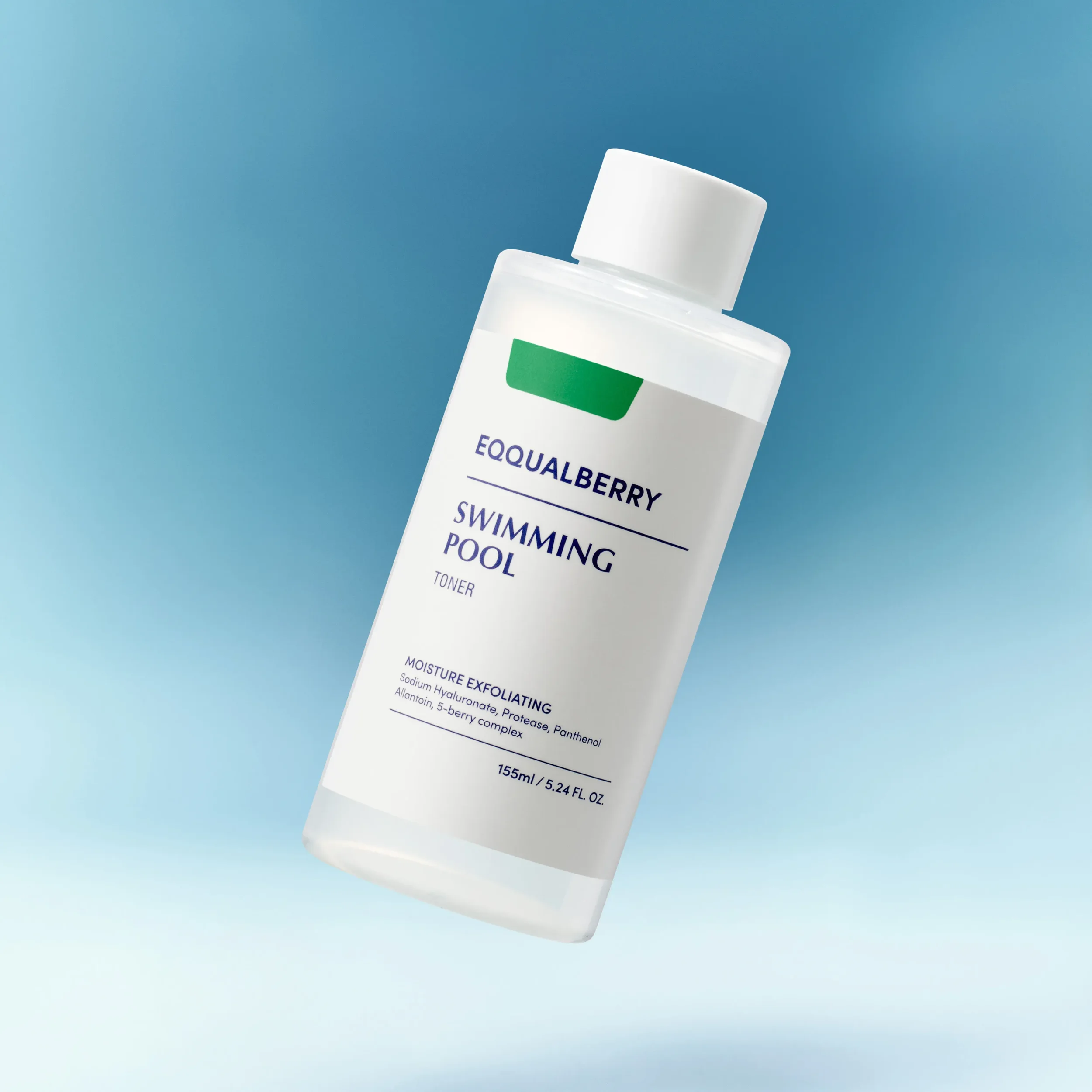
This toner combines basic hydration with mild enzymatic support, making it suitable if you want light exfoliation without using stronger acids.
Key Features
Light, water-like texture that absorbs quickly without leaving a heavy layer
Protease enzyme provides very mild exfoliating support by helping to break down surface buildup
Panthenol, Allantoin, and Beta-Glucan support barrier function and reduce visible irritation
Sodium Hyaluronate helps maintain hydration after cleansing
Berry extracts provide antioxidant support, though not primary actives
No added fragrance or essential oils, reducing irritation risk
Best for: Normal to combination skin, especially if you want a hydrating toner with very mild exfoliating support without using acids.
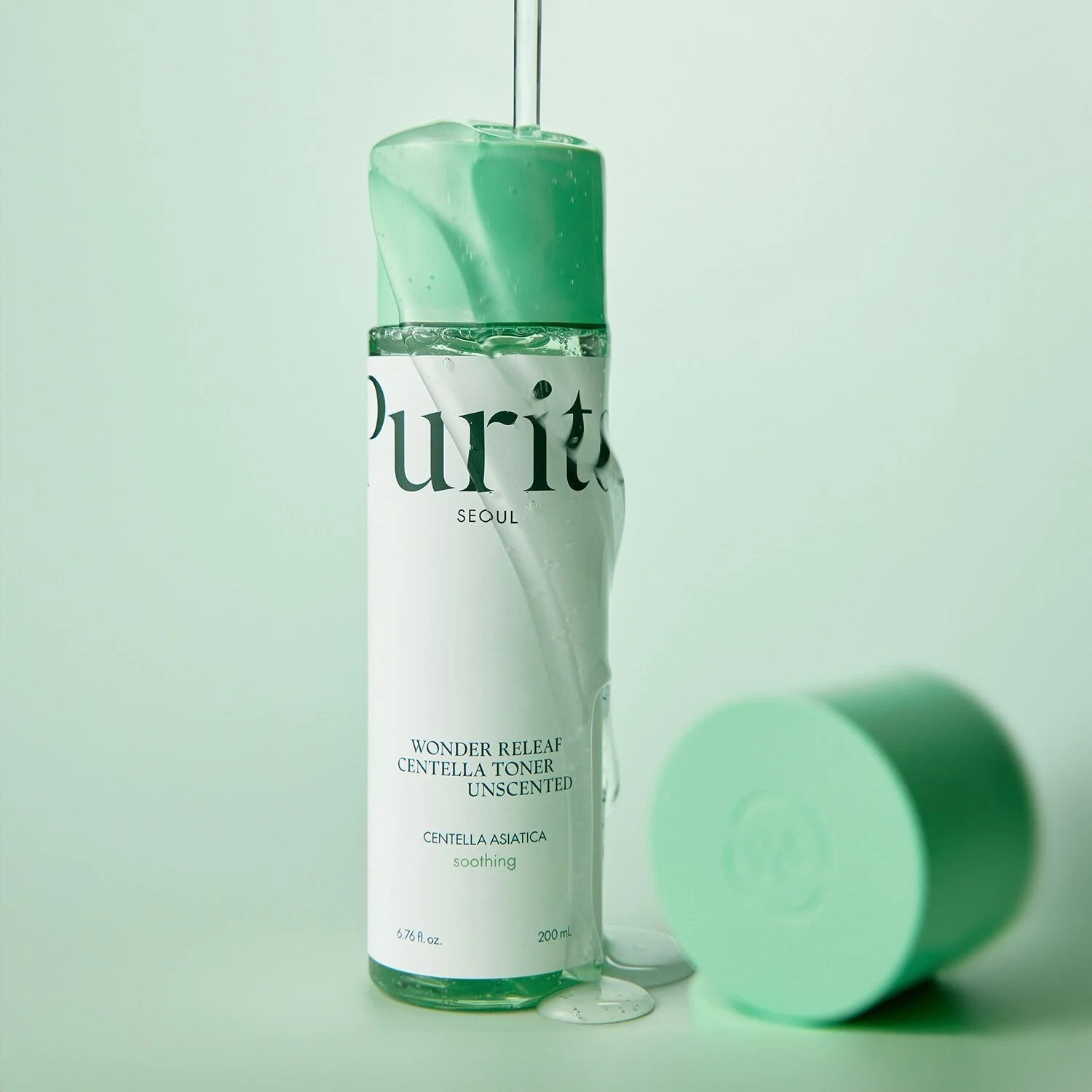
Purito Seoul Wonder Releaf Centella Toner Unscented
Barrier-Calming Minimalist Toner
Where to buy
This toner focuses on calming and barrier support with a short, functional ingredient list, making it suitable when the skin is reactive or easily irritated.
Key Features
Light, water-like texture that absorbs quickly without leaving residue
Centella complex (extract + Madecassoside, Asiaticoside, Madecassic Acid, Asiatic Acid) supports skin calming and barrier repair
Panthenol and Allantoin help reduce visible irritation and improve skin comfort
Trehalose and Sodium Hyaluronate provide lightweight hydration
Minimalist formulation reduces the risk of unnecessary irritation
Fragrance-free and no essential oils, suitable for sensitive skin
Best for: All skin types, especially sensitive, reactive, or compromised skin.
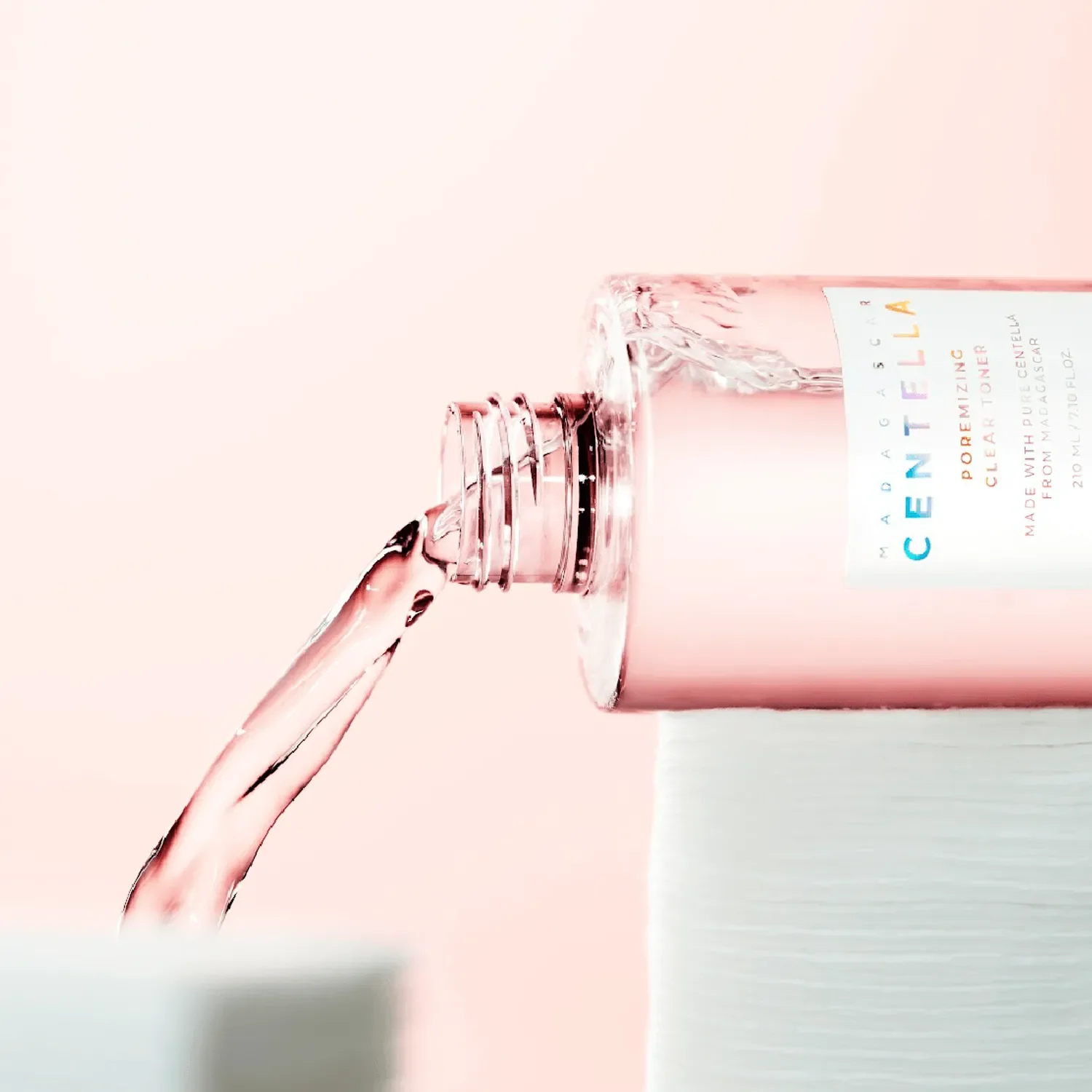
SKIN1004 Madagascar Centella Poremizing Clear Toner
Multi-Acid Pore-Refining Toner
Where to buy
This toner combines calming ingredients with multiple exfoliating acids, focusing on pore appearance and surface texture while still including barrier-supporting components.
Key Features
High Centella content (50.47%) supports skin calming and helps reduce irritation from exfoliating ingredients
Light, watery texture that absorbs quickly and layers easily
Multi-acid complex: Salicylic Acid (BHA), Capryloyl Salicylic Acid (LHA), Glycolic Acid (AHA), Gluconolactone (PHA) targets buildup, uneven texture, and clogged pores
Willow bark extract provides additional BHA-related support
Glycerin, Betaine, and Hyaluronic Acid forms help maintain hydration alongside exfoliation
Panthenol and Allantoin support skin comfort and barrier function
Contains lavender extract, which may be sensitising for reactive skin
Best for: Oily and combination skin, especially if clogged pores, uneven texture, or excess sebum are primary concerns; less suitable for very sensitive skin.
Medicube Kojic Acid Turmeric Pad
Brightening Exfoliating Toner Pad
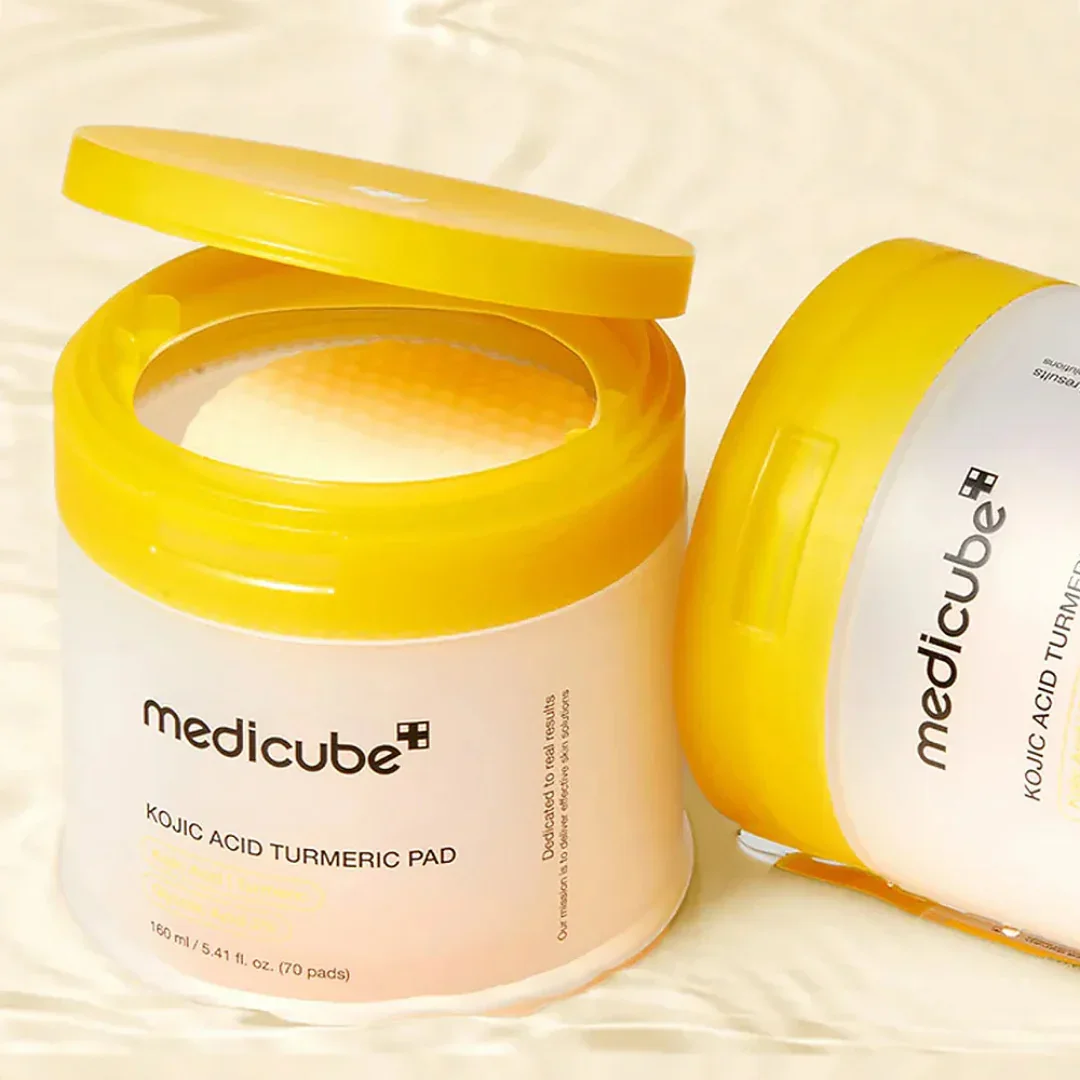
This toner pad combines chemical exfoliation with multiple brightening ingredients, making it an excellent option for fading post-acne marks, improving uneven skin tone, and restoring radiance to dull skin. Glycolic acid helps remove pigmented surface cells, while niacinamide, kojic acid, and turmeric extract work together to support a brighter, more even-looking complexion. Panthenol, allantoin, and multiple forms of hyaluronic acid help keep the skin hydrated and comfortable.
Key Features
Dual-sided pad with textured and smooth surfaces for versatile application
Glycolic acid provides moderate exfoliation to improve skin tone and texture
Niacinamide, kojic acid, and turmeric extract provide additional brightening support
Panthenol, allantoin, and multiple forms of hyaluronic acid help support the skin barrier
Fragrance-free, essential oil-free
Best for: Normal, combination, and oily skin types with post-inflammatory hyperpigmentation, sun spots, and uneven skin tone.
ROUND LAB Mugwort Calming Toner
Mugwort-Based Soothing Toner
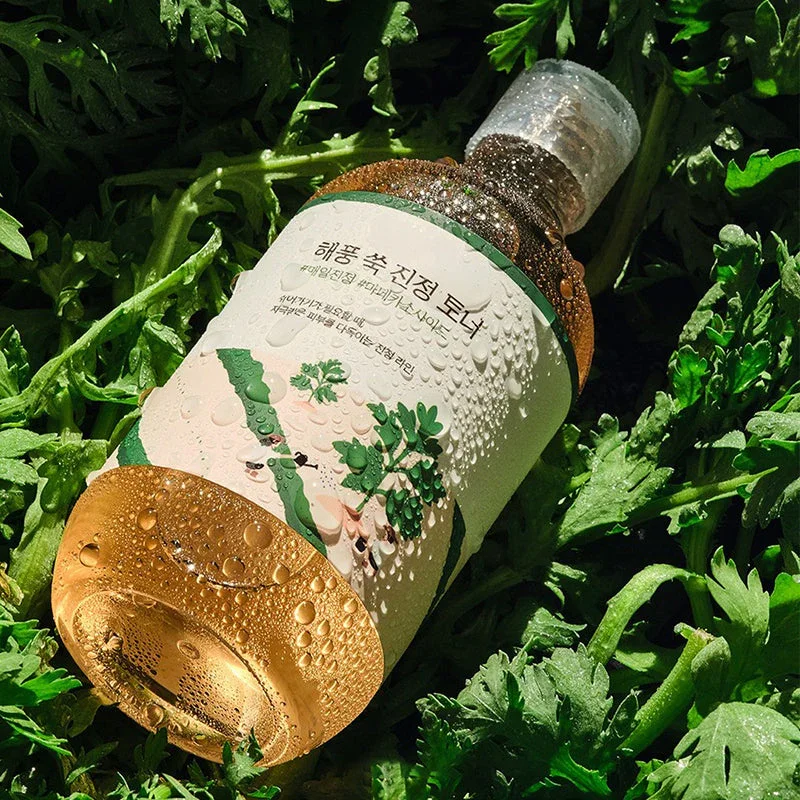
This toner focuses on calming and reducing visible irritation, using mugwort as the main ingredient alongside barrier-supporting components.
Key Features
Mugwort extracts (Artemisia Vulgaris + Artemisia Princeps) provide calming support and help reduce visible redness
Light, watery texture that absorbs quickly and layers easily without heaviness
Panthenol, Allantoin, Madecassoside, and Dipotassium Glycyrrhizate support barrier function and improve skin comfort
Additional extracts (green tea, chlorella, cocoa) provide antioxidant support
Contains sage oil, which is an essential oil and may be sensitising for reactive skin
Best for: Normal, combination, and sensitive skin, especially if redness and irritation are primary concerns; less suitable for very reactive skin due to the presence of essential oil.
S.NATURE Aqua Collagen Peptide Triple Gel Essence
Multi-Hydration Collagen Gel Essence
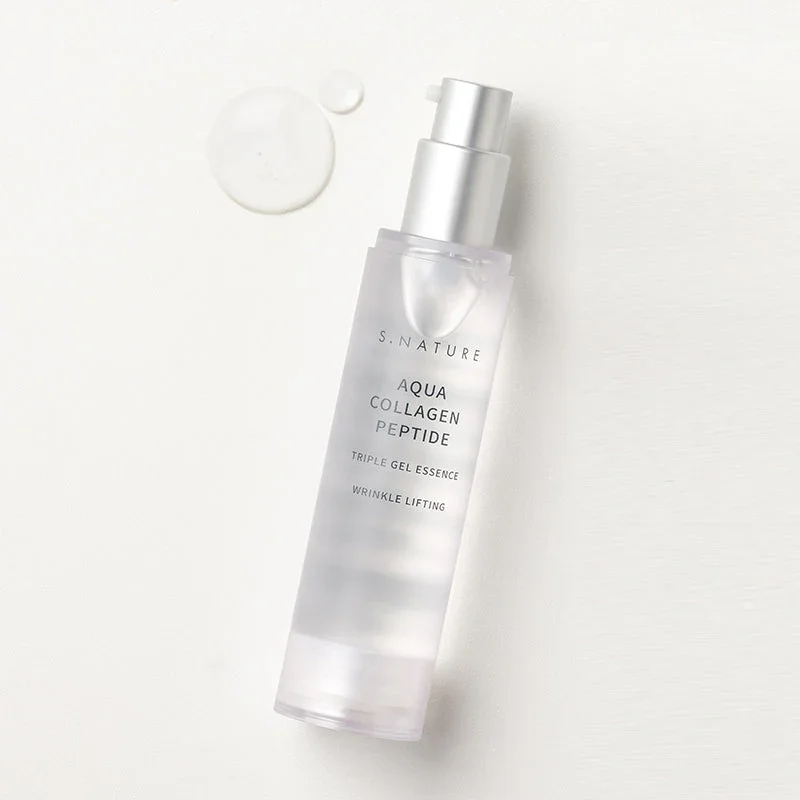
Where to buy
This formula focuses on layered hydration with added skin-conditioning ingredients, using a gel-essence texture that sits between a toner and a serum.
Key Features
Multiple forms of hyaluronic acid support hydration at different levels and help maintain moisture balance
Hydrolyzed collagen acts as a surface-level humectant, contributing to a smoother and more hydrated skin appearance
Gel-essence texture spreads easily and absorbs without heaviness, making it suitable for layering
Allantoin and Centella Asiatica extract support calming and barrier function
Adenosine provides additional skin-conditioning support
Plant extracts (including green tea, licorice, chamomile, rosemary) offer antioxidant support
No added fragrance or essential oils, reducing irritation risk
Best for: All skin types, especially dehydrated skin or when you want to add an extra hydration layer without heaviness.
Serums and Treatments
Serums are more targeted products designed to address specific concerns such as acne, pigmentation, or uneven texture, and should be selected with extra attention to ingredient composition.
Isntree Hyper Vitamin C 23 Serum
High-Strength Pure Vitamin C Treatment
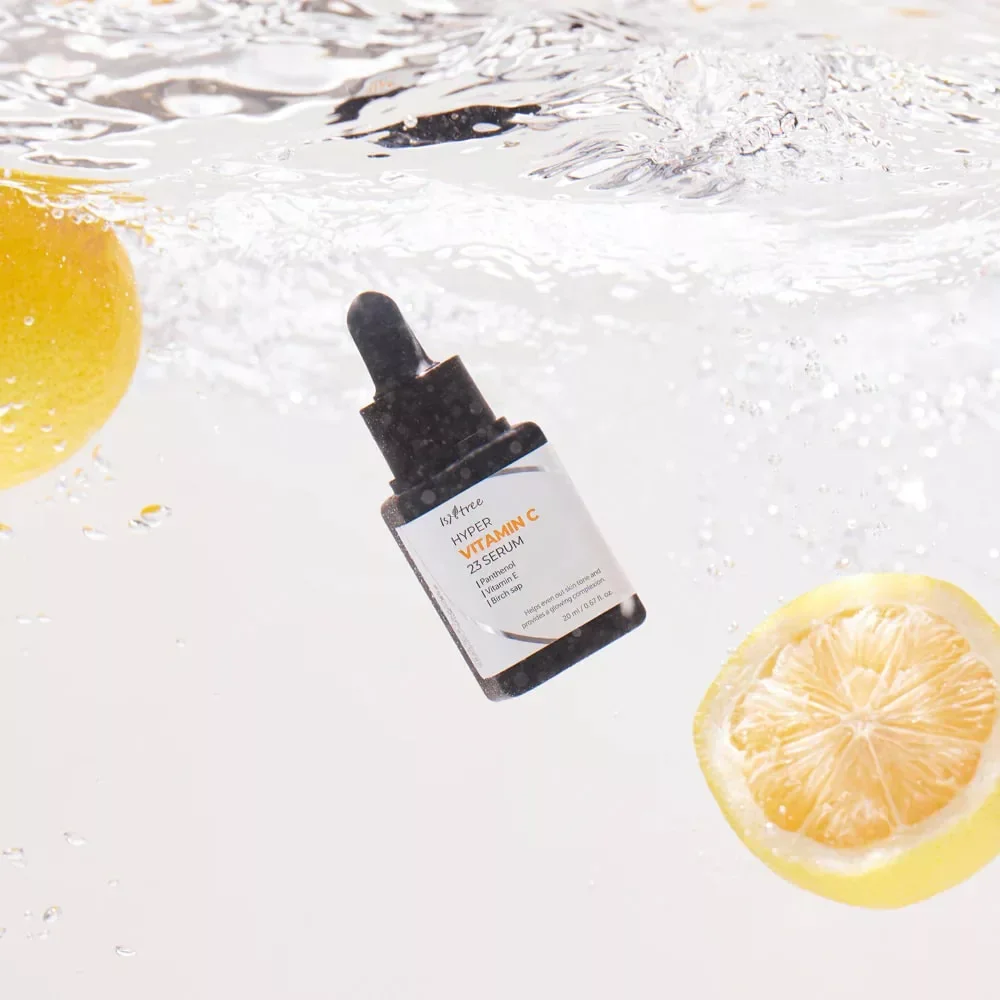
This is a high-concentration vitamin C serum designed for targeted use, not as a starting point. With 23% pure ascorbic acid, it requires tolerance and careful introduction.
Key Features
23% Ascorbic Acid (pure vitamin C) provides strong antioxidant support and helps improve uneven skin tone and dullness
Low-viscosity serum texture that absorbs quickly but may feel slightly active on the skin due to the high concentration
Ethyl Ascorbyl Ether adds a more stable vitamin C derivative alongside pure ascorbic acid
Hydration support (Betaine, Hydroxyethyl Urea, Panthenol) helps reduce potential dryness or irritation
Tocopherol (Vitamin E) enhances antioxidant protection and supports formula stability
No added fragrance or essential oils, reducing unnecessary irritation risk
Best for: Experienced users with normal, combination, or oily skin who are already tolerant to vitamin C; not suitable for beginners or very sensitive skin.
For a closer look at vitamin C and its role in skincare, you can find more information here.
SKIN1004 Lab in Nature Madagascar Centella Niacinamide 10 Boosting Shot Ampoule
Tone-Correcting Niacinamide + Tranexamic Acid Serum

Where to buy
This formula targets uneven skin tone and post-acne marks, combining higher-strength niacinamide with additional brightening and calming components.
Key Features
Niacinamide (10%) supports sebum regulation and helps improve uneven skin tone and post-inflammatory marks
Tranexamic Acid targets pigmentation and helps reduce the appearance of discoloration
Ascorbyl Glucoside provides mild antioxidant support and contributes to tone-evening
Centella Asiatica and Madecassoside support skin calming and barrier function
Polyglutamic Acid and Panthenol help maintain hydration and reduce potential irritation
“Boosting shot” concept (Hydrolyzed Sponge) may enhance ingredient penetration, but can feel slightly stimulating on sensitive skin
No added fragrance or essential oils, reducing irritation risk
Best for: Combination to oily skin, especially if uneven tone, post-acne marks, or excess sebum are primary concerns; use cautiously on very sensitive skin.
Niacinamide appears frequently in skincare due to its versatility and skin-balancing properties. If you would like to understand how it works and when to use it, you can read my full guide here.
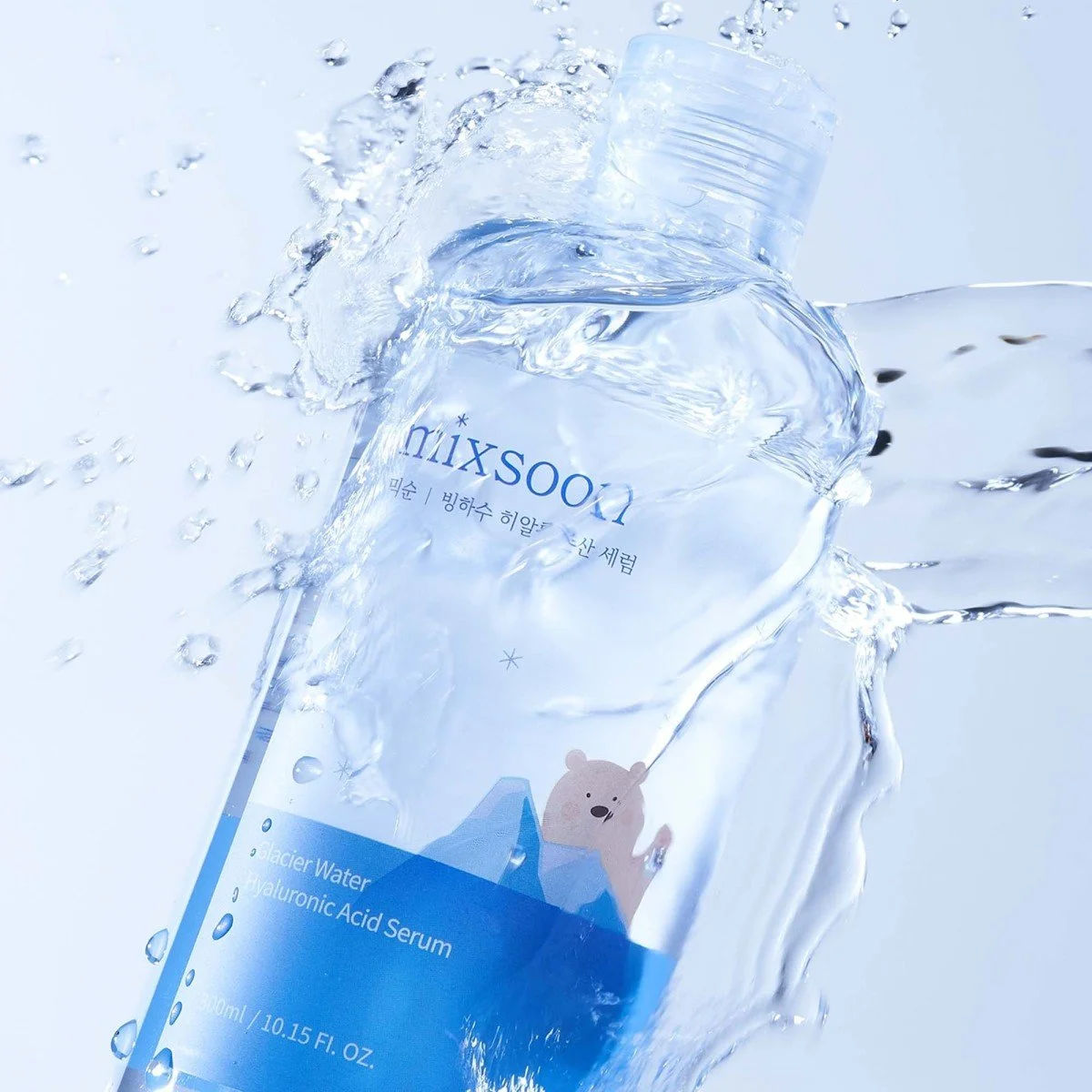
mixsoon Glacier Water Hyaluronic Acid Serum
Minimalist Hydration-Only Serum
Where to buy
This is a very simple, hydration-focused formula with a short ingredient list, designed to support moisture without adding unnecessary complexity.
Key Features
Minimal formulation (5 ingredients) reduces the risk of irritation and makes it easy to combine with other actives
Glacier water base functions as a lightweight solvent, with no specific functional advantage over water but contributes to the product identity
Sodium Hyaluronate supports hydration by attracting and holding water in the skin
Watery serum texture that absorbs quickly without leaving residue or heaviness
No fragrance, essential oils, or additional actives, making it highly compatible with sensitive routines
Best for: All skin types, including sensitive and reactive skin, especially if you want a simple hydration step without active ingredients.
When to Consult a Dermatologist or Specialist
If the bumps keep returning, spread, itch persistently, or do not improve despite simplifying your routine, it is worth seeing a dermatologist.
Malassezia folliculitis can look very similar to acne and other types of folliculitis, so the diagnosis is not always obvious. European dermatology guidance recommends considering other causes when the picture is unclear.
See a dermatologist if:
The bumps do not improve or keep returning
Itching or inflammation is persistent
The affected area is spreading
Standard acne products have not helped
You are unsure what is causing the breakouts
A dermatologist can confirm the diagnosis and recommend the most appropriate antifungal option if needed.
Frequently Asked Questions
Is Fungal Acne Contagious?
Usually no. Malassezia already lives naturally on most people’s skin, and folliculitis develops when that yeast overgrows rather than because you “catch” it from someone else.
Can Hair Products Contribute to Fungal Acne on the Forehead?
Yes, especially if rich conditioners, oils, or styling products regularly sit against the forehead and hairline. If your bumps cluster there, it is worth checking your hair products too.
Can You Wear Makeup If You Are Prone to Fungal Acne?
Yes. Makeup is not automatically a problem, but very heavy or occlusive formulas may be less suitable if they seem to coincide with your flare-ups.
Does Diet Cause Fungal Acne?
There is no good evidence that eating sugar, yeast, or specific foods directly “feeds” Malassezia on the skin. Current guidance focuses much more on factors such as heat, sweating, sebum, occlusion, antibiotics, and immune suppression.
Can Fungal Acne Come Back After It Clears?
Yes. Recurrence is common, especially if the same triggers remain, which is why some people need ongoing trigger control or intermittent antifungal maintenance.
Summary: Consistency and Skin Health
Managing fungal acne comes down to understanding what triggers it and keeping your routine consistent. Small changes, especially in ingredient selection, can make a significant difference over time.
If you would like to go deeper, you can explore my other guides on Korean skincare, where I break down routines, ingredients, and product types in a clear and practical way.
If you are unsure what works best for your skin, you can also take the skin type quiz on my website. It will help you identify your skin type and guide you toward Korean skincare products that are more suitable for your needs.
For more personalized support, I offer one-to-one skincare consultations where we build a routine tailored to your skin, concerns, and preferences.



Understanding Your Skin
A Practical Guide to Skincare
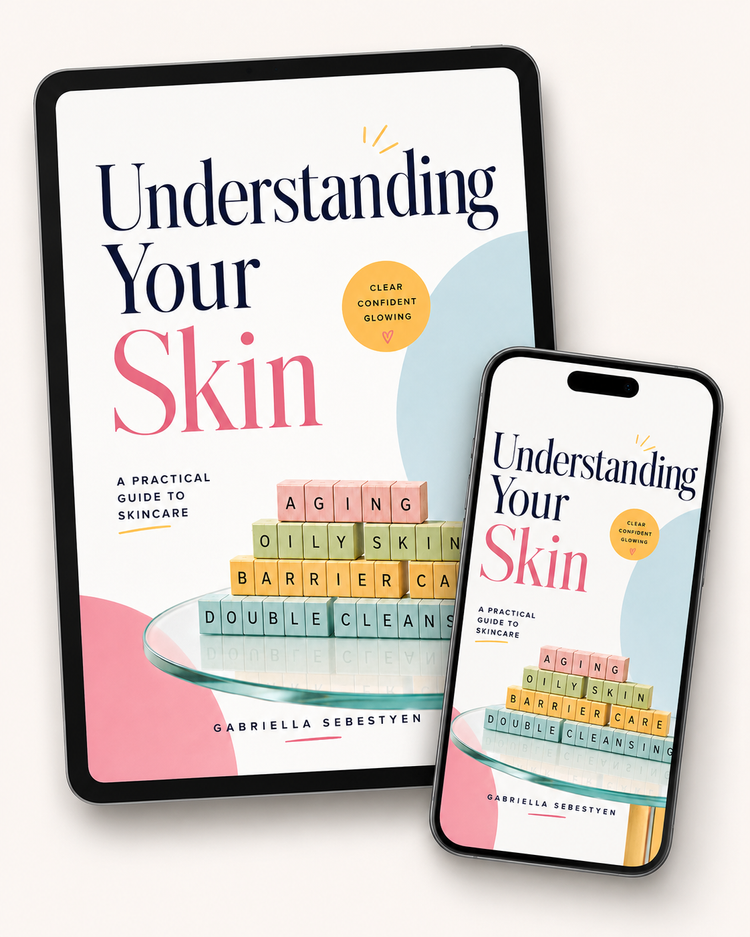
I wrote Understanding Your Skin to help you build an effective skincare routine with confidence. This illustrated guide explains skin types, ingredients, and routines in a practical, evidence-based way that's easy to understand and apply.
- Written by a physician
- 120-page illustrated guide
- Evidence-based skincare guidance
- Sample routines & product recommendations

Adult acne in your 30s and 40s: what causes it, how it differs from teenage acne, and how to build a practical Korean skincare routine.