What Skincare Actives Can You Use If You Have Rosacea?
Having rosacea does not mean your skincare routine has to be completely free of active ingredients. The main thing is choosing them carefully and paying attention to how your skin reacts.
If you are looking for the best Korean skincare for rosacea, ingredients such as azelaic acid, niacinamide, tranexamic acid, retinoids and vitamin C may all have a place in your routine. The important difference is that some have direct evidence in rosacea, while others are simply actives you may still be able to use for concerns such as pigmentation, acne or skin aging.
In this guide, I’ll go through them one by one and explain where the evidence is stronger and where more caution is needed.
Key Takeaways
✓ Can you use active ingredients if you have rosacea? Yes. Rosacea does not automatically mean avoiding all actives, but your tolerance may change depending on how calm or reactive your skin is
✓ Which active has the strongest evidence in rosacea? Azelaic acid has the strongest direct evidence among the common skincare actives discussed here, particularly for papules and pustules
✓ Is niacinamide useful for rosacea-prone skin? It may support the skin barrier, but higher concentrations are not necessarily better and the direct evidence is limited
✓ Can you use retinoids if you have rosacea? Yes, they are not automatically off-limits, especially if your rosacea is well controlled and you want them for anti-aging, pigmentation or acne
✓ Can you use vitamin C with rosacea-prone skin? Yes, if your skin tolerates it, although pure L-ascorbic acid may be more irritating for very reactive skin
✓ What about tranexamic acid? Early research is promising, particularly for redness and flushing, but the evidence is still emerging
✓ Can you exfoliate if you have rosacea? Exfoliating acids are not universally forbidden, but they deserve the most caution because irritation itself can aggravate rosacea symptoms
In This Article
Some links are affiliate links. If you choose to purchase through them, it helps support my work at no extra cost to you.
Why Rosacea Skin Can React Differently to Active Ingredients
Rosacea is more than facial redness or generally “sensitive skin.” Current understanding describes it as a chronic inflammatory disorder involving interactions between the immune system, facial blood vessels, sensory nerves and the skin barrier. This is why rosacea can involve not only visible redness and flushing, but also burning, stinging, warmth, dryness and inflammatory bumps. The American Academy of Dermatology explains some of these interacting mechanisms and common triggers here.
Our understanding of rosacea has also changed. It is no longer best approached by forcing everyone into one of the traditional four subtypes. Since 2017, expert consensus has moved toward a phenotype-based model, looking instead at the individual features a person actually has. The original phenotype-based classification can be found here.
This matters when choosing skincare actives. Someone whose main features are occasional flushing and mild sensitivity may tolerate a product very differently from someone who currently has frequent burning, persistent redness or inflammatory lesions.
It also means that “rosacea-safe” is not a very precise way to describe an active ingredient. Tolerance depends not only on the ingredient itself, but also on its concentration, formulation, how often it is used, what it is combined with and how reactive the skin is at that time.
So rosacea does not necessarily require avoiding active ingredients altogether. It requires a more individual, low-irritation approach to using them.
Not every active in this article is being discussed as an ingredient for rosacea itself.
Some, such as azelaic acid, have evidence specifically related to rosacea, while others may simply be ingredients that someone with rosacea wants to use for another goal, such as pigmentation or skin aging. I’ll make that distinction clear for each ingredient.
Can You Use Azelaic Acid With Rosacea?
Yes. If you have rosacea, azelaic acid is one of the best-supported active ingredients you can consider, especially if papules and pustules are part of your symptoms.
This is one of the few skincare actives in this article that also has direct clinical evidence in rosacea. The current National Rosacea Society treatment algorithm includes topical azelaic acid among the options for mild inflammatory lesions.
The evidence is quite solid. In two clinical studies involving more than 600 people, 15% azelaic acid used for 12 weeks reduced inflammatory lesions by around 50–58%. You can see the full study data in the 15% azelaic acid prescribing information on DailyMed.
What matters even more is the limitation.
Azelaic acid has good evidence for rosacea with papules and pustules, but that evidence should not automatically be extended to isolated flushing or persistent vascular redness. The same prescribing information states that its efficacy for erythema without papules and pustules has not been established.
So if your rosacea includes papules or pustules together with redness, azelaic acid makes a lot of sense.
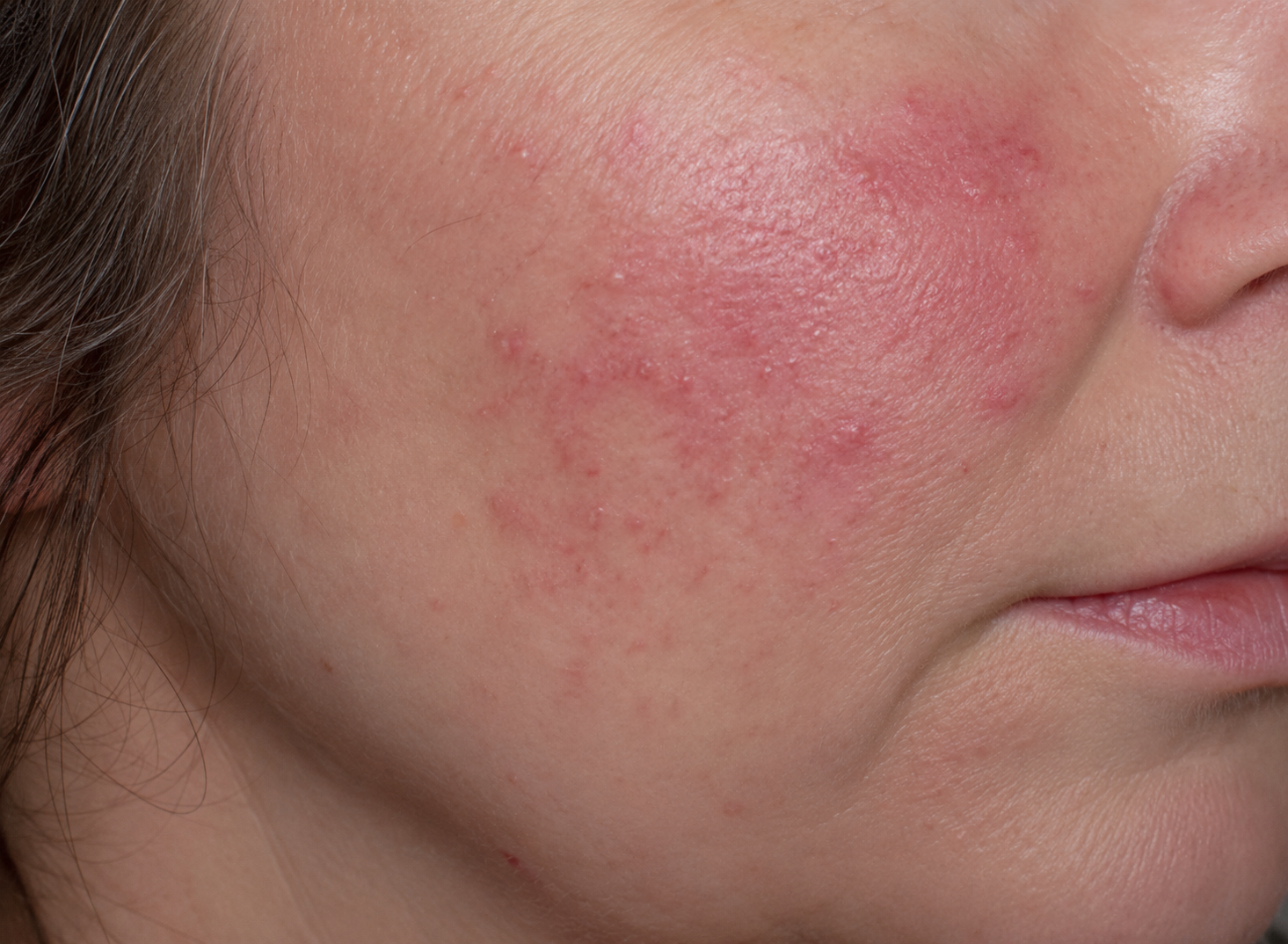
Papulopustular rosacea
If your main concern is flushing or persistent vascular redness without inflammatory bumps, I would be more cautious about expecting azelaic acid alone to make a big difference.
Concentration matters too. The strongest rosacea-specific evidence is mainly for 15% azelaic acid gel and 20% cream, while most cosmetic formulas contain around 10–12%.
That does not mean a lower concentration cannot be useful. If your skin is very reactive, a well-formulated 10–12% product may actually be easier to introduce. But I would not assume that a 10% cosmetic serum will give you the same results as the prescription-strength formulas used in rosacea studies.
If you are looking for the best Korean azelaic acid products for rosacea-prone skin, these are the ones I would look at first.
SKIN1004 Azelaic Acid 10 Ampoule
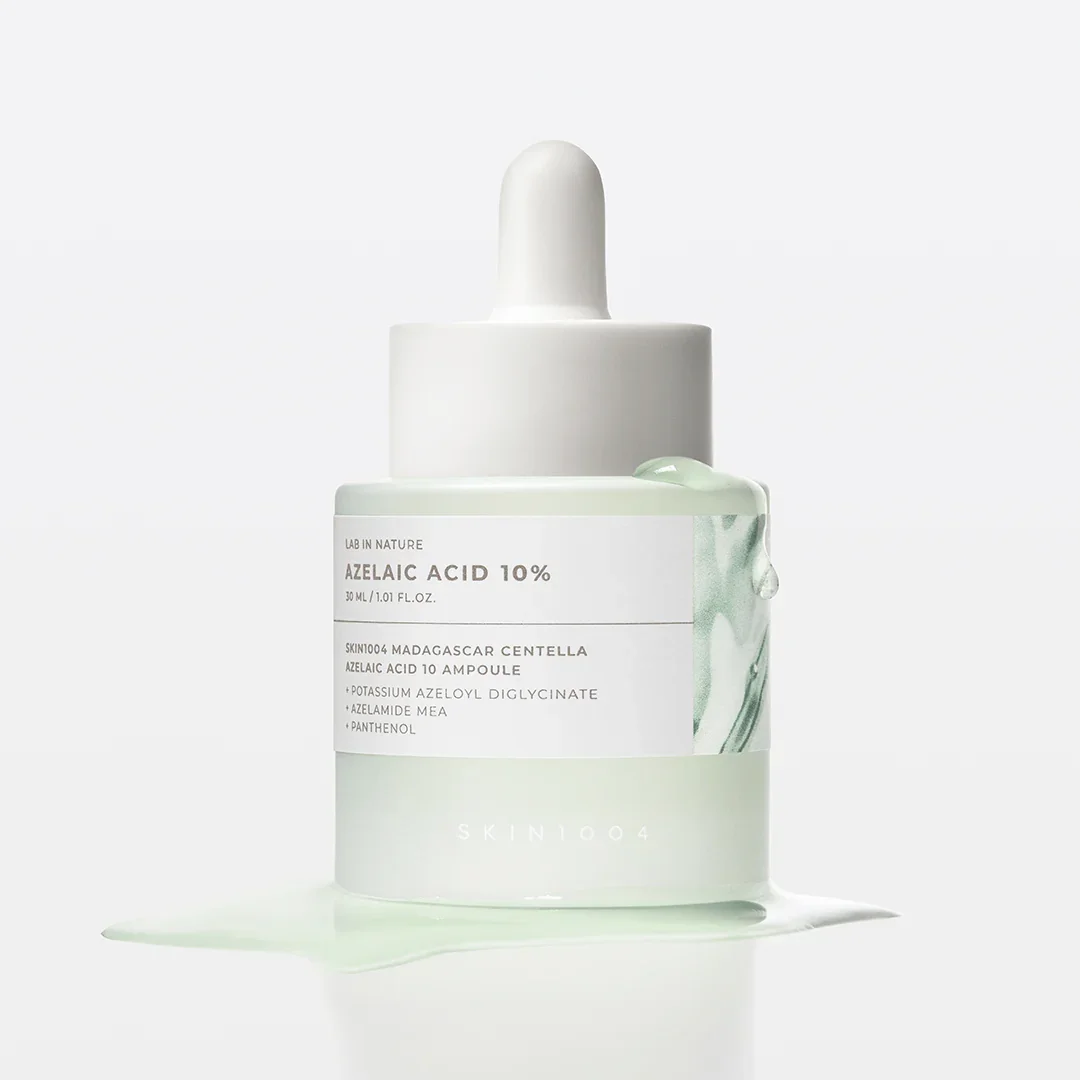
The SKIN1004 Azelaic Acid 10 Ampoule would probably be my first choice if your skin is very reactive and you want to keep the rest of the formula simple.
It contains 10% azelaic acid, together with 1% potassium azeloyl diglycinate (PAD) and 0.5% azelamide MEA. It is also paired with panthenol, allantoin, Centella, beta-glucan, sodium hyaluronate and licorice, which keeps the formula focused on hydration and barrier support.
Best for: Reactive skin and anyone wanting a relatively minimalist 10% azelaic acid formula
Texture: Lightweight, watery ampoule
Fungal-acne safe: Yes, based on ingredient-list screening
TIRTIR Azelaic Acid 12% Serum
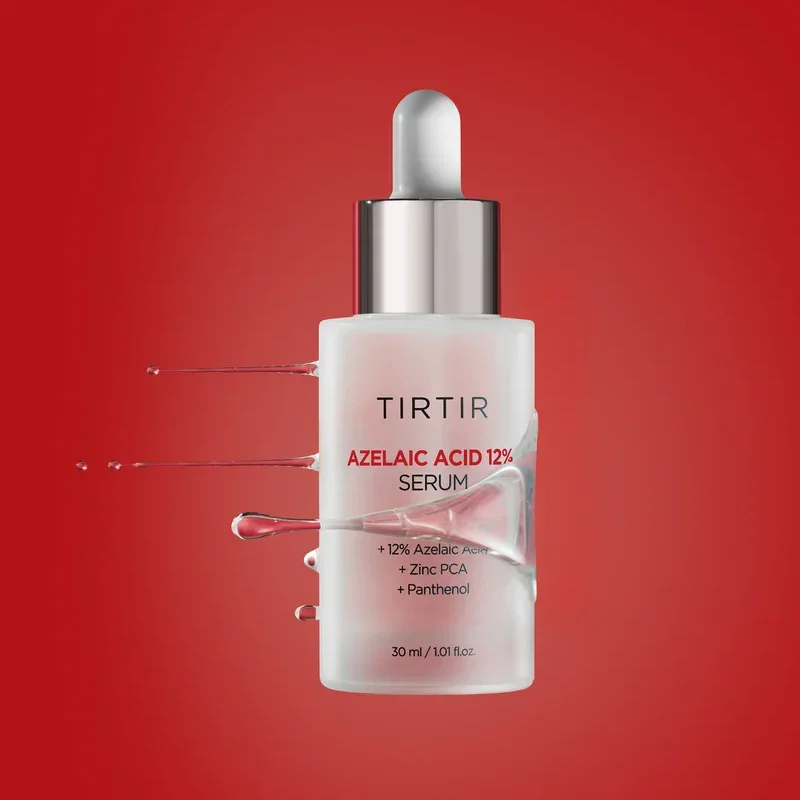
The TIRTIR Azelaic Acid 12% Serum is one of the stronger Korean cosmetic options. It contains 12% azelaic acid, together with panthenol, betaine, Zinc PCA, ceramide NP and humectants.
TIRTIR also reports improvements in hydration and redness in its own product testing. It is still worth keeping in mind that this tells us about the product itself, rather than proving an effect on rosacea specifically.
Best for: Anyone wanting a straightforward 12% azelaic acid serum without too many extra actives
Texture: Lightweight serum
Fungal-acne safe: No
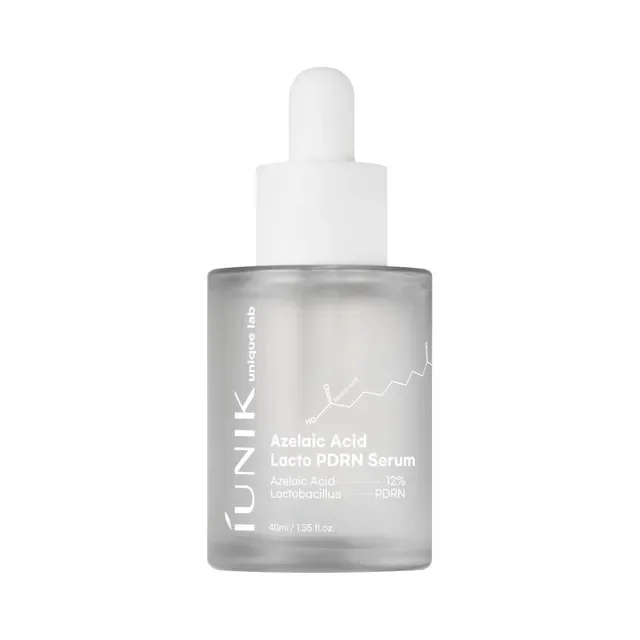
iUNIK Azelaic Acid Lacto PDRN Serum
Where to buy
Launched in July 2026, the iUNIK Azelaic Acid Lacto PDRN Serum contains 12% azelaic acid.
PDRN sounds like a nice bonus at first, but it is not really the reason this formula stands out. The more relevant part is the 12% azelaic acid paired with panthenol, glycerin, allantoin, beta-glucan, betaine, Zinc PCA, ceramide and amino acids.
I also appreciate that iUNIK describes its own testing specifically as improvement in dryness-related redness, rather than presenting it as proof that the serum improves rosacea itself.
Best for: Dehydrated or easily irritated skin that needs more barrier support alongside 12% azelaic acid
Texture: Lightweight, watery serum
Fungal-acne safe: No
COSRX Azelaic Acid 10 B5 Redness Soothing Cream
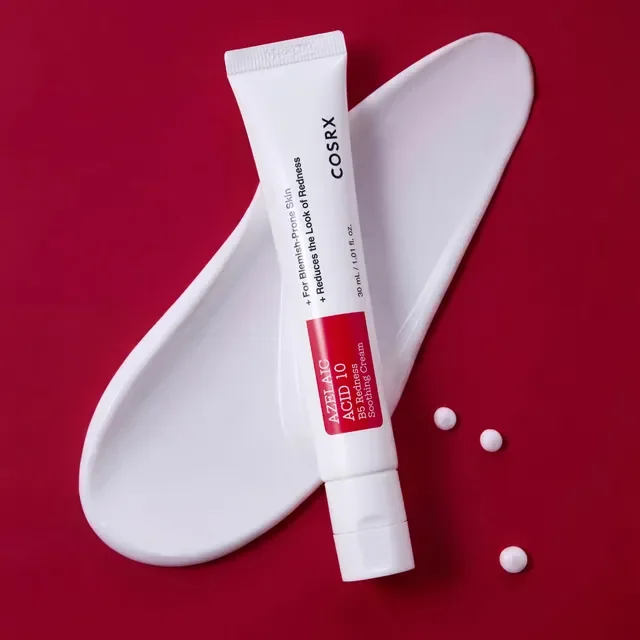
If you prefer a cream rather than another serum, the COSRX Azelaic Acid 10 B5 Redness Soothing Cream is probably the best option here.
It contains 10% azelaic acid, together with panthenol, Centella-derived actives, allantoin, dipotassium glycyrrhizate, Zinc PCA, hyaluronic acid and licorice.
There is also some niacinamide and gluconolactone further down the ingredient list, so it is not quite as minimalist as the former ones. But if your skin prefers a creamier texture, I still think it is a very sensible option.
COSRX reports non-comedogenic testing and a reduction in redness caused by physical irritation after one application. Again, I would not interpret that as proof that the cream improves rosacea-related persistent erythema, but it is still useful product-specific information.
Best for: Normal to dry skin, or anyone who prefers an azelaic acid cream
Texture: Lightweight cream
Fungal-acne safe: No
Is Niacinamide Good for Rosacea?
Niacinamide can be a useful ingredient if you have rosacea, especially as part of a barrier-supporting moisturizer. But the direct evidence is much more limited than it is for azelaic acid.
One small study followed 50 people with rosacea who used a niacinamide-containing moisturizer twice a day for four weeks. The moisturizer improved hydration and skin-barrier function, and participants also showed improvement in their rosacea signs and symptoms.
There is an important detail, though: the study tested a complete moisturizer, not niacinamide on its own. The formula contained around 2% niacinamide, so we cannot take the results and say that 2% niacinamide itself was responsible for everything that improved.
A more accurate takeaway is that a barrier-supportive moisturizer containing a relatively low concentration of niacinamide worked well in rosacea-prone skin.
There is also no good reason to assume that a 10% or 20% niacinamide serum would be better for rosacea. If your skin reacts easily, a lower concentration already built into your moisturizer may actually be a much more sensible place to start.
For Korean skincare, these two creams show two different ways to use niacinamide without adding a separate high-strength serum.
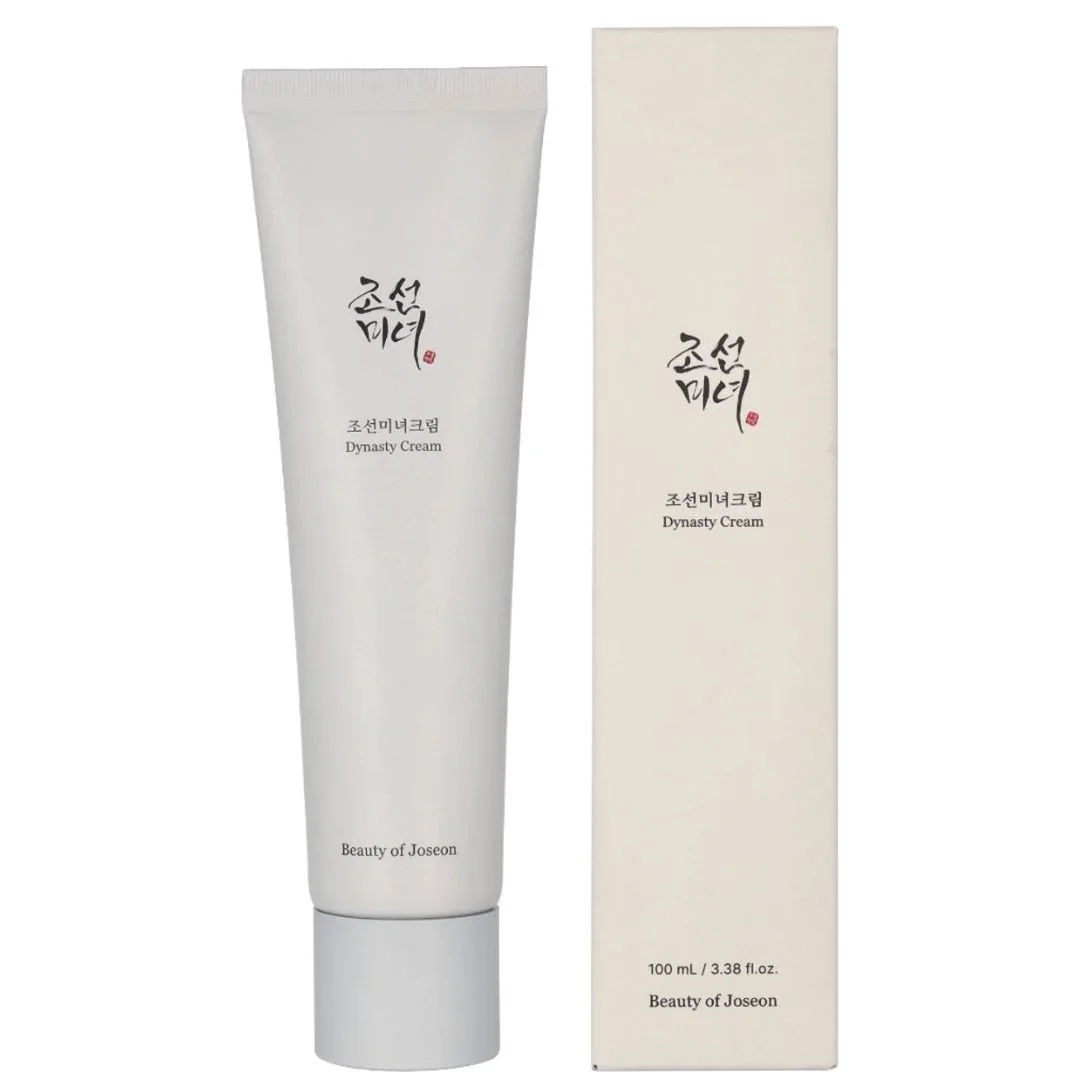
Beauty of Joseon Dynasty Cream
Where to buy
The Beauty of Joseon Dynasty Cream contains 2% niacinamide and 2% squalane, making it a good example of lower-dose niacinamide already built into your moisturizer.
The formula also includes glycerin, rice bran water, ginseng root water, hyaluronic acid and ceramide NP. It is fragrance-free and alcohol-free, and Beauty of Joseon reports that the cream was non-irritating in sensitive-skin testing.
Best for: Dry, dehydrated or reactive skin wanting low-dose niacinamide in a moisturizer
Texture: Rich, creamy moisturizer with a dewy finish
Fungal-acne safe: No
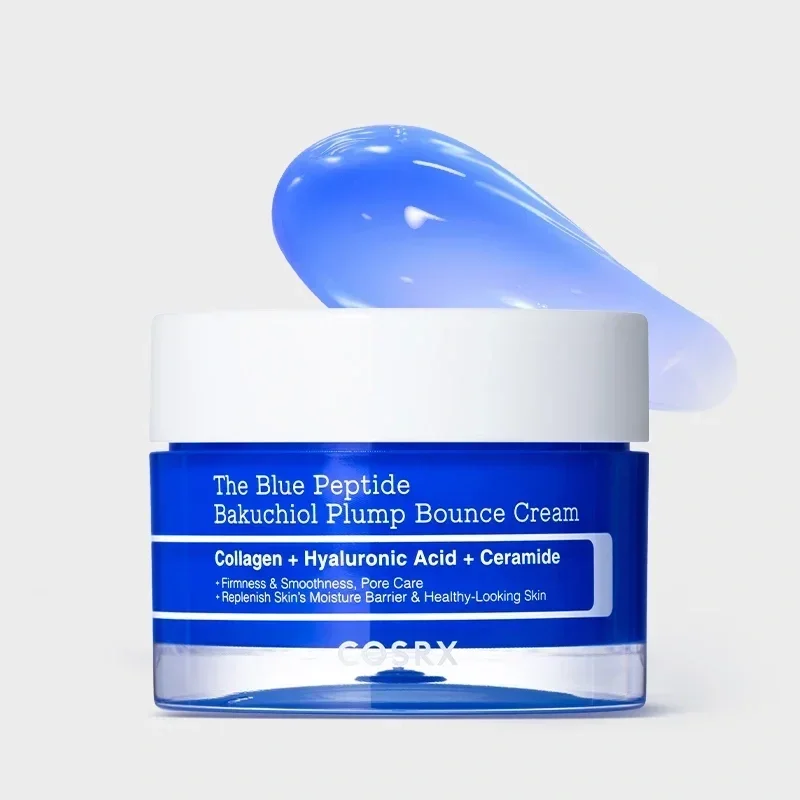
COSRX The Blue Peptide Bakuchiol Plump Bounce Cream
Where to buy
The COSRX The Blue Peptide Bakuchiol Plump Bounce Cream takes a different approach. It also contains 2% niacinamide, but adds bakuchiol, copper tripeptide, other peptides, squalane, ceramide NP, cholesterol, panthenol and beta-glucan.
This makes more sense if you have rosacea-prone skin but also want to work on signs of skin aging. Instead of layering a niacinamide serum, peptide serum, separate anti-aging product and moisturizer, one multifunctional cream can keep the routine shorter.
Best for: Rosacea-prone skin with anti-aging goals that benefits from a shorter routine
Texture: Lightweight, water-texture cream
Fungal-acne safe: No
Can You Use Tranexamic Acid With Rosacea?
Yes, tranexamic acid (TXA) can be used if you have rosacea, and early research suggests it may be particularly relevant to redness and flushing. But at this point, I would call it promising rather than well established.
This is quite different from azelaic acid. Tranexamic acid is not currently one of the standard topical options used for rosacea, but several small studies have produced encouraging results.
One small study of 20 women used 10% tranexamic acid, either alone or with microneedling, and found improvement that lasted for more than four months. You can read the study here.
A later study in 45 women also found improvement in redness with 10% topical TXA, with better results when microneedling was added.
A 2024 review also reported improvements in redness, flushing, burning and barrier function across several small studies. The main limitation is that the research is still small and uses very different methods, so tranexamic acid is promising, but not yet an established rosacea active.
The most accurate conclusion for now is that topical tranexamic acid looks promising for rosacea-related redness and flushing, but we still need better clinical studies to know how effective it really is.
There is another practical limitation if you are shopping for skincare. Much of the direct topical rosacea research has used 10% tranexamic acid, while serums commonly contain considerably less. A 4% TXA serum therefore should not be assumed to give the same results as the 10% solutions used in those studies.
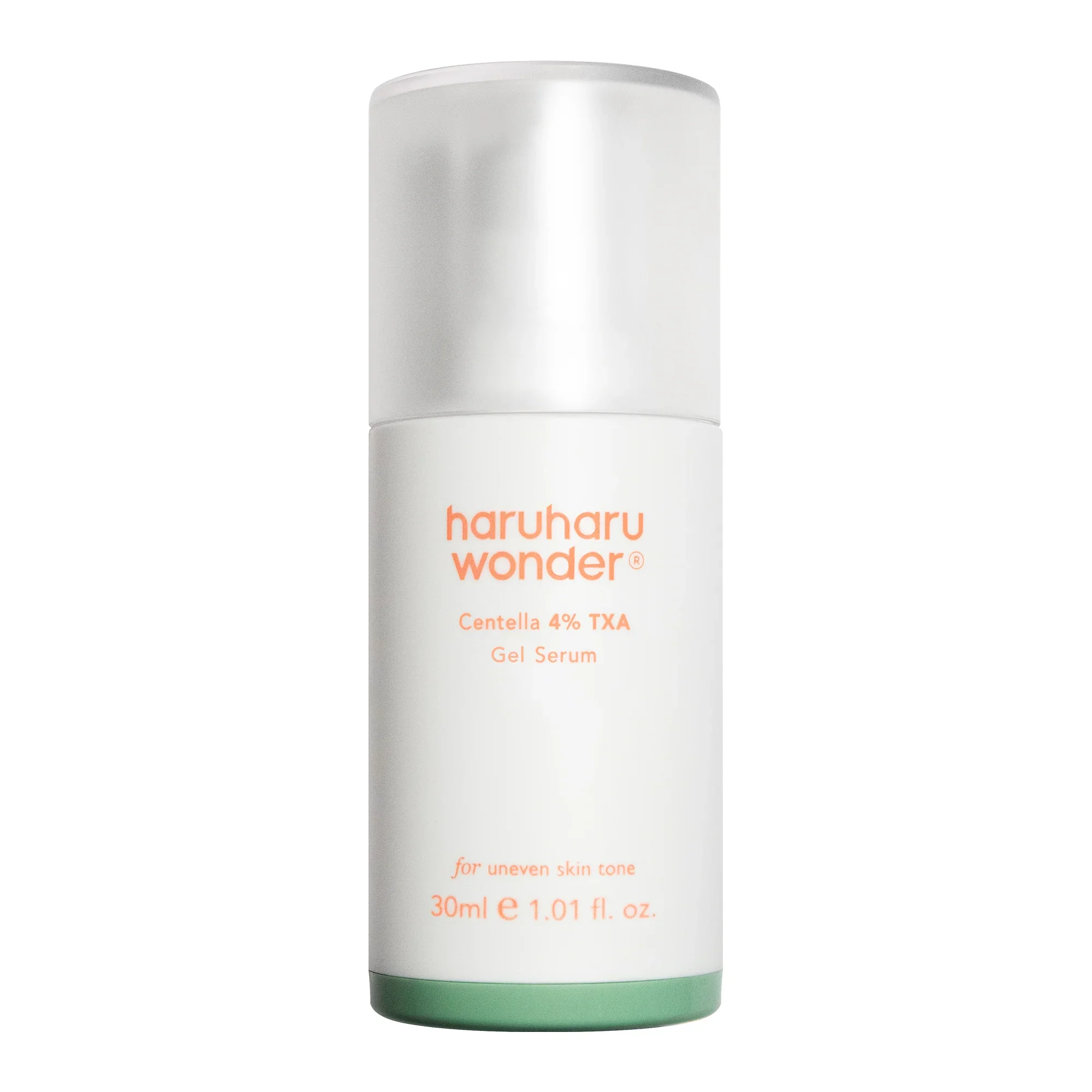
Haruharu Wonder Centella 4% TXA Gel Serum
Where to buy
For a K-beauty option, the Haruharu Wonder Centella 4% TXA Gel Serum is a particularly good fit if redness is not your only concern.
It combines 4% tranexamic acid with 4% niacinamide, plus Centella components, madecassoside, pear extract and small amounts of ascorbic acid and sodium ascorbyl phosphate.
Its real advantage is broad: if you have rosacea-prone skin together with post-inflammatory hyperpigmentation (PIH), uneven tone or melasma, one serum can cover several of those goals without layering multiple separate brightening actives.
The 4% niacinamide concentration is also relatively moderate compared with the 10–20% niacinamide serums now common on the market.
Best for: Rosacea-prone skin with dark spots, post-inflammatory pigmentation or melasma
Texture: Lightweight, bouncy gel serum with a non-sticky finish
Fungal-acne safe: No
Can You Use Retinol or Retinoids With Rosacea?
Yes, having rosacea does not automatically mean you have to avoid retinoids. But whether your skin can tolerate one depends a lot on how calm and stable your rosacea is.
Retinoids have actually been studied in rosacea, although the evidence is still limited. In one study of 55 people with inflammatory rosacea, 0.1% adapalene reduced the number of inflammatory lesions, but it did not make a meaningful difference to persistent redness or visible blood vessels. You can read the study here.
That does not make retinoids a routine first choice for rosacea. A 2025 systematic review found that topical retinoid research is still limited and somewhat contradictory, and larger studies are needed. The current National Rosacea Society algorithm also keeps topical retinoids mainly for selected or more difficult cases rather than listing them among the usual first options for mild inflammatory rosacea.
For skincare, though, there is another reason you may want a retinoid: anti-aging.
If your rosacea is well controlled and your skin is comfortable, a carefully chosen retinoid may still be an option for fine lines, texture or other signs of skin aging. If your skin is already burning, stinging, very flushed or inflamed, that is probably not the best time to introduce one.
And with rosacea-prone skin, I would not treat prolonged burning or increasing redness as something you simply have to “push through” while your skin gets used to retinol.
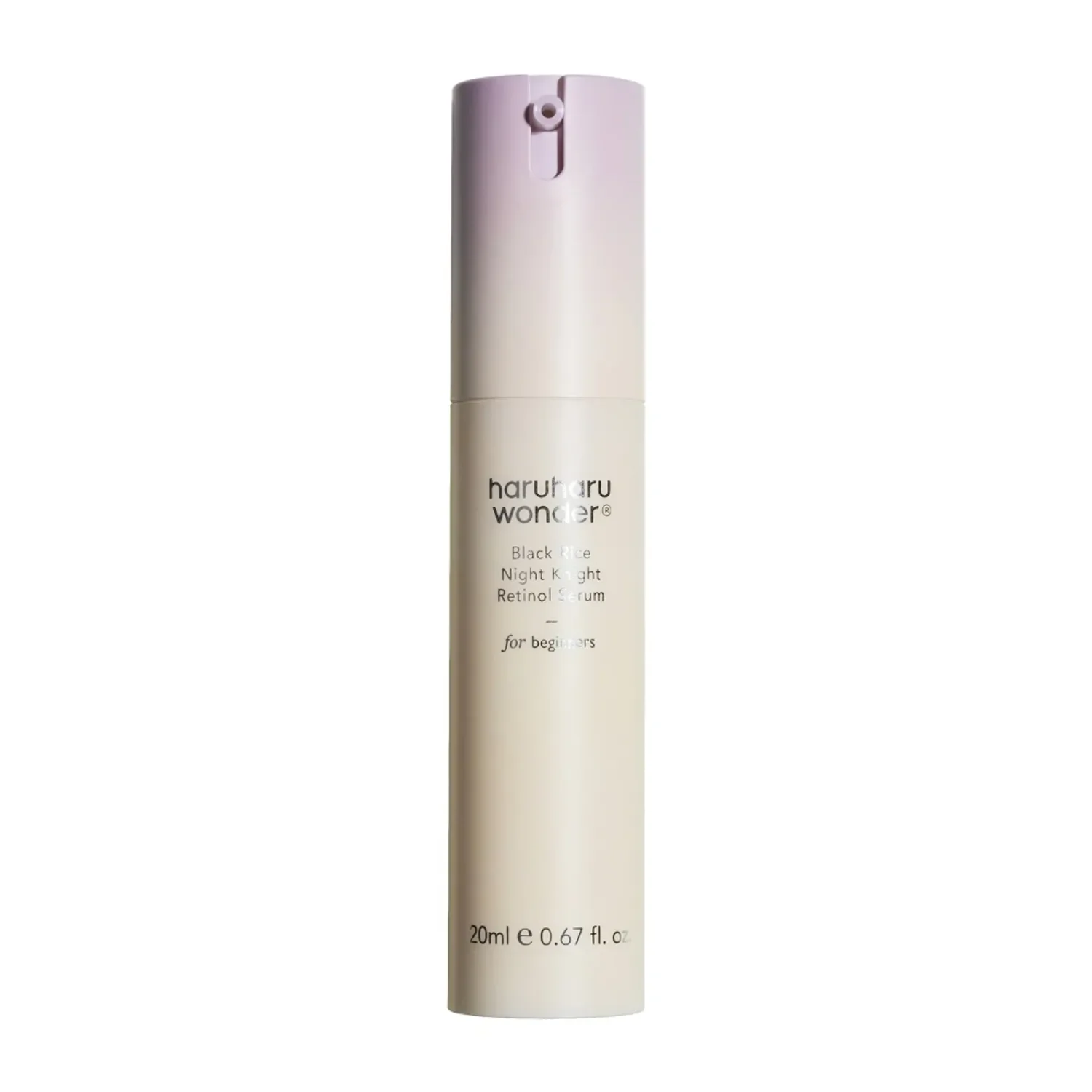
Haruharu Wonder Black Rice Night Knight Retinol Serum
Where to buy
The Haruharu Wonder Black Rice Night Knight Retinol Serum is probably the gentlest starting point of these three. It uses 0.08% pure retinol in a microencapsulated form, together with 1% bakuchiol, ceramide NP, sunflower seed oil, fermented black rice and adenosine.
The microencapsulation is worth mentioning here. Encapsulation and controlled-release systems are recognized formulation strategies for reducing retinoid irritation, rather than simply being a marketing term. A 2024 review discusses several of these approaches, including encapsulation, lipid carriers and cyclodextrin systems.
There is also human research showing that a slower-release retinol system produced 12–23% less irritation than another delivery system at the same retinol concentrations. That does not prove this particular Haruharu serum will be irritation-free if you have rosacea, but it does support the logic behind choosing a controlled-release formula when tolerability matters.
Best for: Retinol beginners or reactive skin looking for an anti-aging retinoid
Texture: Lightweight, milky serum
Fungal-acne safe: No
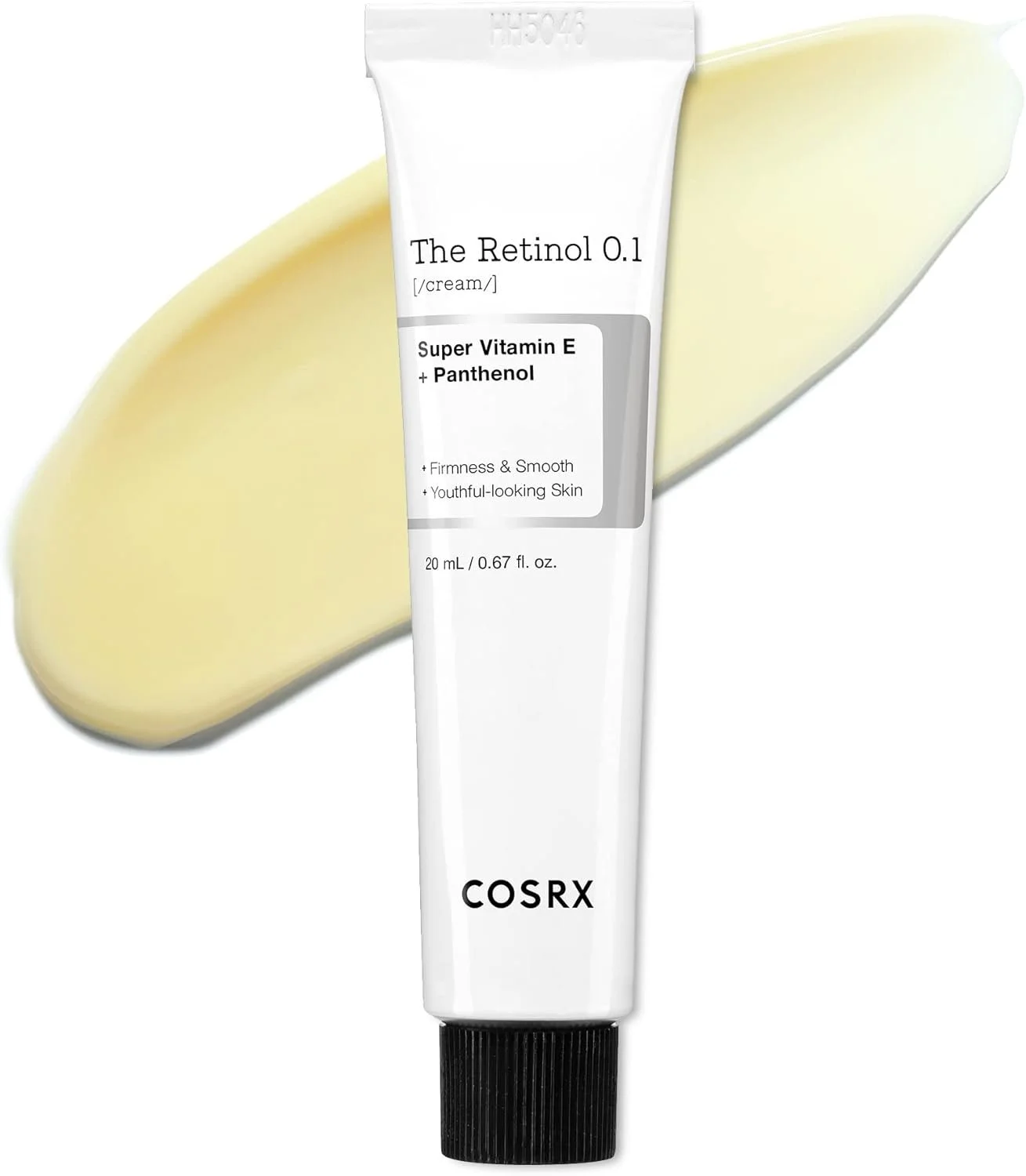
COSRX The Retinol 0.1 Cream
Where to buy
The COSRX The Retinol 0.1 Cream gives you 0.1% pure retinol in a richer cream.
The formula includes glycerin, panthenol, shea butter, soybean and sunflower oils, allantoin, vitamin E and several forms of hyaluronic acid.
This makes more sense if your skin tends to be dry as well as rosacea-prone, because the retinol is already sitting in a more nourishing cream base.
Best for: Dry or normal skin wanting a beginner-strength pure retinol cream
Texture: Creamy and more nourishing than the other two options
Fungal-acne safe: No
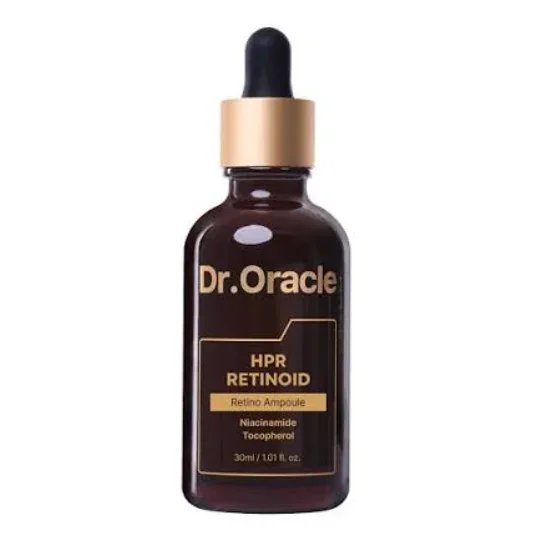
Dr. Oracle Retino Tightening Vitamin A Ampoule
Where to buy
The Dr. Oracle Retino Tightening Vitamin A Ampoule takes a different route and uses 0.1% HPR (Hydroxypinacolone Retinoate) with niacinamide and adenosine included in the supporting formula.
HPR is often marketed as a gentler next-generation retinoid, but I would be careful not to turn that into a rosacea claim. We do not have good evidence showing that HPR is specifically the safest retinoid for rosacea-prone skin.
Best for: Someone who wants to try an HPR-based anti-aging product rather than pure retinol
Texture: Lightweight ampoule
Fungal-acne safe: No
Whichever retinoid you choose, the same rule matters more than chasing the “gentlest” retinoid name: start slowly and pay attention to what your own skin is telling you. If your rosacea is calm, you may tolerate a retinoid perfectly well. If burning, flushing or persistent irritation starts increasing, that is a reason to reduce or stop it rather than forcing your skin to adapt.
Is Vitamin C Too Irritating for Rosacea-Prone Skin?
Not necessarily. Vitamin C can be used with rosacea-prone skin, but pure L-ascorbic acid may sting or feel too strong if your skin is very reactive. The direct evidence for vitamin C in rosacea is also still quite limited.
Lower-strength vitamin C may still have something to offer for redness. A small rosacea study using 5% vitamin C reported improvement in erythema, and similar results were seen in another small group of women with redness-prone, capillary-visible skin after six weeks. A 2024 review of topical ascorbic acid summarizes this evidence, including the 5% vitamin C clinical study.
That is interesting, but it is nowhere near the level of evidence we have for azelaic acid.
For most people with rosacea, I would think of vitamin C mainly as an antioxidant and anti-aging active that you may still be able to use, rather than something you need because you have rosacea.
Purito SEOUL Pure Vitamin C Serum
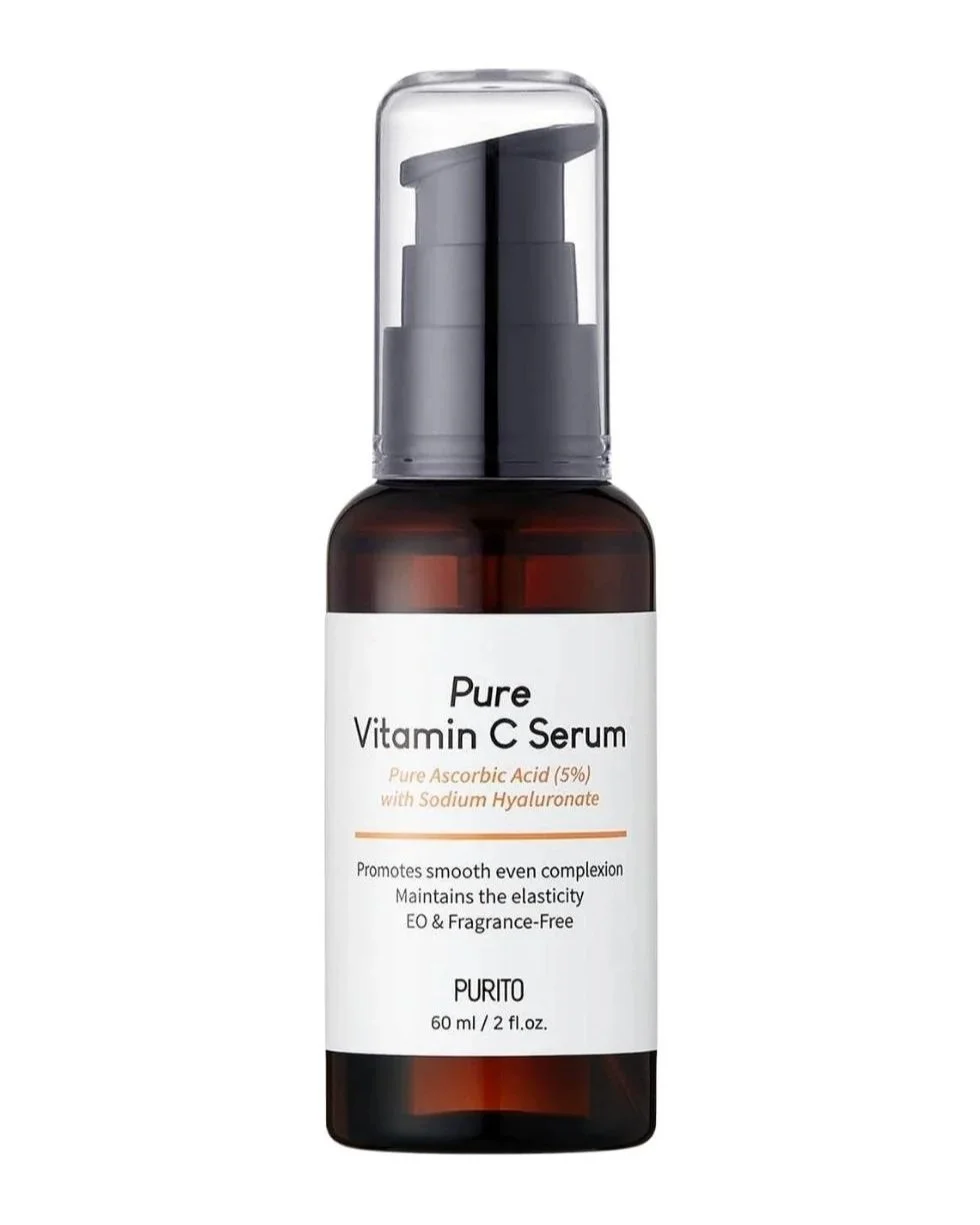
The Purito Pure Vitamin C Serum contains 5% pure ascorbic acid, which makes it a good starting point if you want to use pure vitamin C without going straight to a high concentration. PURITO pairs it with bamboo water, sodium hyaluronate, niacinamide, glutathione and adenosine.
The 5% concentration is also worth noting because it is similar to the concentration used in the small studies above. That does not mean this serum has been shown to improve rosacea, but it gives you a more moderate pure-vitamin-C option than the stronger formulas commonly sold for brightening and anti-aging.
Purito itself advises people with sensitive skin to start with a small amount or mix the serum with moisturizer if needed.
Best for: Rosacea-prone skin wanting to try pure vitamin C at a moderate concentration
Texture: Lightweight serum
Fungal-acne safe: No
Beauty of Joseon Light On Serum: Centella + Vita C
Where to buy
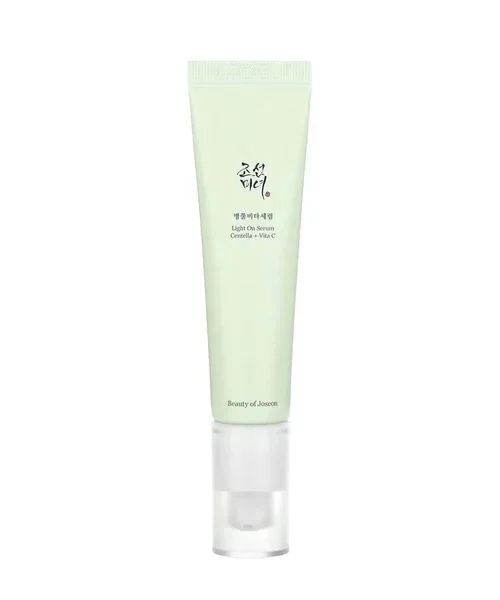
If pure ascorbic acid tends to sting your skin, the Beauty of Joseon Light On Serum: Centella + Vita C takes a different approach. It uses 3-O-ethyl ascorbic acid, a vitamin C derivative, rather than relying on a high concentration of pure L-ascorbic acid.
The current formula also includes Centella, betaine, panthenol, bisabolol and beta-glucan, so the serum is built around more than brightening alone.
There is much less direct rosacea research on vitamin C derivatives, so I would not say that 3-O-ethyl ascorbic acid is proven to be better for rosacea. It is simply another option if your skin does not get along well with pure vitamin C.
Best for: Sensitive or reactive skin that does not tolerate pure ascorbic acid well
Texture: Lightweight, non-sticky creamy serum
Fungal-acne safe: No
Can You Use AHA, BHA or PHA If You Have Rosacea?
Having rosacea does not automatically mean that AHA, BHA or PHA can never be used, but exfoliating acids deserve more caution because irritation itself can aggravate rosacea symptoms.
The American Academy of Dermatology specifically lists glycolic acid and lactic acid among ingredients that can irritate rosacea-prone skin. Individual tolerance varies, but burning, stinging, increased flushing or prolonged redness are signs that an exfoliating product is not agreeing with your skin.
What About PHA?
PHA is often described as gentler than traditional AHAs, but gentler does not mean irritation-free or automatically suitable for rosacea-prone skin.
There is not enough evidence to say that one exfoliating-acid category is universally the best choice for rosacea. Concentration, formulation, frequency of use and the current state of the skin can all affect tolerance.
So I would avoid both extremes: rosacea does not automatically make every exfoliating acid forbidden, but it also does not mean that exfoliation should be considered a routine part of rosacea-prone skincare.
Frequently Asked Questions
Should I Stop All Active Ingredients During a Rosacea Flare?
Not necessarily, but if your skin is suddenly burning, stinging, flushing more than usual or feeling very sensitive, it is usually better not to introduce anything new or potentially irritating. The National Rosacea Society continues to emphasize gentle skincare and trigger avoidance as part of rosacea management.
Is There an Official “Rosacea-Safe” Active Schedule?
No. There is no evidence-based schedule telling everyone with rosacea exactly which actives to use and how often. Current rosacea guidelines are based much more on your individual symptoms and skin tolerance than on a universal skincare routine.
Can I Use More Than One Active Ingredient If I Have Rosacea?
Yes, but introducing several new actives at once makes it much harder to know what caused irritation if your skin reacts. Adding them one at a time gives you a much clearer idea of what your skin actually tolerates.
How Should I Test a New Product If I Have Rosacea?
The American Academy of Dermatology recommends testing a new skincare product on a small area twice daily for 7–10 days before using it more widely. It cannot guarantee that your whole face will react the same way, but it can help catch obvious irritation first.
Does “Suitable for Sensitive Skin” Mean a Product Is Safe for Rosacea?
Not necessarily. Sensitive-skin testing can be useful, but it is not the same as testing a product specifically in people with rosacea. The full formula, concentration and your own skin tolerance still matter.
Can You Use Peptides If You Have Rosacea?
Peptides are not automatically off-limits if you have rosacea, but there is very little direct rosacea-specific research on them. If you use peptides for anti-aging or general skin support, the overall formula and how your skin tolerates it are more important than the peptide label itself.
What Does “Active Ingredient” Mean in Skincare?
In everyday skincare language, an active is usually an ingredient included to produce a specific effect, such as helping with pigmentation, acne, skin aging or cell turnover. But “skincare active” is not a formal regulatory category for ordinary cosmetics, so throughout this article I use the term in its common skincare sense.
Build a Routine Your Rosacea-Prone Skin Can Actually Tolerate
Having rosacea does not mean giving up every active ingredient or keeping your routine permanently basic. What matters much more is choosing ingredients for a reason, keeping irritation low, and paying attention to how your own skin responds.
If you want to learn more about ingredients, Korean skincare and how to build a routine that actually makes sense, you can find more practical guides on my skincare blog.
Not sure what your skin needs or where to start? Take my free Skin Type Quiz for a simple starting point.
And if you have rosacea-prone skin and are struggling to put together a routine that feels gentle but still effective, you can contact me or take a look at my personalized skincare consultation options. I can help you simplify what you are using, choose products around your individual concerns and build a routine without adding actives just for the sake of having more steps.


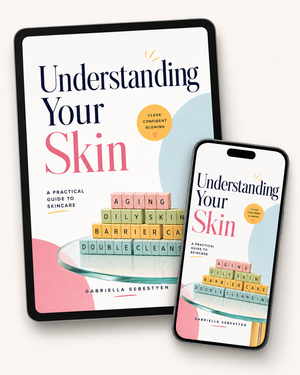
Understanding Your Skin
A Practical Guide to Skincare
I wrote Understanding Your Skin to help you build an effective skincare routine with confidence. This illustrated guide explains skin types, ingredients, and routines in a practical, evidence-based way that's easy to understand and apply.
- Written by a physician
- 120-page illustrated guide
- Evidence-based skincare guidance
- Sample routines & product recommendations

Having rosacea does not mean giving up every active ingredient. This guide looks at which actives can still fit into your routine, where the evidence is strongest, and which ones need more caution.