Medicube vs. Celimax Retinal Booster: Which One Should You Choose?
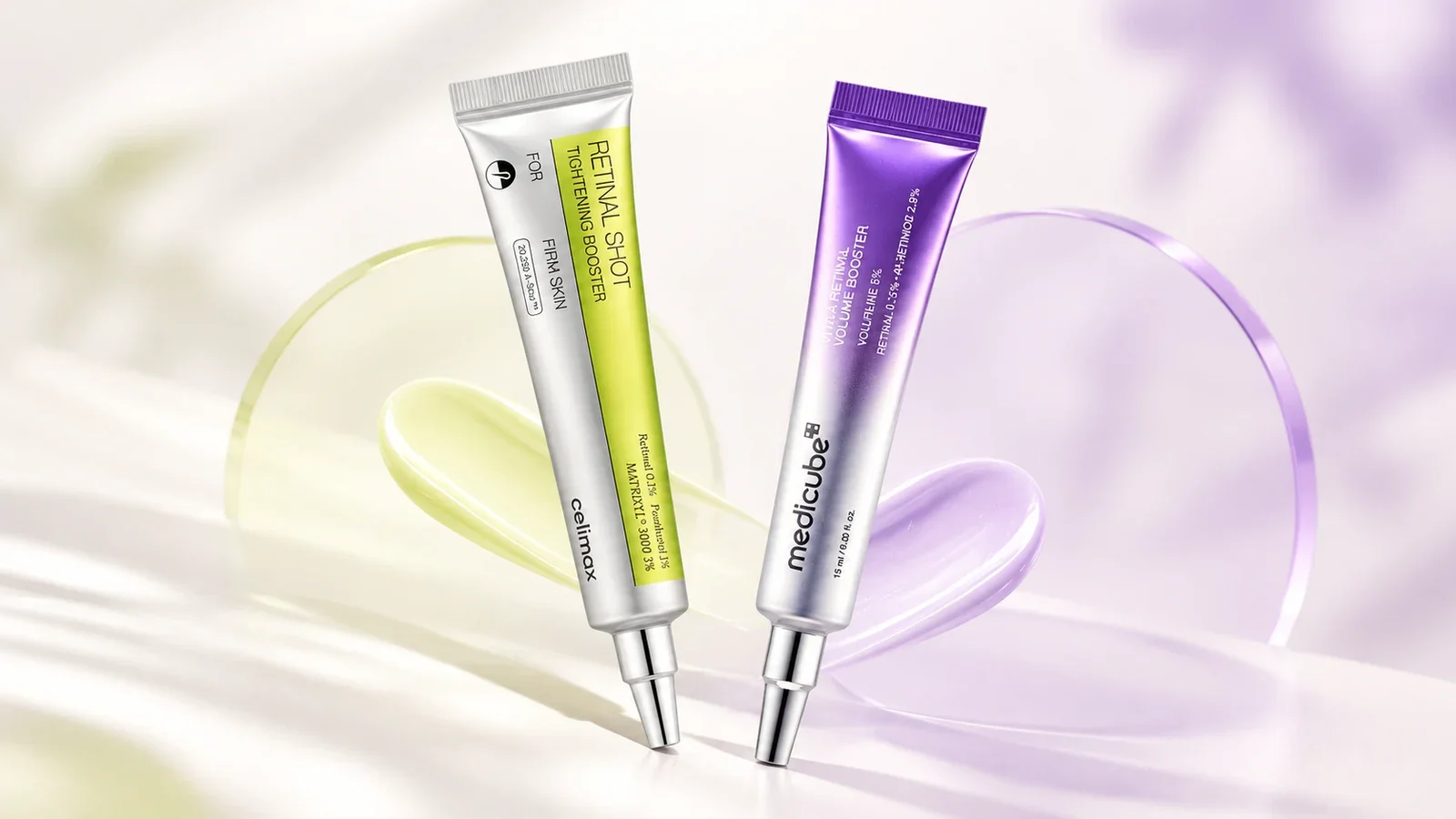
The new Medicube Vita A Retinal Volume Booster, available by September 2026, combines 0.15% retinal, three additional retinoids, and micro-spicules. Sounds familiar? The popular Celimax Vita A Retinal Shot Tightening Booster also combines retinal with micro-spicules, although at a lower 0.1% concentration.
With two such similar Korean retinal boosters, there's plenty to compare! And while their main ingredients might look almost identical, their complete formulas reveal some important differences that could change which one is better for your skin.
So, let's see how Medicube and Celimax compare, and which one I'd actually recommend for different skin types and concerns.
Some links are affiliate links. If you choose to purchase through them, it helps support my work at no extra cost to you.
Retinal Concentration and Technology
Medicube contains 0.15% retinal plus three additional retinoids, while Celimax uses 0.1% retinal with nano-liposomal delivery technology. Medicube has the higher concentration, but that doesn't necessarily make it more effective. How retinal is formulated also matters.
Related Article: Retinol in Skincare: How to Use It, and Why It Matters
Medicube: 0.15% Retinal + Three Additional Retinoids
Medicube combines 0.15% retinal with retinol, retinyl acetate, and hydroxypinacolone retinoate (HPR). These four vitamin A derivatives work through different pathways, although the concentrations of the additional three aren't disclosed.
This makes Medicube an interesting option for experienced retinoid users who want a higher-strength formula. However, combining four retinoids doesn't automatically mean better results.
Celimax: 0.1% Retinal With Nano-Liposomal Technology
Celimax takes a different approach, using 0.1% retinal encapsulated in nano-liposomes measuring approximately 30 nanometers, according to the brand.
This delivery system is designed to help protect retinal from degradation and improve its delivery into the skin. A 2024 study on liposomal retinaldehyde found that encapsulation could improve retinal stability and skin penetration, highlighting why delivery technology can be just as important as the concentration itself.
Micro-Spicules: Does Medicube or Celimax Have Better Delivery Technology?
Medicube contains 21,000 micro-spicules measuring approximately 10 μm, while Celimax contains 20,250 A-Shot particles measuring 15 μm. Micro-spicules are tiny, needle-like structures derived from marine sponges. They temporarily create microscopic pathways through the skin's outer barrier, helping skincare ingredients penetrate more effectively.
Related Article: The Complete Guide to Spicule Skincare: Benefits, Risks, and the Best Products Worth Trying
Medicube: Smaller Micro-Spicules
Medicube's spicules are approximately one-third smaller than Celimax's, with only 750 more particles. However, research on sponge spicules suggests that their shape and proportions also influence how effectively they enhance skin permeability.
Celimax: A-Shot Technology
Celimax provides more detailed testing of its spicule technology. In a brand-commissioned study involving 20 adults, the company reported an 892.35% increase in measured absorption depth compared with a spicule-free version of the formula.
Both products may cause a prickling sensation during application. Since micro-spicules temporarily affect the skin barrier, people with highly sensitive or compromised skin should be particularly cautious.
Personally, I wouldn't choose between these two boosters based on their micro-spicules. Both use similar technology, and I find the differences in their retinal formulations and supporting ingredients much more important.
Volufiline vs. Matrixyl: Which Is Better for Skin Aging?
Medicube contains 5% Volufiline, an ingredient complex designed to improve the appearance of skin volume, while Celimax contains 3% Matrixyl 3000, a peptide complex targeting fine lines and wrinkles. Although both support the products' anti-aging claims, they focus on different concerns.
One important detail: these percentages refer to the complete ingredient complexes, not the concentrations of their individual active molecules.
Medicube: 5% Volufiline for Plumper-Looking Skin
Volufiline combines Anemarrhena asphodeloides root extract with an oil-based carrier. Its key compound, sarsasapogenin, is promoted for its potential to encourage lipid storage in fat cells.
According to Croda Beauty, the company behind Volufiline, the ingredient may encourage lipid storage in fat cells and improve the appearance of skin volume. However, independent clinical evidence remains limited, particularly for claims about restoring lost facial fat.
Medicube may appeal to someone concerned about hollow-looking areas or reduced facial plumpness, although its rich moisturizing formula can also contribute to a fuller, smoother appearance.
Celimax: 3% Matrixyl 3000 for Fine Lines and Firmness
Matrixyl 3000 combines two peptides, Palmitoyl Tripeptide-1 and Palmitoyl Tetrapeptide-7, designed to support the skin's structural proteins and improve the appearance of wrinkles.
Also developed by Sederma, now part of Croda Beauty, Matrixyl 3000 has some encouraging clinical evidence. A scientific review published in 2025 discusses studies showing improvements in wrinkle appearance with these peptides. However, research specifically isolating Matrixyl 3000 is still limited, and the peptides' individual concentrations in Celimax aren't disclosed.
For me, Matrixyl 3000 is the more relevant addition for fine lines and firmness, while Volufiline is interesting for its plumping claims. Still, I'd give retinal more weight than either of these supporting ingredients when choosing between the two boosters.
Full Formulation Comparison: Which Booster Is Better for Your Skin Type?
Medicube has a richer, more complex formula with several moisturizing oils and barrier-supporting ingredients, while Celimax uses a simpler, fragrance-free formula with fewer potentially irritating ingredients. This makes Medicube particularly interesting for dry skin, while Celimax may be a better fit for oily, combination, or fragrance-sensitive skin.
Medicube: Richer Moisturizing and Barrier Support
Beyond its retinoids, Medicube contains squalane, macadamia oil, olive oil, ceramide NP, cholesterol, and panthenol. These ingredients help soften the skin, reduce moisture loss, and support the skin barrier, which is particularly useful when using retinal.
The formula is likely to feel creamier and more nourishing than Celimax, making it appealing for dry or mature skin.
However, there's one important drawback: Medicube contains several fragrant essential oils, including jasmine, angelica root, and bitter orange leaf oil. Although the ingredient list doesn't include Parfum, these botanical oils contain aromatic compounds that may irritate sensitive or fragrance-reactive skin.
Celimax: Simpler Formula With Soothing Ingredients
Celimax takes a more minimalist approach, combining glycerin, panthenol, sodium lactate, and lecithin to provide hydration and support the skin barrier.
Its formula still contains moisturizing emollients, so it isn't necessarily a lightweight, watery serum. However, compared with Medicube's oil-rich composition, I'd expect it to feel somewhat lighter on the skin.
Another advantage is that Celimax contains no added fragrance or essential oils, making it a more suitable option for people who prefer fragrance-free skincare.
Which Formula Would I Choose?
For dry skin, I'd lean toward Medicube because of its richer moisturizing ingredients, provided fragrance isn't an issue.
For oily, combination, or fragrance-sensitive skin, Celimax would be my preference. Its simpler formula offers a good balance of hydration and barrier support without the additional fragrant botanical oils.
However, if your skin is extremely sensitive or your barrier is already compromised, I'd be cautious with both. Their combination of retinal and micro-spicules may be too irritating, regardless of the supporting ingredients.
Which Is Better for Different Skin Concerns?
Medicube may be the better choice for experienced retinoid users concerned about wrinkles, dryness, and loss of plumpness, while Celimax is a good option for fine lines, uneven texture, enlarged-looking pores, and early signs of aging. However, both products target many of the same concerns, so the differences are more about their formulations than completely different benefits.
Personally, I wouldn't switch from Celimax to Medicube just because Medicube has a higher retinal concentration or is the newer product. If Celimax is already working well for your skin, there's no compelling reason to change. I'd consider Medicube mainly if you prefer a richer formula and already tolerate stronger retinoids.
How to Use Medicube and Celimax Retinal Boosters Safely
Both booster serums are best introduced gradually into an evening skincare routine. Their combination of retinal and micro-spicules makes it especially important to avoid overusing them.
What Do the Brands Recommend?
Medicube recommends applying a small amount in the evening and starting every other night, adjusting the frequency according to skin tolerance.
Celimax also recommends every other night for the first two weeks, with the option to increase to nightly use once the skin has adjusted. Its Korean guidance is more cautious, suggesting 1–2 evenings weekly for dry or sensitive skin and 3–4 for combination or oily skin.
My Recommendation
I'd start either booster just twice a week, even if you've used retinol before. Apply a small amount to clean, dry skin, follow with moisturizer, and increase the frequency only if your skin remains comfortable.
Avoid combining them with other retinoids, strong exfoliating acids, or additional micro-spicule products in the same routine. Use sunscreen every morning, and stop using the booster if you develop persistent burning, redness, or irritation.
I also wouldn't recommend either product as someone's very first retinoid. A simple retinal or low-strength retinol formula without micro-spicules would be a gentler starting point.
Frequently Asked Questions
Can I Use Medicube or Celimax Retinal Booster Around My Eyes?
I wouldn't recommend applying either booster directly to the eyelids or close to the lash line. The combination of retinal and micro-spicules may be too irritating for this delicate area. If you're concerned about fine lines around your eyes, a dedicated eye product would be a safer choice.
Can I Use These Retinal Boosters With Vitamin C?
Yes, but I'd separate them into different routines. Use your vitamin C serum in the morning and your retinal booster in the evening. This is particularly sensible if you're using a strong, acidic vitamin C formula.
How Long Does It Take to See Results?
You may notice smoother, more hydrated-looking skin within a few weeks, but improvements in fine lines, uneven texture, and pigmentation generally take longer. Allow approximately 8–12 weeks of consistent use before evaluating the results, and remember that individual responses vary.
Can I Apply These Boosters Over Moisturizer?
Yes. Applying moisturizer first can help reduce direct contact with the skin and may make the routine more comfortable. However, it could also change how the micro-spicules interact with the skin, so the delivery effects may differ from applying the booster directly.
Can I Use Medicube or Celimax Retinal Booster During Pregnancy or Breastfeeding?
Avoid both products during pregnancy because they contain vitamin A derivatives. If you're breastfeeding, discuss retinoid use with your healthcare professional before starting either booster, particularly given their micro-spicule delivery systems.
Related article: Skincare During Pregnancy: What’s Safe (and What to Avoid)
Final Verdict: Medicube or Celimax?
If I had to choose, I'd recommend Medicube for experienced retinoid users who prefer richer skincare and want to focus on wrinkles and loss of plumpness. Celimax would be my choice for someone who wants a simpler, fragrance-free formula, particularly if they have oily or combination skin.
But I also think it's important not to overthink the numbers. A higher retinal concentration, a few more micro-spicules, or a longer ingredient list doesn't necessarily mean you'll get better results. What matters most is finding a formula your skin tolerates well enough to use consistently.
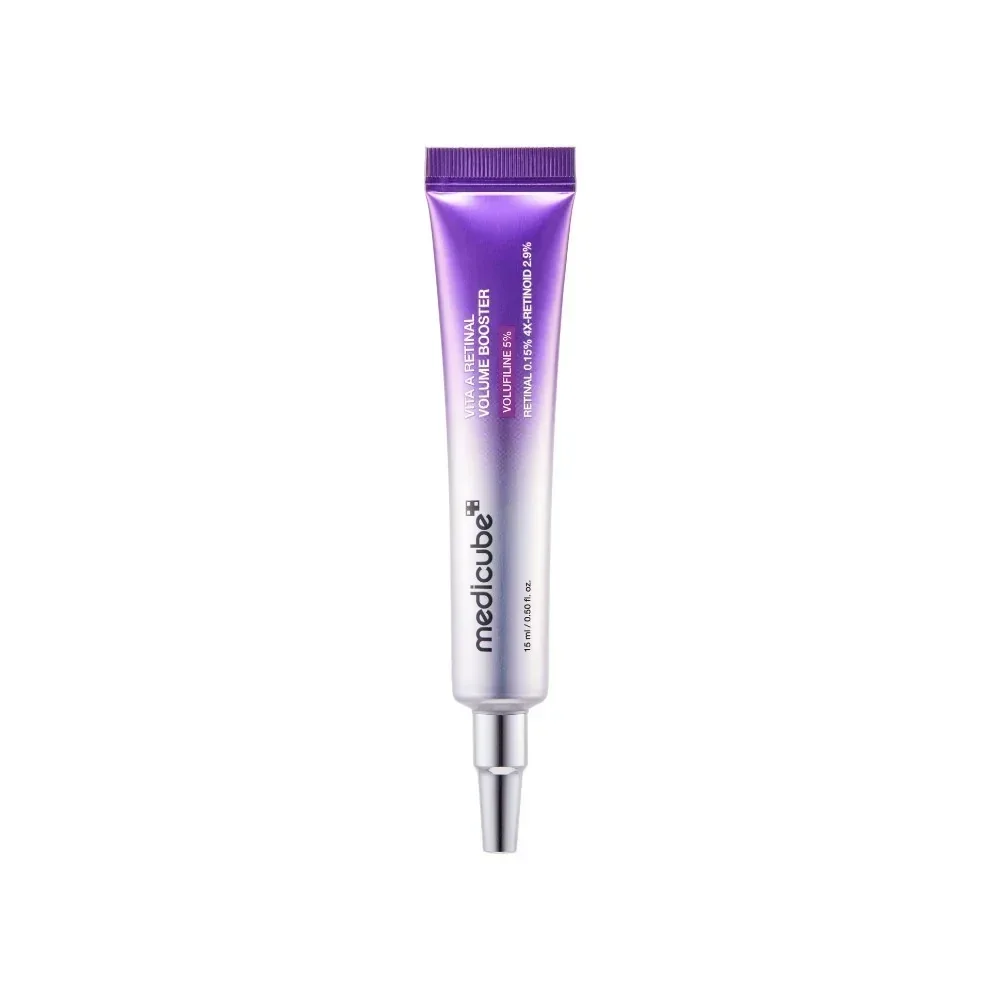
Medicube Vita A Retinal Volume Booster
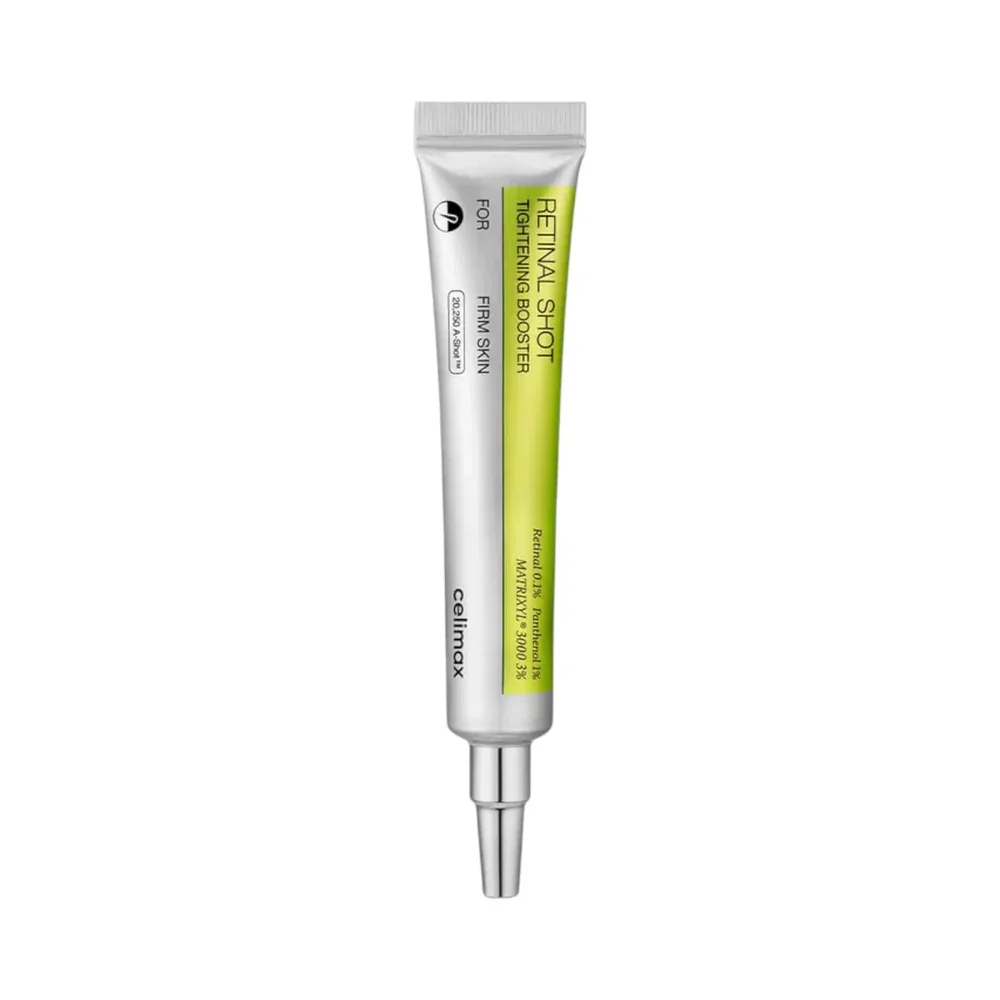
Celimax The Vita A Retinal Shot Tightening Booster
I hope this comparison has helped you understand the differences between these two boosters rather than making your decision even more confusing! And remember, if you're already happy with Celimax, you don't need to rush out and replace it with Medicube just because it's newer.
If you'd like to explore more Korean skincare products, ingredients, and brand comparisons, have a look around my skincare blog.
And if you're still unsure where to start, you can take my free skin type quiz or explore my personalized skincare consultations. I'd be happy to help you find products that actually suit your skin, rather than simply following the latest skincare trends.








Understanding Your Skin
A Practical Guide to Skincare
I wrote Understanding Your Skin to help you build an effective skincare routine with confidence. This illustrated guide explains skin types, ingredients, and routines in a practical, evidence-based way that's easy to understand and apply.
- Written by a physician
- 120-page illustrated guide
- Evidence-based skincare guidance
- Sample routines & product recommendations

I compared Medicube and Celimax retinal boosters, from their ingredients to their formulas, to help you find the better match for your skin.