Why Does Vitamin C Serum Sting? 6 Reasons, What to Do & Gentler Korean Options

Vitamin C serum can sting because of its low pH, a high concentration of pure vitamin C, an irritated skin barrier, other active ingredients in your routine, or the serum formula itself. This is especially common with pure vitamin C, also called L-ascorbic acid, which is usually formulated at a very acidic pH.
In this guide, you’ll learn why vitamin C can sting, how to make it easier to tolerate, and which Korean vitamin C serums may be worth trying if stronger formulas feel uncomfortable.
Key Takeaways
Pure vitamin C, or L-ascorbic acid, is the form most likely to sting because it is usually formulated at a very low pH to improve skin penetration.
A vitamin C serum that suddenly starts stinging may be a sign that your skin barrier is irritated, especially if other products also feel more uncomfortable than usual.
Higher vitamin C percentages are not automatically better. Lower-strength L-ascorbic acid or a vitamin C derivative may be easier to tolerate while still fitting into an effective routine.
Retinoids and exfoliating acids can make vitamin C feel more irritating because several potentially irritating products can add up, even when the ingredients are not chemically incompatible.
Persistent burning is not a sign that vitamin C is working better. If the discomfort lasts, causes redness, or keeps returning, adjust the strength, frequency, or formula instead of pushing through it.
Some links are affiliate links. If you choose to purchase through them, it helps support my work at no extra cost to you.
Why Does My Vitamin C Serum Sting or Burn? 6 Common Reasons
If your vitamin C serum stings, it does not necessarily mean that vitamin C is simply “too strong” for your skin. The form and concentration of vitamin C, the pH of the formula, the condition of your skin barrier, other actives in your routine, and the rest of the serum formula can all affect how it feels on your skin.
This is especially relevant to pure vitamin C, also called L-ascorbic acid. Unlike many vitamin C derivatives, pure vitamin C is usually formulated at a very low pH, which can make it more noticeable on sensitive or irritated skin.
1. Pure Vitamin C Serums Usually Have a Very Low pH
Pure vitamin C does not penetrate the skin particularly easily, so L-ascorbic acid serums are generally formulated at a pH below about 3.5 to improve skin penetration.
For comparison, the normal pH of your skin is usually around 4.1 to 5.8.
So you may be applying a serum with a pH of around 3–3.5 to skin that normally sits closer to pH 5. That difference helps explain why pure vitamin C can sometimes feel sharp, tingly or sting when you apply it.
This does not mean that a low-pH serum is automatically damaging your skin. A mild, brief tingle can happen with an acidic formula.
But strong burning, pain or redness that does not quickly settle is different and may mean your skin is not tolerating the product well.
2. Higher Vitamin C Concentrations Can Be More Irritating
With pure vitamin C, a bigger percentage on the bottle is not automatically better.
Skin delivery appears to improve up to around 20% L-ascorbic acid. Above that, higher concentrations do not appear to improve penetration and may increase the chance of irritation.
That does not mean everyone will find a 20% serum irritating. Some people tolerate strong formulas very well, while others notice stinging at much lower concentrations.
You may even find one 20% serum comfortable and another 15% serum irritating.
That is because the percentage is only one part of the formula. The pH and the other ingredients also affect how the finished serum feels on your skin.
3. Your Skin Barrier May Be Irritated
This is particularly worth thinking about if your usual vitamin C suddenly starts to sting when it never did before.
The outermost part of your skin acts as a protective barrier that helps keep water in and outside substances out.
When that barrier is irritated or disrupted, your skin can become much more reactive to products that would normally cause no problem.
This can happen after over-exfoliating, cleansing too aggressively, very dry weather, dermatitis, or simply using too many irritating products at the same time.
So if you have used the same serum comfortably for weeks or months and it suddenly starts burning, the product may not have changed. Your skin may simply be more sensitive right now.
4. Retinoids and Exfoliating Acids Can Add to the Irritation
The common advice that you should never use vitamin C with retinoids is too simplistic. The bigger issue is usually how much irritation your skin is dealing with at once.
Retinoids can cause dryness, peeling, redness and burning, especially when you first start using them or increase how often you use them.
Exfoliating acids can also make your skin more reactive. With glycolic acid, for example, both the concentration and pH of the formula affect how irritating it may be.
If your retinoid or exfoliant has already left your skin dry, peeling or sensitive, adding a very acidic pure vitamin C serum may make the sting much more noticeable.
Separating potentially irritating actives can therefore make your routine easier to tolerate. This is about reducing cumulative irritation, not because vitamin C and retinoids are automatically incompatible.
5. Applying Vitamin C to Damp Skin May Make It Feel Stronger
There is some logic behind the advice to wait until your skin is completely dry before applying vitamin C, but the evidence is not as direct as it is sometimes presented online.
Hydration can affect how easily some ingredients move through the skin. A 2025 study found that greater skin hydration increased the penetration of ascorbyl glucoside, which is a water-soluble vitamin C derivative.
However, this study did not test pure vitamin C, and it did not show that applying L-ascorbic acid to damp facial skin causes more stinging.
So “never apply vitamin C to damp skin” should not be treated as a strict rule.
But if your serum tends to sting, waiting until your skin is completely dry before applying it is a simple thing to try.
6. Another Ingredient in the Serum Could Be Responsible
A vitamin C serum contains much more than vitamin C.
Depending on the formula, it may also contain preservatives, fragrance, additional acids, solvents, penetration enhancers and other active ingredients.
Some cosmetic ingredients, particularly fragrances, preservatives and surfactants, are recognized causes of contact reactions in susceptible people.
This becomes especially relevant if one specific vitamin C serum causes discomfort while other vitamin C products do not. In that case, it is worth looking at the entire ingredient list rather than assuming pure vitamin C itself is responsible.
And remember that stinging does not automatically mean allergy. Irritation from an acidic or otherwise irritating formula is different from allergic contact dermatitis.
What Should You Do If Your Vitamin C Serum Stings?
If you want to keep vitamin C in your routine, a little stinging does not necessarily mean you have to give it up. Usually, the first step is to make pure vitamin C easier for your skin to tolerate or to use it when your skin is less reactive.
Persistent burning is different. You should not have to push through significant discomfort just to use a vitamin C serum.
1. Start With a Lower Vitamin C Concentration
If you are currently using a 15–20% pure vitamin C serum, stepping down to 5–10% L-ascorbic acid is a reasonable place to start.
Lower does not mean useless. Clinical studies have reported skin benefits with 5% and 10% L-ascorbic acid formulations, so you do not need to use the highest concentration available to benefit from pure vitamin C.
Once your skin is comfortable with a lower strength, you can decide whether there is any reason to move higher. If 10% works well for you, there is no need to chase 20% simply because it sounds stronger.
2. Use It Less Often at First
You also do not have to start with vitamin C every morning.
If your serum causes mild stinging, try using it two or three mornings per week and increase the frequency gradually only if your skin stays comfortable. Longer intervals between applications are also recommended when higher-strength vitamin C causes discomfort, particularly for sensitive skin. Increasing the interval between applications can improve tolerability.
The exact “two or three times per week” schedule is a practical starting point rather than a research-defined dose. Your skin response matters more than reaching daily use as quickly as possible.
3. Apply Your Vitamin C to Dry Skin
After cleansing, gently dry your face and wait until your skin is no longer wet before applying the serum.
As we discussed above, there is no good clinical evidence showing that L-ascorbic acid specifically stings more on damp facial skin. However, greater skin hydration can increase the permeability of the skin to topical substances.
So if your vitamin C tends to sting, applying it to completely dry skin is an easy change to try. It is a tolerability strategy, not a strict vitamin C rule.
4. Try Buffering It With Moisturizer
If applying the serum directly to your skin is still uncomfortable, you can try:
cleanser → thin layer of moisturizer → vitamin C → moisturizer if needed
Moisturizers are an important part of supporting reactive skin, and recent sensitive-skin research emphasizes both moisturization and barrier repair as part of reducing skin sensitivity.
There is not strong research specifically testing moisturizer under L-ascorbic acid serum, so buffering should be viewed as a practical option rather than a proven vitamin C technique.
Putting moisturizer underneath may also reduce how directly the serum reaches your skin and potentially reduce penetration somewhat. But if buffering allows you to use the serum comfortably when direct application does not, that trade-off may be reasonable.
5. Give Vitamin C a Break If Your Skin Barrier Is Already Irritated
Pay attention to how the rest of your skin feels.
If your face is tight, flaky, unusually red, burning even when you apply water, or suddenly reacting to products that normally feel comfortable, this is probably not the best time to keep adding an acidic vitamin C serum.
When the skin barrier is overstressed, skincare should focus on supporting hydration and the skin's natural barrier recovery.
Temporarily simplify your routine to a gentle cleanser and moisturizer and leave the vitamin C out until your skin feels normal again. Then restart it slowly rather than immediately returning to your previous strength and frequency.
6. Separate Vitamin C From Other Irritating Actives
If you also use a retinoid or stronger exfoliating acids, you do not necessarily need to remove them from your routine.
Instead, avoid asking your skin to tolerate everything at once.
A simple approach is:
Morning: vitamin C
Evening: retinoid
If you use stronger exfoliating acids, consider using them on different days rather than layering them with your pure vitamin C serum.
As we covered earlier, the concern is usually cumulative irritation, not a dangerous chemical reaction between vitamin C and retinoids.
7. Try a Gentler Vitamin C Derivative
If pure vitamin C continues to sting even after you lower the concentration and adjust your routine, you can try a vitamin C derivative instead.
Options include:
3-O-ethyl ascorbic acid
ascorbyl glucoside
sodium ascorbyl phosphate
magnesium ascorbyl phosphate
Unlike pure vitamin C, many derivatives can be used in formulas that do not require such a strongly acidic environment. Recent research describes, for example, sodium and magnesium ascorbyl phosphate as more stable, lower-irritation options that can be formulated around neutral pH.
But there is an important trade-off.
Pure vitamin C, or L-ascorbic acid, still has stronger clinical evidence than most vitamin C derivatives. A 2026 dermatology review notes the established clinical evidence behind topical L-ascorbic acid while describing derivatives as promising alternatives whose skin delivery and clinical performance still vary. L-ascorbic acid remains the better-established form clinically.
So switching to a derivative can be a very sensible choice when tolerability is the problem, but it is not automatically an upgrade over pure vitamin C.
8. Look Beyond the Vitamin C Percentage
When choosing your next serum, do not look only at whether the label says 10%, 15% or 20%.
The way topical vitamin C performs depends on several factors, including its concentration, pH, formulation and stabilizing ingredients.
If your skin is easily irritated, a relatively simple formula may be a better choice. In particular, you may want to avoid combining your vitamin C with lots of fragrance, essential oils, additional exfoliating acids or several other potentially irritating actives in the same product.
Should You Keep Using Vitamin C If It Burns?
You do not need to push through persistent burning in the hope that your skin will eventually “get used to” vitamin C.
A very brief, mild tingle from an acidic pure vitamin C serum can happen. But burning that continues, significant redness, itching or increasing irritation is a reason to change how you are using the product or stop it. Guidance for topical vitamin C similarly recommends reducing the strength in sensitive skin and responding to stinging or redness rather than simply continuing through irritation. Sensitive skin generally tolerates lower-strength vitamin C better.
So there is an important difference between:
“It tingles slightly for a few seconds.”
and
“My face burns for several minutes and becomes red.”
The second is not a sign that your vitamin C is working better.
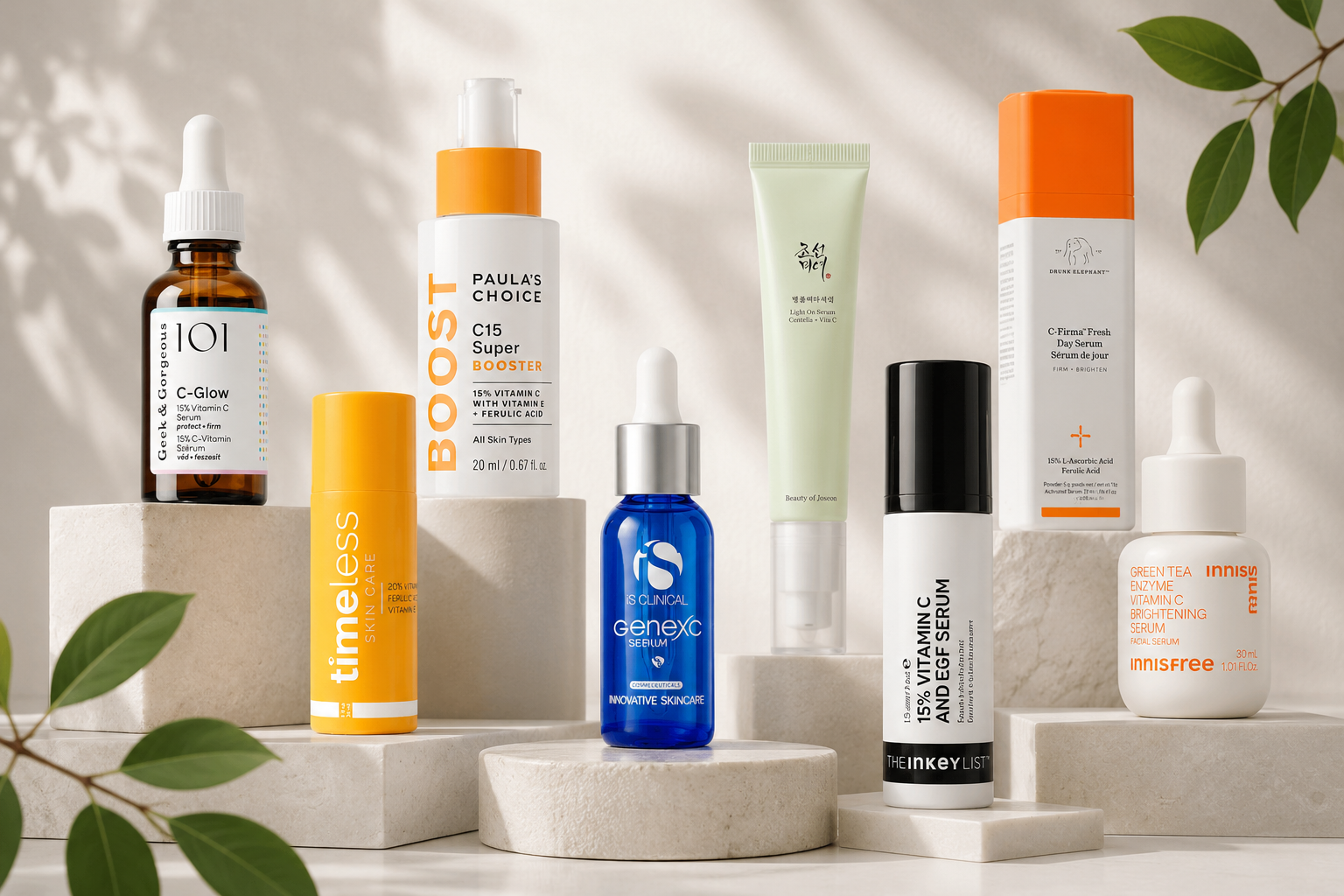
6 Korean Vitamin C Serums to Try If Vitamin C Usually Stings
If stronger vitamin C serums tend to sting, look for lower concentrations of pure vitamin C or vitamin C derivatives that do not require the same very acidic formulas.
I’ve ordered these roughly from formulas that may be easier to tolerate to options that need a little more caution, especially if your skin reacts easily. This is not a strict irritation ranking, because your response will always depend on the complete formula and your skin.
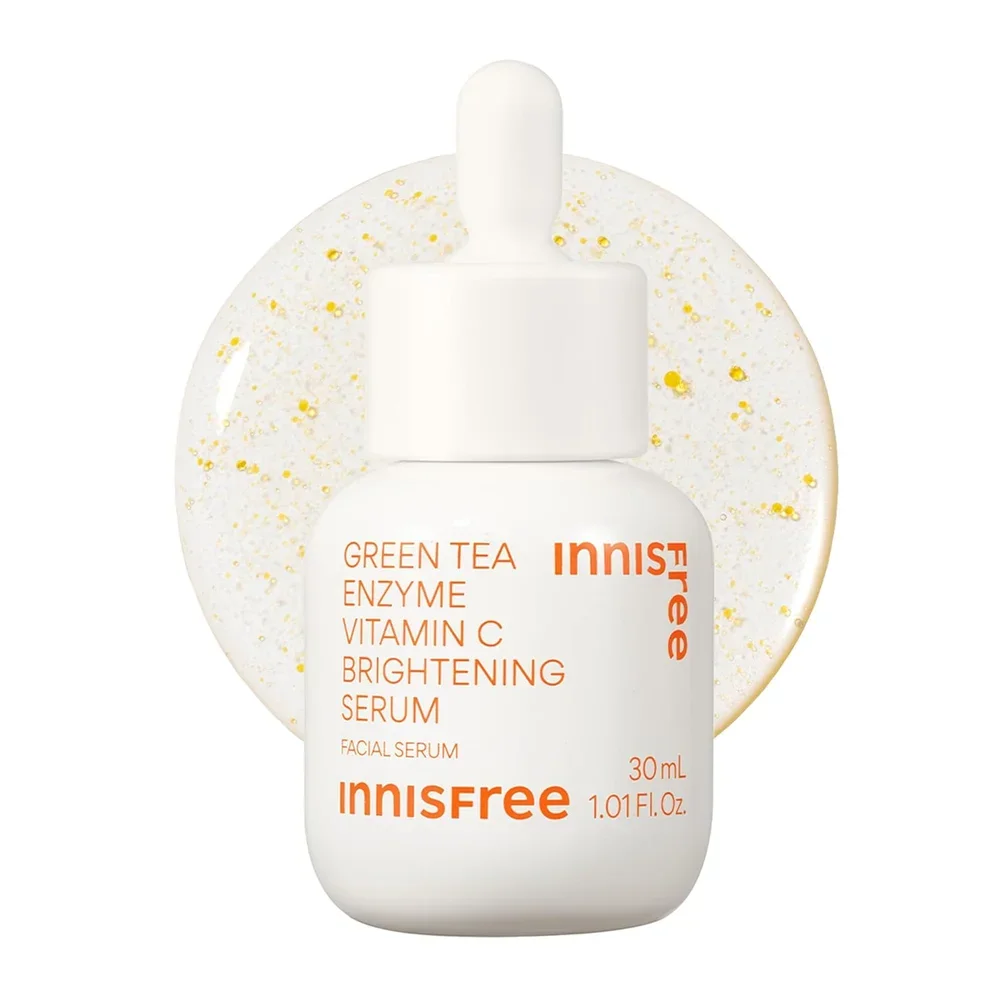
Innisfree Green Tea Enzyme Vitamin C Brightening Serum
Where to buy
This lightweight serum contains 3-O-Ethyl Ascorbic Acid at 20,000 ppm (2%), together with a smaller amount of Ascorbyl Tetraisopalmitate. It also includes niacinamide, panthenol, hyaluronic acid, squalane, vitamin E and ferulic acid. A distinctive feature of the formula is its approximately 90,000 visible vitamin C/E capsules in each 30 mL bottle.
Because it relies mainly on a relatively low concentration of a vitamin C derivative rather than pure L-ascorbic acid, this is a good place to start if strongly acidic vitamin C serums tend to sting.
Best for: Dull, uneven skin tone
Texture: Lightweight serum
Fragrance: No
Essential oils: No
Alcohol denat.: No
Fungal acne-safe: No
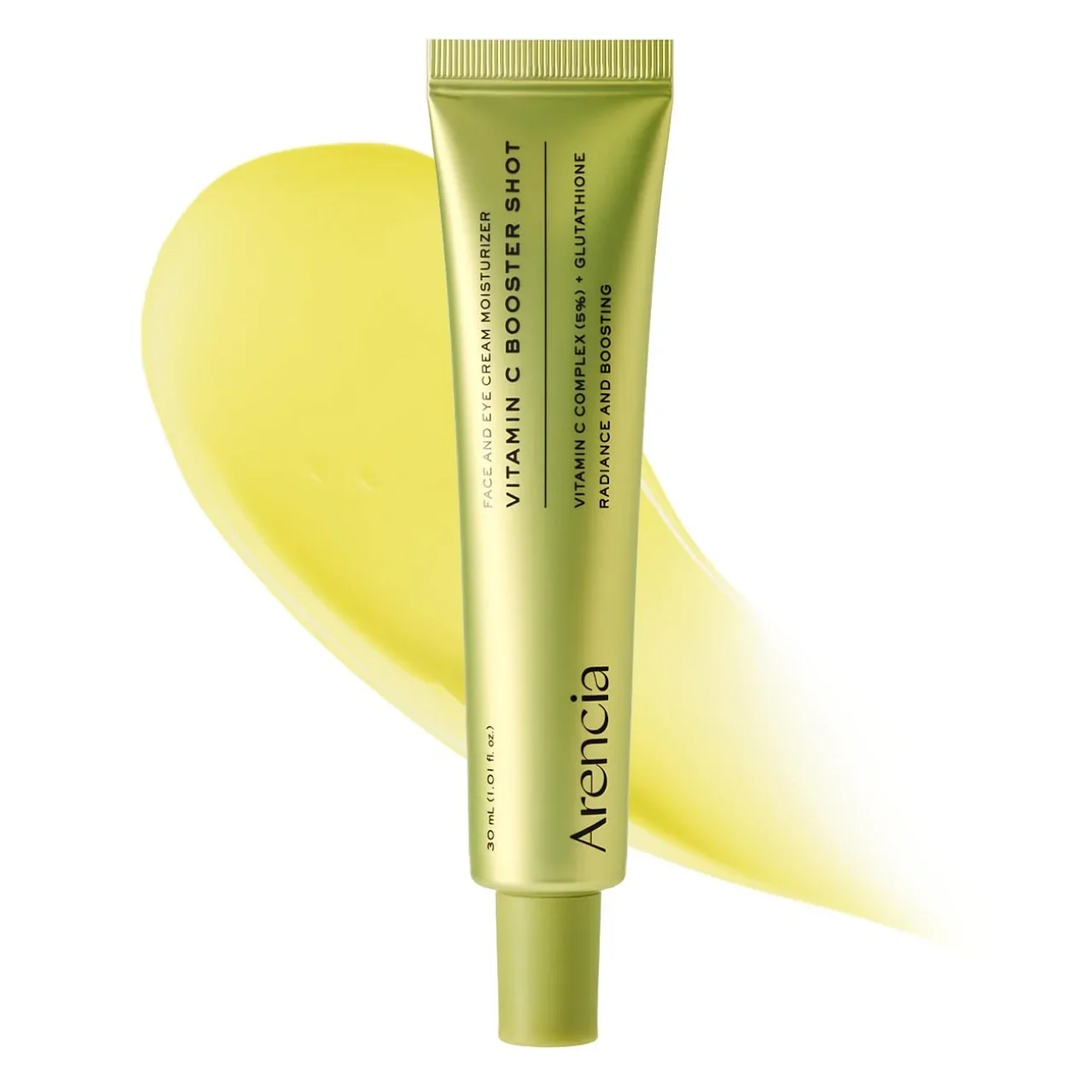
Arencia Vitamin C Booster Shot
Where to buy
The main vitamin C in this creamy serum is 5% 3-O-Ethyl Ascorbic Acid. The ingredient list also contains much smaller amounts of pure Ascorbic Acid, Ascorbyl Glucoside and Sodium Ascorbyl Phosphate.
Niacinamide and glutathione make it particularly relevant for dullness, uneven-looking tone and dark spots, while panthenol and allantoin add skin-comfort support. Its creamier base also makes it a good option if your skin prefers something more nourishing than a watery vitamin C serum.
Best for: Normal to dry or dehydrated skin with dullness, uneven tone or dark spots
Texture: Creamy serum / light emulsion
Fragrance: No
Essential oils: No
Alcohol denat.: No
Fungal acne-safe: No
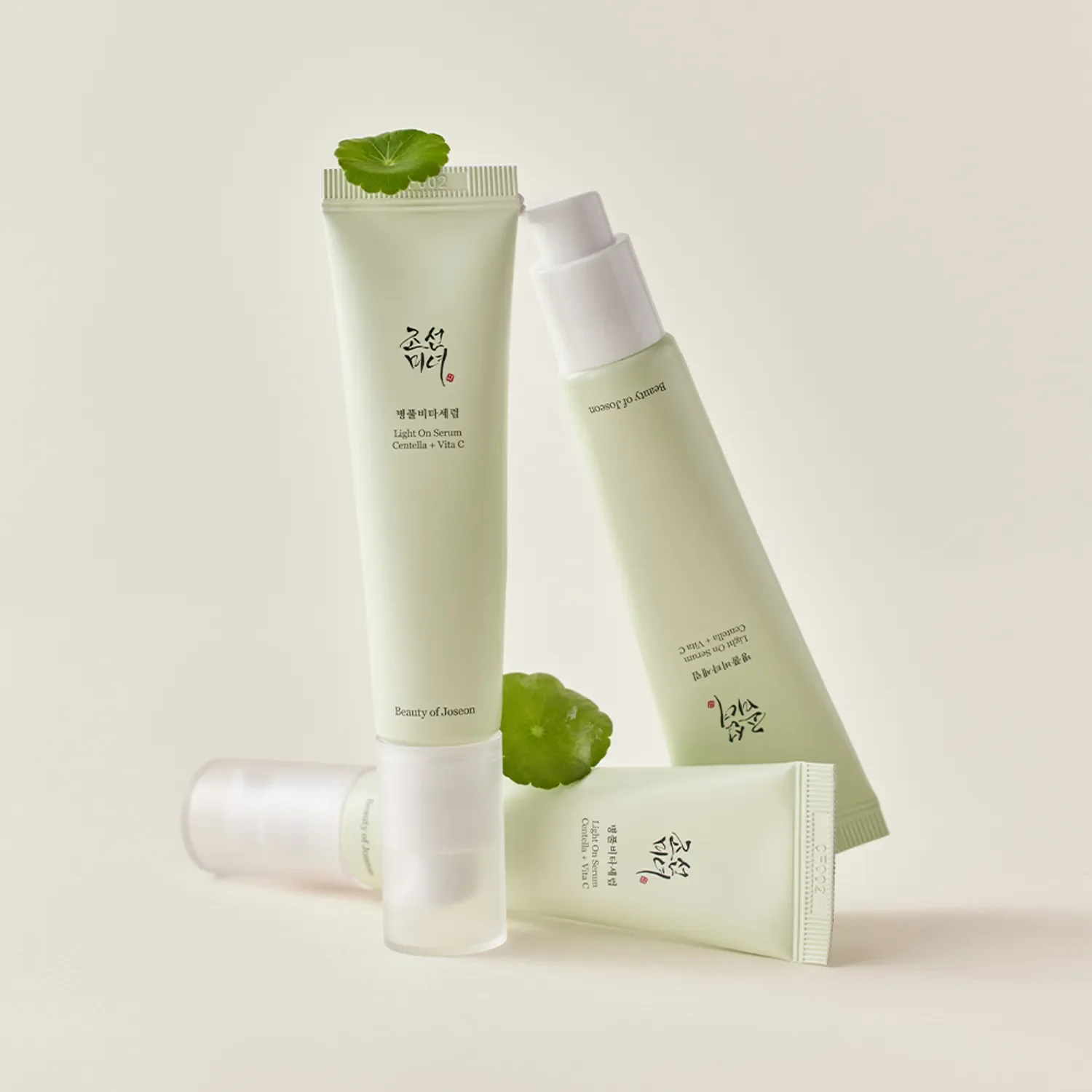
Beauty of Joseon Light On Serum: Centella + Vita C
Where to buy
This serum pairs 10% 3-O-Ethyl Ascorbic Acid with 68% Centella asiatica extract. Glycerin, betaine, panthenol, bisabolol, beta-glucan and hydrolyzed hyaluronic acid add hydration and skin-comfort support.
The formula also contains lightweight emollients and silicones, giving it a smoother, more emulsion-like texture than a typical watery vitamin C serum. Even though the vitamin C percentage is higher than in the first two options, it still uses a derivative rather than pure L-ascorbic acid, which makes it worth considering if traditional acidic vitamin C serums feel too sharp on your skin.
Best for: Normal to dry skin with dullness, uneven tone or dark spots
Texture: Lightweight creamy serum / emulsion
Fragrance: No
Essential oils: No
Alcohol denat.: No
Fungal acne-safe: No
Purito SEOUL Pure Vitamin C Serum
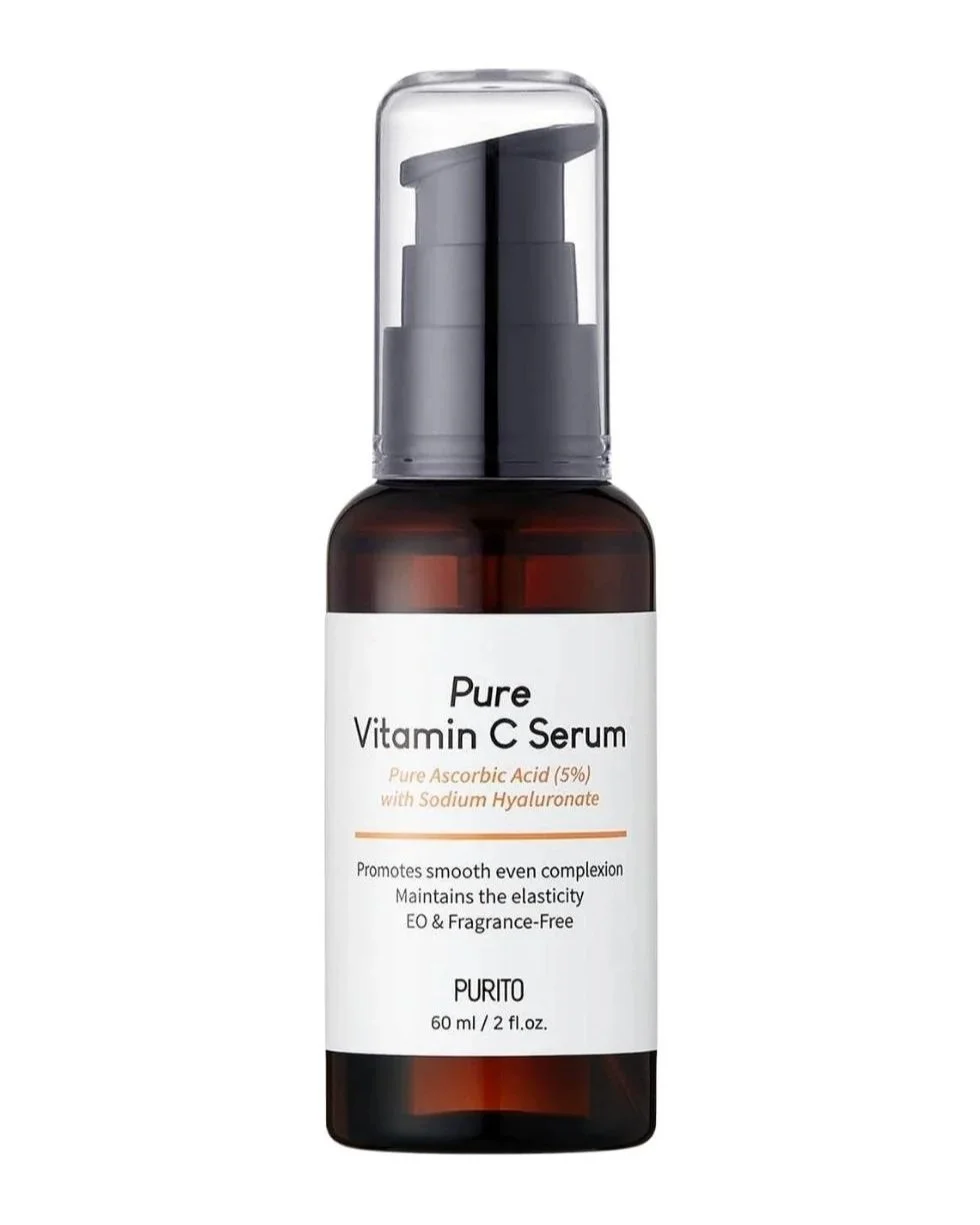
If you want to stay with pure vitamin C but avoid jumping straight to a 15–20% formula, PURITO uses 5% Ascorbic Acid in a lightweight serum.
Niacinamide and glutathione complement the formula for dullness, uneven-looking tone and dark spots, while sodium hyaluronate adds hydration. It is also free from fragrance, essential oils and denatured alcohol, making it one of the more straightforward options here if you want a lower-strength L-ascorbic acid serum without too many additional potential irritants.
Best for: Normal to combination skin with dullness, uneven tone or dark spots
Texture: Lightweight fluid serum
Fragrance: No
Essential oils: No
Alcohol denat.: No
Fungal acne-safe: No
SOME BY MI Galactomyces Pure Vitamin C Glow Serum
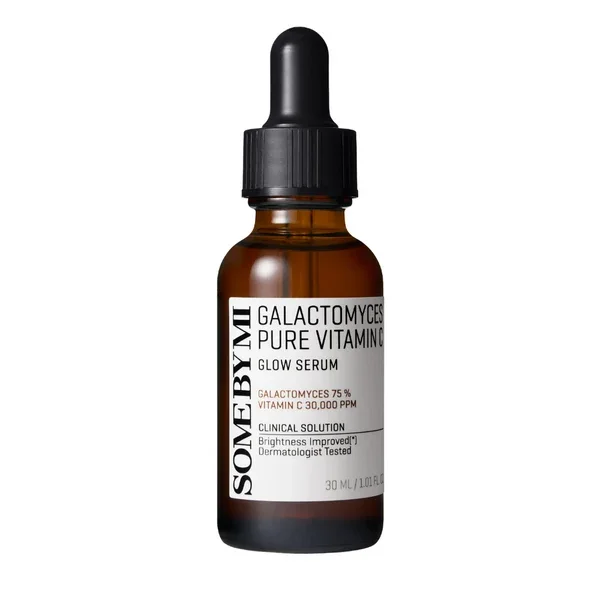
This serum contains a relatively low concentration of pure vitamin C, combining 3% Ascorbic Acid with 75% Galactomyces Ferment Filtrate.
Glycerin, trehalose, sodium hyaluronate, panthenol and allantoin provide hydration and skin-comfort support, while niacinamide complements the formula for uneven-looking tone.
The vitamin C concentration itself is approachable, but the formula also contains bergamot and lavender essential oils. For that reason, I would place it below the fragrance-free options if your main concern is stinging or irritation.
Best for: Normal to combination skin with dullness or uneven tone
Texture: Lightweight, slightly viscous serum
Fragrance: No
Essential oils: Yes
Alcohol denat.: No
Fungal acne-safe: No
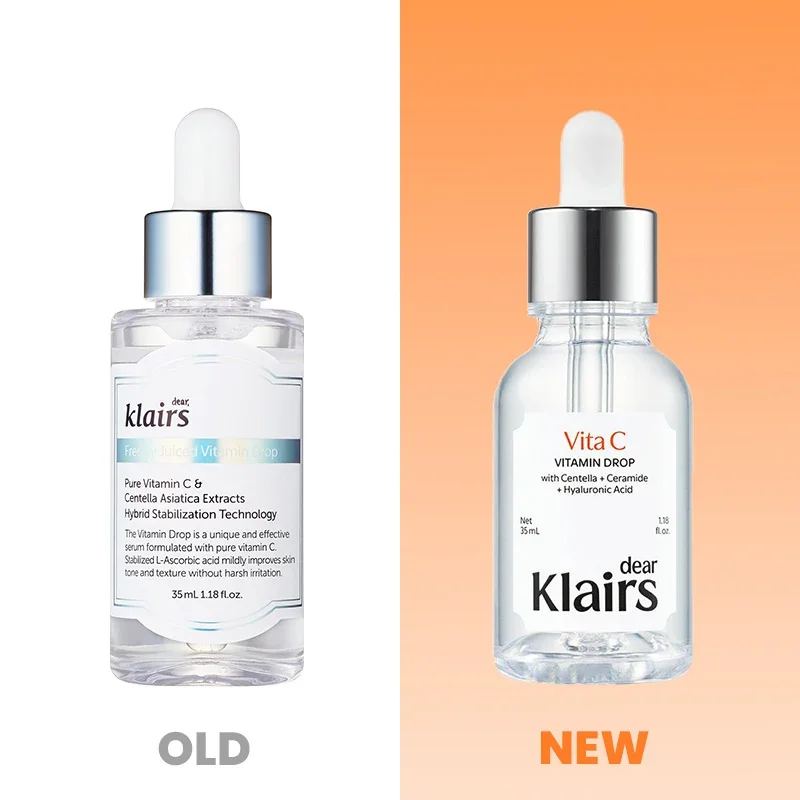
Dear, Klairs Vita C Vitamin Drop
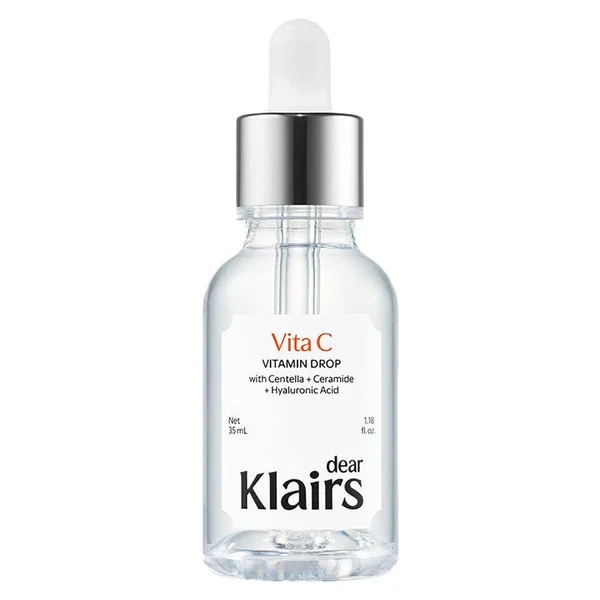
This Korean vitamin C serum uses 5% pure vitamin C, or Ascorbic Acid, together with a smaller amount of Sodium Ascorbyl Phosphate.
The relatively low concentration makes it an approachable option if you specifically want to try pure L-ascorbic acid without starting at 15–20%. Centella asiatica and several humectants add some skin-comfort support.
However, it also contains orange and lavender essential oils, so despite the moderate vitamin C strength, I would be more cautious with this one if your skin tends to sting or react easily.
Best for: Normal, combination or acne-prone skin with dullness, uneven tone or post-acne marks
Texture: Lightweight, slightly viscous serum
Fragrance: No
Essential oils: Yes
Alcohol denat.: No
Fungal acne-safe: No
Frequently Asked Questions
Can Vitamin C Serum Cause Purging?
Vitamin C does not typically cause skin purging. Purging is associated with ingredients that speed up skin cell turnover, such as retinoids and exfoliating acids. Vitamin C works mainly as an antioxidant and does not act in the same way.
If you start getting new breakouts after introducing a vitamin C serum, irritation or another ingredient in the formula is a more likely explanation than “vitamin C purging.”
Can an Oxidized Vitamin C Serum Irritate Your Skin?
Possibly. Pure vitamin C is unstable and gradually breaks down when exposed to factors such as air, light and heat. This process can reduce the amount of active vitamin C in the formula and create degradation products. Oxidation of L-ascorbic acid is also commonly accompanied by a gradual color change.
A small change from clear to pale yellow does not automatically mean a serum has become unusable, especially because formulas differ. But if a product that was originally clear has become dark yellow, orange or brown, or has noticeably changed in smell or texture, I would replace it rather than continue using it.
Can You Be Allergic to Vitamin C Serum?
Yes, although irritation and allergy are not the same thing.
Allergic contact dermatitis from cosmetic products is a delayed immune reaction and may cause symptoms such as itching, redness, scaling or an eczema-like rash. A 2025 dermatology review notes that patch testing is the standard method used to diagnose cosmetic contact allergy.
And the allergen does not necessarily have to be vitamin C itself. Fragrance, preservatives or another ingredient in the serum may be responsible.
Should I Wash Vitamin C Off If It Burns?
If your serum causes significant burning, increasing redness or pain rather than a brief mild tingle, wash it off and stop using it for the moment.
There is no benefit in leaving an uncomfortable serum on your skin in the hope that stronger burning means stronger results. Once your skin feels normal again, you can decide whether to retry it less often, use a lower concentration or switch to another formula.
Can Vitamin C Derivatives Still Cause Irritation?
Yes. Vitamin C derivatives are often easier to formulate at a less acidic pH than pure L-ascorbic acid, but “gentler” does not mean irritation is impossible.
Any finished skincare product can cause irritation depending on its concentration and the rest of the formula. Allergic reactions to vitamin C derivatives have also been reported, including 3-O-ethyl ascorbic acid as a potential cosmetic allergen, although this is very different from the brief stinging that can occur with an acidic serum.
Finding a Vitamin C Serum Your Skin Can Tolerate
A vitamin C serum does not need to sting to be effective. If yours feels uncomfortable, start by looking at the type and concentration of vitamin C, your skin barrier, the rest of your routine, and the complete formula. Sometimes a lower-strength pure vitamin C serum is enough; in other cases, switching to a vitamin C derivative may simply suit your skin better. The goal is not to use the strongest serum you can tolerate, but to find one you can use comfortably and consistently.
Want to learn more about choosing skincare ingredients and building a routine that works for your skin? Explore more skincare guides on the blog. If you are not sure where to start, take the Skin Type Quiz to better understand your skin and what it may need. And if you would like a routine selected specifically for you, explore my Personalised Skincare Consultation options.




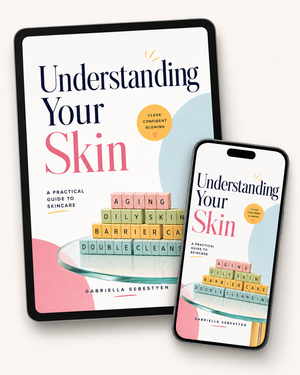
Understanding Your Skin
A Practical Guide to Skincare
I wrote Understanding Your Skin to help you build an effective skincare routine with confidence. This illustrated guide explains skin types, ingredients, and routines in a practical, evidence-based way that's easy to understand and apply.
- Written by a physician
- 120-page illustrated guide
- Evidence-based skincare guidance
- Sample routines & product recommendations

I compared Medicube and Celimax retinal boosters, from their ingredients to their formulas, to help you find the better match for your skin.