Retinoids for Beginners: How to Choose and Start Your First Retinoid
If you are new to retinoids, the main questions are usually practical: which type to choose, what strength to start with, how often to use it, and how to avoid unnecessary irritation.
This guide covers those beginner questions, explains what to look for in a formula, and compares several Korean retinoids suitable for first-time users, with recommendations informed by my medical and cosmetology background.
Key Takeaways
✓ For most beginners, retinol or retinal are the best places to start. Around 0.1–0.3% retinol or about 0.05% retinal are practical beginner strengths.
✓ There is no best age to start a retinoid. Start when you have a reason to use one, such as early photoaging, uneven texture, pigmentation, or recurring clogged pores.
✓ The formula matters as much as the retinoid type. Look for a simple, hydrating formula with supportive ingredients such as glycerin, ceramides, panthenol, squalane, or niacinamide.
✓ Start slowly rather than using your retinoid every night. Around two nights per week is a practical starting point, then increase gradually only if your skin remains comfortable.
✓ Peeling and irritation are not signs that a retinoid is working better. Mild dryness can happen at first, but persistent burning, redness, or significant peeling means you should reduce your frequency or pause.
In This Article
Some links are affiliate links. If you choose to purchase through them, it helps support my work at no extra cost to you.
What Is a Retinoid?
Retinoid is the umbrella term for a family of vitamin A derivatives used in skincare and dermatology. Retinol, retinal (retinaldehyde), retinyl esters and newer derivatives such as HPR are all different types of retinoids. The American Academy of Dermatology also uses retinoid as the broader term for vitamin A-based products applied to the skin.
These ingredients are not identical. For example, retinol is converted in the skin to retinal and then to biologically active retinoic acid:
Retinol → retinal → retinoic acid
Tretinoin is already retinoic acid, while adapalene is a synthetic drug retinoid. These medical retinoids have a different evidence base and availability, so this beginner guide focuses on the retinoids you are most likely to encounter in cosmetic skincare products, including retinol, retinal, HPR and retinyl esters.
Why Use a Retinoid?
You do not need to start using a retinoid simply because it is popular or because you have reached a certain age. A retinoid is worth considering when its benefits match a skin concern you actually want to improve.
Retinoids are mainly used for:
Fine lines and photoaging: they can support collagen-related skin remodeling and gradually improve visible signs of sun-related aging.
Uneven or rough texture: they can help skin feel smoother over time.
Uneven pigmentation: some retinoids can gradually improve uneven tone linked to sun damage.
Post-acne marks and clogged pores: retinoids may also help here, although the strongest acne evidence comes from medical retinoids such as adapalene and tretinoin.
For cosmetic retinoids, much of the clinical evidence comes from retinol. Research with 0.1% stabilized retinol has shown improvements in fine lines, pigmentation, firmness, elasticity, and overall signs of photoaging.
Retinoids also work gradually rather than producing dramatic changes within a few weeks. In longer-term research, 0.1% retinol continued to improve signs of photodamage over 52 weeks, together with changes linked to collagen production and skin remodeling.
If your skin is healthy and you have no particular concern with texture, pigmentation, or signs of photoaging, there is no requirement to add a retinoid. A gentle routine, moisturizer, and consistent sun protection remain the foundation.
What Is the Best Age to Start Using a Retinoid?
There is no scientifically established age when everyone should start using a retinoid. The right time depends more on your skin concerns and goals than on your birthday. The American Academy of Dermatology also recommends choosing retinoids based on concerns such as fine lines, uneven pigmentation, texture changes, and acne, rather than suggesting one universal age to begin.
| Main concern | When to consider starting a retinoid | What to know |
|---|---|---|
| Acne / clogged pores | When breakouts or clogged pores become a recurring concern | Retinoids can help keep pores clear, although the strongest acne evidence comes from medical retinoids such as adapalene. |
| Post-acne marks | Once active irritation or inflammation is reasonably controlled | Retinoids may support more even-looking skin over time, but they are not necessarily the most targeted option for pigmentation. |
| Rough or uneven texture | When texture becomes persistent or bothersome | Retinol and retinal can support skin renewal and gradually improve smoothness. |
| Preventing photoaging | There is no scientifically established age | Starting in your late 20s or 30s is optional, not a requirement. |
| Early fine lines or mild sun damage | When you begin noticing these changes | This is one of the clearest reasons to consider a cosmetic retinoid such as retinol or retinal. |
| Established photoaging | At any age, including your 40s, 50s, or 60s | It is not too late to start. People with existing photodamage are well represented in retinol research. |
| Uneven pigmentation or sun spots | When pigmentation becomes a concern | Retinol can help with photoaging-related uneven pigmentation, although more targeted pigment ingredients may also be useful. |
| Melasma | As part of a broader pigmentation routine | I would not rely on a cosmetic retinoid as the main approach for melasma. |
The often-repeated advice to “start retinol at 25” is not an evidence-based cutoff. There is no particular birthday when your skin suddenly needs a retinoid, and we do not have long-term studies showing that everyone who starts at 25 will have meaningfully less skin aging decades later.
Using a retinoid proactively in your late 20s or 30s is an option if preventing visible photoaging is one of your goals, but starting later does not mean you have missed your chance. In a group of six clinical studies of 0.1% retinol, the participants had an average age of 47.4 years and already had mild-to-moderate signs of sun damage, yet retinol still improved multiple signs of photoaging.
So rather than choosing a retinoid because you have turned 25, 30, or 40, it is more useful to ask what you want it to do for your skin. Age may influence how gently you introduce one, especially if your skin has become drier or more sensitive, but it does not determine whether you are “too early” or “too late” to start.
Which Retinoid Is Best for Beginners?
If you have never used a retinoid before, 0.1–0.3% retinol is usually the simplest place to start. Retinol has the most established evidence among cosmetic retinoids, and lower concentrations can provide skin-remodeling benefits with better tolerability than stronger 1% formulas.
Retinal is a good alternative, especially if you find a formula you prefer. Around 0.05% retinal is a reasonable beginner strength, and both 0.05% and 0.1% retinal have been well tolerated and improved skin texture in human research. Retinal needs one fewer conversion step than retinol before becoming retinoic acid, but it is not proven to be universally gentler or better than retinol.
HPR and other retinoid derivatives are often marketed as gentler choices for sensitive skin. They may be worth considering if tolerability is your main concern, but their clinical evidence is more limited. Some HPR research also uses formulas combining HPR with other retinoids, so it is harder to know how HPR performs on its own.
The retinoid type is only part of the decision. The overall formula can make a major difference to how comfortable your first retinoid is to use, which we will look at next.
What Type of Retinoid Product Is Best for Beginners?
For your first retinoid, look for a simple, well-formulated product that supports hydration and minimizes unnecessary irritation. You do not need a completely bare “retinoid-only” formula, but you also do not need one packed with several strong active ingredients.
Is a Retinoid Better in a Serum or Cream?
Whether you choose a serum, cream, or lotion matters less than the overall formula. A cream or lotion may feel more comfortable if your skin is dry or easily irritated, while a lightweight serum may suit normal or oilier skin better.
What Should You Look for in a Beginner Retinoid Formula?
It can help to choose a formula with supportive ingredients such as glycerin, ceramides, squalane, panthenol, or niacinamide. Moisturizing and barrier-supportive ingredients are commonly used in retinoid formulas to help improve tolerability and reduce dryness and irritation.
For a first product, I would be more cautious with formulas that also contain strong exfoliating acids or several potentially irritating actives. Starting with a simpler formula makes it easier to see how your skin responds to the retinoid itself.
Finally, check the packaging. Retinoids are sensitive to light, oxygen, and heat, although stability varies between different retinoids and formulations. Testing of commercial retinoid products has found substantial differences in stability, so an opaque tube, pump, or other light-protective package is a useful feature.
How Often Should a Beginner Use a Retinoid?
If you have never used a retinoid before, starting around two nights per week is a practical approach. The goal is to give your skin time to adjust before increasing how often you use it.
The American Academy of Dermatology recommends introducing retinoids gradually to reduce the risk of dryness and irritation. If your skin stays comfortable, you can slowly increase to around three nights per week and later to every other night if needed.
You do not have to work up to nightly use. A frequency your skin tolerates consistently is more useful than forcing daily application and repeatedly becoming irritated.
A simple beginner schedule can look like this:
Weeks 1–2: 2 nights per week
Then: increase to around 3 nights per week if your skin feels comfortable
Later: move toward every other night only if you want to and your skin tolerates it well
Increase gradually rather than changing both the strength and frequency at the same time.
How Do You Apply a Retinoid for the First Time?
For your first application, keep the routine simple. Use your retinoid at night, after cleansing, and apply only a small amount to the whole face.
A basic routine looks like this:
Cleanse gently.
Let your skin dry.
Apply about a pea-sized amount of retinoid for the entire face.
Follow with moisturizer.
Applying more product does not make the retinoid work faster. It mainly increases the chance of dryness, peeling, and irritation. A pea-sized amount for the whole face is commonly recommended.
You do not need to wait exactly 20 or 30 minutes after cleansing. The important point is that your skin is no longer wet, especially if you are prone to irritation.
Should You Apply Moisturizer Before or After a Retinoid?
If your skin is comfortable with the retinoid, you can apply retinoid first, then moisturizer.
If your skin is dry or sensitive, you can apply moisturizer first, then the retinoid, or use the sandwich method:
moisturizer → retinoid → moisturizer
Using moisturizer alongside a retinoid can help reduce dryness and improve tolerability.
When you are first starting, it is also helpful to keep the rest of your routine simple. Avoid introducing several new strong actives at the same time, so you can clearly see how your skin responds to the retinoid itself.
Daily Sun Protection
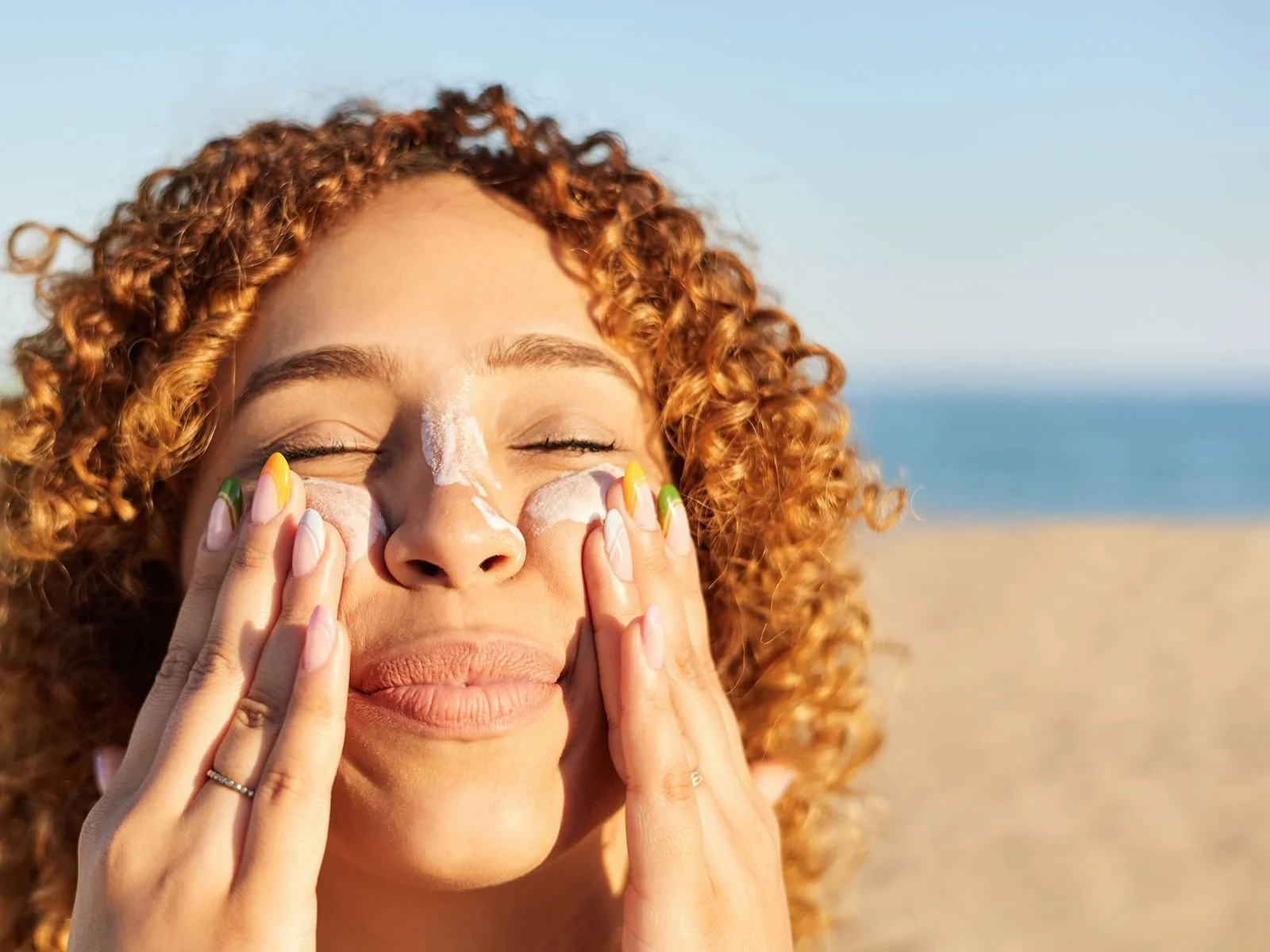
Retinoids speed up skin renewal and can make your skin more sensitive to the sun, particularly while your skin is adjusting. UV exposure can also worsen retinoid-related redness and irritation. Use a broad-spectrum SPF 30 or higher every morning, especially since UV exposure also contributes to the photoaging and pigmentation you may be using your retinoid to improve.
What Should You Expect When You Start Using a Retinoid?
During the first few weeks, you may notice mild dryness, flaking, tightness, or some redness while your skin adjusts. These effects should stay manageable. Significant burning, painful tightness, cracking, or persistent redness are signs that your skin is becoming irritated rather than simply “adjusting.”
What Does Retinization Mean?
Retinization describes the early adjustment period after starting a retinoid, when changes in the outer layers of the skin can cause temporary dryness, peeling, or irritation. These changes often occur during the first few weeks of use and can affect the skin barrier. This early period of redness, peeling, and flaking is commonly described as retinization.
However, you do not need to deliberately “retinize” your skin by pushing through irritation. Peeling, burning, and redness are not signs that your retinoid is working better. Starting gradually, moisturizing well, and reducing your frequency if irritation develops is a better approach than trying to force your skin to adapt as quickly as possible.
Does Retinoid Purging Really Happen?
“Purging” usually describes a temporary increase in breakouts after starting an ingredient that affects skin-cell turnover. However, the idea that retinoids routinely cause an initial acne flare is not as well established as social media often suggests. A review of clinical trial data found no clear evidence that topical retinoids consistently worsen acne when treatment begins.
This means you should not automatically assume every new breakout is a purge. If breakouts continue to worsen, appear in areas where you do not normally break out, or come together with significant irritation, the product or routine may simply not be working well for your skin.
How Long Does It Take for a Retinoid to Work?
Retinoids are a long-term skincare step rather than a quick fix. You may notice changes in texture first, while improvements in pigmentation, fine lines, and other signs of photoaging generally require several months of consistent use. The goal during the first few weeks is therefore not to see dramatic results, but to establish a routine your skin can tolerate consistently.
What Are the Best Korean Retinoids for Beginners?
The best Korean retinoids for beginners are products that combine a clearly disclosed retinol or retinal strength with a simple, supportive formula that is easy to introduce gradually.
The products below are compared based on the retinoid type and concentration, supportive ingredients, texture, fragrance and essential oils, and overall suitability for a first-time retinoid user.
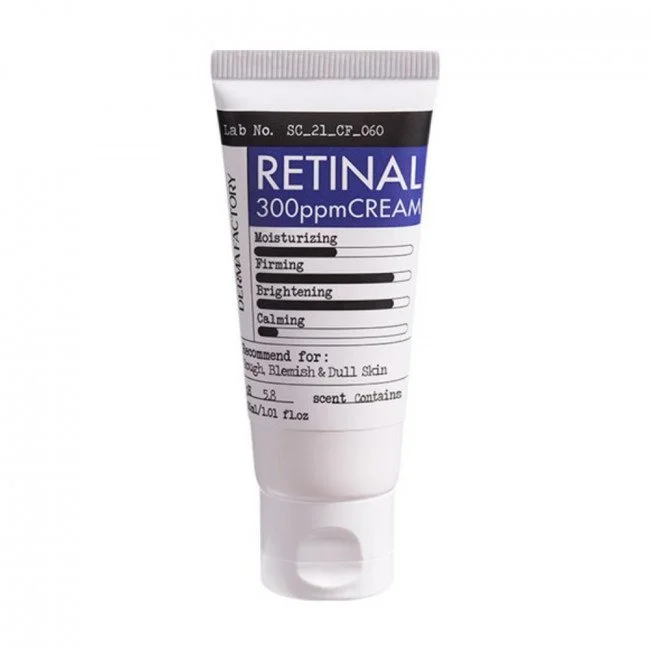
Derma Factory Retinal 300ppm Cream
Where to buy
Retinoid: 0.03% retinal (300 ppm)
Best for: First-time users who want to start conservatively
Texture: Lightweight moisturizing cream
Fragrance: Yes
Essential oils: No
Derma Factory uses 300 ppm retinal, which equals 0.03% retinal. The formula also contains 3% retinal liposome, but this should not be confused with 3% pure retinal. At 0.03%, the retinal concentration is slightly below the 0.05% level commonly seen in beginner-friendly retinal products, making this a particularly cautious starting option.
The supporting formula is quite well suited to a beginner. Glycerin, panthenol, niacinamide, cholesterol, and rapeseed sterols provide hydration and barrier support, while hydrogenated polydecene, silicones, and macadamia seed oil add emollience and help give the cream a smoother feel.
The main drawback is added fragrance. There are no essential oils listed, but if your skin is very reactive or fragrance-sensitive, I would favor a fragrance-free retinal formula instead.
K-SECRET Seoul 1988 Serum: Retinal Liposome 2% + Black Ginseng
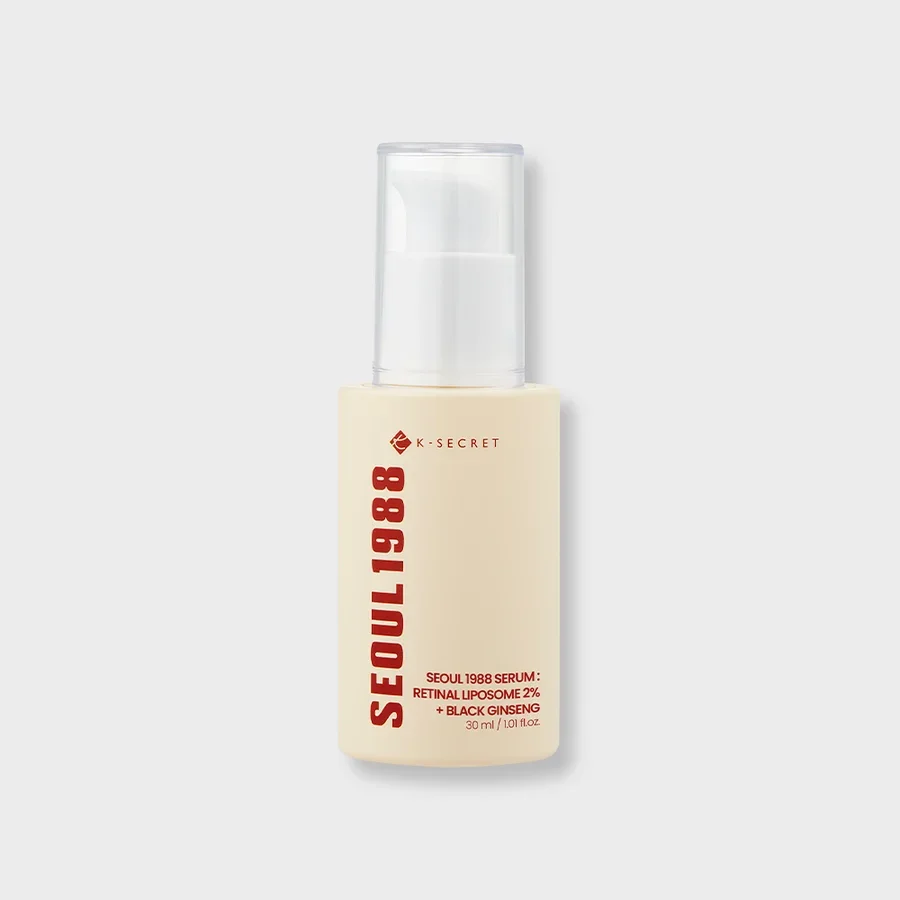
Retinoid: 0.02% retinal (200 ppm)
Best for: Beginners who want a very low-strength retinal with a more well-rounded, multitargeted formula
Texture: Lightweight emulsion serum
Fragrance: No
Essential oils: No
Despite the “2% Retinal Liposome” name, this serum contains 200 ppm, or 0.02% retinal. The 2% refers to the liposomal retinal ingredient rather than 2% pure retinal, so this is still a very low-strength retinal product.
The formula combines retinal with niacinamide, bakuchiol, 3-O-ethyl ascorbic acid, peptides, and black ginseng, giving it a broader focus beyond retinoid care alone. Glycerin, betaine, cholesterol, hydrogenated lecithin, macadamia oil, and sunflower seed oil add hydration and barrier support.
Because it contains several additional actives, this is a better fit if you want one serum that targets multiple concerns at once, rather than the simplest possible first-retinoid formula.
A major plus for sensitive beginners is that it is free from added fragrance and essential oils.
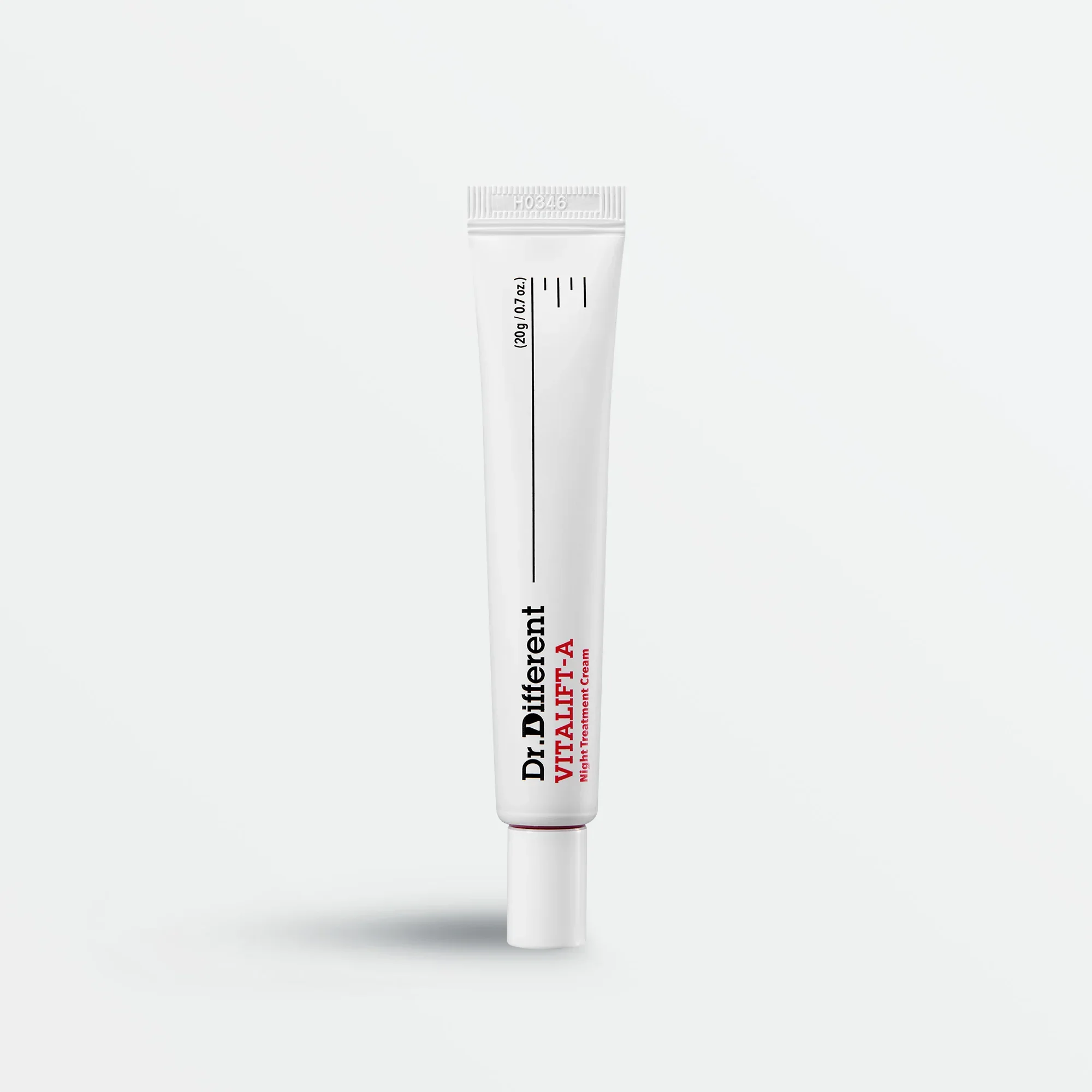
Dr. Different Vitalift-A
Where to buy
Retinoid: 0.05% retinal (500 ppm)
Best for: Beginners with normal to dry skin who want a moisturizing, barrier-supportive retinal cream
Texture: Rich cream
Fragrance: No
Essential oils: No
Dr. Different Vitalift-A contains 0.05% retinal, a commonly used lower retinal concentration that makes sense for someone introducing retinal for the first time.
The formula is particularly strong on barrier and moisture support. Squalane, safflower seed oil, shea butter, cholesterol, ceramide NP, sodium hyaluronate, and polyglutamic acid help reduce the dryness that can come with starting a retinoid. It also contains adenosine and vitamin E for additional skin-conditioning and antioxidant support.
Compared with a multitargeted serum, this is a more focused retinal formula without several additional treatment actives. That makes it a good option if you want retinal plus a nourishing moisturizer-style base, especially if your skin already leans dry.
It is also free from added fragrance and essential oils.
Dr. Althea Pure Retinol 0.15% Cream
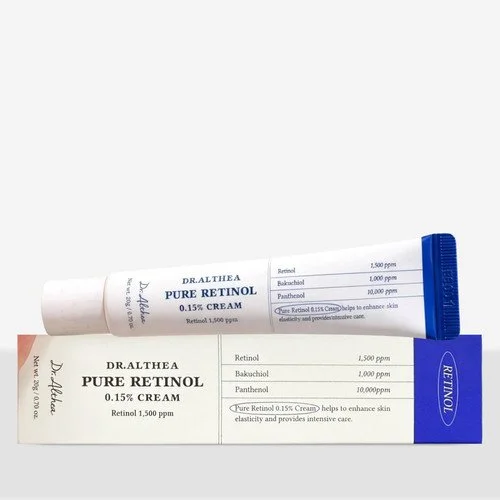
Retinoid: 0.15% retinol (1,500 ppm)
Best for: Beginners who prefer retinol and want a more multitargeted formula for early aging and uneven tone
Texture: Lightweight cream
Fragrance: No
Essential oils: No
Dr. Althea Pure Retinol Cream contains 0.15% retinol, which sits comfortably within a beginner-friendly range and makes it a good option if you want to start with retinol rather than retinal.
The formula combines retinol with bakuchiol, kojic acid, acetyl hexapeptide-8, and sodium DNA (PDRN), giving it a broader focus on uneven tone and signs of aging. At the same time, centella leaf water, panthenol, betaine, allantoin, madecassoside, cholesterol, and ceramide NP provide soothing, hydrating, and barrier-supportive care.
Because it includes several additional active ingredients, this is not the most minimalist first-retinoid formula. It makes more sense if you want one product that combines a gentle retinol strength with additional brightening and anti-aging support.
It is also free from added fragrance and essential oils.
FRANKLY Retinol 0.1% Cream
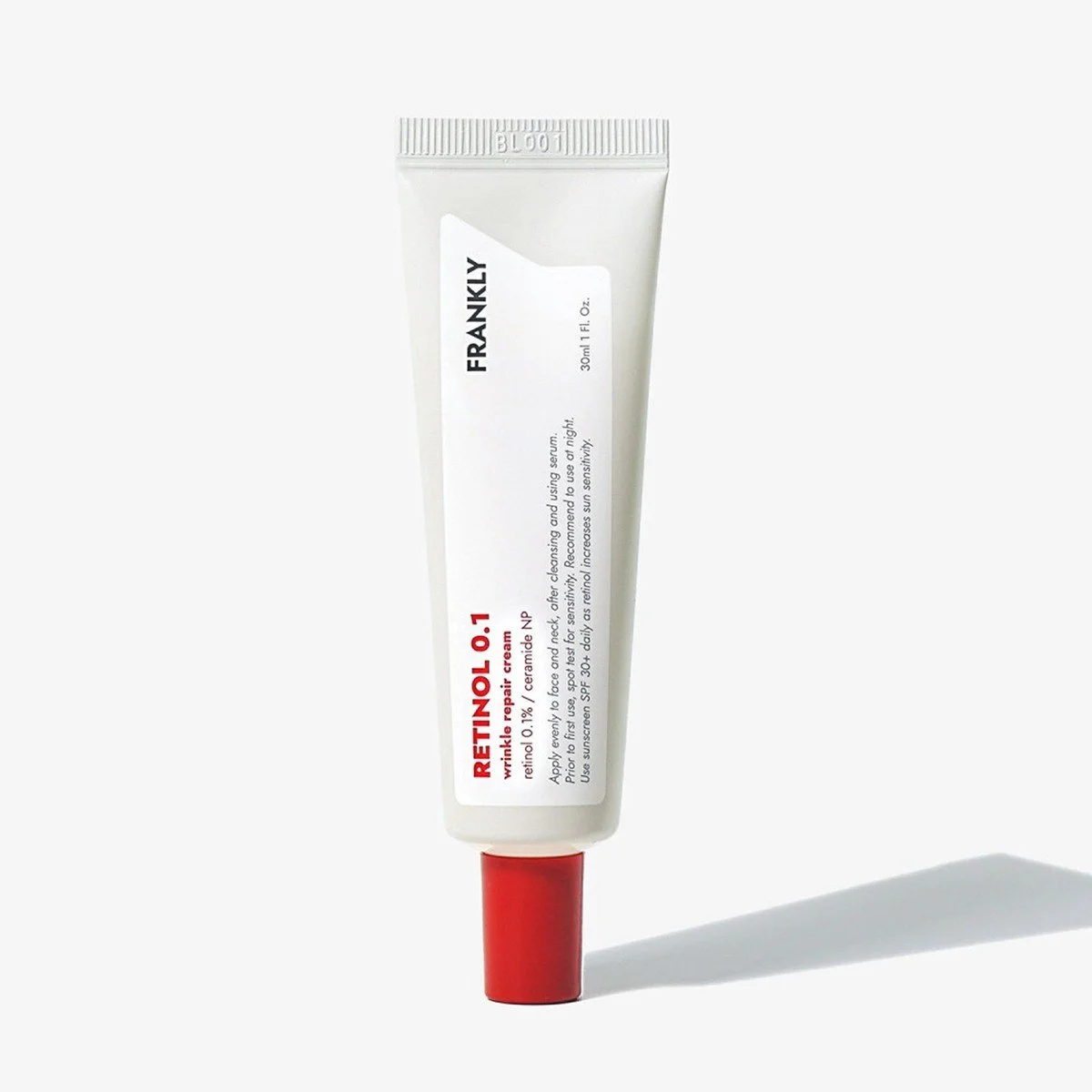
Retinoid: 0.1% retinol (1,000 ppm)
Best for: Beginners who want a straightforward low-strength retinol with strong moisturizing and barrier support
Texture: Nourishing cream
Fragrance: No
Essential oils: No
FRANKLY uses 0.1% retinol, making it one of the gentler retinol strengths in this list and a practical option if this is your first retinoid.
The formula is especially supportive on the moisturizing side. Glycerin, shea butter, macadamia oil, ceramide NP, cholesterol, beta-glucan, and hydrolyzed hyaluronic acid help with hydration and barrier support, while niacinamide adds additional support for uneven tone and skin barrier function.
It also contains several botanical extracts, including centella, ginseng berry, fig, and kelp, so it is not a completely minimalist formula, but it does avoid added fragrance and essential oils. Overall, this is a good choice if you want a simple 0.1% retinol strength in a richer, more nourishing base rather than a lightweight treatment serum.
COSRX The Retinol 0.3 Cream
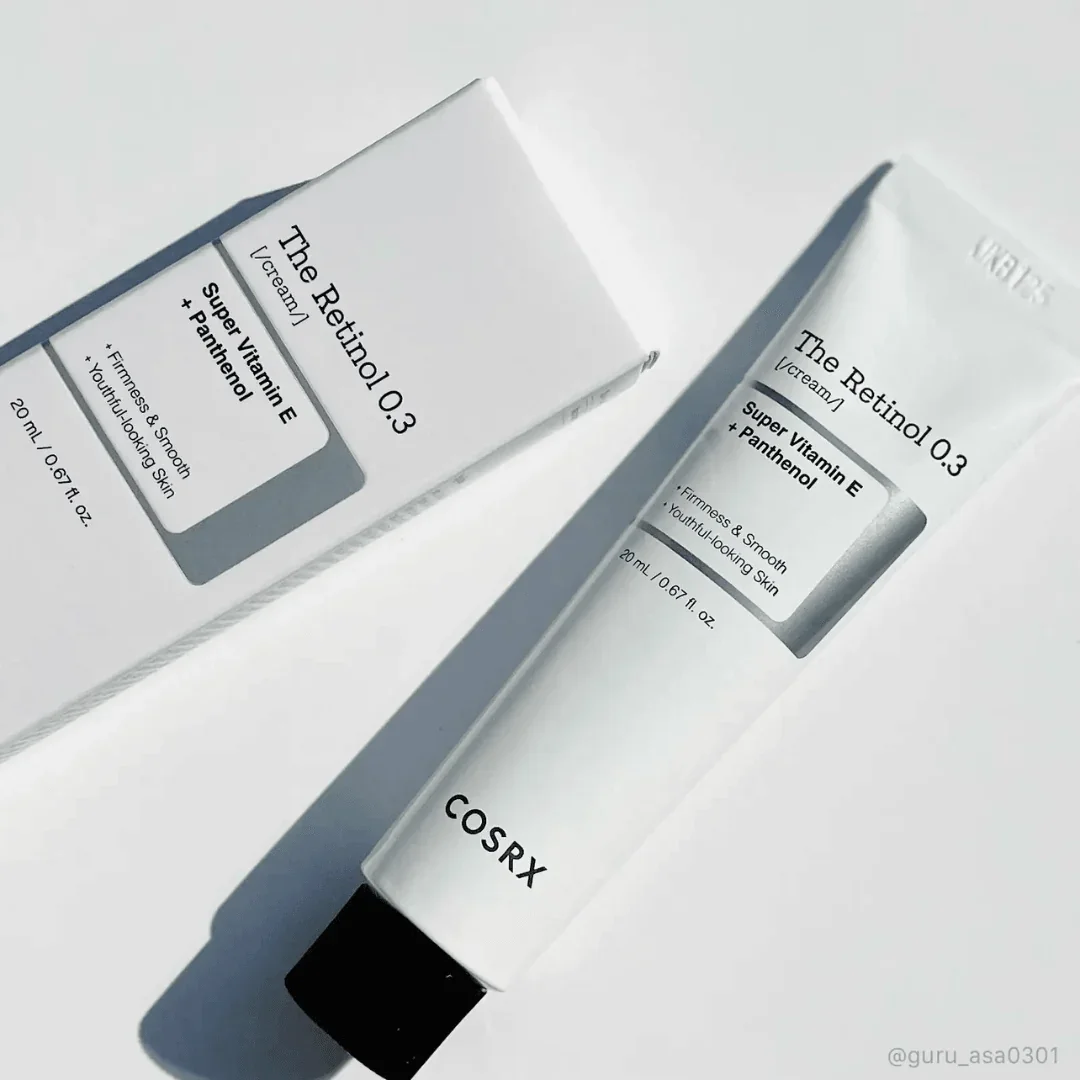
Retinoid: 0.3% retinol (3,000 ppm)
Best for: Beginners who want a stronger starting option and already have fairly resilient skin
Texture: Rich cream
Fragrance: No
Essential oils: No
COSRX The Retinol 0.3 Cream contains 0.3% retinol, which is still within a commonly used cosmetic range but sits at the higher end of what I would consider for a first retinoid. If your skin is very sensitive or easily irritated, I would start lower.
The cream has a strongly moisturizing base with glycerin, shea butter, panthenol, soybean oil, sunflower oil, and several forms of hyaluronic acid. Allantoin adds soothing support, while vitamin E, glutathione, ascorbic acid, and 3-O-ethyl ascorbic acid give the formula additional antioxidant and brightening support.
This is a good choice if you want a more substantial retinol strength in a nourishing cream rather than a lightweight serum, but it may be more appropriate for beginners with normal to dry, relatively resilient skin than for someone who already knows their skin reacts easily.
It is free from added fragrance and essential oils.
Dr. Althea 0.1% Gentle Retinol Serum
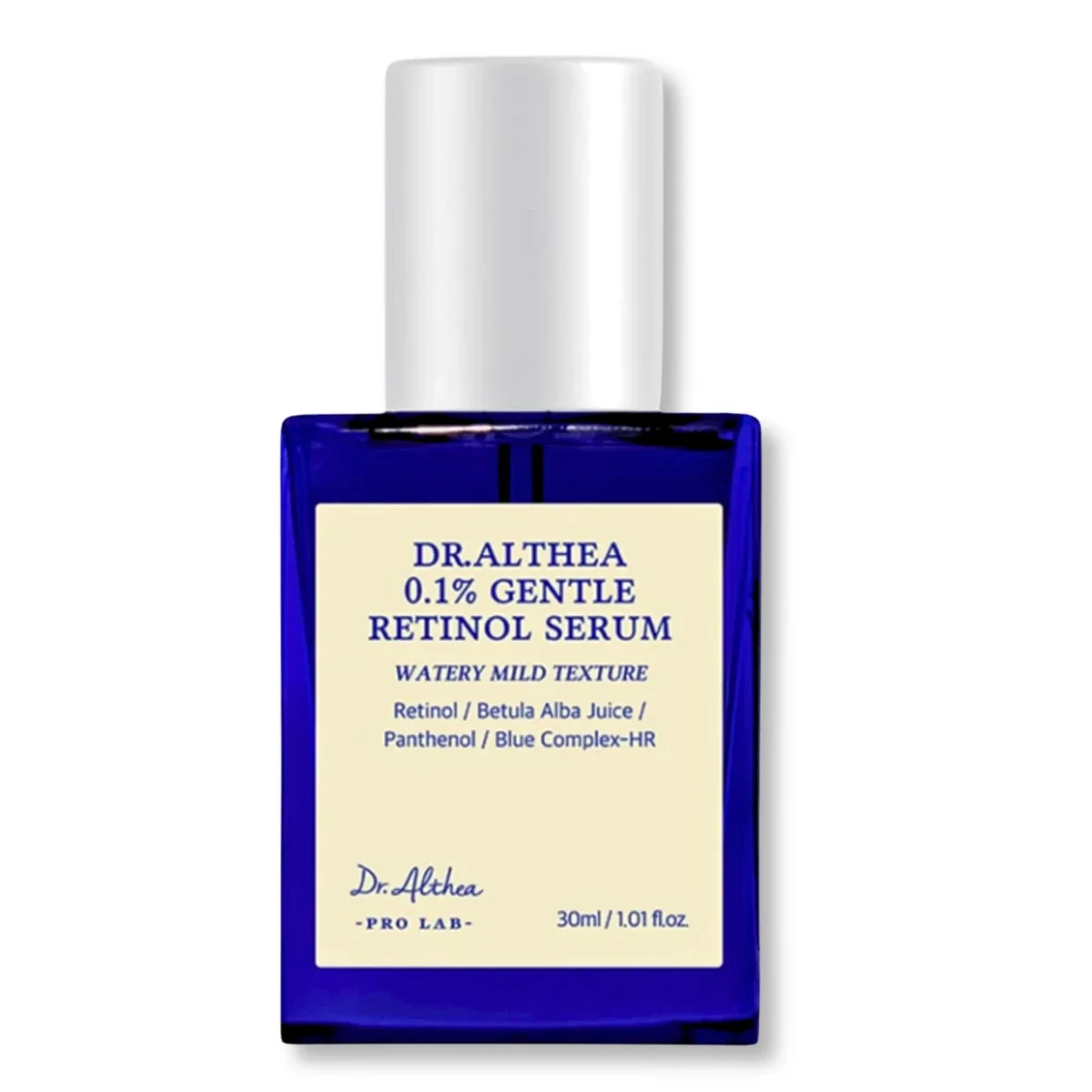
Retinoid: 0.1% retinol (1,000 ppm)
Best for: Beginners who want a low-strength retinol in a lightweight, soothing formula
Texture: Lightweight serum-emulsion
Fragrance: No
Essential oils: No
With 0.1% retinol, this is one of the more conservative retinol options on the list and a good starting point if you want to introduce retinol gradually.
The formula pairs retinol with panthenol, allantoin, glycerin, soybean oil, and hydrogenated lecithin for hydration and barrier support. It also contains bakuchiol, giving the serum a little more anti-aging support without turning it into an overly complex active formula.
There is no added fragrance or essential oil, although the formula does contain several botanical extracts, including lavender flower, chamomile, borage, and clary extracts. Overall, this is a good option if you prefer a lighter serum texture and a simple 0.1% retinol starting strength rather than a richer cream.
Frequently Asked Questions
How Long Does It Take to See Results From a Retinoid?
Retinoids work gradually. Texture may improve first, while fine lines, pigmentation, and photoaging usually need several months of consistent use.
Can You Use Retinoids During Pregnancy?
No. Retinoids should be avoided during pregnancy, including non-prescription retinoid skincare. If you are trying to conceive or breastfeeding, ask your healthcare provider for individual guidance.
What Should You Not Use With a Retinoid?
Be cautious with AHAs, BHAs, strong exfoliants, and other irritating actives, especially when you are just starting. They are not always incompatible, but combining too much at once can increase irritation.
Can You Use a Retinoid Under Your Eyes?
Yes, but the eye area is more sensitive. Avoid the eyelids and lash line unless the product is specifically made for the eye area, and reduce use if you notice dryness or irritation.
Can You Use a Retinoid on Your Neck?
Yes, but the neck can be more sensitive than the face. Start slowly, use a small amount, and moisturize well.
When Should You Move to a Stronger Retinoid?
Consider increasing strength only after your skin has tolerated your current retinoid comfortably for several weeks to months and you still want more results. Do not move up simply because you are not peeling or irritated.
Ready to Start Your Retinoid Routine?
If you are new to retinoids, start simple. Choose a suitable strength, introduce it gradually, and give your skin time to adjust. You do not need the strongest product or the most complicated routine to get started.
Once you have the basics in place, the next step is making sure the rest of your routine also fits your skin and your main concerns. You can explore the blog for more skincare guides, ingredient comparisons, and practical routine advice.
If you are not sure what your skin type is or where to begin, take my Skin Type Quiz. And if you want more individual guidance, you can also explore my personalized skincare consultation options for a routine built around your skin concerns, current products, and preferences.




Understanding Your Skin
A Practical Guide to Skincare
I wrote Understanding Your Skin to help you build an effective skincare routine with confidence. This illustrated guide explains skin types, ingredients, and routines in a practical, evidence-based way that's easy to understand and apply.
- Written by a physician
- 120-page illustrated guide
- Evidence-based skincare guidance
- Sample routines & product recommendations

Modern Korean sun serums prove that daily SPF can be lightweight, hydrating, and genuinely enjoyable to wear.