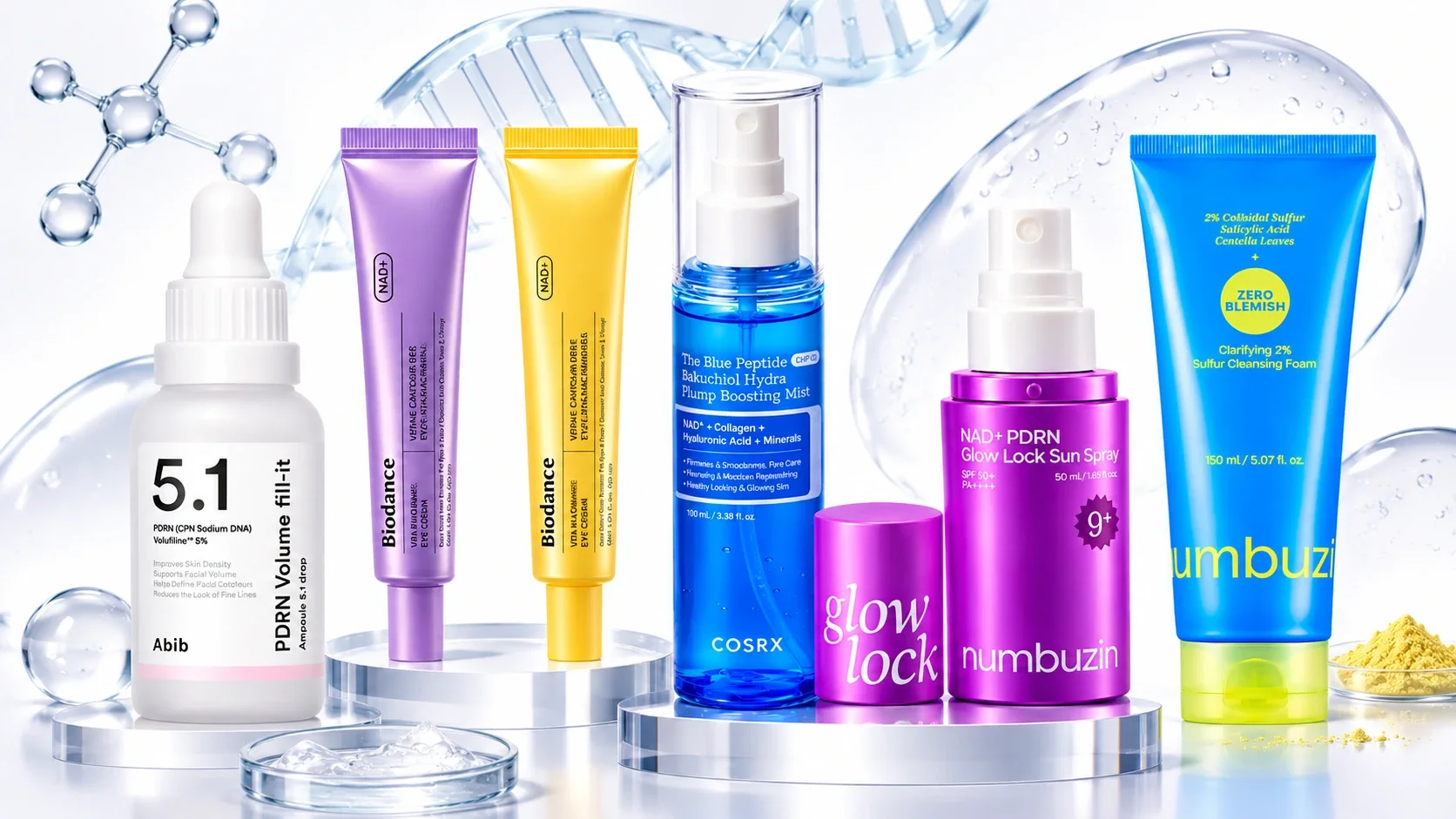
Key Takeaways
✓ PDRN is not disappearing, but simply adding PDRN to a serum is becoming less distinctive. Newer formulas are pairing it with Volufiline, retinal, peptides and other ingredients, or moving it into more specialized categories such as eye care.
✓ NAD+ and copper peptides are becoming more mainstream in Korean skincare. Ingredients once associated with niche anti-aging or longevity-focused products are now appearing in everyday formats such as eye creams, facial mists and sunscreens.
✓ Volufiline is emerging as one of the ingredients to watch for 2027, particularly in products targeting facial plumping and visible volume loss. However, “5% Volufiline” does not mean 5% pure sarsasapogenin.
✓ Sunscreen is becoming increasingly treatment-like. New formulas are combining UV filters with PDRN, NAD+, peptides and other skincare actives, but adequate application and UV protection still matter far more than the extras.
✓ At the same time, K-beauty is rediscovering older dermatological ingredients. Sulfur is a good example: it is far less glamorous than PDRN or NAD+, yet new Korean formulas are bringing it back in more modern, cosmetically elegant products.
Korean skincare in 2026 has been heavily shaped by PDRN, peptides, retinal and increasingly complex “regenerative” ingredient stories. But some of the newest launches suggest that the market is already moving into its next phase.
And that next phase looks surprisingly divided.
On one side, K-beauty is becoming more biotech-inspired, with ingredients associated with regenerative medicine, cellular metabolism and skin signaling — including PDRN, NAD+ and copper peptides — moving into mainstream cosmetic products. Brands are also combining several of these ingredients in the same formula rather than relying on one hero active.
On the other side, Korean brands are rediscovering established ingredients such as sulfur and putting them into formulas that feel much more modern than traditional dermatological treatments.
That contrast may tell us more about K-beauty in 2027 than any single trending ingredient.
These six recent launches are good examples of where Korean skincare may be heading next.
Some links are affiliate links. If you choose to purchase through them, it helps support my work at no extra cost to you.
In This Article
1. PDRN Is No Longer Enough on Its Own
Abib PDRN Volume Fill-it Ampoule 5.1 Drop
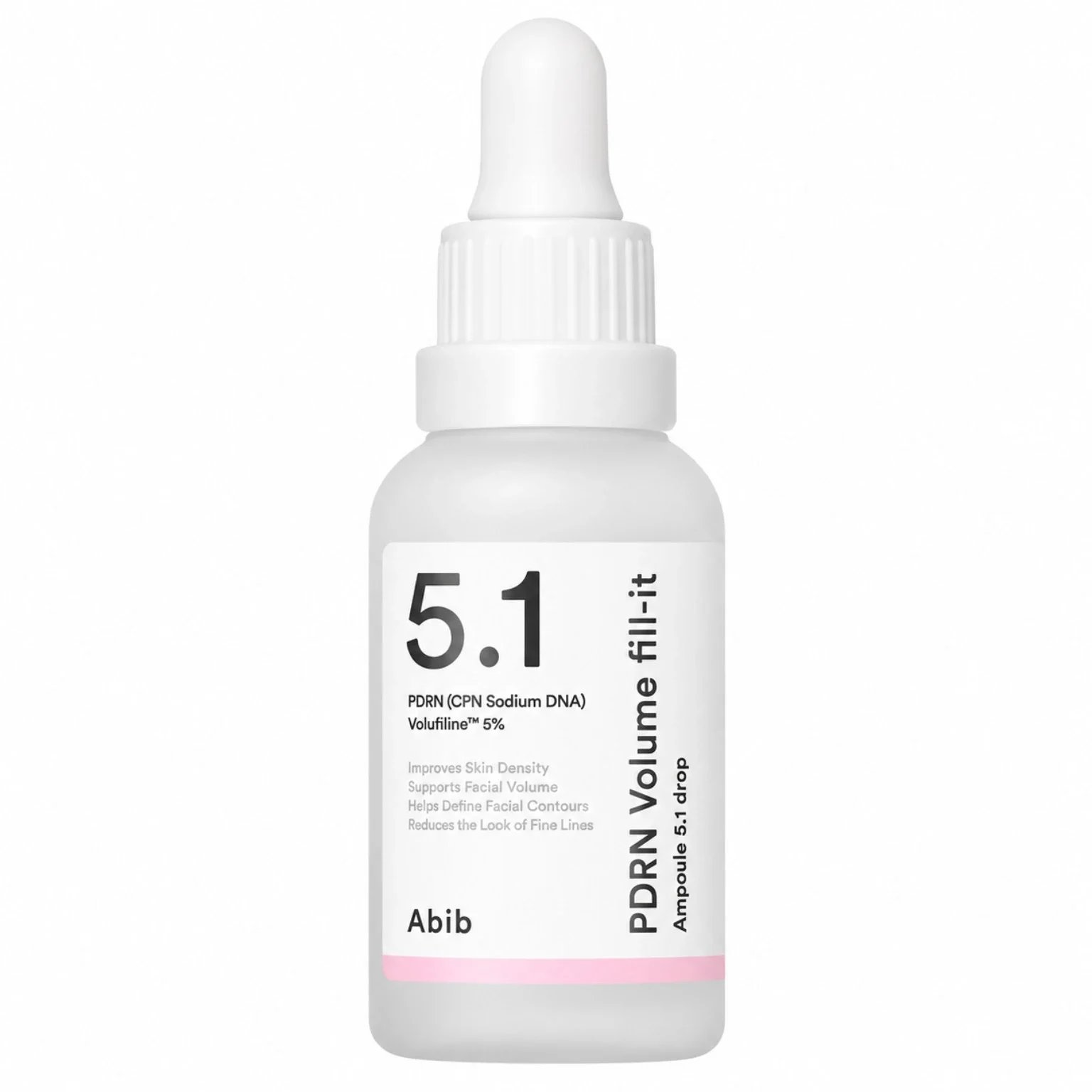
PDRN was one of the defining Korean skincare ingredients of the last couple of years. The next stage may be less about selling PDRN itself and more about what brands combine it with.
Abib's new PDRN Volume Fill-it Ampoule 5.1 Drop is a very good example.
The “5.1” refers to 5% Volufiline and 0.1% PDRN, but the formula does not stop there. It also contains retinal, niacinamide, beta-glucan, cholesterol and six peptides, including Copper Tripeptide-1. Abib currently lists the ampoule among its new products.
Best for: normal to dry or mature skin concerned with loss of firmness, fine lines and a flatter or less plump appearance.
The Volufiline part deserves some clarification. Volufiline is a proprietary Croda/Sederma raw material made from hydrogenated polyisobutene and Anemarrhena asphodeloides root extract, associated with the compound sarsasapogenin. Croda's technical information recommends a 5% use level for the raw material. Therefore, “5% Volufiline” means 5% of that branded ingredient mixture — not 5% pure sarsasapogenin.
As I've mentioned in several of my articles, we shouldn't expect topical PDRN to deliver the same results as injectable treatments. PDRN molecules are relatively large, making it difficult for them to penetrate deeply into the skin. While newer research looks promising, for now, the most convincing benefits of PDRN skincare products are hydration and skin conditioning rather than dramatic anti-aging or regenerative effects.
Related Article: How to Use PDRN for Real Results: A Doctor’s Honest Take
The more convincing part of the Abib formula may therefore be the multi-active approach rather than PDRN or Volufiline alone.
It also illustrates something increasingly common in newer K-beauty formulas: instead of asking one ingredient to do everything, brands are building a broader anti-aging story around several different mechanisms.
Who may want to skip it: very reactive skin and people already using multiple retinoid products may find the addition of retinal unnecessary. The emollient-rich formula may also feel heavier on very oily skin.
Pregnancy note: this product contains retinal, so you should avoid it during pregnancy.
What this could mean for 2027: PDRN may increasingly become one component of a larger anti-aging formula rather than the entire reason a product exists.
2. PDRN Is Moving Into More Specialized Categories
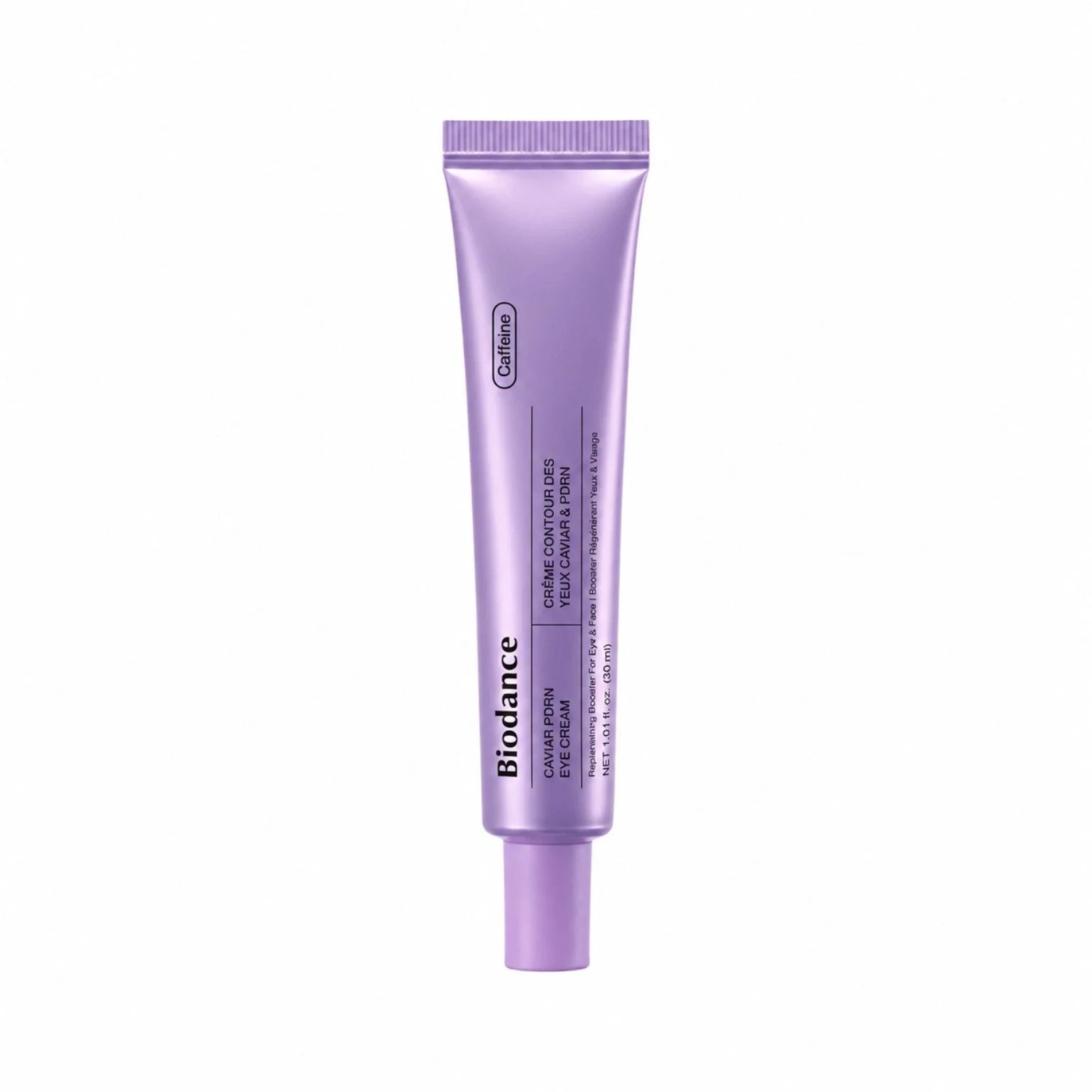
Biodance Caviar PDRN Eye Cream
Where to buy
The Biodance Caviar PDRN Eye Cream demonstrates another way PDRN is evolving: moving away from generic face serums and into more targeted product categories.
Biodance combines salmon-derived PDRN with caviar ingredients and caffeine. The complete formula also contains squalane, niacinamide, glycerin, panthenol and adenosine.
Best for: dry or dehydrated under-eyes with mild puffiness, early fine lines and loss of elasticity.
From an ingredient perspective, this is actually a fairly sensible eye cream. Squalane and other emollients provide the richer texture that dry under-eyes often benefit from, while niacinamide and panthenol add barrier and hydration support. Caffeine may temporarily help the appearance of puffiness.
I would be more cautious about interpreting claims around “lifting” eye bags. An eye cream can moisturize, temporarily plump fine lines and potentially improve the appearance of puffiness, but it cannot correct significant structural under-eye hollowing or true fat-pad changes (Hamie, 2024).
That distinction is important when choosing who the product is actually best for.
Less suitable for: people whose main concern is deeply pigmented dark circles or structural hollowness rather than dryness and puffiness. Very milia-prone users may also prefer a lighter texture.
What this could mean for 2027: expect to see PDRN increasingly appearing in eye products, lip treatments, masks and other specialized formats, rather than another endless stream of nearly identical PDRN serums.
Related Article: Under-Eye Care the Korean Way: Why Your Eyes Need Special Attention
3. NAD+ Is Moving Into Mainstream K-Beauty
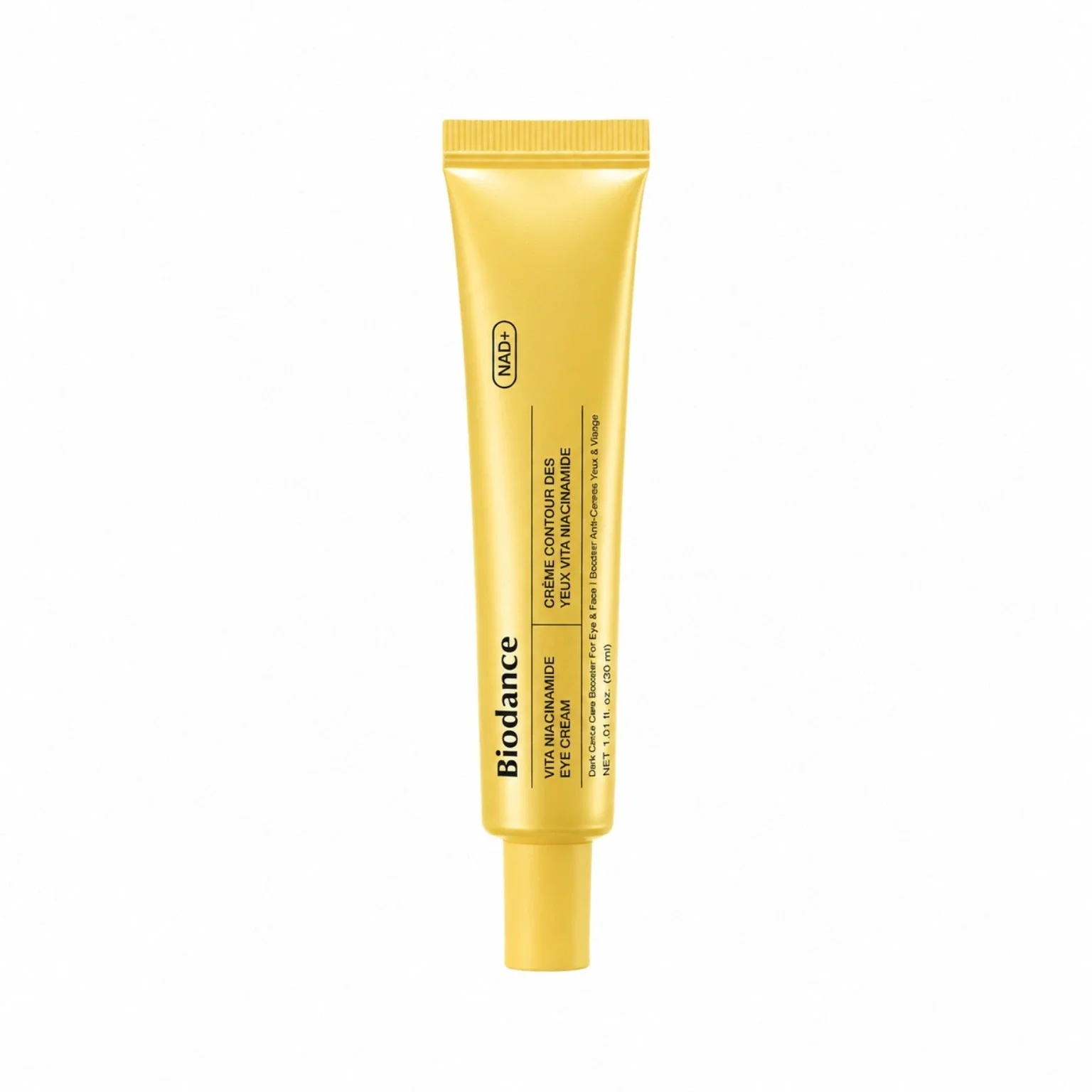
Biodance Vita Niacinamide Eye Cream
Where to buy
NAD+ is one of the more interesting newer ingredients making its way into Korean skincare.
The Biodance Vita Niacinamide Eye Cream combines NAD+ with pineapple fruit water, niacinamide, glutathione, ceramide NP, ATP and resveratrol. Its full ingredient list places pineapple water first and niacinamide very high in the formula, while NAD+ appears further down.
Best for: dull, uneven-looking under-eyes where pigmentation and loss of radiance are more important concerns than puffiness.
This distinction matters because the practical strength of this formula is probably brightening and barrier support, not NAD+ alone. Niacinamide has substantially better established topical evidence and is positioned prominently in the formula. Glycerin, emollients and ceramide NP also make this a useful moisturizing eye cream.
NAD+ itself is biologically fascinating. It plays an essential role in cellular energy metabolism and DNA repair, and interest in declining NAD+ levels and aging has expanded rapidly.
That connection with cellular metabolism and longevity research also makes it extremely attractive from a skincare-marketing perspective.
But topical cosmetic evidence is still early.
Recent studies on topical NAD+ are promising, but they have used techniques such as microneedling or specialized delivery systems. That suggests getting NAD+ effectively into the skin may still be a challenge for ordinary cosmetic creams.
Related Article: NAD⁺ and NMN in Skincare: What They Do and What the Evidence Really Shows
So I would not buy this eye cream because I expect topical NAD+ to “reverse cellular aging.”
I would consider it because the overall brightening formula makes sense, while the presence of NAD+ tells us something interesting about where Korean beauty marketing and formulation are heading.
What this could mean for 2027: NAD+ may move from a niche longevity concept into mainstream creams, serums and eye treatments — but the science of conventional topical NAD+ still needs to catch up with the marketing.
4. Copper Peptides Are Becoming More Consumer-Friendly
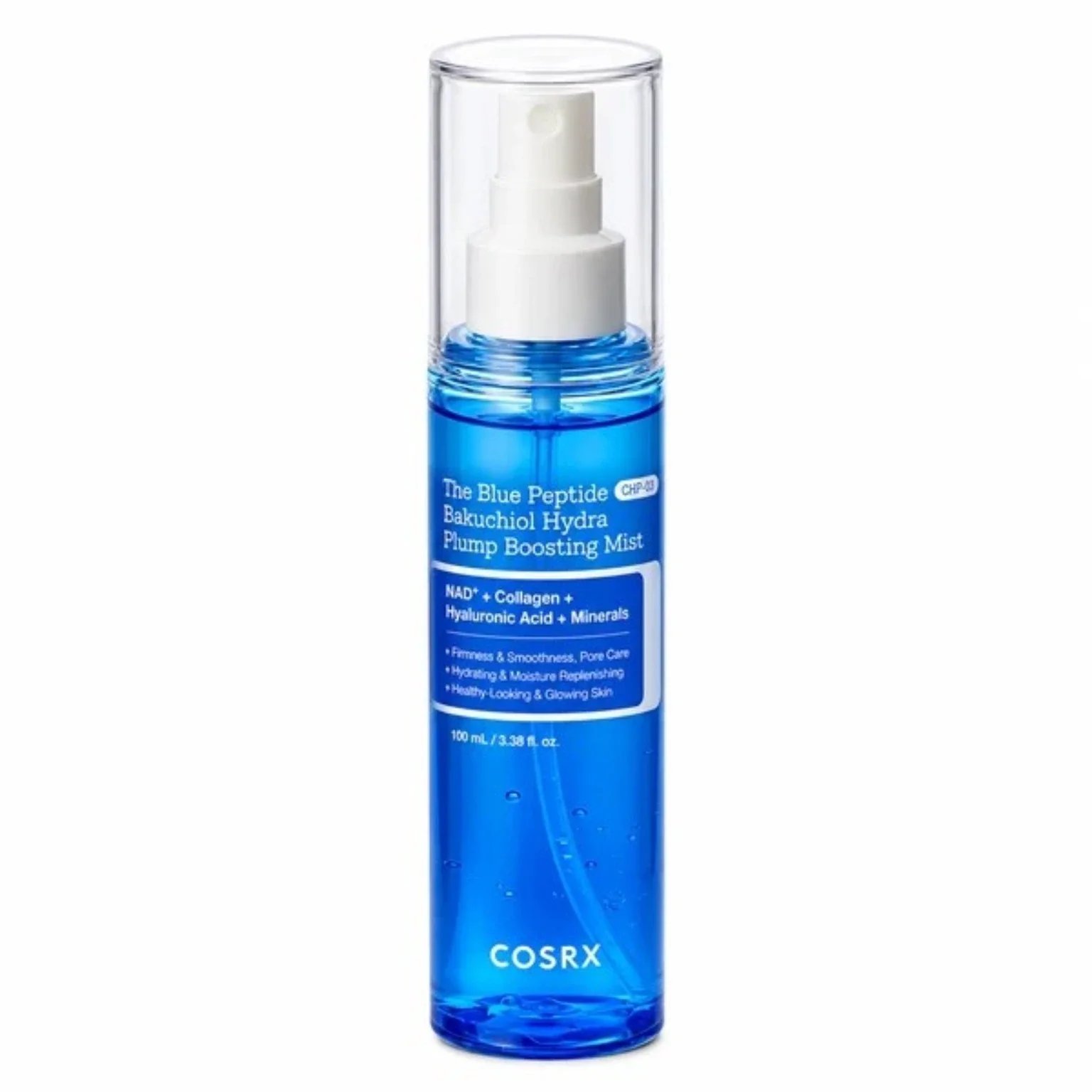
COSRX The Blue Peptide Bakuchiol Hydra Plump Boosting Mist
Where to buy
Copper peptides traditionally appear in anti-aging serums that feel relatively treatment-focused. COSRX has taken a different approach by putting them into a two-phase facial and body mist.
The Blue Peptide Bakuchiol Hydra Plump Boosting Mist launched on Amazon US on November 1, 2026, before reaching COSRX's own store. COSRX discloses 0.2% Copper Tripeptide-1 (2,000 ppm) and 0.05% bakuchiol (500 ppm). The formula also contains niacinamide, NAD+, additional peptides, panthenol, beta-glucan and multiple forms of hyaluronic acid.
Best for: dehydrated normal, combination or dry skin looking for lightweight hydration with some additional firming and anti-aging support.
I particularly like what this product represents rather than simply what it contains.
Korean brands are starting to move more sophisticated actives into products that are easy and enjoyable to use: mists, sprays, pads and hybrid products rather than another dropper serum.
There is still room for skepticism.
Copper peptide research is biologically interesting, but recent reviews note that human clinical evidence remains much thinner than the amount of preclinical data might suggest.
Related Article: Should You Start Using Copper Peptides?
Bakuchiol also needs context. One of the best-known randomized clinical studies used 0.5% bakuchiol, while this mist contains 0.05%. That does not mean 0.05% cannot contribute to the formula, but I would not assume it reproduces the results seen with a ten-times-higher concentration in a different formulation.
The most immediately predictable benefit from this mist is therefore still hydration and a dewy finish, with the copper peptide and bakuchiol adding potentially useful longer-term support.
What this could mean for 2027: more advanced anti-aging ingredients may move into lightweight, lifestyle-friendly formats rather than staying confined to traditional treatment serums.
5. Sunscreen Is Becoming a Treatment Product
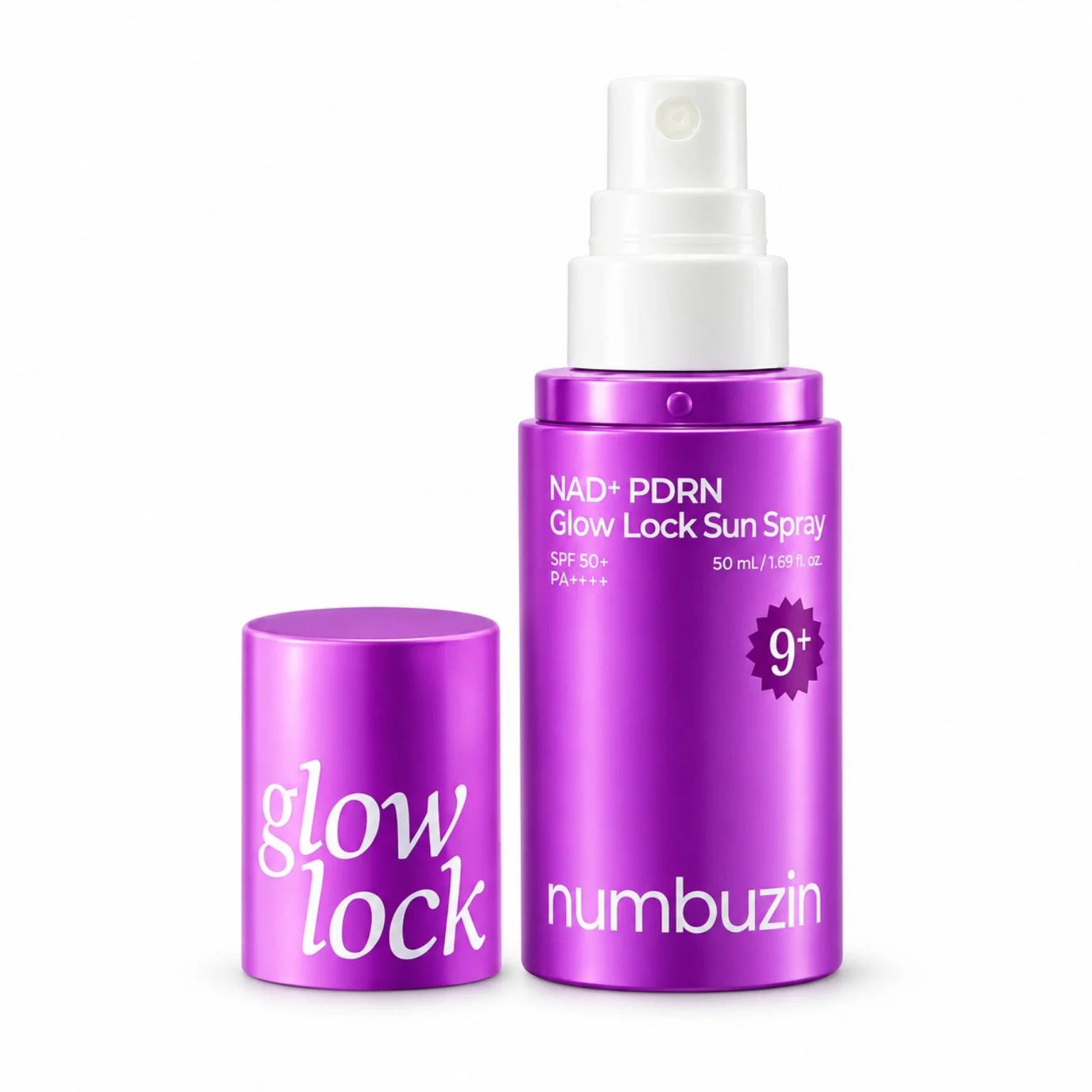
numbuzin No.9 NAD+ PDRN Glow Lock Sun Spray SPF50+ PA++++
Where to buy
Sunscreen and skincare have been blending together for years, but products such as the numbuzin No.9 NAD+ PDRN Glow Lock Sun Spray push the concept significantly further.
The formula combines a modern UV-filter system with niacinamide, NAD+, PDRN, resveratrol and an extensive peptide complex. Retailer ingredient data disclose 10,000 ppb NAD+ and 5,000 ppb Sodium DNA, equivalent to approximately 0.001% NAD+ and 0.0005% Sodium DNA.
Best for: people who already use sunscreen and want a portable format for daytime reapplication, particularly when wearing makeup.
This is where concentration context becomes particularly important.
NAD+, PDRN and “50 peptides” make the product sound almost like an anti-aging treatment, but the main job of this product is still protecting skin from UV radiation.
The disclosed amounts of NAD+ and PDRN are very small. That does not automatically prove that they are useless, but I would not choose the product primarily for those ingredients.
I am much more interested in whether the spray makes people reapply sunscreen more consistently.
The difficulty with sunscreen sprays is dose. SPF testing is based on a specific applied amount, while real-world sunscreen application is frequently insufficient or uneven. Research examining sunscreen coverage has repeatedly shown that application technique can leave areas inadequately protected.
A few light spritzes should therefore not automatically be assumed to provide the same protection as a properly applied layer of sunscreen.
For me, this makes the numbuzin spray most appealing as a convenient reapplication product, rather than an excuse to focus on PDRN while forgetting the SPF.
Related Article: Korean Sunscreens 2026: Sun Serums, SPF Mists, and New Lightweight Textures
What this could mean for 2027: sunscreen may increasingly be sold as a treatment step containing the same fashionable actives as serums and creams. The best products, however, will still need to succeed first and foremost as sunscreens.
6. “Old-School” Dermatological Ingredients Are Coming Back in K-Beauty
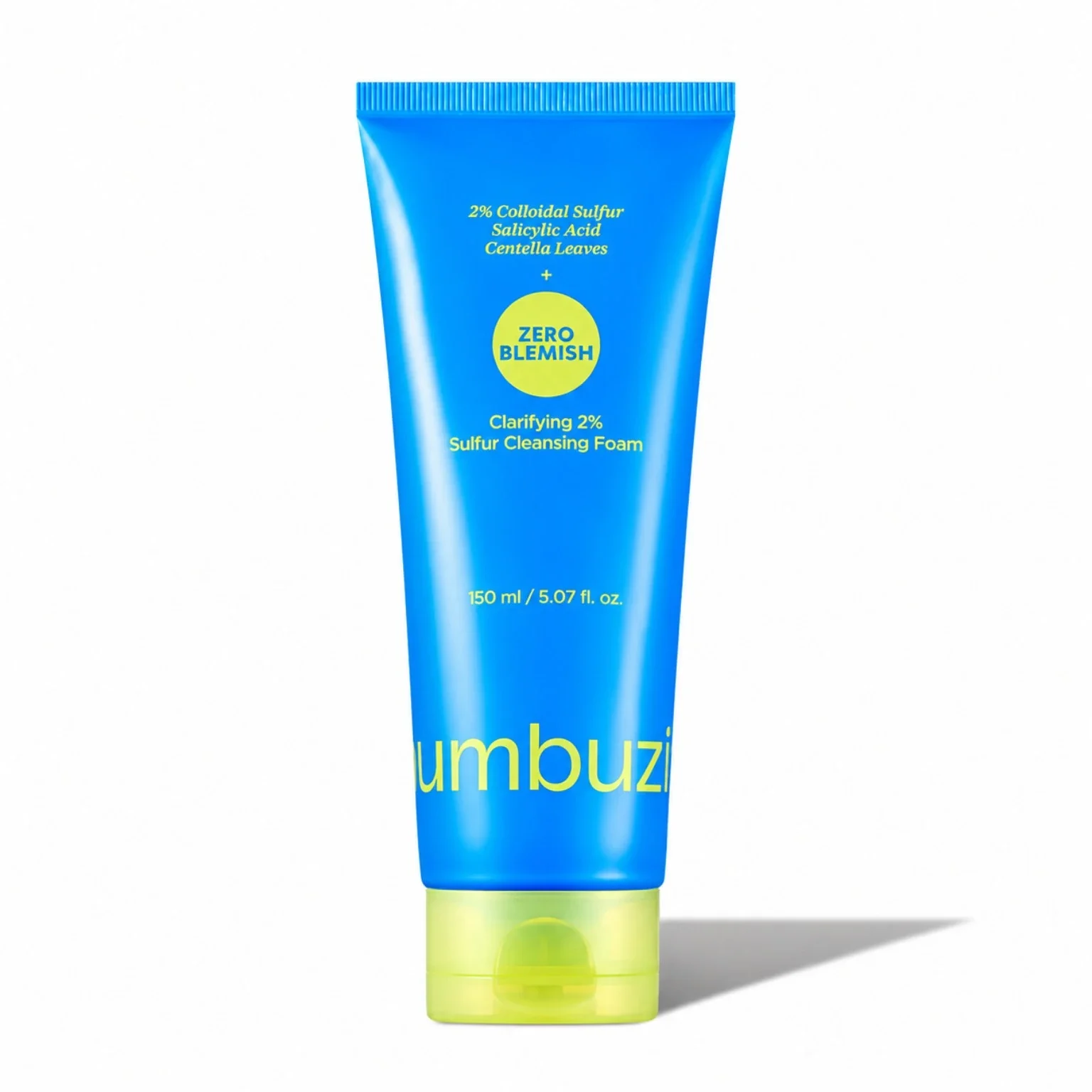
numbuzin No.0 Zero Blemish Clarifying 2% Sulfur Cleansing Foam
Where to buy
This may be the least trend-driven product in this article — and that is exactly why I find it exciting.
Sulfur is not new. It is not glamorous. It does not have the same cutting-edge image as NAD+, PDRN or peptides.
But numbuzin has built a new cleanser around 2% colloidal sulfur, alongside gluconolactone, salicylic acid, centella, ceramide NP and a relatively modern surfactant system.
Best for: oily, congested and acne-prone skin, particularly for people who want to try sulfur in a rinse-off product rather than a stronger leave-on treatment.
Sulfur has a long history in dermatology and has keratolytic, antimicrobial and antifungal properties. It has been used in acne, seborrheic dermatitis and several other skin conditions (Chen, 2025).
At the same time, sulfur should not suddenly be treated as the most evidence-backed acne ingredient simply because it is trending again. A Cochrane-derived review found the evidence for sulfur in acne considerably less certain than the evidence supporting better-established options such as azelaic acid.
What makes the numbuzin cleanser interesting is therefore not the discovery of a new active.
It is the modernization of an old one.
The wash-off format may also make sulfur easier to tolerate for people who find leave-on sulfur products too drying or unpleasant.
Less suitable for: very dry, compromised or highly reactive skin, where a sulfur-based acne cleanser may simply be unnecessary.
Related Article: Acne 101: What Actually Works in Korean Skincare
The Return of Proven, Less Glamorous Ingredients
This is a trend I would watch closely.
Alongside newer and modern ingredients, I would not be surprised to see Korean brands give more attention to established ingredients such as sulfur, azelaic acid, urea, ectoin and other less fashionable but useful actives.
The innovation may not always be the ingredient itself.
Sometimes the innovation is making an old ingredient easier to use.
What These Launches Tell Us About K-Beauty in 2027
If these products are any indication, the biggest K-beauty trend of 2027 may not be one new miracle ingredient.
Instead, we may be entering an era of more complicated, multi-mechanism formulas.
PDRN is increasingly being combined with retinal, peptides and Volufiline. NAD+ is moving into mainstream eye care and sunscreen. Copper peptides are appearing in accessible formats such as facial mists. Sunscreens are being marketed almost like treatment serums.
Related Article: Korean Clinical Grade Skincare in 2026: Advanced Brands and Technologies You May Not Know Yet
At the same time, brands are looking backward and rediscovering ingredients that dermatology has used for decades.
That creates an interesting tension.
K-beauty is embracing advanced biotech-inspired ingredients while also returning to older, well-known actives.
And for consumers, that makes ingredient literacy more important than ever.
A product is not automatically impressive because it contains PDRN. Fifty peptides do not automatically make a sunscreen better. NAD+ on an ingredient list does not mean a cream has proven cellular anti-aging effects. And a 5% Volufiline claim does not mean the product contains 5% pure sarsasapogenin.
The better questions are:
Does the complete formula make sense?
Are the headline ingredients present at meaningful or at least disclosed concentrations?
Does the product offer something useful for your particular skin type?
And is the trendy ingredient actually the reason the product is good — or simply the reason you noticed it?
Those are the questions I expect will matter much more as Korean skincare moves into 2027.
Frequently Asked Questions
Should I replace my current skincare products when a new K-beauty ingredient starts trending?
Usually, no. If your current routine is working well for your skin, a new ingredient is not automatically a reason to replace it. New launches are most useful when they solve a problem your existing routine does not address or offer a format that fits your routine better.
How long should I wait before judging a newly launched skincare product?
For immediate effects such as hydration, texture and irritation, you can often learn quite a lot within the first few uses. Changes involving pigmentation, fine lines or firmness generally require much longer. I would also be cautious about drawing conclusions from launch-week reviews, when many opinions are based primarily on texture and first impressions.
Can I use several trendy anti-aging ingredients in the same routine?
Sometimes, but more is not automatically better. Products combining peptides, PDRN, niacinamide or other relatively gentle ingredients may layer easily, while adding retinal, exfoliating acids or several potentially irritating treatments can make a routine unnecessarily complicated. The overall routine matters more than collecting every new active.
Are the newest Korean skincare products usually better than older formulas?
Not necessarily. A newer product may have a more sophisticated texture, delivery system or ingredient combination, but established products often have the advantage of longer consumer experience and clearer expectations. A new formula should still earn its place in your routine based on your skin type and concerns rather than its launch date.
How can I decide whether a new K-beauty launch is worth trying?
Look beyond the headline ingredient. Check the complete formula, disclosed concentrations when available, texture, skin-type suitability and whether the product actually fills a gap in your routine. A product can contain a very fashionable ingredient and still be completely unnecessary for your skin.
Find the Right Korean Skincare for Your Skin
Want to keep exploring? Read more evidence-based Korean skincare guides on my blog for ingredient explainers, product comparisons and practical routine advice.
Not sure what your skin actually needs? Take my Skin Type Quiz for a starting point, or explore my personalized skincare consultation if you want a routine tailored to your skin type, concerns, preferences and current products.




Six new launches offer an early look at the K-beauty trends that could shape 2027.