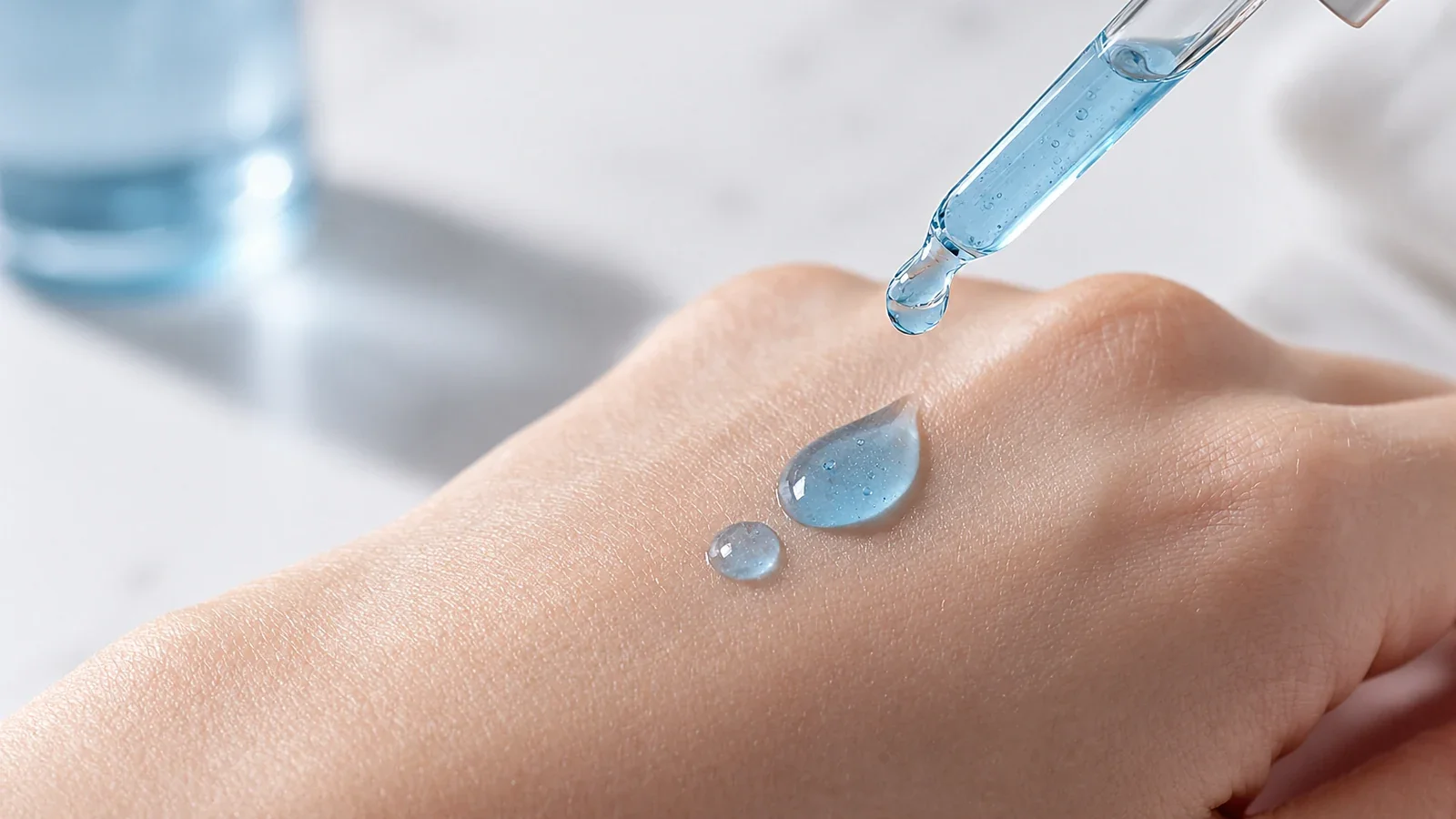
Copper peptides can be a useful addition to your routine if you want to target fine lines, loss of firmness, and skin recovery without relying only on retinol or higher strength vitamin C. The best known form, GHK Cu, has been studied for its role in collagen support and skin repair, although the human evidence is still more limited than for established anti aging ingredients such as retinoids.
In this guide, I will explain what copper peptides do, how to choose a good copper peptide serum, what benefits you can realistically expect, and which products are actually worth considering.
Key Takeaways
✓ Copper peptides, especially GHK Cu, may support collagen, firmness, fine lines, and skin repair. The evidence is promising, but still more limited than for retinoids.
✓ Higher concentration does not automatically mean a better product. Formula quality, stability, and delivery matter too.
✓ Look for Copper Tripeptide 1 on the ingredient list, and check what any percentage claim actually refers to.
✓ Copper peptides can be useful if your skin does not tolerate retinol or higher strength vitamin C well.
✓ Choose based on your skin and routine, whether you prefer a lightweight serum, richer formula, budget option, or a cream instead of another serum.
Some links are affiliate links. If you choose to purchase through them, it helps support my work at no extra cost to you.
What Are Copper Peptides?
Copper peptides are small chains of amino acids that bind to copper ions. The best-known and most studied copper peptide in skincare is GHK-Cu, short for glycyl-L-histidyl-L-lysine copper.
If you are checking the ingredient list of a skincare product, you will usually find GHK-Cu listed as Copper Tripeptide-1. So if a serum is marketed as a copper peptide serum, this is one of the main ingredient names to look for.
Copper peptides are only one type of peptide used in skincare. Different peptides have different structures and functions, so the evidence for GHK-Cu should not automatically be applied to every peptide serum. GHK-Cu has attracted particular interest because of its potential role in skin repair, extracellular matrix remodeling, and other processes related to skin aging.
Related Article: The Best Korean Peptide Serums for Anti-Aging
How Do You Choose a Good Copper Peptide Serum?
A good copper peptide serum is not simply the one with the highest percentage. When you are choosing a product, look at the form of copper peptide, the disclosed concentration, the overall formulation, and how the peptide is delivered into the skin.
How Much Copper Peptide Should a Serum Contain?
There is currently no established minimum concentration of GHK-Cu that guarantees visible results in facial skincare. This makes copper peptides different from ingredients such as retinol, where percentages can give you a more useful idea of product strength.
If a brand discloses the amount of Copper Tripeptide-1 or GHK-Cu, that is helpful, but a higher number does not automatically mean a better serum. Also pay attention to exactly what the percentage refers to. A product advertised as containing a “1% copper peptide complex,” for example, does not necessarily contain 1% pure GHK-Cu.
Does the Delivery System Matter?
Yes. GHK-Cu is hydrophilic, which makes penetration through the lipid-rich stratum corneum challenging. This is why the formulation around the peptide matters, not just how much of it was added to the bottle.
Researchers have explored delivery systems such as liposomes and other carriers to improve peptide delivery and stability. However, this does not mean that every product marketed as “liposomal” automatically delivers copper peptides better. Recent research has found that liposomal encapsulation does not always produce significantly greater skin penetration than free GHK-Cu, so the quality of the complete formulation still matters.
In other words, a sophisticated-sounding delivery system is a positive feature only if the formulation has actually been designed and tested well.
Related Article: Korean Clinical Grade Skincare in 2026: Advanced Brands and Technologies You May Not Know Yet
Is a Dedicated Copper Peptide Serum Better Than a Multi-Peptide Serum?
Not necessarily. A serum focused primarily on GHK-Cu has one practical advantage: it is usually easier to understand what you are actually getting. The brand may be more likely to disclose the concentration and formulate specifically around the stability and delivery needs of the copper peptide.
But that does not mean you need a dedicated copper peptide serum. A well-formulated multi-peptide serum can also be a good option, particularly if it contains a meaningful amount of Copper Tripeptide-1 alongside other complementary peptides.
What I would be more cautious about is a long “peptide complex” where Copper Tripeptide-1 appears somewhere in the formula but the brand gives you no information about its amount or why it is included. In that situation, the presence of copper peptide on the ingredient list alone does not tell you whether the product provides enough GHK-Cu to reproduce effects seen in research.
So when you are comparing copper peptide serums, don't choose based on the biggest percentage or the longest peptide list. Look for a clearly identified form of copper peptide, transparent concentration information when available, and a formulation designed with peptide stability and delivery in mind.
How Can Copper Peptides Benefit Your Skin?
Copper peptides may help support firmer skin, reduce the appearance of fine lines, and support skin repair. They are also generally well tolerated, which can make them useful if your skin does not handle retinol or higher concentrations of vitamin C well.
Supporting Your Skin's Collagen and Firmness
Copper peptides may support collagen production and the processes involved in maintaining your skin's structure. Since collagen levels naturally decrease with age, this may help if you are starting to notice less firmness or elasticity.
Copper peptides are not a replacement for retinoids. Retinoids have much stronger clinical evidence for photoaging and collagen remodeling. Copper peptides can instead be used as an additional anti-aging step, or as an option if your skin does not tolerate retinol well.
Fine Lines and Wrinkles
GHK-Cu may help reduce the appearance of fine lines and wrinkles over time, although you should not expect fast or dramatic changes.
Small clinical studies have reported improvements in wrinkle depth and skin firmness, but the results can vary depending on the formulation, concentration, and delivery system.
If retinol regularly leaves your skin dry, peeling, or irritated, or higher-strength vitamin C serums tend to sting, you may find copper peptides easier to use.
You also do not necessarily have to choose between them. If your skin tolerates retinol and vitamin C well, copper peptides can simply be another supportive step in your routine. Vitamin C is mainly used for antioxidant protection and brightening, while copper peptides are more closely linked to skin repair and structural support.
Related Article: Best Vitamin C Serums (2026): How to Choose the Right Formula for Your Skin
Helping Your Skin Recover
Copper peptides may also support processes involved in skin repair and recovery, including tissue remodeling and the skin's response to oxidative and inflammatory stress.
This does not mean that a cosmetic copper peptide serum can treat or medically heal damaged skin. Most of the evidence for the regenerative effects of GHK-Cu still comes from laboratory and preclinical studies.
My recommendation is to think of copper peptides as an extra anti-aging step rather than something your routine absolutely needs. If you already use sunscreen, a good moisturizer, and the main actives that work for your skin, a well-formulated copper peptide serum can be worth adding if firmness, fine lines, and skin recovery are among your main concerns.
Best Copper Peptide Products Worth Trying
Not every product that contains Copper Tripeptide 1 is necessarily a good copper peptide product. For this list, I looked for meaningful concentrations where brands disclose them, well designed supporting formulas, useful textures, and products that give you a practical reason to choose them over the others.
Dr.Reju-All Advanced PDRN Copper Peptide Serum
Best for: Lightweight layering
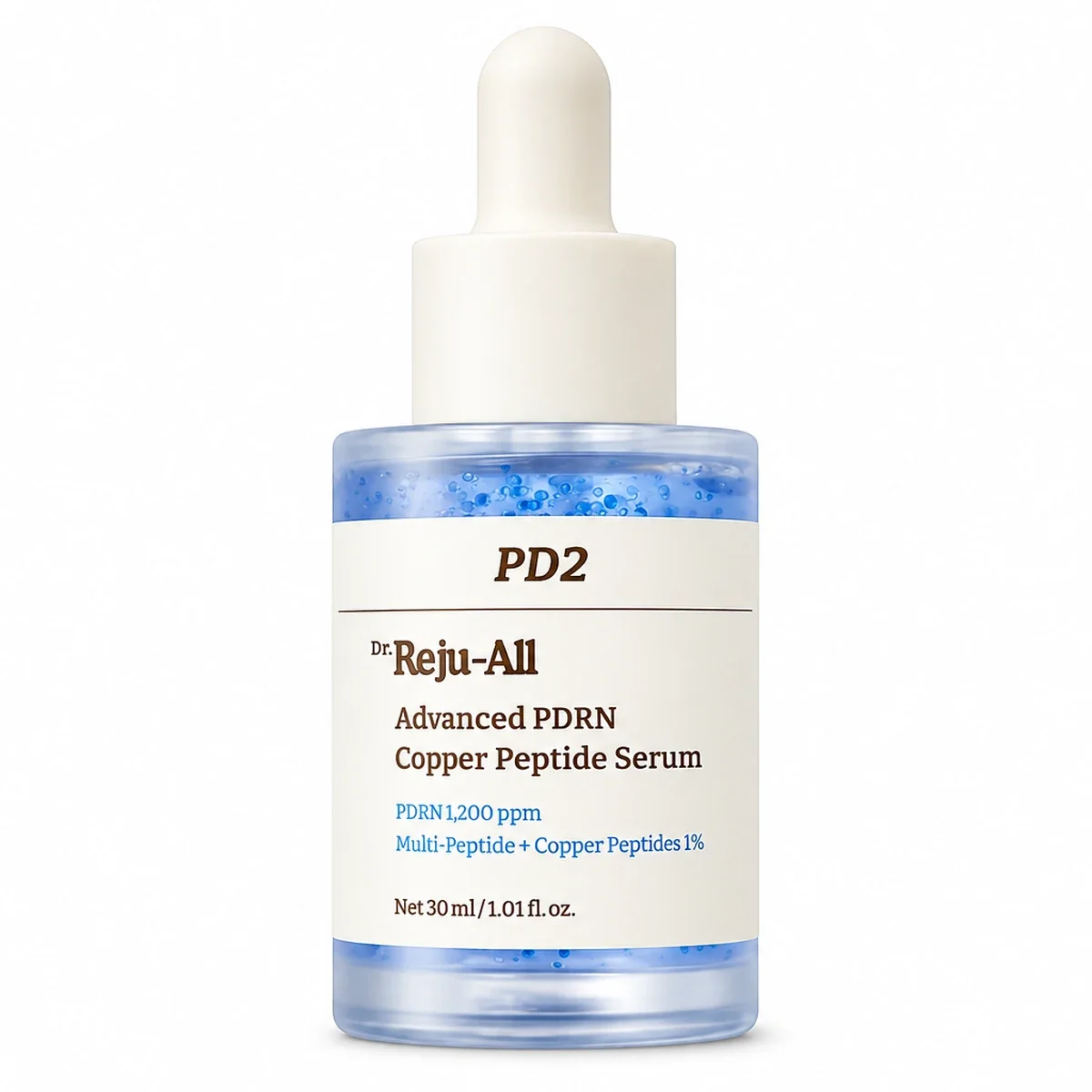
Dr.Reju-All is a good choice if you already use several skincare steps and do not want another heavy serum. The texture is lightweight, while the formula combines 1,200 ppm PDRN with a 1% multi peptide and copper peptide complex. Importantly, that does not mean the serum contains 1% pure GHK Cu.
The tiny blue capsules contain the copper peptide portion of the formula and are designed to help protect it from breaking down before application. I would see this mainly as a stability feature rather than proof of better skin penetration.
You also get niacinamide, panthenol, beta glucan, hyaluronic acid and several additional peptides. One thing to know if your skin is very reactive is that the formula contains hinoki oil and chamomile flower oil, even though it has no artificial fragrance.
Related Article: How to Use PDRN for Real Results: A Doctor’s Honest Take
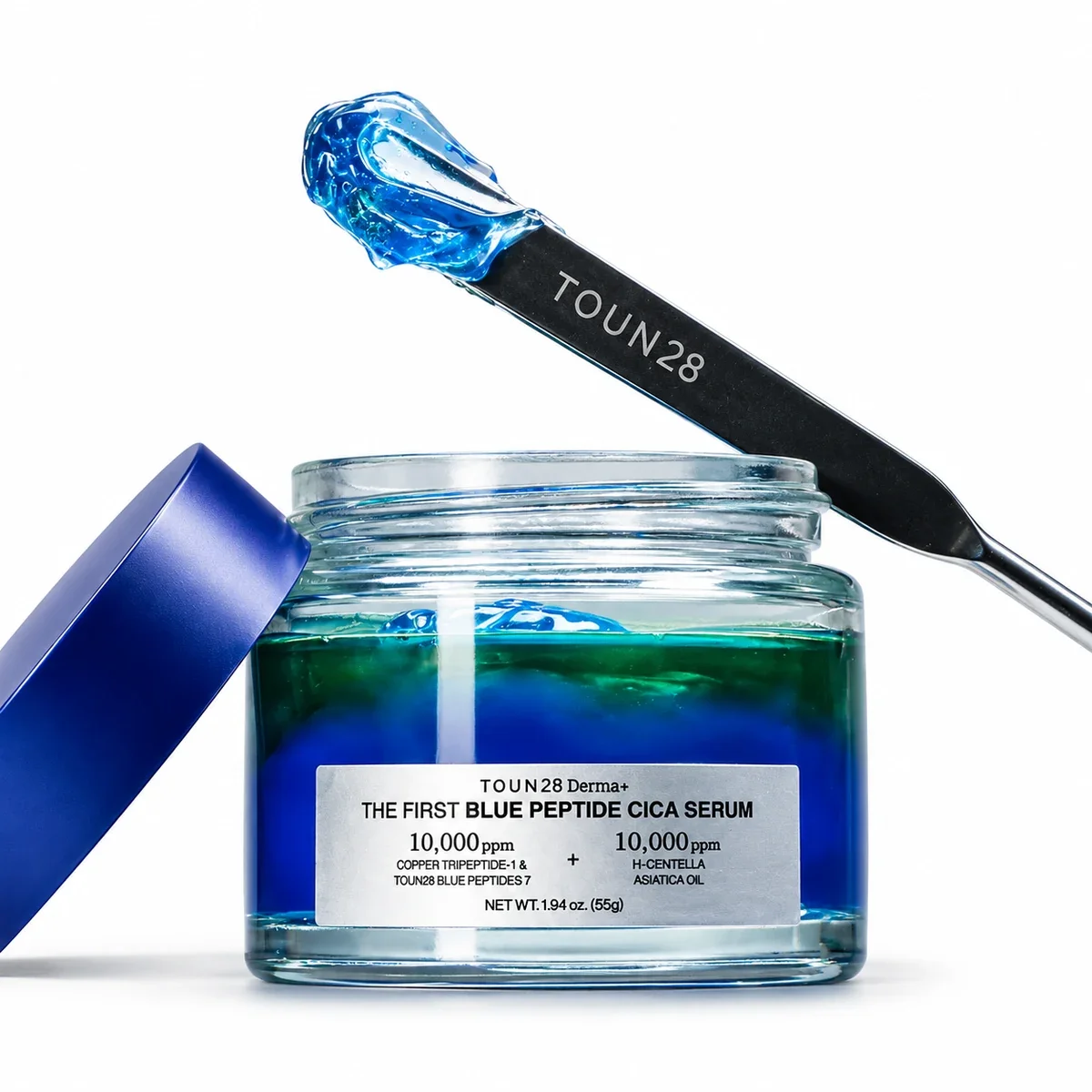
TOUN28 The First Blue Peptide Cica Serum
Best for: Dry skin
Where to buy
This is one of the more unusual Korean copper peptide formulas. TOUN28 uses 5,000 ppm, or 0.5%, GHK Cu, together with seven additional peptides.
Instead of a typical watery serum, it comes as two separate gel layers. A blue water gel contains the copper peptide, while a green oil gel contains Centella asiatica oil. You mix the two together with the included spatula, and they melt into a silky serum on the skin.
That combination makes more sense to me for dry skin than a very thin peptide serum. The formula also includes multiple forms of hyaluronic acid and ceramide NP to support hydration. There is no added fragrance. I like that the texture gives this product a real reason to exist beyond simply offering another bottle of copper peptides.
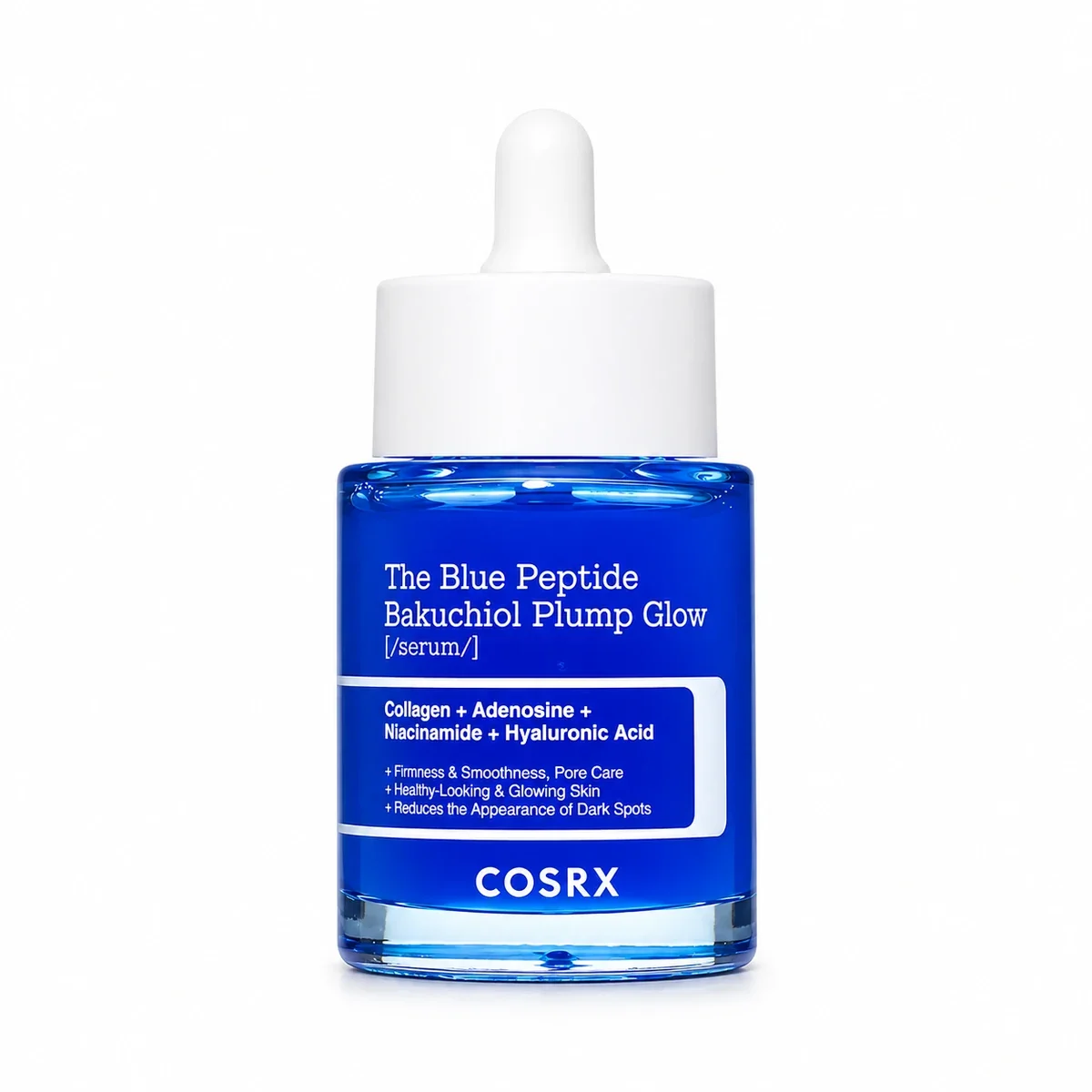
COSRX The Blue Peptide Bakuchiol Plump Glow Serum
Best for: Budget
Where to buy
COSRX gives you a generous 50 mL bottle for around $27, while still disclosing 0.5% Copper Tripeptide 1 and 0.25% bakuchiol. That makes it one of the better value formulas on this list.
The serum has a lightweight, fluid texture and also includes niacinamide, betaine, panthenol, several additional peptides and multiple forms of hyaluronic acid. It is a good option if you want one serum that covers hydration and early signs of aging without becoming too complicated.
There is one important caveat: the formula contains alcohol. I would not automatically consider that a reason to avoid it, but it is worth knowing if you specifically avoid alcohol in leave on skincare or if your skin tends to react to it.
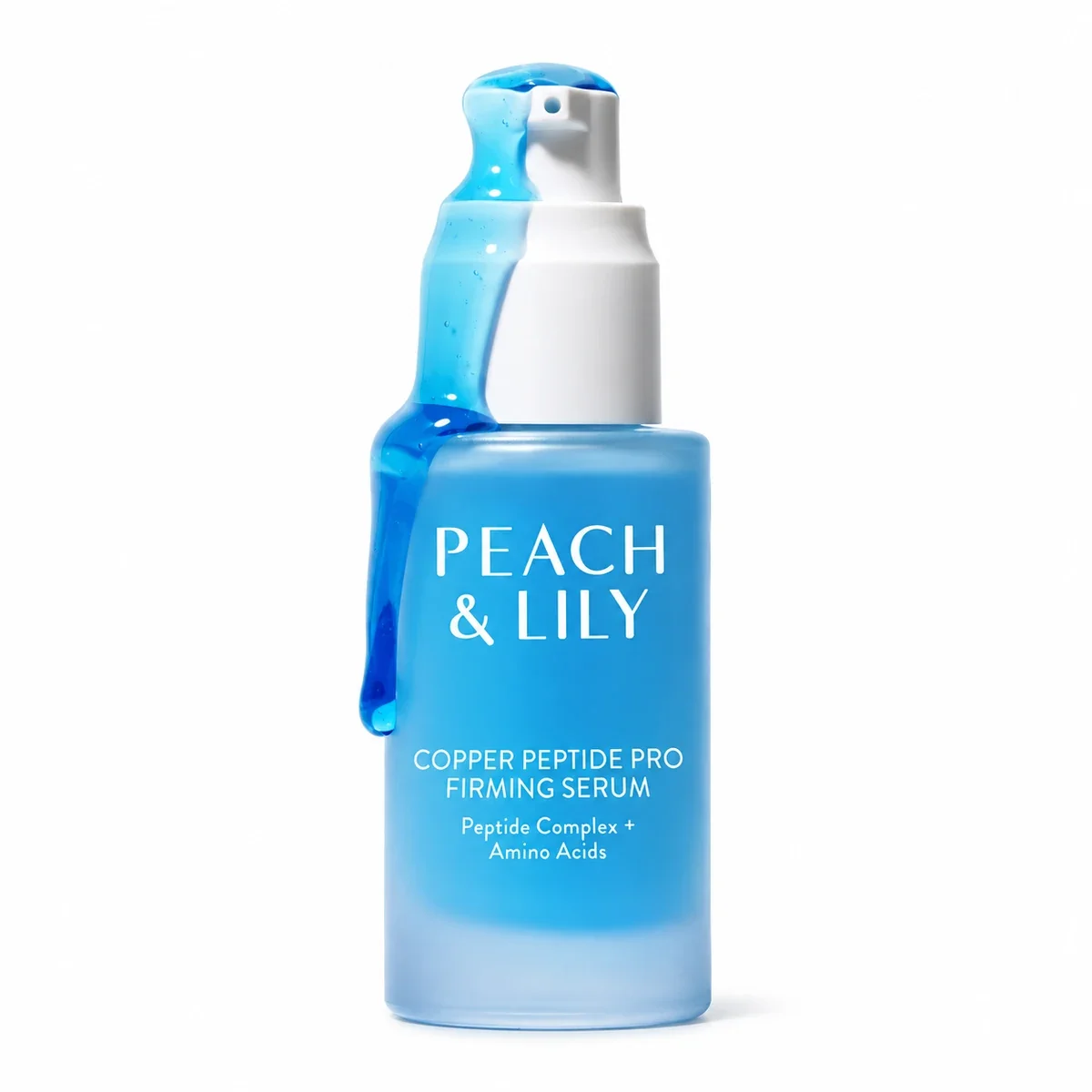
Peach & Lily Copper Peptide Pro Firming Serum
Best for: Sensitive skin
Where to buy
If sensitivity is your main concern, Peach & Lily would be one of my first choices from this list. The serum contains a disclosed 0.2% copper peptide, plus 12 additional peptides, amino acids, squalane and several forms of hyaluronic acid.
The formula has a silky, hydrating texture rather than feeling like a strong active treatment. It also carries the National Eczema Association Seal of Acceptance, which gives it an advantage for those who want a more sensitivity focused option.
The 0.2% concentration is lower than some of the 0.5% and 1% products here, but I would not choose a copper peptide serum based on percentage alone. If your priority is a comfortable formula that you are more likely to use consistently, this is a very balanced option.
NIOD Copper Amino Isolate Serum 3 1:1 (CAIS3)
Best if: You hate heavy or sticky serums
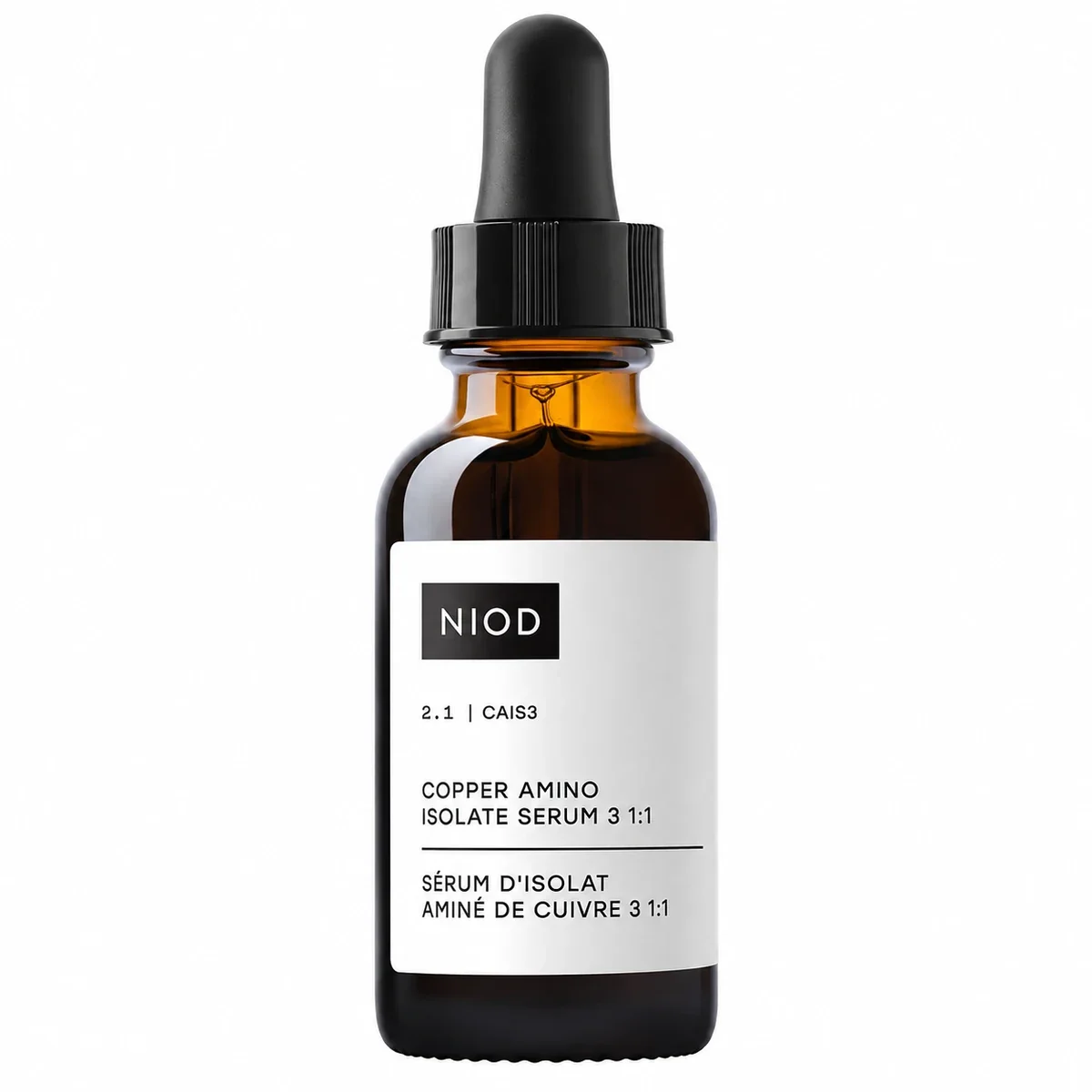
NIOD is the most copper peptide focused formula on this list. CAIS3 contains 1% GHK Cu together with another 1% GHK peptide, and the brand is unusually transparent about exactly what those percentages mean.
Despite the high copper peptide concentration, this is a very lightweight, water based serum. That makes it a good choice if you dislike rich, sticky peptide serums or want something that disappears quickly under the rest of your routine.
NIOD has also tested the finished product over 4, 8 and 12 weeks, rather than relying only on ingredient level claims. It is considerably more expensive than The Ordinary, which comes from the same DECIEM family, but the formulation and concentration are also different. If you want a straightforward, high concentration GHK Cu serum and texture matters to you, this is one of the strongest options.
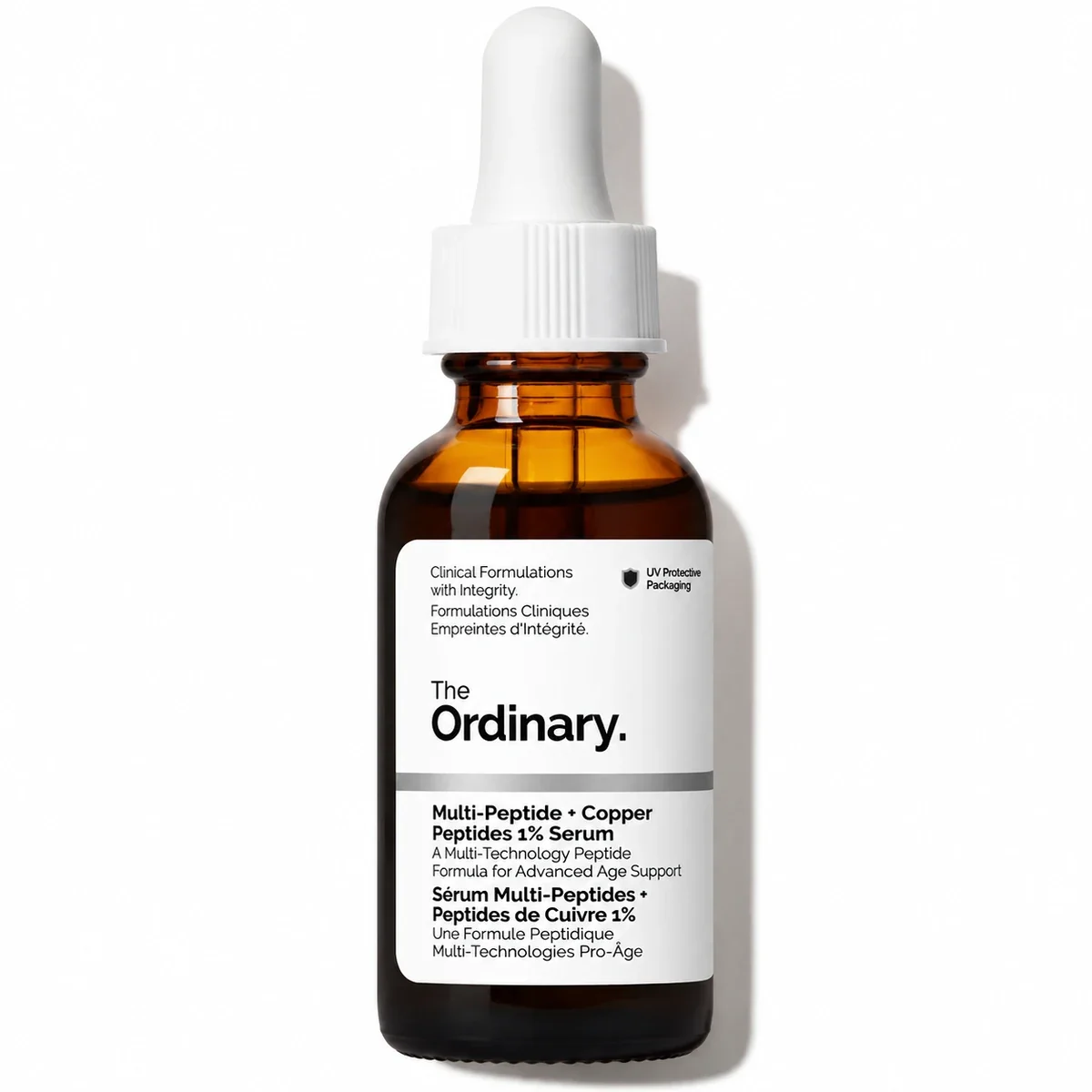
The Ordinary Multi-Peptide + Copper Peptides 1% Serum
Best for: An easy to find option
Where to buy
The Ordinary is the easiest place to start if you want a recognizable copper peptide serum without moving into premium prices. The current formula costs around $32 for 30 mL and combines its 1% copper peptide system with several additional peptides, amino acids and hyaluronic acid.
Copper Tripeptide 1 is fourth in the ingredient list, so this is clearly a central part of the formula rather than a token addition. The serum is also water based, alcohol free and oil free.
I would choose this if you want to try copper peptides without spending NIOD or Allies of Skin money, while still getting a more complete peptide serum rather than a very basic GHK Cu formula. The Ordinary does recommend separating it from some strong actives, so check the brand's current compatibility guidance if your routine is already complicated.
Biossance Squalane + Copper Peptide Rapid Plumping Serum
Best for: Dehydrated skin
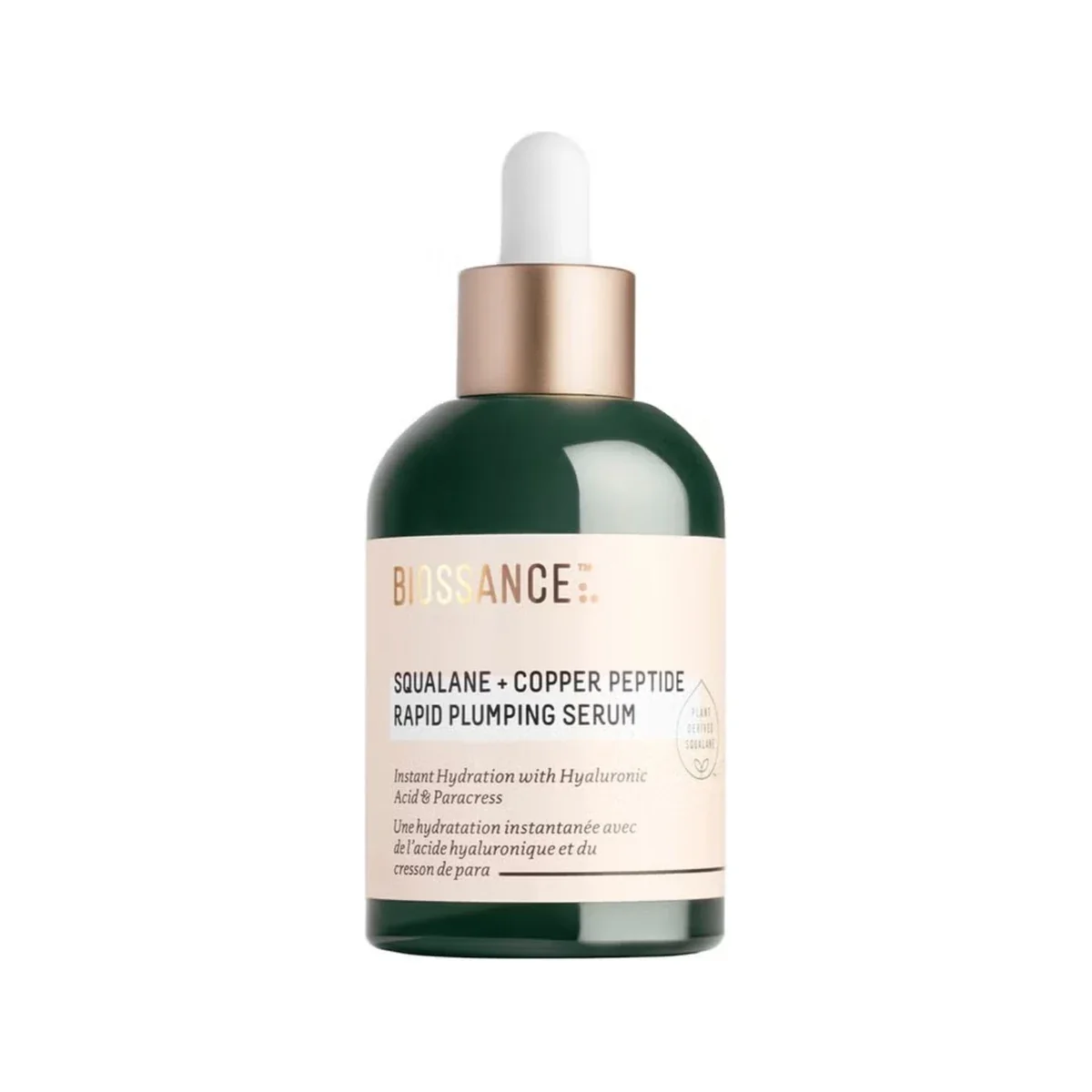
Biossance makes the most sense if dehydration is just as important to you as fine lines or firmness. Copper Tripeptide 1 appears relatively high in the ingredient list, but Biossance does not disclose its exact percentage, so I would not compare its strength directly with a 0.5% or 1% serum.
What makes the formula stand out is the hydration system around it. You get squalane, sodium hyaluronate, ectoin, panthenol and sodium polyglutamate, together with Copper PCA and two additional peptides.
The silky texture also gives it more slip than many watery peptide serums. The immediate “plumping” in the name is most likely coming largely from those hydrating ingredients rather than copper peptides suddenly changing your collagen, but that is not a disadvantage if dehydrated skin is what you are trying to improve.
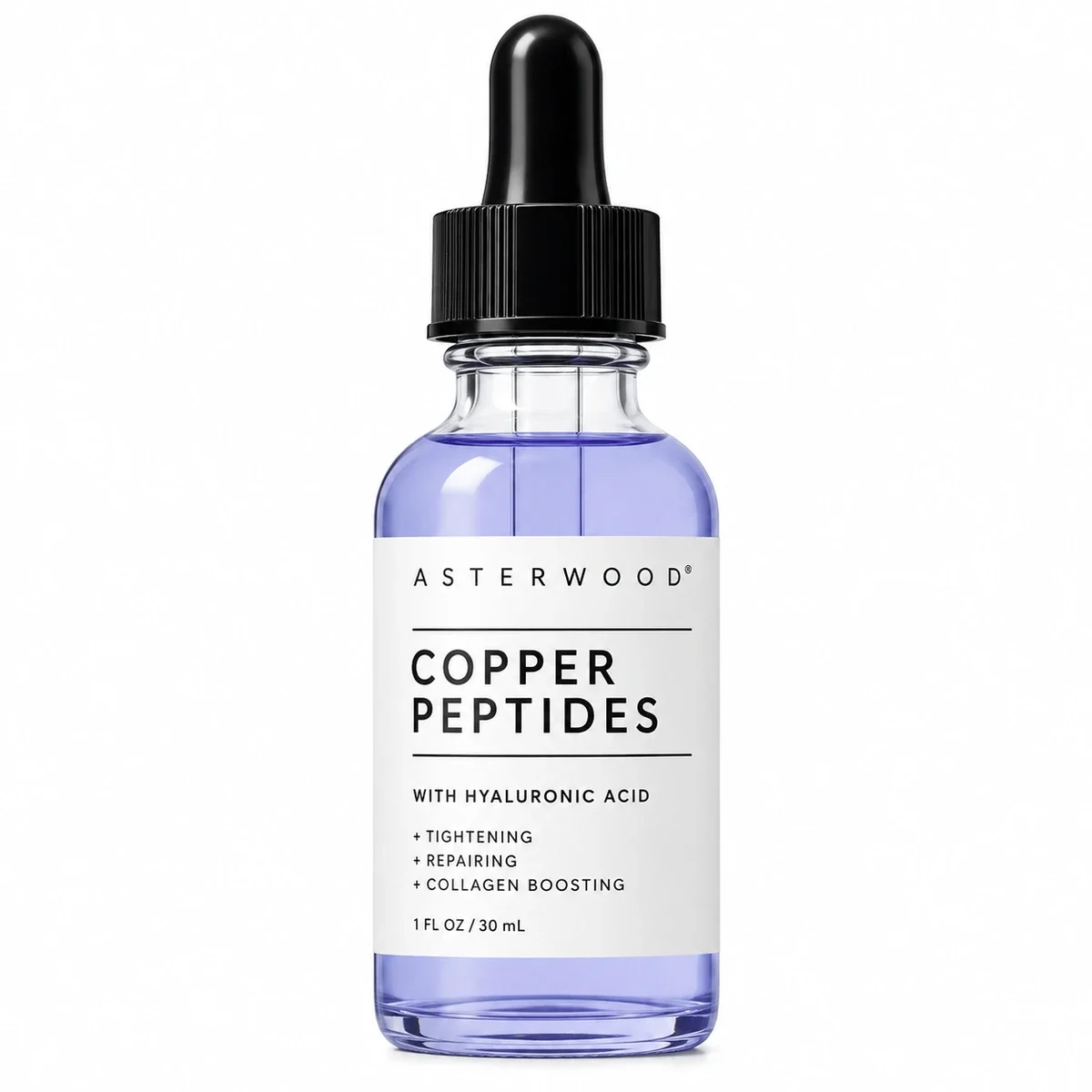
Asterwood Copper Peptides Serum
Best for: Minimalist formula
Where to buy
Asterwood is almost the opposite of the multi peptide serums above. The entire formula has only six ingredients, including a clearly disclosed 0.10% Copper Tripeptide 1 and 1.5% sodium hyaluronate.
There are no extra peptide complexes, botanical extracts, fragrance or essential oils. If you want to try GHK Cu without introducing a long ingredient list at the same time, that simplicity is the main reason to choose it.
The 0.10% concentration is lower than NIOD, COSRX or TOUN28, but it is clearly disclosed rather than hidden behind an unspecified peptide blend. I would particularly consider this one if your routine already contains the other ingredients you want and you are simply looking for a straightforward copper peptide serum without paying for a more elaborate formula.
Related Article: Hypoallergenic Korean Skincare: How to Build a Low-Irritation Routine
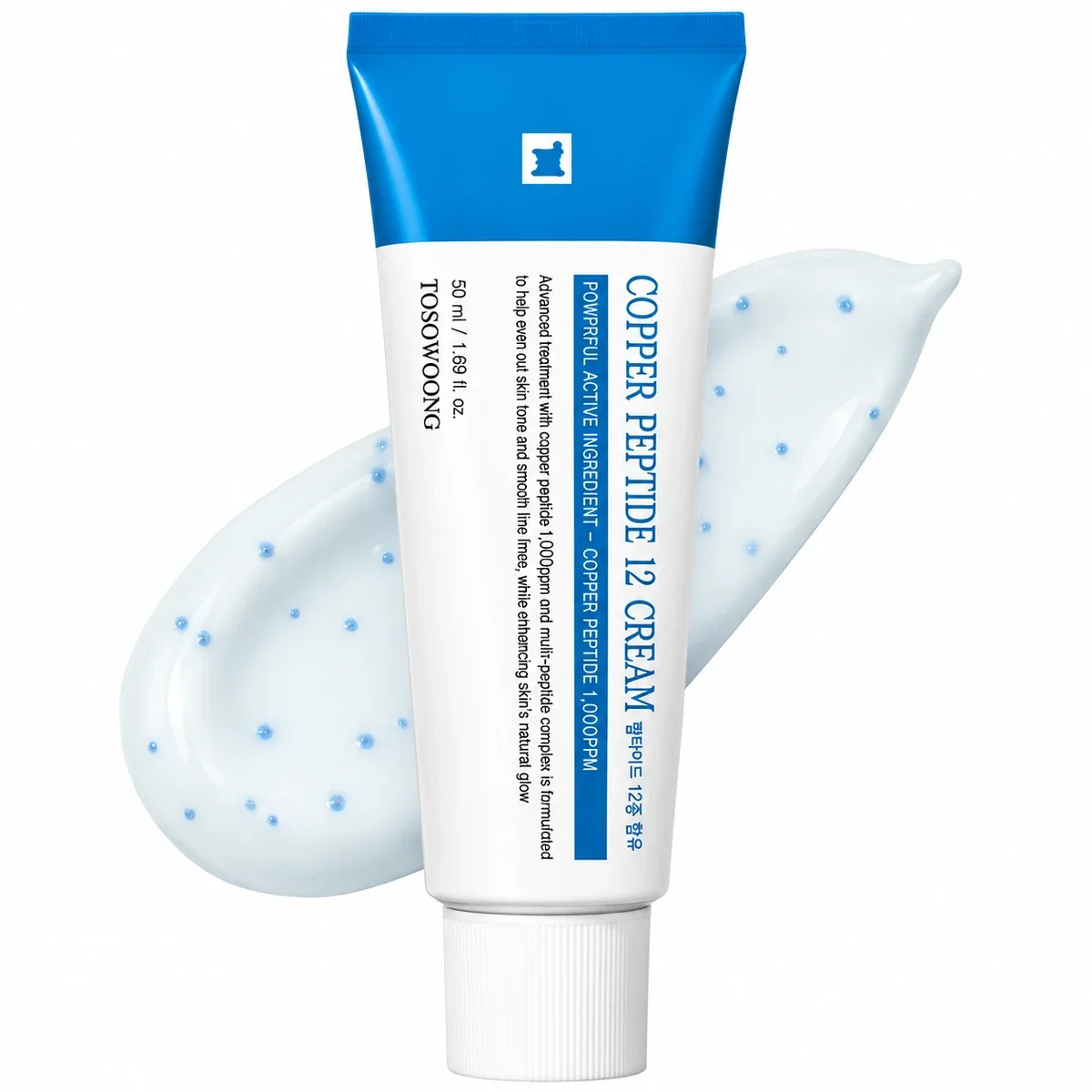
TOSOWOONG Copper Peptide 12 Cream
Best for: A minimalist routine
Where to buy
Not everyone needs another serum. TOSOWOONG lets you add copper peptides through your moisturizer step instead, which is why I like it for a simpler routine.
The cream contains 1,000 ppm, or 0.10%, Copper Tripeptide 1 together with a total of 12 peptides. The “12” in the name refers to the number of peptides, not a 12% copper peptide concentration. You may also see “99% purity” in the marketing, which refers to the purity of the copper peptide raw material rather than the percentage in the finished cream.
The texture is richer than the serums on this list, with emollients including ethylhexyl palmitate and isopropyl palmitate. I would lean toward this one for normal, dry or dehydrated skin rather than very clog prone skin. One thing worth noting is that it does contain a small amount of alcohol.
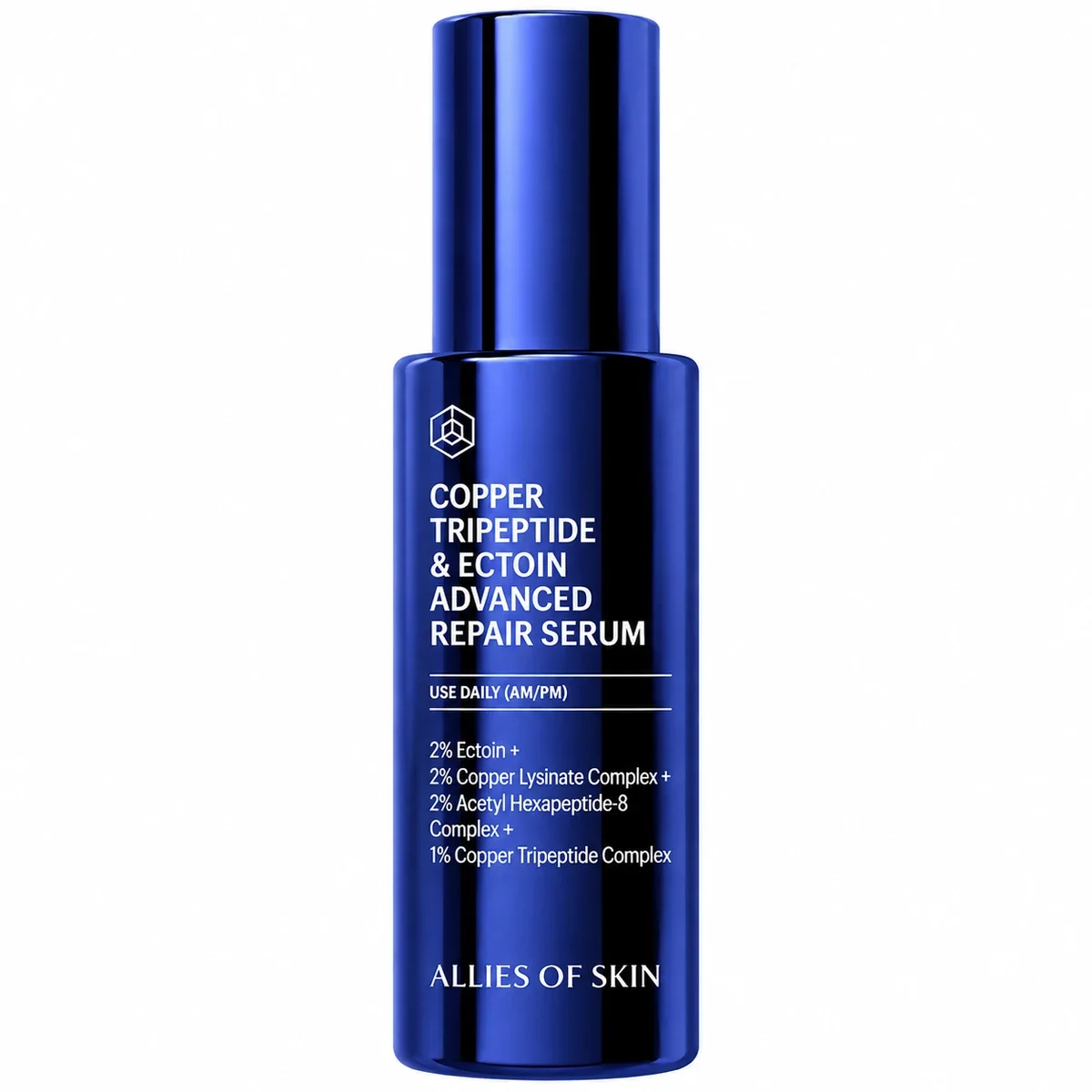
Allies of Skin Copper Tripeptide & Ectoin Advanced Repair Serum
Best for: Premium
Where to buy
At around $199 for 30 mL, Allies of Skin is by far the premium option on this list, so the formula needs to offer more than attractive packaging.
It combines a 1% Copper Tripeptide Complex with 2% ectoin, 2% Copper Lysinate Complex and 2% Acetyl Hexapeptide 8 Complex. I would be careful with that first number because the brand says 1% Copper Tripeptide Complex, not 1% pure GHK Cu.
The supporting formula is excellent, with panthenol, oxidized glutathione and ergothioneine, and no added fragrance or denatured alcohol. The finished serum has also undergone product testing, which is a welcome addition at this price point.
I would choose it if you want a luxury formula that combines copper peptides with strong hydration and recovery support, and the price is not the deciding factor.
Frequently Asked Questions
How Often Should You Use Copper Peptides?
Most copper peptide serums can be used once or twice a day, depending on the product.
If your skin is sensitive, start once a day or every other day and see how your skin responds. There is no need to rush into using it morning and night.
Should You Use Copper Peptides in the Morning or at Night?
You can use copper peptides either in the morning or at night.
Choose whichever routine is easier for you. If your morning routine already has several products, using your copper peptide serum at night may simply be more practical.
Where Do Copper Peptides Go in Your Skincare Routine?
Use a copper peptide serum after cleansing and toner and before your moisturizer.
If you use several serums, apply them from thinner to thicker texture. If the brand gives specific instructions for the product, follow those first.
How Long Does It Take to See Results From Copper Peptides?
Copper peptides are not a quick-fix ingredient. Give your serum at least a couple of months before deciding whether you notice a difference.
Changes in fine lines or firmness are usually gradual, so taking a photo before you start can make it easier to compare your skin later.
Can Copper Peptides Cause Purging?
Copper peptides should not normally cause purging.
If you start a new copper peptide serum and notice repeated redness, itching, burning, or breakouts, I would treat that as a sign that the product may not suit your skin rather than assuming you need to push through it.
Related Article: Acne From a Product: Is It Purging or a Breakout? How to Tell the Difference
Are Copper Peptides Worth Adding to Your Routine?
Copper peptides can be worth adding if you want extra support for firmness, fine lines, and skin recovery, especially if your skin does not tolerate retinol or higher strength vitamin C well.
I would not consider them an essential skincare step, and I would not replace sunscreen or proven anti aging ingredients with a copper peptide serum. But once you already have a good basic routine, a well formulated GHK Cu product can be a useful addition.
If you want more evidence based skincare guides, explore my Blog, check out my skincare eBook, or book a personalized skincare consultation if you would like help building a routine around your own skin type and concerns.



What copper peptides can realistically do for your skin, how to choose a good formula, and which products are worth considering.