Korean Milky Toners: How to Choose the Best Formula for Your Skin
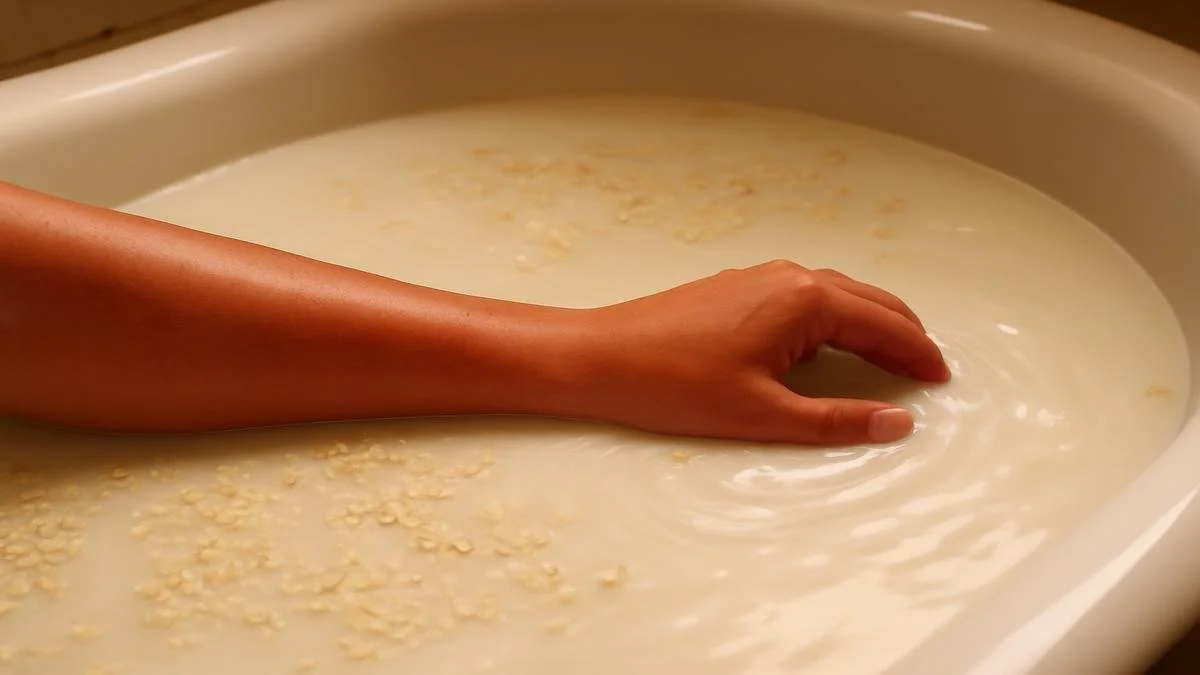
Milky toners have become one of the most popular categories in Korean skincare thanks to their ability to bridge hydration and barrier support. Unlike traditional hydrating toners, they combine water-binding ingredients with lightweight lipids, helping skin feel more comfortable, resilient, and less prone to moisture loss.
Key Takeaways
✓ Milky toners combine hydration with light barrier support in a single step.
✓ Milky toners are often best suited to dry, dehydrated, sensitive, or barrier-compromised skin.
✓ A milky toner can help reduce tightness and improve moisture retention, especially during winter.
✓ The best milky toner depends on your skin type, climate, and overall skincare routine.
✓ Ceramides, squalane, panthenol, and rice extracts are common ingredients in well-formulated milky toners.
Some links are affiliate links. If you choose to purchase through them, it helps support my work at no extra cost to you.
What Is a Milky Toner
Milky toners sit in a unique place within skincare formulation. Unlike traditional clear, water-based toners, they are hybrid products — built on a water base but supported by a small, carefully balanced oil phase.
This gives them their characteristic soft, milky appearance and their more cushioning skin feel.
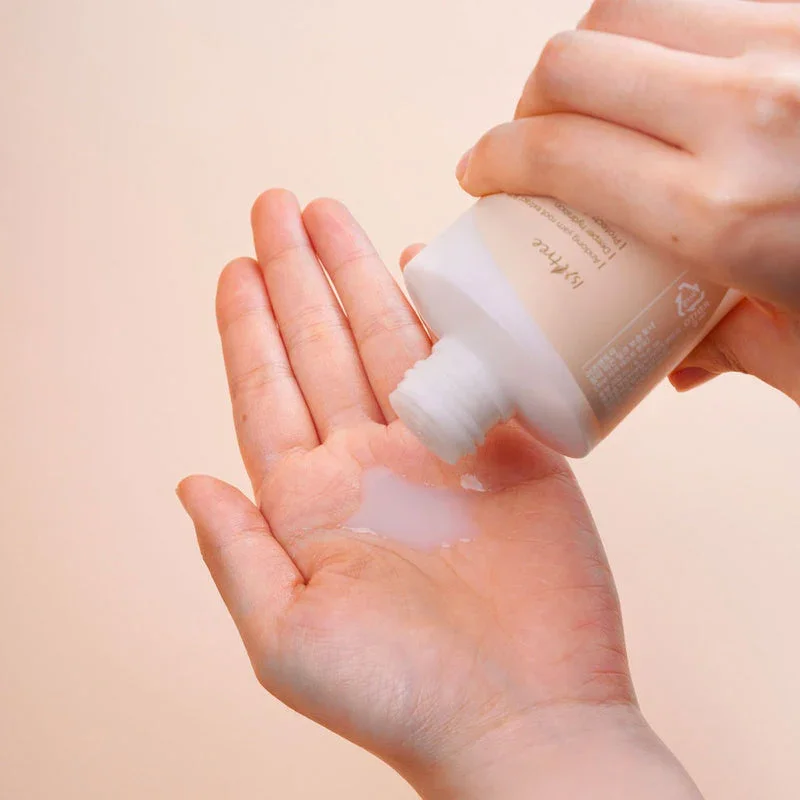
From a formulation standpoint, most milky toners are light oil-in-water emulsions rather than true creams or lotions. This means that tiny droplets of oil are dispersed within a water-based formula, stabilized by emulsifiers.
The oil content is low, but intentional — enough to support the skin barrier without creating heaviness or occlusion. This is also why milky toners feel more substantial than clear toners, yet absorb much more quickly than emulsions or moisturizers.
The “comfort” people associate with milky toners comes from this structure. Clear toners focus primarily on hydration, delivering humectants that bind water to the skin.
Milky toners still do this, but they go a step further by helping retain that moisture, smoothing the skin surface and reducing that tight, depleted feeling that often appears in colder weather or after active use.
The ingredients used in milky toners reflect this dual role: hydration paired with barrier support. Instead of relying on a single type of ingredient, these formulas combine several supportive elements that work together to improve skin comfort and resilience.
Key ingredients commonly found in well-formulated milky toners include:
Ceramides
These help reinforce the skin barrier by supporting the lipid structure of the stratum corneum, improving the skin’s ability to retain moisture over time.Fatty alcohols (the skin-friendly kind)
Ingredients such as cetearyl alcohol or behenyl alcohol contribute to formula stability and create a smoother, more cushioning texture, without the drying effects associated with simple alcohols like ethanol.Lecithin
A phospholipid that supports barrier function while helping the formula integrate more naturally with the skin, contributing to that soft, comfortable finish milky toners are known for.Squalane
A lightweight, non-greasy lipid that mimics components naturally found in the skin, helping to reduce moisture loss without clogging or heaviness.Rice or soybean extracts
Traditionally used in Korean skincare for their soothing and conditioning properties, these extracts support overall skin comfort and can contribute to a more even, healthy-looking glow.Panthenol
A well-studied humectant and soothing ingredient that supports hydration, barrier recovery, and reduces the sensation of dryness or irritation.
Together, these ingredients explain why milky toners feel different — not just thicker, but genuinely more supportive.
They are designed to hydrate while helping the skin hold onto that hydration, which is especially important during colder months or when the barrier needs extra care.
Milky Toner vs Hydrating Toner vs Essence
These three product types are often grouped together, but they are formulated very differently and serve distinct roles in a skincare routine.
Understanding these differences helps you choose what your skin actually needs — rather than layering products out of habit.
Hydrating Toners
Texture:
Lightweight, watery, and fast-absorbing.
Occlusivity:
Very low. Hydrating toners focus on delivering water to the skin, not sealing it in.
Who benefits most:
Hydrating toners are ideal for skin that feels dehydrated but otherwise balanced — especially oily or combination skin, or during warmer and more humid seasons. They work well as the first hydration step, preparing the skin to absorb the products that follow.
Hydrating toners are best when your skin needs water, not additional lipids or barrier support.
Milky Toners
Texture:
Soft, fluid, and slightly cushioning, with a milky appearance.
Occlusivity:
Low to moderate. While not occlusive in the way creams are, milky toners help reduce moisture loss by supporting the skin barrier.
Who benefits most:
Milky toners are well suited for dry, sensitized, or barrier-compromised skin, particularly in colder weather or during periods of increased active use. They are especially helpful when skin feels tight, depleted, or uncomfortable despite using hydrating products.
Milky toners are best when your skin needs hydration plus comfort and barrier reinforcement.
Essences
Texture:
Light but more substantial than watery toners, often slightly viscous.
Occlusivity:
Low. Essences focus on delivering targeted active ingredients rather than sealing moisture.
Who benefits most:
Essences are ideal when the goal is treatment rather than basic hydration — for example, supporting brightening, texture refinement, or skin renewal. They are often layered after toners and before serums.
Essences are best when your skin needs specific results, not necessarily extra cushioning.
A Simple Guide: Which One Should You Choose?
If your skin feels dehydrated but comfortable → a hydrating toner is usually enough.
If your skin feels tight, reactive, or weakened, especially in winter → a milky toner is often the better choice.
If hydration is adequate but you want targeted improvements (tone, texture, renewal) → an essence may be more appropriate.
It’s also important to remember that more products do not automatically mean better results. These steps can be combined thoughtfully, but they can also replace each other depending on your skin’s needs at a given time.
Who Should Use a Milky Toner (And Who Shouldn’t)
Milky toners can be an extremely supportive step in a routine — when used for the right skin type and at the right time. Their strength lies in comfort and barrier support, but that also means they are not universally necessary.
Ideal for:
Winter-dry skin
Colder temperatures, wind, and indoor heating can increase moisture loss, leaving skin feeling tight and depleted. Milky toners help replenish hydration while adding a light layer of lipid support, making them especially useful during winter months.Compromised skin barriers
If the skin barrier is weakened — whether from environmental stress, over-cleansing, or active ingredients — milky toners can provide gentle reinforcement without further irritation.Post-retinoid routines
Skin adjusting to retinoids often experiences dryness, sensitivity, or discomfort. A milky toner can help restore comfort and support barrier recovery without interfering with the effectiveness of treatment products.Sensitized or over-exfoliated skin
When skin feels reactive, stings easily, or shows signs of over-exfoliation, milky toners offer a soothing alternative to clear, lightweight toners that may not provide enough support.Minimalist routines
For those who prefer fewer steps, a well-formulated milky toner can partially bridge the gap between hydration and moisturization, reducing the need for multiple layering products.

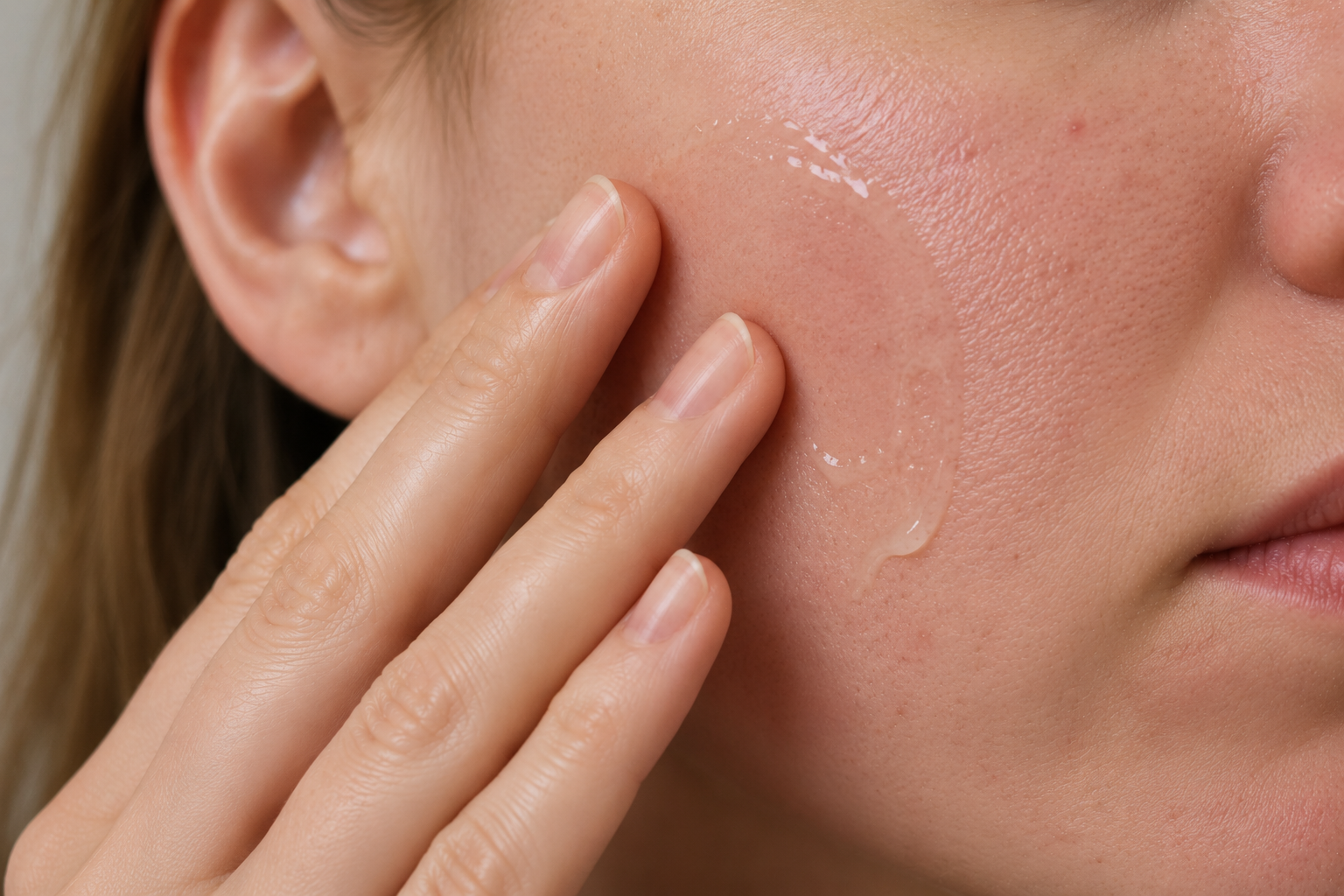


Not ideal for:
Very oily or congestion-prone skin
While not inherently heavy, milky toners do contain lipids. On very oily or easily congested skin, this can feel unnecessary or contribute to discomfort — unless the formula is exceptionally lightweight and carefully chosen.Hot, humid climates or peak summer conditions
In warm, humid environments, the additional cushioning that makes milky toners comforting in winter may feel excessive. During these periods, lighter hydrating toners are often better suited to the skin’s needs.
How to Use a Milky Toner Properly
Milky toners are versatile, but how you use them makes a real difference in how they perform. Because they sit between hydration and light barrier support, small adjustments in application can help tailor them to your skin’s needs.
Hands vs Cotton Pads
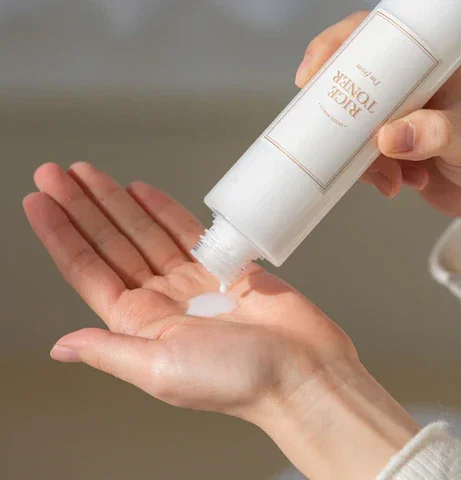
In most cases, applying a milky toner with your hands is preferred. This minimizes product absorption into cotton, allows better control over pressure, and helps the toner distribute evenly without unnecessary friction.
Gently pressing the product into the skin also enhances comfort, especially for sensitized or compromised barriers.
Single Layer vs Layering
In most cases, one layer of a milky toner is sufficient. Applied after cleansing, it provides hydration, comfort, and light barrier support without the need for additional toner steps.
Layering becomes relevant mainly in the context of the 7-skin method, a technique traditionally used with toners to gradually build hydration by applying thin layers rather than one heavy application.
While the name suggests seven layers, in practice, most people rarely apply more than two or three — and often far fewer.
Milky toners can also be used this way when the skin is extremely dry, depleted, or uncomfortable, such as during cold winter months or after barrier disruption. In these situations, applying two thin layers, allowing each to absorb fully, can help improve comfort without overloading the skin.
The key is moderation.
Layering should respond to how the skin feels on that day, not to a fixed number of steps. When done thoughtfully, adding a second layer can enhance hydration while maintaining the soft, balanced finish milky toners are designed to provide.
Morning vs Evening Use
In the morning, milky toners can replace heavier steps when you want hydration and comfort without weight. Using a thin layer helps maintain a soft, natural glow that works well under sunscreen and makeup.
In the evening, they are especially valuable after cleansing or exfoliation, when the skin benefits most from calming, barrier-supportive steps. Evening use is also ideal during retinoid routines.
Ingredient Red Flags to Watch For
One point I cannot emphasize enough is the importance of ingredient transparency. Milky toners are often marketed as soothing or barrier-repairing, but those claims should always be supported by the actual formulation.
Brand descriptions can be helpful, but they should never replace checking the ingredient list yourself.
When reviewing a milky toner, it’s worth paying attention to a few common red flags.
Heavy mineral oil high in the ingredient list
Mineral oil has no functional role in a well-formulated milky toner and should not be present. This category is designed to provide hydration and light barrier support through water-based formulas and skin-compatible lipids. When mineral oil appears in a milky toner, it usually indicates a mismatch between the product’s purpose and its formulation. For this reason, it is best avoided.Strong fragrance combined with emulsifiers
Fragrance can be tolerated by some skin types, but in a leave-on milky toner — especially one intended to support hydration and barrier comfort — it may increase the risk of irritation for sensitive or compromised skin. For these skin types, fragrance-free formulas are generally the safer and more supportive choice.High fatty alcohol content for acne-prone skin
Fatty alcohols (cetearyl alcohol, cetyl alcohol, stearyl alcohol, and behenyl alcohol) play an important role in formulation, but when they appear very high in the list, they can feel too rich for acne-prone or congestion-prone skin. In these cases, a lighter milky toner or a traditional hydrating toner may be the better choice.Unnecessary exfoliating acids in “comfort” toners
Milky toners are meant to calm and support the skin. The inclusion of exfoliating acids in products positioned as comforting or barrier-repairing is often unnecessary and can undermine their intended purpose — especially for already sensitized skin.
Ultimately, the most reliable way to understand a product is to look beyond the claims and assess how the ingredients align with your skin’s needs.
Learning to read ingredient lists empowers you to make better decisions and reduces the risk of irritation or disappointment.
Best Milky Toners (By Skin Type)
There are many milky toners on the market, often with long and complex ingredient lists. Personally, I tend to be cautious with formulas that try to do too much at once.
For this guide, I’ve chosen to focus on simpler, more balanced formulations that prioritize skin comfort, barrier support, and tolerability, without unnecessary additions or overcomplication.
Below, you’ll find Korean milky toners selected for their suitability to specific skin needs, with clear notes on texture, key ingredients, and when each formula works best.
These recommendations focus on hydration, barrier support, and comfort, helping you choose a milky toner that fits your skin type, season, and routine.
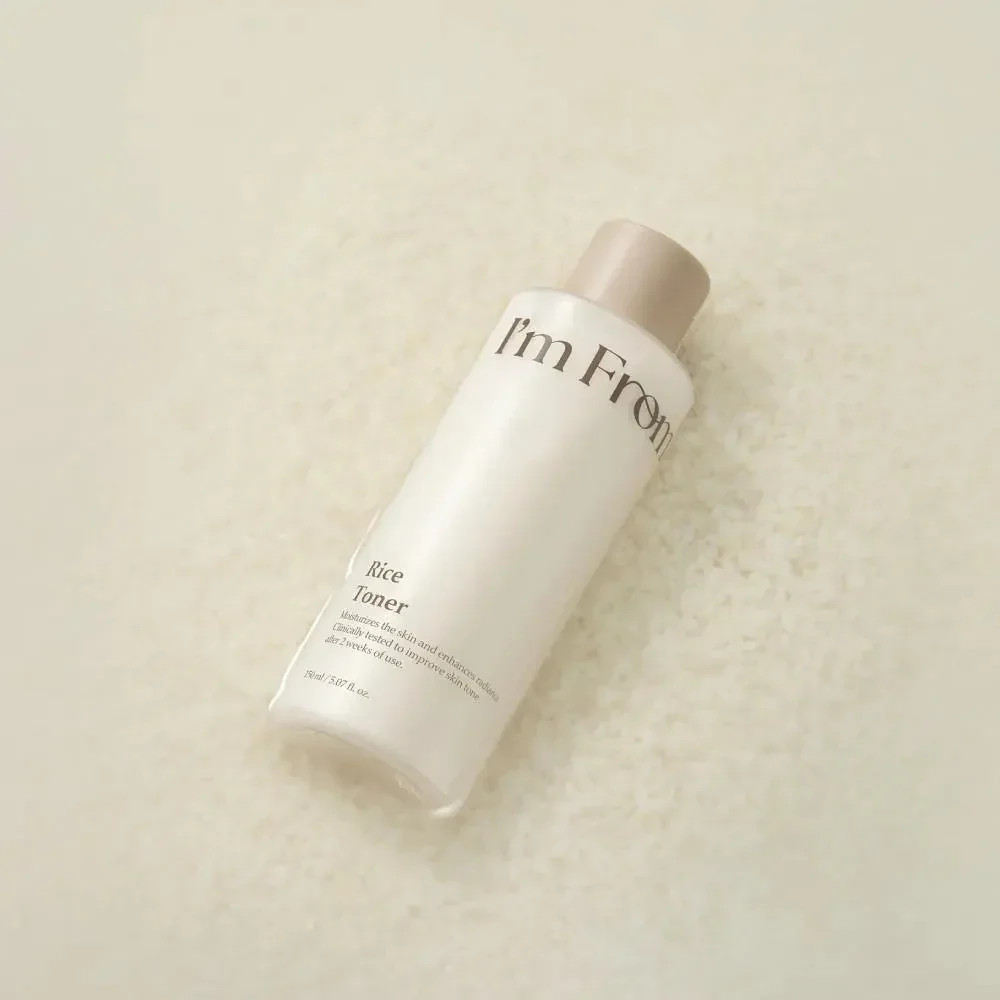
1. I’m From Rice Toner
Where to buy
Key features:
77.78% Goami rice extract – helps hydrate the skin and maintain daily comfort
Rice bran extract – supports the skin barrier and helps reduce dryness and tightness
Hydrogenated lecithin – helps limit moisture loss and supports barrier function
Niacinamide – supports overall skin balance
Soothing plant extracts (portulaca, ulmus root) – help calm easily reactive skin
Fragrance-free, low-irritation formula
Best for: Normal to dry skin, sensitive to very sensitive skin, and winter routines
The formula is intentionally simple and not crowded with unnecessary ingredients. This makes it particularly well suited to very sensitive or reactive skin that does not tolerate complex or highly active formulas.
I usually think of this toner as a reliable, everyday option when the main goal is to keep the skin calm, comfortable, and well supported.
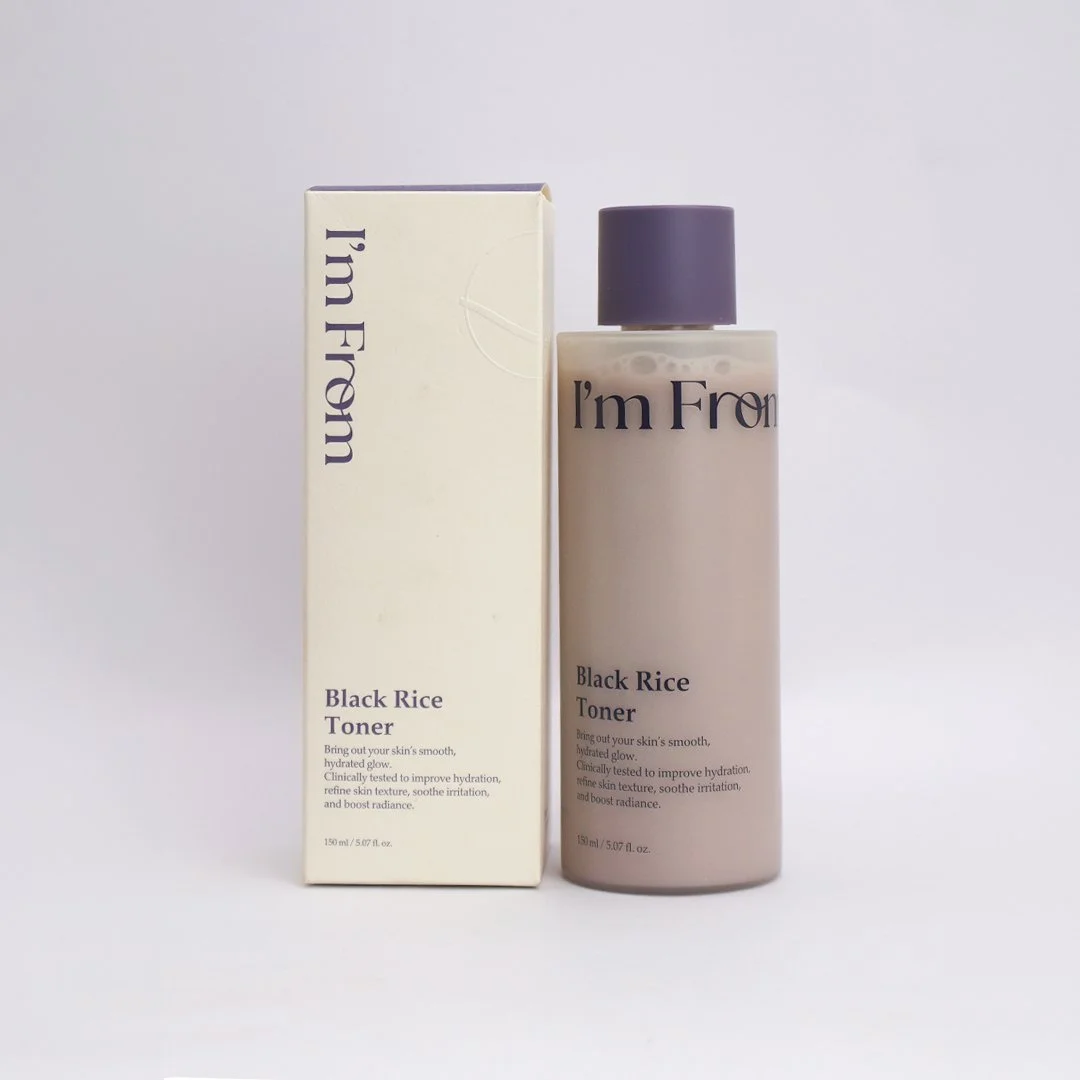
2. I’m From Black Rice Toner
Where to buy
Key features:
Fermented Jindo black rice water – a Korean medicinal rice traditionally associated with longevity; supports hydration while offering antioxidant support
Anthocyanins – naturally occurring antioxidants from black rice that help protect the skin from oxidative stress and support overall skin resilience
Lightweight lipid components – provide hydration without heaviness, making the formula more suitable for combination and oilier skin types
Niacinamide – supports skin balance and helps regulate excess oil
Panthenol and polyglutamic acid – support hydration and skin comfort
Very mild exfoliating support (glycolic acid, low level) – included to help refine skin texture without functioning as a true exfoliation step
Fragrance-free formula
Best for: Combination to oily skin, dehydrated but oilier skin types, and those who want antioxidant support without heaviness
Compared to the Rice Toner, this formula feels lighter and more dynamic. The focus here is not only on comfort, but also on supporting skin exposed to daily environmental stress.
The use of fermented black rice and anthocyanins adds an antioxidant dimension, while the overall texture remains well suited to skin that finds richer milky toners too heavy.
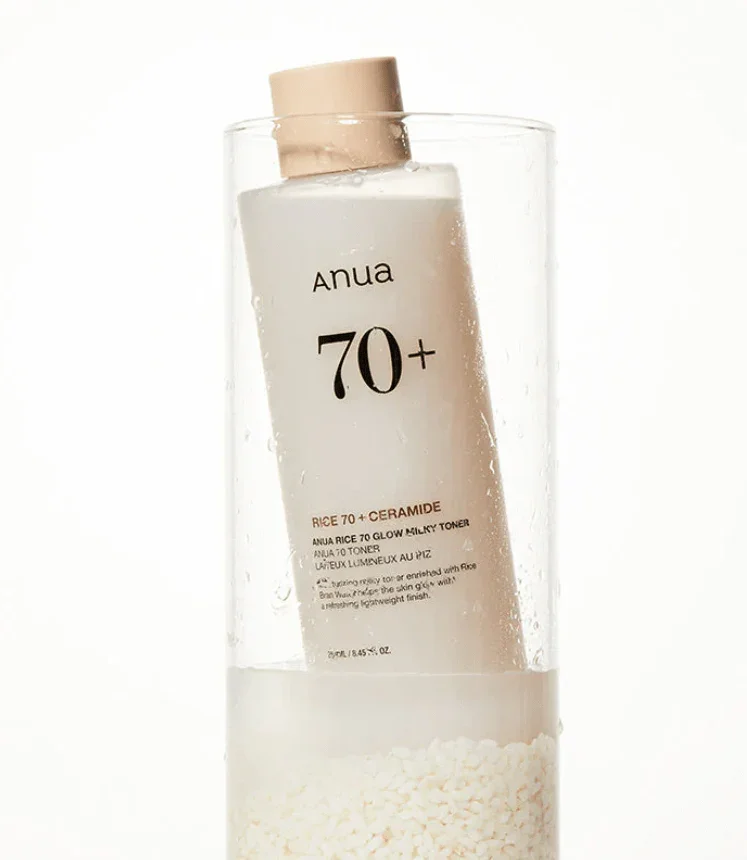
3. Anua Rice 70 Glow Milky Toner
Where to buy
Key features:
71% rice bran water – supports hydration and skin conditioning, contributing to a softer, smoother appearance
Ceramide complex (ceramide NP, AP, EOP + cholesterol + phytosphingosine) – supports the skin barrier and helps reduce moisture loss
Multiple humectants (glycerin, betaine, panthenol, hyaluronic acid forms) – improve hydration at different levels of the skin
Niacinamide – supports overall skin balance and tone
Arbutin and ascorbic acid (low levels) – provide mild tone-evening support, useful for addressing early or superficial hyperpigmentation over time
Silicone-based emollients (diphenyl dimethicone, triethylhexanoin) – create a smoother, more luminous skin finish
Fragrance-free formula
Best for: Normal to dry skin, dehydration-prone skin, and skin concerned with dullness or mild hyperpigmentation
This milky toner is more feature-rich than simpler rice-based formulas and is clearly designed to deliver both hydration and visible skin refinement. Alongside its glow-enhancing finish, the inclusion of arbutin and low-dose ascorbic acid makes it a reasonable supporting step for routines focused on uneven tone or dark spots, rather than a primary treatment.
I tend to recommend this type of formula when the skin tolerates more complex ingredient blends and when hydration, barrier support, and gradual tone refinement are all part of the goal.
For very sensitive skin, or during periods of irritation, a simpler milky toner may be a better fit.
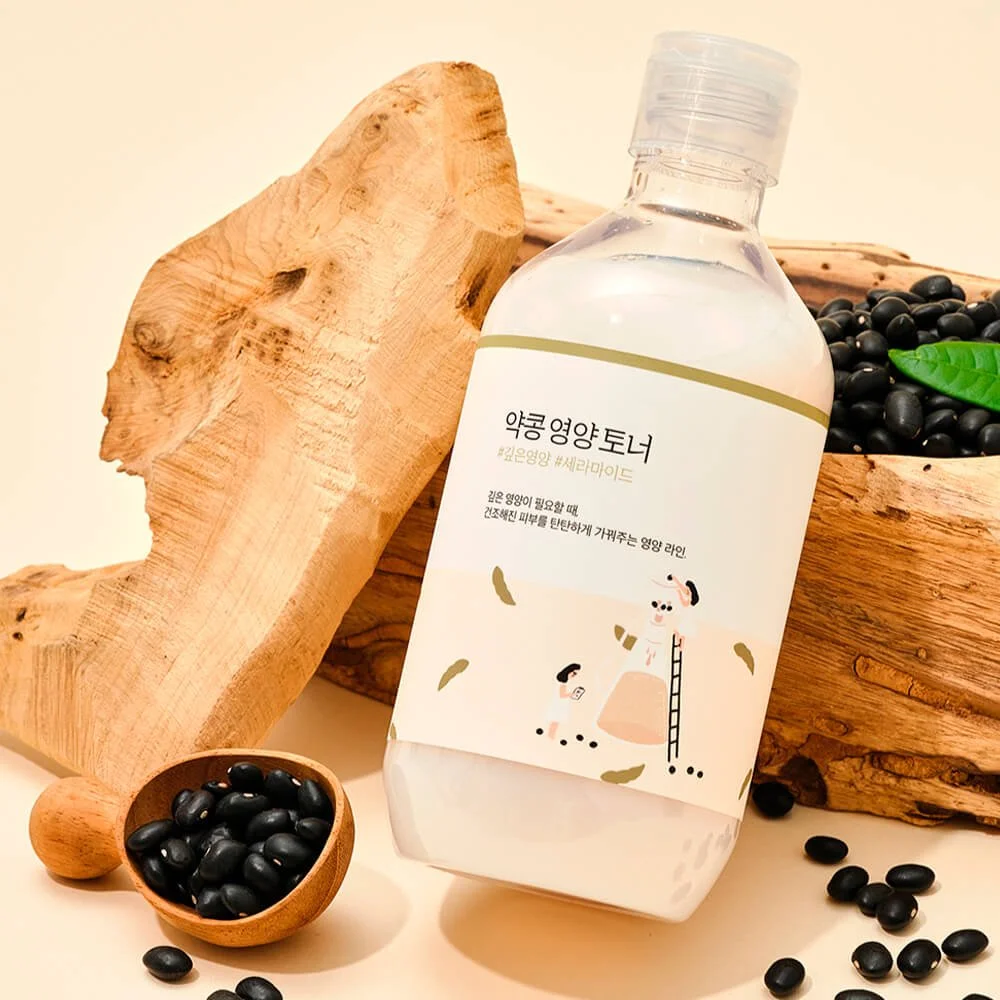
4. Round Lab Soybean Nourishing Toner
Key features:
Soybean seed extract (11,700 ppm) – supports skin nourishment and helps maintain barrier comfort
Ceramide NP – reinforces the skin barrier and helps reduce moisture loss
Chondrus crispus (red algae) extract – provides additional conditioning and hydration support
Panthenol and sodium hyaluronate – help maintain hydration and improve skin comfort
Hydrogenated lecithin – supports barrier integrity and moisture retention
Soothing components (dipotassium glycyrrhizate) – help calm easily stressed skin
Fragrance-free formula
Best for: Dry to very dry skin, dry-dehydrated skin, and skin in need of extra nourishment
This milky toner sits on the more nourishing and comforting end of the spectrum. The combination of soybean extract, ceramide, and conditioning agents makes it especially suitable when the skin feels persistently dry or lacks resilience.
It works well as a supportive base layer in routines where hydration alone does not feel sufficient.
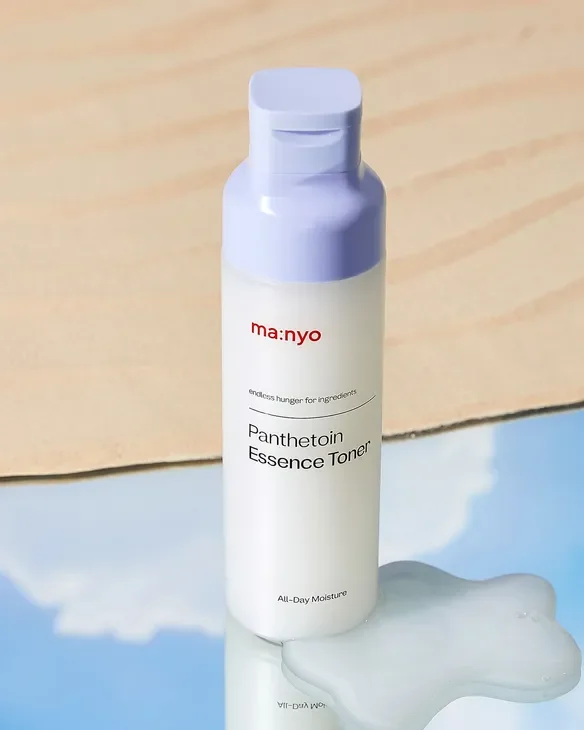
5. ma:nyo Panthetoin Essence Toner
Where to buy
Key features:
Panthenol and ectoin – support barrier repair, hydration, and skin stress tolerance
Ceramide NP and phytosphingosine – help reinforce the skin barrier and reduce moisture loss
Squalane and lightweight plant oils (macadamia, sunflower) – provide lipid support and improve skin comfort
Allantoin and soothing botanical extracts – help calm irritated or reactive skin
Fermented ingredient complex – supports skin conditioning and overall resilience
Fragrance-free formula
Best for: Dry to very dry skin, sensitized or compromised skin, post-treatment or post-retinoid routines
This formula feels closer to an essence-toner hybrid than a classic watery toner. The focus is clearly on barrier support and skin comfort rather than glow or tone correction. With panthenol, ectoin, ceramides, and supportive lipids, it works well when the skin feels stressed, reactive, or slow to recover.
For very sensitive skin or periods of barrier disruption, this type of formula can provide a noticeable sense of relief and stability.
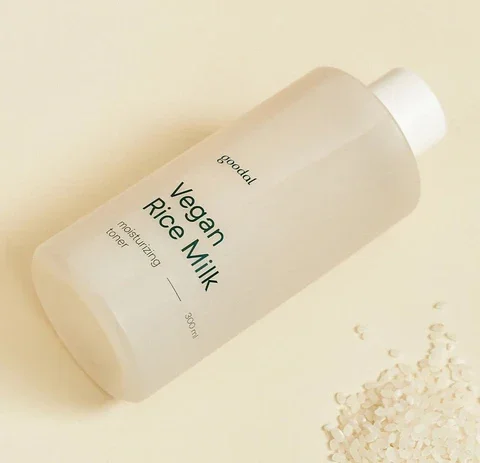
6. Goodal Vegan Rice Milk Moisturizing Toner
Where to buy
Key features:
Rice extract and soy milk – support hydration and skin softness, contributing to a comfortably moisturized feel
Humectant-rich base (glycerin, xylitol, sugars) – helps attract and retain water in the skin
Sodium hyaluronate – adds additional hydration support
Panthenol and biosaccharide gum-1 – help soothe the skin and improve overall comfort
Ceramide NP and hydrogenated lecithin – provide light barrier support
Fragrance-free formula
Best for: Normal to dry skin, combination skin in winter, and dehydration-prone skin
This toner focuses on hydration and comfort rather than visible treatment effects. The formula is simple and well balanced, making it suitable when the skin needs moisture without feeling heavy.
It works well for combination skin during colder periods, when dehydration becomes more noticeable but richer formulas still feel unnecessary.
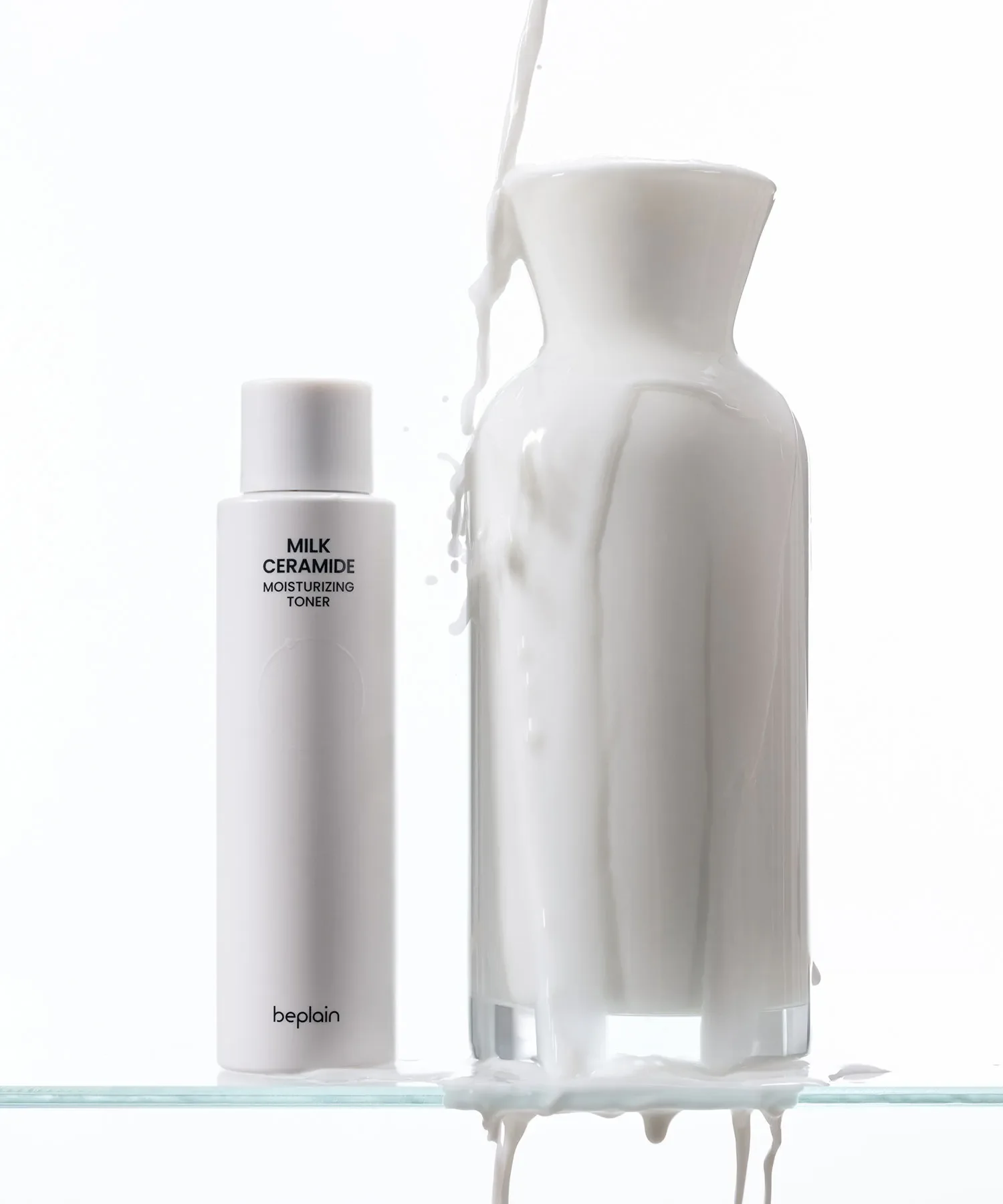
7. beplain Milk Ceramide Moisturizing Toner
Key features:
Multi-ceramide complex (ceramide NP, AP, NG, EOP, AS + phytosphingosine, cholesterol) – closely mirrors the skin’s natural lipid structure and provides strong barrier support
Milk-derived ferment (lactobacillus/soymilk ferment filtrate) – contributes to skin conditioning and comfort
Panthenol, allantoin, and beta-glucan – help soothe the skin and reduce feelings of dryness or irritation
Squalane and supportive emollients – help improve skin softness and reduce moisture loss
Centella asiatica extract – adds mild calming support
Fragrance-free formula
Best for: Dry to very dry skin, barrier-impaired skin, and skin prone to sensitivity or dehydration
This toner is clearly designed with barrier repair as the priority. Compared to lighter rice or humectant-focused milky toners, it offers more structural support through its extensive ceramide and lipid system. It works best when the skin feels persistently dry, weakened, or slow to recover, and when maintaining barrier integrity is more important than glow or tone-refining effects.
Because of its richer, more lipid-dense composition, it may feel unnecessary for oily skin when the barrier is functioning well.
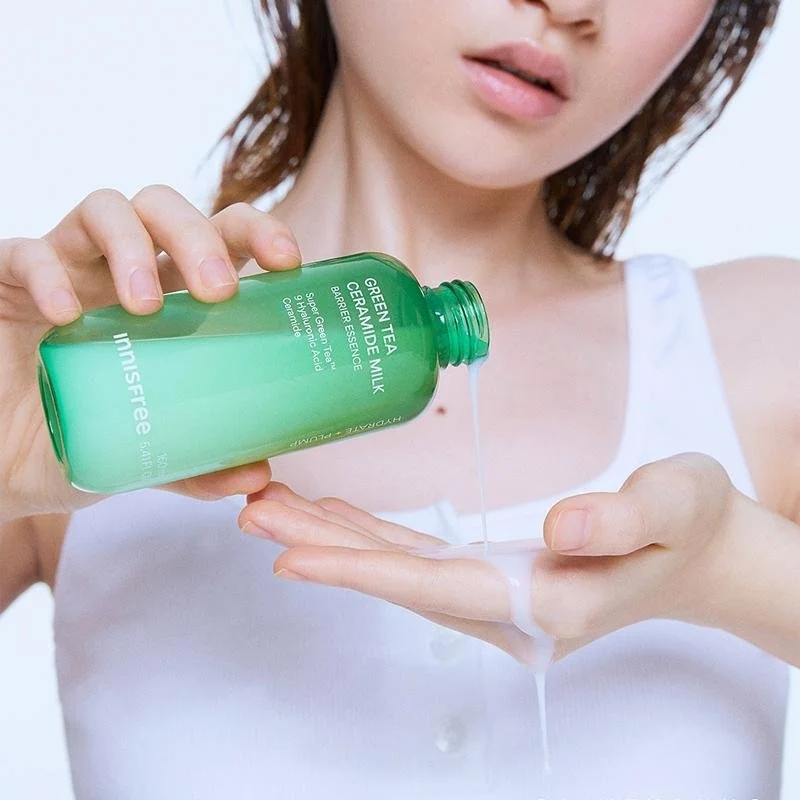
8. INNISFREE Green Tea Ceramide Milk
Where to buy
Key features:
Green tea components (camellia sinensis leaf extract and seed oil) – provide antioxidant support and help protect the skin from daily environmental stress
Ceramide NP and phytosterols – support the skin barrier and help reduce moisture loss
Hydrogenated rice bran oil and lightweight emollients – improve skin softness and comfort without feeling heavy
Multiple forms of hyaluronic acid – support hydration at different levels of the skin
Niacinamide – helps maintain overall skin balance
Fragrance-free formula
Best for: Normal to dry skin, combination skin that needs more comfort, and skin exposed to environmental stress
This toner focuses on balanced nourishment and barrier support, rather than deep repair or intensive treatment. The green tea components add an antioxidant dimension, while the ceramide and lipid content help maintain comfort and resilience.
It works well for skin that feels slightly dry or stressed but does not need a very heavy or corrective milky toner. For combination skin, it can be a comfortable option when hydration alone feels insufficient but richer ceramide-focused formulas feel too much.
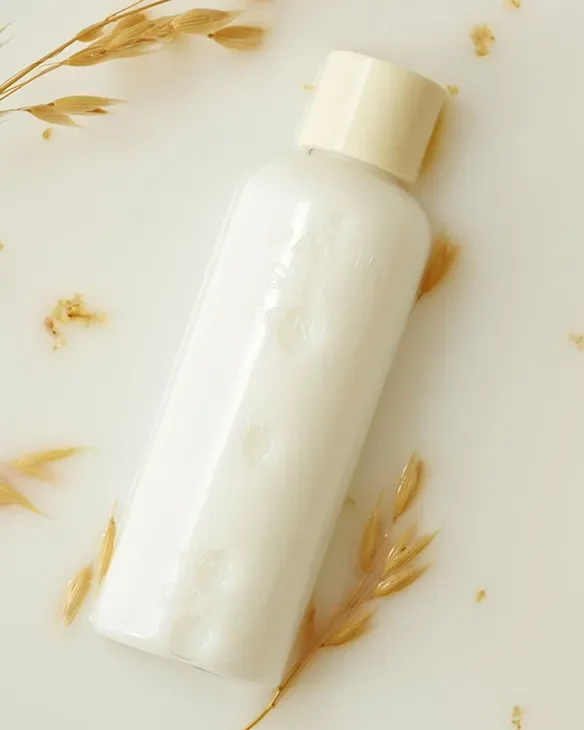
9. Purito Oat-in Silky Toner
Where to buy
Key features:
Oat seed water and oat kernel extract – support skin comfort and help calm easily irritated or reactive skin
Beta-glucan – provides soothing hydration and supports barrier recovery
Meadowfoam seed oil – offers light lipid support without heaviness
Very short, minimalist ingredient list
Fragrance-free formula
Best for: Sensitive to very sensitive skin, compromised skin barriers, and those who prefer minimal formulas
This toner is one of the simplest options in the milky toner category. The formula focuses almost entirely on calming and tolerance, rather than glow, tone correction, or visible skin refinement.
It works well when the skin reacts easily or when complex formulations feel overwhelming, and it can be a reliable base step in pared-down or recovery-focused routines.
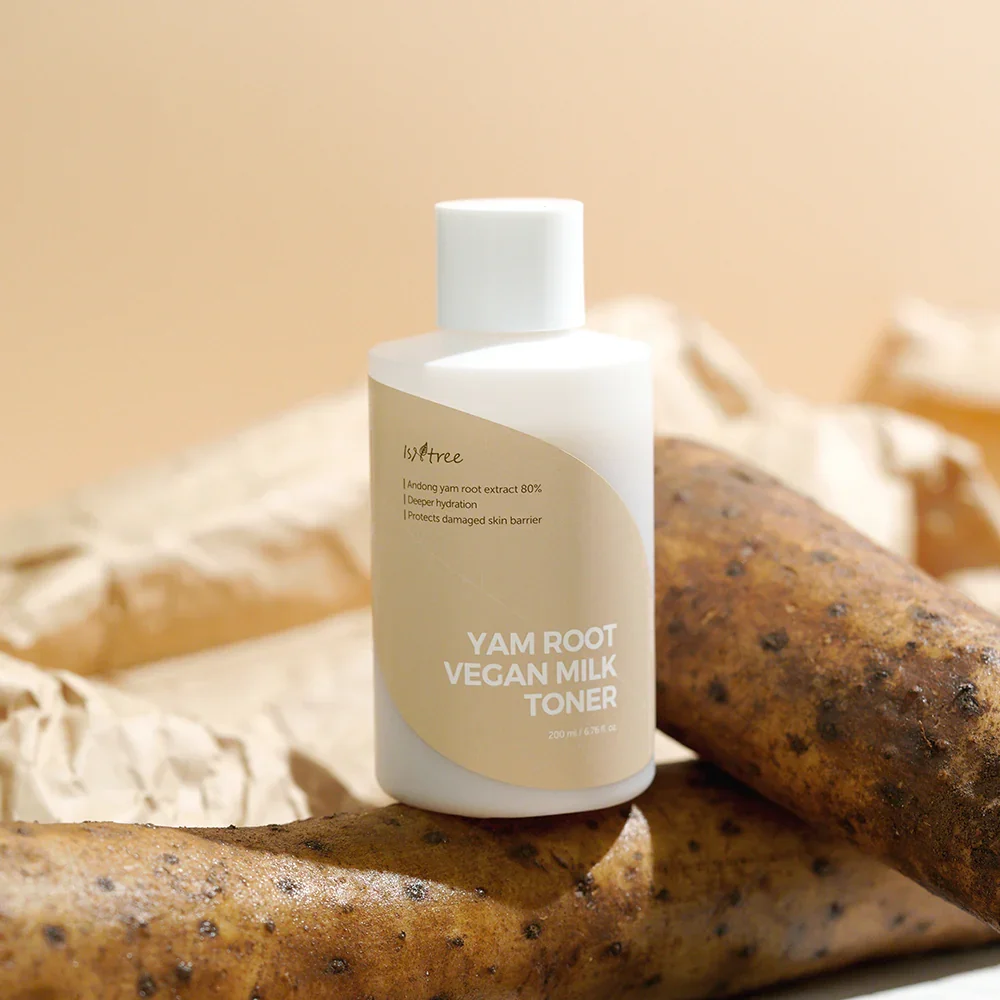
10. Isntree Yam Root Vegan Milk Toner
Key features:
80% yam root extract – provides hydration and a naturally cushioning, comforting feel on the skin
Plant-derived oils (sunflower, meadowfoam, macadamia, argan) – offer lipid support and improve skin softness
Ceramide NP and cholesterol – help support the skin barrier and reduce moisture loss
Panthenol and trehalose – support hydration and skin comfort
Oat, seaweed, and botanical extracts – contribute additional soothing and conditioning support
Fragrance-free, vegan formula
Best for: Dry to very dry skin, dehydrated skin, and skin that benefits from richer, plant-based nourishment
This is a comfort-driven milky toner with a noticeably more nourishing feel than lighter rice or oat-based options. The high yam root extract content, combined with multiple plant oils and barrier lipids, makes it well suited to skin that feels tight, depleted, or easily unsettled.
It works best when the skin needs sustained comfort rather than light hydration, and when a vegan, plant-focused formula is preferred.
For oilier or congestion-prone skin, this type of formulation may feel heavier than necessary when the barrier is functioning well.
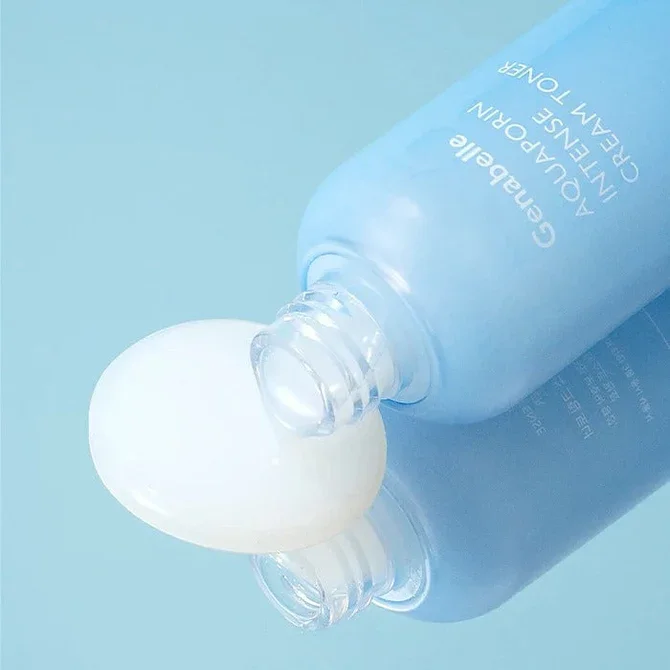
+1 Genabelle Aquaporin Intense Cream Toner
Where to buy
Key features:
Aquaporin-supporting humectant system – enhances water movement and retention within the skin
Multiple plant butters (shea, cupuaçu, murumuru, mango) – provide substantial lipid replenishment and a strong cushioning effect
Ceramide complex (NP, NS, AS, AP, EOP) with phytosphingosine and lecithin – supports barrier structure and reduces moisture loss
Panthenol and glyceryl glucoside – support hydration and skin comfort
Macadamia and baobab seed oils – add further emollient support
Fragrance-free formula
Best for: Very dry skin, severely dehydrated or barrier-impaired skin, and routines where a toner replaces lighter lotion steps
This is closer to a cream-toner hybrid than a traditional milky toner. The formula prioritizes deep comfort and moisture retention through a combination of humectants, rich butters, and barrier lipids. It works best when the skin feels persistently dry, tight, or unable to hold hydration, and when lighter milky toners no longer feel sufficient.
For normal, combination, or oily skin, this level of richness is likely more than necessary and may feel heavy, particularly in multi-step routines.
Final Thoughts
Milky toners can be a valuable part of a skincare routine when they’re chosen thoughtfully and used according to your skin’s needs. Their real benefit comes from formulation quality, ingredient transparency, and how well they support hydration and the skin barrier — not from trends or texture alone.
If you’d like to learn more, you’ll find skincare tips, ingredient insights, and trusted Korean product guidance throughout the blog. For a deeper understanding, my eBook series takes a closer look at skincare steps and key ingredients.
And if you prefer individualized support, you can also book a personalized skincare consultation designed around your skin type, concerns, and goals.
Latest Articles


Understanding Your Skin
A Practical Guide to Skincare
I wrote Understanding Your Skin to help you build an effective skincare routine with confidence. This illustrated guide explains skin types, ingredients, and routines in a practical, evidence-based way that's easy to understand and apply.
- Written by a physician
- 120-page illustrated guide
- Evidence-based skincare guidance
- Sample routines & product recommendations

Having rosacea does not mean giving up every active ingredient. This guide looks at which actives can still fit into your routine, where the evidence is strongest, and which ones need more caution.